
The Alchemy of Self: Crafting Heirloom Jewelry at JINGYING and the Science of Gold
Part I: Introduction – The Hunger for the Real
In an era defined by the intangible—digital assets, fleeting social media trends, and algorithm-driven consumption—there is a palpable, growing hunger for the tangible. We are surrounded by objects of convenience, yet we yearn for objects of meaning. The modern individual is no longer satisfied with being a passive consumer; they desire to be an active creator, to leave a mark that is physical, permanent, and deeply personal. This cultural shift, a quiet rebellion against the anonymity of mass production, has found a powerful outlet in the resurgence of handmade crafts.
At the intersection of this maker movement and the ancient art of adornment stands JINGYING. More than a jewelry manufacturer or retailer, JINGYING functions as a modern atelier—a sanctuary where personal narratives are translated into metal and gemstone. Whether you are a professional brand seeking a manufacturing partner or an individual looking to pour sentiment into a wearable form, JINGYING offers a gateway to a world where craft, memory, and identity converge .
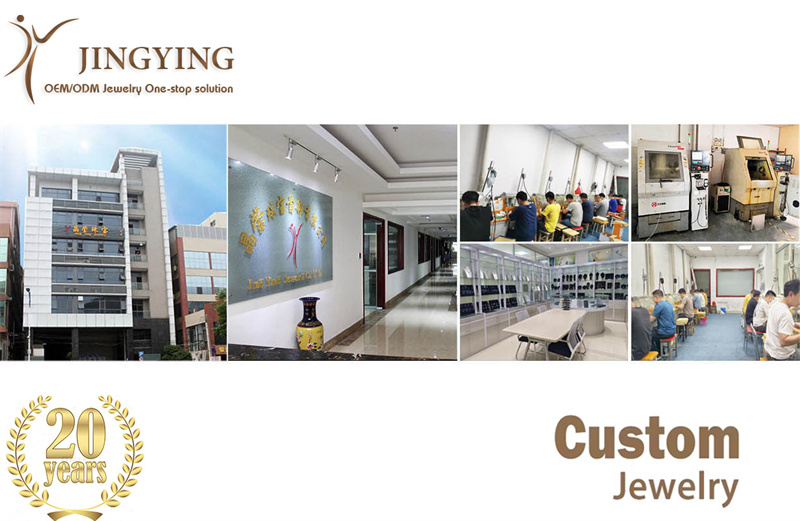
This exploration delves into the transformative experience of creating your own jewelry at JINGYING, tracing the journey from a fleeting idea to a tangible heirloom. Furthermore, for those who appreciate the beauty of gold—specifically the accessible luxury of gold plating—we will answer the crucial question that every jewelry lover asks: Does 24k gold plated jewelry tarnish? By understanding both the art of creation and the science of material care, we can fully appreciate the pieces we choose to wear close to our hearts.
Part II: The Philosophy of JINGYING – Where Story Becomes Structure
To walk into a JINGYING workspace is to depart from the sterile hum of a standard retail environment. The air carries the faint, clean scent of metal and polishing compounds. The soundscape is not curated pop music, but the focused quiet punctuated by the soft buzz of a flex shaft, the gentle tap of a hammer against a chasing tool, and the rhythmic scrape of a file refining a shape. Workbenches, scarred from use, bear silent witness to hundreds of personal journeys. This environment is meticulously curated not for passive consumption, but for active engagement .
The philosophy underpinning this space is one of accessible mastery. JINGYING operates on the deeply democratic belief that the skills required to create beautiful, lasting jewelry are not the sole province of guild apprentices who train for decades. Through simplified, safe techniques and guided instruction, the complex art of metalsmithing is broken down into achievable steps. Lost-wax casting, saw-piercing, soldering, texturing, and stone setting—these become a vocabulary that anyone can learn to speak. The studio provides the lexicon (tools, materials, and expert guidance) so that the individual can compose their own poem in metal .
This philosophy extends beyond the hobbyist. For professional clients—designers and brands—JINGYING embodies a partnership model of collaborative creation. With over 23 years of excellence and a 35,000-square-meter manufacturing facility, they serve as an extension of a brand’s own production department. Whether it is a startup requiring a 100-piece pilot collection or a luxury house launching a global campaign, the principle remains the same: deep listening to the client’s vision, combined with technical expertise to bring that vision to life with integrity and precision .
Part III: The Journey of Creation – From Concept to Charm
Creating your own jewelry at JINGYING is a journey in miniature, mirroring the creative arc of any significant endeavor. It is an act of mindfulness that pulls the maker into the present moment, offering a state of "flow" where time distorts and self-consciousness falls away .
Phase 1: Conception and Design – The Seed of an Idea
The process begins not with fire and metal, but with imagination and paper. Sitting with a sketchpad or molding a piece of soft wax in one’s fingers, the maker is guided by a simple, profound question: "What do you want to say?"
The answer can be literal—a child’s initial rendered in a graceful script, the outline of a beloved pet, the precise coordinates of a place that feels like home. It can be symbolic—a geometric shape representing balance, an organic form echoing a favorite leaf, or an abstract texture that simply feels "right." For those seeking the ultimate in personalization, JINGYING offers the technology to translate a child's fingerprint or a loved one's handwriting into a laser-engraved detail on a pendant, making the piece a direct, physical imprint of a person .
Instructors at JINGYING act as design consultants, helping to translate these raw ideas into viable, wearable forms. They teach the principles of scale, proportion, and structural integrity, ensuring that the delicate branch you envision won't snap off or that the locket will close securely. This stage is a meditation on intent, forcing a clarity of thought that is rare in our chaotic daily lives .
Phase 2: The Act of Making – The Alchemy of Transformation
This is where theory becomes tangible, and the magic truly happens. JINGYING offers several pathways for creation, honoring both ancient techniques and modern efficiency.
The Lost-Wax Casting Process: This method, ancient in its concept but precise in its modern execution, is ideal for intricate, three-dimensional designs. The maker carves their design in a special jeweler's wax. This delicate model is then attached to a "sprue" (like a wax stem) and encased in a flask filled with a plaster-like investment material. The flask is placed in a kiln, where the wax burns away—hence "lost-wax"—leaving behind a perfect, negative cavity of the design. Molten metal—sterling silver, bronze, or gold—is then forced into this cavity using a vacuum or centrifugal casting machine. The moment of quenching the hot flask in water and cracking open the cooled investment is pure alchemy. The fragile wax that once existed only in the mind’s eye has been transmuted into a durable, metallic ghost of itself .
Fabrication from Sheet and Wire: For those who prefer a more direct, physical engagement with the material, fabrication is the path. A silhouette might be saw-pierced from a sheet of silver using a jewelers' saw, a process requiring a steady hand and a patient rhythm. Surfaces are given character with texturing hammers, stamps, or engraving tools. Separate elements—a jump ring, a bezel for a stone, a decorative element—are joined together through soldering. This process, using a small torch to flow a silver or gold alloy solder into a joint, feels like a tiny miracle. The hands are fully engaged, the mind focused entirely on the task at hand .
Phase 3: Finishing and Revelation – The Birth of an Heirloom
The raw, cast, or assembled piece is often rough, dark with fire-scale from the heat of the torch or kiln. Then begins the satisfying transformation through finishing. Coarse files smooth the edges of the casting gate. Sandpaper of progressively finer grits—from 400 to 2000 and beyond—gradually reveals the shining metal beneath. A tumbler filled with steel shot and soap can work-harden and polish a piece to a soft, durable gleam, while a rotary tool with polishing compounds brings it to a mirror shine .
This stage is deeply satisfying, a gradual unveiling of the object’s true beauty. The final step—stringing the finished charm on a chain or leather cord and placing it around the neck—is a moment of profound accomplishment. The cool weight of it against the skin is a constant, tactile reminder of one’s own capability. This is not a trophy of purchase, but a trophy of process .
Part IV: The Canvas and Palette – Materials of Meaning at JINGYING
The story a piece of jewelry tells is defined as much by its material as by its form. JINGYING offers a curated palette of the world's finest materials, ensuring that the narrative you choose to wear is supported by a foundation of quality and integrity .
The Metals: The Foundation of Form
-
Gold (in all its colors): Available in 10k, 14k, 18k, and 22k variations in yellow, white, and rose. The choice of karatage affects both color intensity and durability. 14k gold, an alloy of 58.3% pure gold mixed with copper, silver, and zinc, offers the perfect balance of rich color and everyday wearability, making it the most popular choice for engagement rings and daily-wear pieces .
-
Platinum: The pinnacle of luxury. Dense, naturally white, and hypoallergenic, platinum is incredibly durable and retains its luster forever, making it the ideal metal for legacy pieces that will be passed down through generations .
-
Sterling Silver (925): Accessible, versatile, and bright. It provides a crisp, cool aesthetic perfect for both bold and delicate designs. JINGYING’s silver is certified 925, and they employ anti-tarnish enhancements to prolong its brilliant finish .
-
Vermeil: For those who love the look of gold but prefer a silver base, vermeil is a luxurious option. JINGYING offers vermeil with a heavy plating of gold (2.5 to 5.0 microns) over sterling silver, providing a durable and substantial gold surface .
The Gemstones: The Soul of Color
Gemstones inject life, color, and profound personal meaning into a piece.
-
Birthstones: The most personal of gems, connecting the wearer to their birth month and its associated folklore. From the deep red of a January Garnet to the serene blue of a December Turquoise, birthstones add a layer of astrological and personal significance .
-
Diamonds: Beyond the classic, brilliant-cut clear diamond, JINGYING offers unique options like raw, uncut diamonds for a rustic, organic feel, or fancy colored diamonds for an exclusive statement. For the ethically conscious, they are experts in setting lab-grown diamonds, which are chemically identical to mined diamonds but offer a conflict-free and more affordable alternative .
-
Alternative Gemstones: For those seeking a unique path, the options are vast: the ethereal, glowing Moonstone; the deep, protective Black Onyx; the peach-pink Morganite, a symbol of compassion; or the vibrant, lab-grown gemstones that offer exceptional brilliance and color consistency .
Part V: The Science of Shine – Does 24k Gold Plated Jewelry Tarnish?
Having invested time, emotion, and resources into creating or acquiring a beautiful piece of jewelry, the natural question becomes: How do I care for it? This is especially pertinent for pieces that utilize gold plating—a technique that offers the look of solid gold at a more accessible price point, and one that JINGYING masters with precision, offering plating options ranging from 0.5 to 5.0 microns in thickness .
To answer the question directly: Yes, 24k gold plated jewelry can tarnish, but the pure gold layer itself is not what tarnishes. Understanding this distinction requires a brief lesson in metallurgy.
The Difference Between Pure Gold and Gold Plating
Pure Gold (24K): Gold is one of the least reactive chemical elements. In its pure 24-karat form, it is virtually inert and does not tarnish, rust, or corrode. It will not react with the oxygen, moisture, or sulfur in the air. However, 24k gold is incredibly soft and malleable (rated 2.5–3 on the Mohs scale), making it impractical for everyday jewelry that requires structural integrity to hold stones or withstand bumps . This is why most fine jewelry is made from 14k or 18k gold alloys, where pure gold is mixed with other metals like copper, silver, or zinc to increase durability .
Gold-Plated Jewelry: This is a composite material. It consists of a base metal—which can be a non-precious metal like brass or copper, or a precious one like sterling silver (in the case of vermeil)—that is coated with a thin layer of gold through an electroplating process .
The Mechanism of Tarnish in Plated Pieces
When we say a gold-plated piece has "tarnished," one of two things is actually happening:
-
Tarnish of the Base Metal (The Most Common Culprit): Gold plating is not permanent. Over time, through friction from wear, contact with chemicals, and abrasion, this thin outer layer of gold can wear away, exposing the base metal underneath. If that base metal is sterling silver, it will tarnish (turn black) due to a reaction with sulfur in the air. If the base metal is copper or brass, it will oxidize, leading to a dull, greenish or dark discoloration. This is often mistaken for the gold tarnishing, but it is actually the underlying metal being revealed and reacting to the environment .
-
Soiling, Not Tarnishing: Sometimes, a piece appears dull or discolored due to a buildup of body oils, lotions, perfumes, and soap residue. This is not chemical tarnish, but a film on the surface that can often be cleaned off with a gentle method .
Factors That Accelerate the Wear of Gold Plating
The longevity of a gold-plated piece depends on several factors:
-
Thickness of Plating: This is the most critical factor. "Flash plating" is a very thin layer that will wear away in weeks. High-quality plating, like the "heavy gold plating" (2+ microns) or vermeil (2.5+ microns) offered by JINGYING and other fine manufacturers, can last for years with proper care .
-
Exposure to Chemicals: Contact with perfumes, hairsprays, lotions, sunscreens, chlorine (in swimming pools), and household cleaning agents will accelerate the breakdown of the plating .
-
Friction and Abrasion: Daily wear against skin, clothing, and other jewelry will physically rub the gold layer away over time. Rings, which are subjected to constant abrasion, will wear faster than earrings .
-
Skin Chemistry (pH): An individual's body chemistry plays a role. Some people have more acidic sweat, which can be more corrosive to metals and can speed up both the tarnishing of the base metal and the breakdown of the plating .
How to Care for Gold-Plated Jewelry to Maximize Its Life
Preserving the beauty of your gold-plated creation from JINGYING requires a proactive, gentle approach .
The "Last On, First Off" Rule: This is the golden rule of jewelry care. Make your jewelry the very last thing you put on when getting dressed (after perfume, hairspray, and lotions have dried) and the very first thing you take off when you return home.
Cleaning Guidelines:
-
Gentle Wipe-Down: After each wear, gently wipe the piece with a soft, lint-free cloth (like a microfiber cloth) to remove oils and perspiration. Do not use a polishing cloth unless absolutely necessary, as they are slightly abrasive .
-
Deep Cleaning (When Needed):
-
Mix a few drops of mild, dye-free soap (like castile soap) into a small bowl of lukewarm water.
-
Place the jewelry in the water and let it soak for 5-10 minutes. Skip this step if the piece has glued-on stones, as water can loosen the adhesive.
-
Use an extra-soft baby toothbrush or a cotton swab to gently dislodge any dirt from crevices.
-
Rinse thoroughly with clean water.
-
Pat completely dry with a soft cloth and allow to air dry fully before storing .
-
Storage:
-
Store your jewelry in a dry, cool place. Humidity is the enemy.
-
Use an airtight bag or container, preferably one with anti-tarnish strips. A simple plastic zip-lock bag (made of polyethylene) is an excellent, cost-effective storage solution .
-
Store pieces separately to prevent them from scratching each other.
Professional Care:
If the gold plating has worn away, do not attempt DIY fixes, which often yield uneven results. Contact a professional jeweler, like the experts at JINGYING, to inquire about re-plating services. A professional can strip the old plating and apply a fresh, even layer of gold, restoring the piece to its original glory .
| Metal Type | Tarnish Resistance | Common Causes of Tarnish/Fading | Maintenance Tips |
|---|---|---|---|
| Pure 24K Gold | Virtually immune to tarnish | Scratches and dents due to softness | Occasional polishing with soft cloth |
| 14K Gold Alloy | Low to moderate | Oxidation of alloy metals (copper, silver) from chemicals, sweat | Regular cleaning; avoid chlorine; store in anti-tarnish pouch |
| Gold-Plated Silver | Low | Friction wears gold layer; silver base tarnishes from sulfur in air | "Last on, first off" rule; gentle cleaning with mild soap; professional re-plating every 1–2 years |
Part VI: Conclusion – A Wearable Manifesto
To create your own jewelry at JINGYING is to engage in a quiet but potent act of self-definition. It is to choose narrative over noise, substance over surface, and creation over consumption. The resulting piece is far more than an accessory. It is a condensed autobiography—a marker of a moment, a relationship, or a triumph. It is a testament to imperfection, where a slight asymmetry is not a flaw but a signature of the human hand, an echo of the Japanese philosophy of wabi-sabi that finds beauty in the unique and the transient .
And when that piece incorporates gold plating, understanding the science behind its care allows you to honor the story it holds. Knowing that the shine requires a gentle touch, that it should be the last thing you put on and the first thing you take off, transforms maintenance into ritual. It reinforces the value of the object, not in its material cost, but in the care and intention you invest in it.
In the cool weight of a self-made pendant, engraved with a fingerprint or set with a birthstone, you carry not just a piece of jewelry, but a manifesto. It is a small, shining declaration that you are the author of your story—capable of leaving a unique and beautiful mark on the world, starting with a simple imprint in metal, worn close to the heart .