
The Art of Adornment: A Comprehensive Guide to Designing and Making Custom Necklace Jewelry
Introduction: The Personal Journey of Custom Jewelry Creation
For millennia, jewelry has served as more than mere decoration. It has been a symbol of status, a talisman of protection, a repository of memory, and a powerful medium for self-expression. In an age of mass production, the desire for objects that tell a personal story is stronger than ever. Custom necklace jewelry sits at the intersection of art, craftsmanship, and identity. Unlike a piece picked off a shelf, a custom-designed and handcrafted necklace is a collaboration between vision and skill—a tangible narrative shaped by your own hands or created in close partnership with an artisan.
This guide is your roadmap into that world. Whether you are a complete beginner inspired to create your first beaded masterpiece, or someone with a specific vision seeking to understand the professional process of working with a jeweler, this comprehensive article will walk you through every step. We will explore the entire lifecycle of a custom necklace: from the initial spark of inspiration and the principles of design, through the practical techniques of making, to the final polishing and care of your unique creation. We will cover accessible DIY methods like beadwork and precious metal clay, as well as the sophisticated traditional techniques of silversmithing and stone setting. The journey of making custom jewelry is one of patience, precision, and passion—and the reward is a piece of art that is exclusively, unmistakably yours .
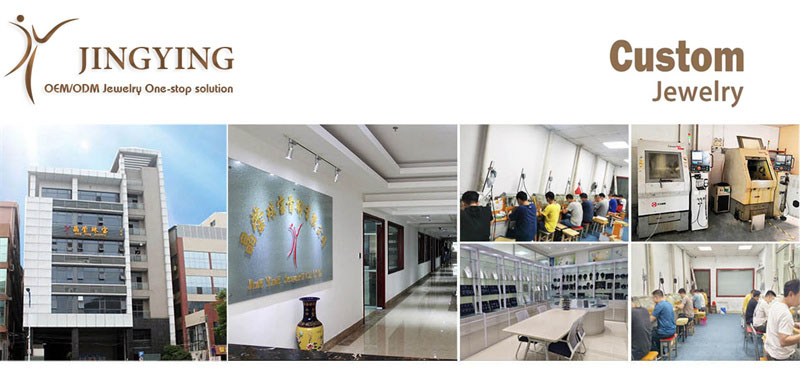
Over the last 23 years, JINGYING Jewelry has been providing a one-stop solution for brand jewelers in terms of OEM/ODM and customized work. We can create a great art jewelry collection in fine jewelry making using just your thoughts, photos, or CAD designs.
We provide ODM/OEM services for 100% real gold and 925 sterling silver rings, necklaces, pendants, earrings, bracelets, and pearl jewelry, including rings, sterling silver cross necklaces, heart necklaces, white gold earrings, and gold tennis bracelets, with personalized logos and packaging.
Part 1: The Conceptualization Phase - From Inspiration to Design
Before any metal is cut or any bead is strung, the most critical phase of creating custom jewelry takes place in the mind and on paper. This is where you define the soul of the piece.
1.1 Finding Your Muse: Sourcing Inspiration
Every great design starts with an idea. Inspiration is everywhere, but learning to see it through the lens of jewelry design requires a shift in perspective. A custom necklace can be an abstract representation of a feeling or a literal depiction of a memory.
-
Personal Narratives: Look inward. What stories do you want to tell? A necklace can commemorate a milestone like a graduation, a new birth, or an anniversary. It can represent a place you love—the curve of a coastline, the color of a desert sunset, or the tangled lines of an urban highway system like Spaghetti Junction, which inspired one modern jeweler . Consider using elements like a charm representing a hobby, a birthstone for a family member, or a locket holding a tiny photograph .
-
The Natural World: Nature is the oldest and most prolific jewelry designer. The organic asymmetry of a leaf, the spiraling geometry of a seashell, the rough texture of tree bark, or the delicate structure of a feather can all be translated into metal and stone.
-
Art and Architecture: The clean lines of Bauhaus architecture can inspire a minimalist geometric pendant. The flowing curves of Art Nouveau can be echoed in a lariat-style necklace. A particular color palette in a favorite painting can guide your choice of gemstones and enamels .
-
Existing Objects and Heirlooms: Sometimes, inspiration comes from the past. Perhaps you have a collection of vintage beads from a flea market that are begging for a new life , or a grandmother's brooch with a gemstone that would be perfect as the centerpiece of a modern pendant. Repurposing heirlooms preserves sentimental value while creating something fresh and wearable .
1.2 The Anatomy of a Necklace: Understanding Core Components
To design effectively, you must understand the parts that will come together to form the whole.
-
The Chain or Cord: This is the foundation. Chains come in countless styles—cable, rope, curb, figaro, snake, and box, to name a few. The choice of chain dramatically affects the necklace's overall aesthetic. A delicate cable chain suggests understated elegance, while a chunky curb chain makes a bold, modern statement. Alternatives include silk cords, leather thongs, beaded strands, or even hand-felted wool .
-
The Pendant or Focal Point: This is the star of the show. It could be a faceted gemstone, a hand-formed metal charm, a sculpted piece of polymer clay, a found object encased in resin, or a coin. The pendant draws the eye and anchors the design.
-
Findings: These are the unsung heroes of jewelry making—the functional components that make the piece wearable. They include clasps (lobster, spring ring, toggle, magnetic), jump rings (small circles of wire that connect components), crimp beads (used to secure stringing wire), and bails (the component that attaches a pendant to a chain) .
-
Embellishments: These are the supporting actors—accent beads, spacers, charms, and gemstones that add texture, color, and narrative depth to the design between the clasp and the focal point.
1.3 Establishing Design Parameters: Length, Proportion, and Wearability
A beautiful necklace is one that is also a joy to wear. Practical considerations are just as important as aesthetics.
-
Necklace Lengths: Standard lengths have names and typical uses .
-
Choker (14-16 inches): Sits snugly around the middle of the neck. Perfect for pendants that sit at the collarbone or for adding an edge to an outfit.
-
Princess (17-19 inches): The most common and versatile length. It falls just below the collarbone and complements almost any neckline.
-
Matinee (20-24 inches): Falls at the top of the bust line. Ideal for heavier pendants or for creating a sophisticated, layered look.
-
Opera (28-34 inches): A dramatic length that falls well below the bust. It can be worn as a single long strand or doubled up for a multi-strand effect.
-
Rope/Lariat (Over 45 inches): Often worn wrapped multiple times around the neck or tied in a knot.
-
-
Proportion and the Wearer: A design must harmonize with the person who will wear it. A large, heavy pendant can overwhelm a person with a small frame, while a tiny charm might get lost on a tall, broad-shouldered individual. Consider the wearer's body type, personal style, and lifestyle. Is this an everyday piece that needs to be durable and low-maintenance, or a special occasion showstopper? .
1.4 From Mind to Paper: Sketching and Visualization
You don't need to be a master artist to sketch your ideas. The goal is to capture the concept, proportions, and details.
-
Start with Basic Shapes: Use circles, ovals, lines, and triangles to map out the overall form. Where is the focal point? How are the elements arranged? Is the design symmetrical or asymmetrical? .
-
Focus on Details: Once the basic layout is there, start adding details. Draw the shape of the pendant, the way the chain drapes, and the placement of accent stones.
-
Create Multiple Variations: Don't settle on the first idea. Sketch several versions, experimenting with different chain lengths, pendant shapes, and arrangements of charms. This process helps you refine your vision and choose the strongest direction.
-
Gather a "Design Board": Collect images, fabric swatches, photos of gemstones, and even sketches from other artists. This collage of ideas will help you communicate your vision to a jeweler or serve as a constant reference point as you begin to make the piece yourself .
Part 2: The Foundational Phase - Materials, Tools, and the Maker's Workspace
With a design in hand, the next step is to gather the physical elements required to bring it to life. The choice of materials and tools will dictate the techniques you can use and the final look and durability of the piece.
2.1 A World of Materials: Choosing Your Medium
-
Precious Metals: For heirloom-quality pieces, precious metals are the gold standard .
-
Silver: Sterling silver (92.5% pure silver) is a favorite for its bright luster, malleability, and relative affordability. It can be cast, forged, soldered, and textured. It does tarnish and requires regular polishing.
-
Gold: Available in various karats (10k, 14k, 18k), with higher karats being purer, softer, and more expensive. Gold is available in a spectrum of colors, including yellow, white, rose, and even green, allowing for rich design combinations .
-
Alternative Metals: For a contemporary look or a more budget-friendly option, consider stainless steel (durable and hypoallergenic), titanium (lightweight and strong), or copper and brass (which offer a warm, vintage feel and can be patinated for unique effects) .
-
-
Gemstones and Beads: This is where your design gains color and personality .
-
Precious Gemstones: Diamonds, rubies, sapphires, and emeralds bring timeless value and brilliance.
-
Semi-Precious Gemstones: An incredibly diverse category including amethyst, citrine, garnet, turquoise, lapis lazuli, moonstone, and opal. They offer a vast range of colors, prices, and meanings (like birthstones).
-
Organic Materials: Pearls, amber, coral, bone, wood, and shell bring a natural, earthy texture to a design .
-
Art Glass and Crystals: From sparkling Swarovski crystals to unique artisan lampwork beads, glass offers endless color and light-catching potential .
-
Alternative Materials: Modern jewelry design embraces everything from polymer clay and resin to paper, fabric, and found objects, opening up infinite possibilities for creative expression .
-
-
Stringing Materials: The choice here depends on the weight of your beads and the desired drape of the necklace.
-
Beading Thread (Nymo, Fireline): A flexible option for bead weaving and lightweight strands. Fireline, a braided fishing line, is incredibly strong and resistant to fraying .
-
Tiger Tail / Beading Wire: A coiled stainless steel cable coated in nylon. It is strong, does not stretch, and is ideal for heavier beads and gemstones. It requires crimp beads for finishing .
-
Cords and Ribbons: Leather, suede, silk, and satin cords offer a soft, casual, or elegant drape and are often used with slip knots or simple pendant bails.
-
2.2 The Maker's Toolkit: Essential Tools for Jewelry Making
The tools you need will depend on the complexity of your project, but a basic jewelry-making kit is essential for almost all techniques .
-
Pliers: The jeweler's hands. You will likely need several types:
-
Chain-Nose Pliers: Tapered, rounded on the outside and flat on the inside. Perfect for gripping, bending wire, and opening and closing jump rings.
-
Round-Nose Pliers: Conical jaws that are essential for creating consistent loops and curves in wire.
-
Flat-Nose Pliers: Flat jaws ideal for gripping and holding components securely without marring them.
-
Crimping Pliers: Have two specialized grooves to fold and secure crimp beads onto beading wire.
-
Nylon-Jaw Pliers: Protect soft wires and precious metal surfaces from scratches and dents .
-
-
Cutting Tools:
-
Flush Cutters / Wire Cutters: Designed to cut wire cleanly, leaving one end flat ("flush"). Essential for a professional finish .
-
Metal Shears: For cutting sheet metal .
-
-
Measuring and Marking:
-
Ruler or Measuring Tape: Crucial for determining necklace length and spacing beads evenly .
-
Calipers: For precisely measuring the size of beads, wire, and findings.
-
-
Finishing Tools:
-
Needle Files: Small, precision files in various shapes (round, flat, square) for smoothing sharp edges and refining details on metal .
-
Emery Paper / Micromesh: For sanding and achieving a progressively smoother surface finish.
-
Polishing Cloth: A treated cloth used for the final polish, removing tarnish, and bringing out the shine of your metals .
-
For advanced techniques like silversmithing, you would also need a jeweler's saw, a torch, a soldering block, flux, solder, a pickle pot (for cleaning), and a flex shaft rotary tool.
2.3 Setting Up Your Workspace
A good workspace is safe, organized, and well-lit. Use a sturdy table with a comfortable chair. Good task lighting, ideally with a magnifying lamp, is essential for seeing fine details. Use small containers, trays, or a bead board to keep your components organized and prevent them from rolling away. Most importantly, ensure good ventilation if you are using adhesives, patinas, or a torch.
Part 3: The Execution Phase - Making the Necklace
This is where theory transforms into practice. We will explore several methods of necklace creation, ranging from beginner-friendly to advanced.
3.1 Method 1: The Art of Beading and Stringing
Stringing beads is the most accessible entry point into jewelry making, yet it offers infinite room for creativity and personalization.
The Beaded Seashell Necklace (A Beginner's Project)
This project is perfect for understanding the fundamentals of layout, crimping, and clasp attachment.
Step 1: Design and Layout
Before cutting any wire, lay out your beads and seashells on a soft cloth or bead board in the order you desire. Play with the pattern—symmetrical, random, gradient—until you are happy with the flow .
Step 2: Secure the Clasp
-
Cut a length of beading wire (e.g., Tiger Tail) to your desired necklace length, plus an extra 4-6 inches for securing the findings.
-
String on a crimp bead, then pass the wire through the loop of your clasp (e.g., a lobster clasp). Bring the wire back through the crimp bead, creating a small loop. Leave a short "tail."
-
Position the crimp bead close to the clasp to eliminate slack. Using your crimping pliers, place the crimp bead in the tool's front notch and squeeze firmly to compress it into an oval. Then, move it to the second notch and squeeze again, folding it in half. This creates a secure, professional finish. Gently tug on the clasp to ensure it's tight.
-
Trim the excess wire tail with your wire cutters.
Step 3: Stringing
Begin stringing your beads and shells in the predetermined order. If using shells with holes too large for a ring, you can use a separate piece of thin wire to create a custom wire-wrapped link to attach the shell to the main strand .
Step 4: Secure the Other End
Once all beads are strung, repeat Step 2 on the other end, attaching the other half of the clasp (e.g., a jump ring). Ensure you are not adding any extra beads and that the necklace isn't twisted before you crimp the final bead.
Step 5: Finishing Touches
Your necklace is now complete. For added security on heavy strands, consider using "wire guardians"—small U-shaped guides that protect the beading wire from rubbing against the clasp .
3.2 Method 2: Creating with Precious Metal Clay (PMC)
Precious Metal Clay is a revolutionary material that feels like clay to work with but fires in a kiln or with a torch to become solid (99.9% fine) silver. It’s an excellent way to create intricate, organic shapes that would be difficult to fabricate from sheet metal .
The Stamped Silver Clay Charm Necklace
Step 1: Shaping and Molding
-
Take a small amount of silver clay and knead it until it is soft and pliable. If it's too sticky, use a tiny amount of olive oil or special release agent on your tools.
-
Roll the clay into even balls for the charm bases, or roll it flat to a uniform thickness using rolling guides (e.g., stacks of playing cards).
-
To create letter or symbol charms, you can gently press the clay into silicone molds. Carefully remove the clay and use a scalpel or craft knife to trim away the excess, refining the shape .
Step 2: Creating the Bail Holes
Before the clay dries, you must create the holes from which the charm will hang. Use a small drinking straw, a mini clay cutter, or even a cocktail stick to create a hole at the top of each charm. Ensure the hole is large enough to accommodate a jump ring after the clay shrinks during firing (typically 10-15%) .
Step 3: Drying and Refining
Place your finished clay pieces on a non-stick surface and leave them to dry completely, usually overnight. They will become hard and chalky. Once dry, you can use needle files and fine sandpaper to refine the shape, smooth any rough edges, and perfect the surface .
Step 4: Firing
Place the dry pieces on a fire-proof soldering block. Using a handheld blow torch, play the flame over the pieces. First, the organic binder in the clay will burn off, which may cause small flames. Gradually bring the pieces to a gentle, even glow. Hold this temperature for the time recommended by your clay manufacturer (often 2-10 minutes). Allow the pieces to cool completely before handling. They are now solid silver .
Step 5: Finishing and Assembly
Use a steel brush to scrub the fired pieces under running water. This removes the white oxide layer and reveals the bright silver beneath. For a high shine, finish with a polishing cloth. Finally, use two pairs of pliers to open a jump ring, thread it through the charm's hole and your chain, and close it securely .
3.3 Method 3: Wire Wrapping and Forging
Wire working is a fundamental silversmithing skill that allows you to create structural components, intricate designs, and secure settings. This method requires more practice but offers immense satisfaction.
The Swirly Heart and Pearl Pendant
This project teaches forging (hammering), texturing, soldering, and creating simple wire components.
Step 1: Annealing the Wire
Metals work-harden (become brittle) when bent. To make it soft and malleable, you must first anneal it. Using a torch, gently heat your sterling silver wire (e.g., 0.8mm and 1mm) until it glows a dull red. Allow it to cool slightly, then quench it in water. Clean it in a mild acid solution called "pickle" to remove oxidation .
Step 2: Forming the Heart
-
Take your annealed wire and find its center. Cross the ends over each other to form a loop at the top.
-
Using round-nose pliers, grip one wire end and begin to curl it inward, forming a spiral. Use your fingers and flat-nose pliers to coax the spiral into a neat, flat coil. Repeat on the other side.
-
Gently manipulate the two spirals so they meet in the middle, forming the two lobes of a heart shape .
Step 3: Soldering
Soldering is not gluing; it's a process of using a higher-temperature torch to melt a silver alloy (solder) that flows into the joint, fusing the metals together.
-
Place your formed heart on a heat-proof block. Apply a small amount of flux (a chemical that prevents oxidation and helps the solder flow) and then a tiny piece or dab of paste solder where the wires touch—at the top loop and where the spirals meet.
-
Gently heat the entire piece to bring it up to temperature, then focus the flame on the joints. The solder will flow and create a secure bond. Quench and pickle the piece to clean it .
Step 4: Adding the Pearl
-
Cut a short length of fine silver wire (e.g., 0.4mm). Anneal the end and use a torch to carefully melt it until it forms a tiny ball (this is a decorative headpin).
-
Thread a pearl onto the wire.
-
Insert the wire through the loop at the bottom of the heart. Using round-nose pliers, grasp the wire just above the pearl and bend it at a right angle. Reposition your pliers and wrap the wire tail around the top of the pliers to form a simple loop. Then, neatly wrap the remaining wire tail around the base of the loop (just above the pearl) several times to create a secure coil. Trim any excess wire and tuck the end in flush with pliers .
Step 5: Finishing
To harden the metal and add texture, you can place the heart on a steel block and gently tap the spirals with a ball-peen hammer. This gives it a handcrafted, forged look. Finally, polish the entire pendant with a polishing cloth or a tumbler. Thread your chosen chain through the loop at the top of the heart .
Part 4: The Professional Path - Collaborating with a Jeweler
For designs involving complex stone setting, casting, or when you want a flawless, heirloom-quality finish, collaborating with a professional jeweler is the ideal path .
4.1 The Collaborative Process: How It Works
Step 1: The Consultation
This is the most important meeting. You will sit down with the jeweler and discuss your vision. Bring your sketches, inspiration photos, and any heirloom pieces or stones you want to incorporate. Be clear about your budget and timeline. A good jeweler will listen, offer expert advice on feasibility, material choices, and design enhancements, and be honest about what can be achieved .
Step 2: Design and Rendering
Based on your consultation, the jeweler will create a more formal design. In the past, this was done with hand-drawn renderings. Today, it is almost always done with Computer-Aided Design (CAD) software. This allows you to see a highly detailed, 3-dimensional model of your necklace from every angle . For very organic, sculptural pieces, some artists still prefer to carve a model by hand in wax.
Step 3: The Wax Model and Casting
Once the CAD design is approved, a physical wax model is often 3D-printed or hand-carved. This tangible model allows you to hold the piece, feel its weight and size, and confirm every detail is perfect before any metal is committed . If you approve, this wax is then used in the "lost wax casting" process to create the final piece in your chosen metal. A mold is made around the wax, the wax is burned out, and molten metal is poured into the cavity.
Step 4: Setting and Finishing
Once the metal piece is cast, it is cleaned, and any attached components (like bails) are soldered on. The jeweler then meticulously sets any gemstones by hand. Finally, the piece undergoes its final polishing and finishing touches—a process that requires immense skill and patience. The entire journey from consultation to completion can take anywhere from a few weeks to several months, depending on complexity .
4.2 Incorporating Heirlooms and Sentimental Pieces
One of the most beautiful reasons to seek out a custom jeweler is to transform old, unworn heirlooms into something new and cherished. That single diamond from a great-aunt's ring can become the centerpiece of a modern pendant. The pearls from a broken necklace can be re-strung with gold beads and a new, contemporary clasp. Gold from old, out-of-style jewelry can be melted down and recast into a new design. This process not only creates a unique piece but also allows you to carry family history and sentimental value forward in a way that fits your current style .
Part 5: The Final Act - Finishing, Caring For, and Wearing Your Creation
5.1 The Finishing Touch: Polish and Quality Control
Whether you made the piece yourself or received it from a jeweler, the final inspection is crucial.
-
Check All Connections: Gently tug on every charm, bead, and clasp. Ensure jump rings are firmly closed with no gaps. If you soldered a jump ring shut for extra security, ensure the join is smooth .
-
Check for Sharp Edges: Run your finger over all parts of the metal. Any sharp spots should be filed and sanded smooth.
-
The Final Clean: Give the necklace a final polish with a jewelry cloth to remove any oils from your hands and bring out its full luster. For silver, this also helps delay tarnish.
5.2 A Lifetime of Wear: Care and Maintenance
A handmade necklace is an investment of love, time, or money. Proper care will ensure it lasts for generations .
-
Storage: Store your necklace in a soft pouch or a lined jewelry box. Keep different pieces separate to prevent them from scratching each other. Use anti-tarnish strips in your jewelry box to slow down tarnishing, especially for silver.
-
Cleaning: The best cleaning is gentle and regular. Wipe the piece with a soft, lint-free cloth after each wear to remove oils and dirt. For a deeper clean, use a mild solution of warm water and a few drops of dish soap. Use a soft toothbrush to gently scrub hard-to-reach areas. Rinse thoroughly and pat dry. Avoid using harsh chemicals or ultrasonic cleaners on pieces with delicate gemstones, pearls, or glued components.
-
What to Avoid: Put your jewelry on after applying makeup, perfume, and hairspray, as these chemicals can damage metals and stones. Remove your necklace before sleeping, exercising, swimming (chlorine is particularly damaging), or showering.
5.3 Wearing with Confidence
The final step is the most rewarding: wearing your creation. A custom necklace is a reflection of your story and your style. Wear it with simple outfits to let it stand as a statement piece, or layer it with other favorites to create a curated, personal collection. A V-neck top highlights a central pendant, while a turtleneck is the perfect canvas for a long, dramatic opera-length strand or a collection of layered chokers .
Ultimately, the imperfections of a handmade piece—a slightly asymmetrical spiral, a unique hammer mark, a perfectly imperfect bead placement—are not flaws. They are the fingerprints of the maker, the evidence of the human hand, and the very elements that make your custom necklace a one-of-a-kind work of art.
Conclusion: The Enduring Power of the Personal
From sketching a rough idea on a napkin to the final satisfying click of a clasp, the process of designing and making a custom necklace is a journey of creation. Whether you choose the meditative path of stringing beads by hand, the alchemic thrill of firing silver clay, the technical challenge of forging metal, or the collaborative partnership with a master jeweler, you are engaging in a practice that is both ancient and deeply personal.
In a world of fleeting trends and identical products, a custom necklace stands as a testament to individuality. It carries your memories, reflects your aesthetics, and represents your creative choices. It is more than an accessory; it is a story you can wear. So gather your tools, find your inspiration, and begin the rewarding journey of bringing your unique vision to life.