
The Alchemy of Adornment: How Custom Design Sterling Silver Bracelets Work at JINGYING
In an era dominated by algorithm-driven trends and mass-produced accessories, there exists a counter-movement—a return to the meaningful, the personal, and the enduring. Jewelry, one of humanity’s oldest forms of expression, is experiencing a renaissance of customization. Consumers no longer want just any bracelet; they want their bracelet: a piece that whispers their story, commemorates their milestone, or embodies their brand’s unique identity. At the heart of this global shift towards bespoke adornment lies a complex, fascinating, and highly refined manufacturing process.
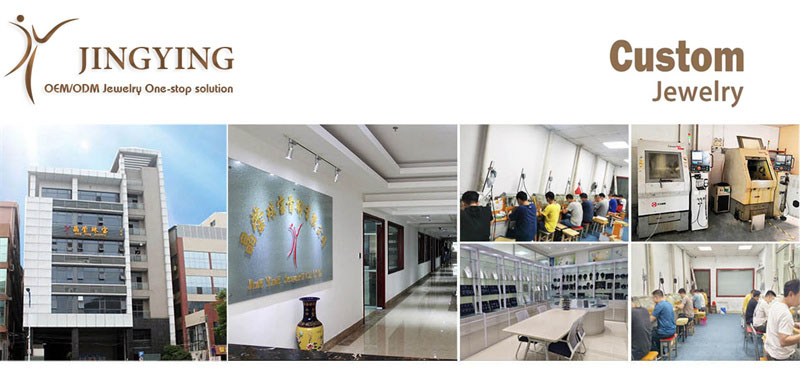
Guangzhou JINGYING Jewelry Co., Ltd., established in 1998, has spent over two decades mastering this delicate balance between artistic vision and industrial precision . Operating from a 15,000-square-meter facility, JINGYING has evolved from a small workshop into a premier OEM/ODM manufacturer for global brands, exporting to over 30 countries . But how exactly does a raw idea transform into a gleaming 925 sterling silver bracelet ready for the wrists of customers in New York, London, or Tokyo?
This article demystifies the intricate journey of custom design at JINGYING. We will explore the step-by-step alchemy that turns a client’s spark of inspiration into a tangible, wearable reality, examining the philosophy, technology, and craftsmanship that define the JINGYING experience.
1. The Foundation: Understanding the Medium (S925 Sterling Silver)
Before delving into the "how," one must understand the "what." The blank canvas for this creative journey is 925 sterling silver. The "925" designation is not arbitrary; it is a hallmark of quality recognized worldwide. It signifies that the metal is composed of 92.5% pure silver and 7.5% other metals, typically copper .
1.1 Why Sterling Silver?
Pure silver (99.9%) is too soft for the daily wear and tear required of a bracelet. It would bend, scratch, and lose its shape quickly. The addition of copper creates an alloy that retains the precious luster and anti-tarnish properties of silver while gaining the structural integrity necessary for longevity . For the wearer, this means a bracelet that is both beautiful and durable. Furthermore, when sourced and manufactured correctly by a reputable factory like JINGYING, it is hypoallergenic and safe for sensitive skin, complying with strict international regulations like the EU’s nickel-free standards and California’s Proposition 65 .
1.2 The "r china" Significance
For clients receiving products from JINGYING, the stamping is a critical final step. Often, bracelets will bear the "925" mark for purity, and potentially an "r china" mark. This "r" signifies a registered trademark and identifies the manufacturer of record, providing a crucial layer of traceability and authenticity. It is a promise from JINGYING to the end consumer that the piece is genuine and the manufacturer stands behind its quality .
2. Phase One: The Genesis of an Idea (Concept & Consultation)
The custom design process at JINGYING does not begin with machinery or metal, but with a conversation. This initial phase is arguably the most important, as it sets the trajectory for the entire project.
2.1 The Client's Voice
Clients arrive with visions in various forms. Some are seasoned jewelry buyers with detailed technical drawings or CAD files. Others are boutique founders with a napkin sketch and a passionate idea. Many are e-commerce entrepreneurs with a mood board curated from Pinterest and Instagram .
JINGYING’s design consultants are trained to listen not just to the specifications, but to the "why." Is this bracelet meant to be a daily talisman for a wellness brand? A statement piece for a high-fashion runway? A commemorative charm for a life event? Understanding the narrative behind the piece—whether for a brand identity or a personal story—is essential for infusing the design with authentic meaning .
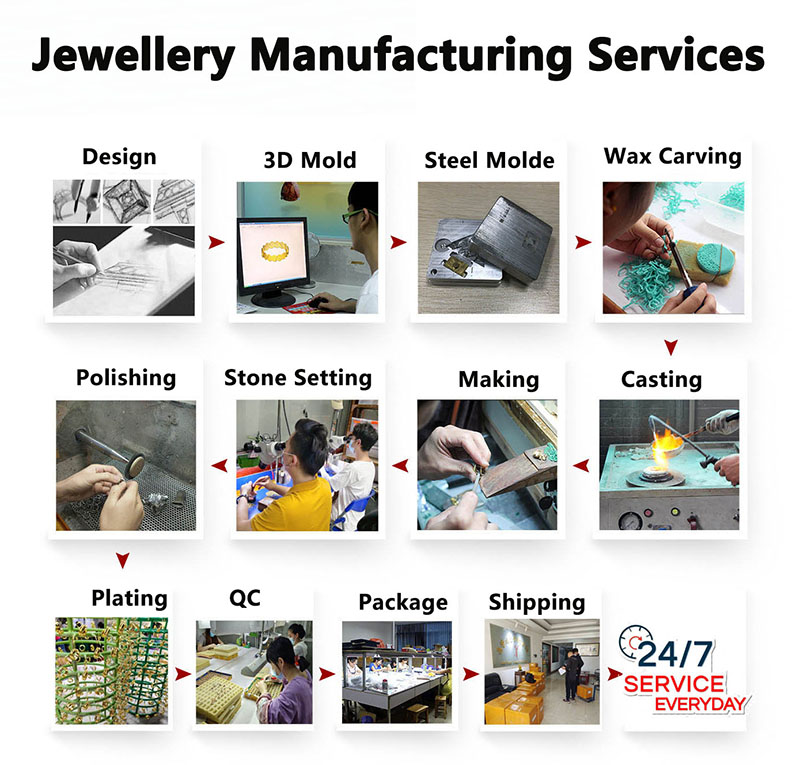
2.2 Technical Translation and Feasibility
Once the artistic direction is understood, the JINGYING team shifts into analytical mode. They assess the technical feasibility of the design. Can this intricate filigree pattern be cast successfully? Will this ultra-thin band be strong enough to withstand daily wear? Is this particular clasp the most functional choice for the bracelet's weight?
This is where the company's decades of experience become invaluable. They guide clients away from potential structural pitfalls and towards designs that are not only beautiful but also manufacturable and durable. They advise on material suitability, suggesting, for example, where a high-polish finish might be more practical than a delicate matte texture, or how to adjust a design to accommodate a specific gemstone cut .
3. Phase Two: Giving Form to Thought (Design & Prototyping)
With a clear concept and feasibility plan in place, the idea moves into the visualization stage. This is where the abstract becomes concrete.
3.1 Sketching and CAD Modeling
The journey often begins with hand-rendered sketches, capturing the fluidity and emotion of the design. These initial drawings are then translated into the digital realm using advanced software like Rhino, MatrixGold, and JewelCAD . JINGYING’s team of skilled CAD engineers creates hyper-realistic 3D renderings.
These digital models are far more than simple pictures. They are interactive blueprints that allow the client to view the bracelet from every angle, zoom in on intricate details, and see how light might play across different surface textures. The client can request revisions at this stage—adjusting the curve of a cuff, deepening an engraving, or resizing a charm—without any cost or time lost to physical materials .
3.2 The First Physical Breath: Prototyping
Once the 3D model is approved, it is time to bring the design into the physical world. For most designs, this involves creating a wax prototype through high-precision 3D printing . This wax model is an exact replica of the future silver bracelet. Holding this lightweight model allows the client to feel the scale and proportions in a way a screen cannot convey.
For simpler, stamped designs, a prototype might be created directly from a soft metal. This sample is then meticulously finished—polished, plated if required, and fitted with the correct clasp. This physical sample is shipped to the client for final evaluation. It is a critical "moment of truth" where the design is tested against the original vision. Once the client gives their stamp of approval, the design is locked and ready for mass production .
4. Phase Three: The Science of Creation (Manufacturing Processes)
With a perfected prototype as the master guide, the factory floor comes alive. This phase is a symphony of technology and handcraftsmanship, where raw silver ingots are transformed into hundreds or thousands of identical, high-quality bracelets.
4.1 Tooling and Mold Making
For designs destined for casting, the approved master model is used to create durable rubber molds. These molds will be used to produce the thousands of wax patterns needed for production. For stamped designs (like nameplates or simple bangles), custom stamping dies are precision-engineered from hardened steel. The quality of these tools is paramount; they are the bedrock of consistency in large-scale production .
4.2 Production Techniques
JINGYING utilizes several key manufacturing methods depending on the design's complexity:
-
Lost-Wax Casting: This ancient technique, perfected with modern technology, is ideal for intricate, three-dimensional designs like charms, detailed cuffs, and filigree work. Hot wax is injected into the rubber molds to create a "tree" of wax models. This tree is encased in a heat-resistant plaster (investment) and placed in a kiln. The wax burns out ("lost"), leaving a perfect cavity. Molten 925 sterling silver, heated to approximately 960°C (1760°F), is then forced into this cavity using vacuum or centrifugal force. Once cooled, the plaster is broken away to reveal the silver tree, which is then cut apart into individual rough castings .
-
Stamping: For flatter, more geometric designs, stamping is the method of choice. A strip of sterling silver is placed between the custom-made dies in a powerful press. With immense force, the die cuts and shapes the silver in a single action. This method is incredibly efficient for producing large quantities of consistent pieces like chain links, bangle halves, and simple pendants .
-
CNC Machining: For designs requiring absolute precision or hard angles that are difficult to cast, JINGYING employs Computer Numerical Control (CNC) machining. This process uses computer-guided drills and lathes to carve the bracelet directly from a solid block of silver, ensuring micron-level accuracy .
4.3 Assembly
Many bracelet styles—especially link bracelets or those with movable parts—require skilled assembly. Artisans use techniques like soldering to join individual links, attach clasps, and secure findings (like the bail for a charm). For high-precision work, laser welding is used, allowing for seamless joins without the excess metal or marks associated with traditional torch soldering .
5. Phase Four: The Revelation of Beauty (Finishing & Plating)
At this stage, the bracelet exists, but it is rough, matte, and unremarkable. The finishing process is where its true beauty and character are revealed.
5.1 Surface Refinement
-
Tumbling: The rough castings are placed in vibrating barrels with abrasive media and lubricants. This process smooths rough edges, polishes hard-to-reach areas, and work-hardens the metal, making it stronger .
-
Filing and Sanding: Skilled workers hand-file any remaining "sprues" (the nubs where the silver connected to the casting tree) and sand the surface to prepare it for polishing.
-
Polishing: Using a series of rotating wheels impregnated with progressively finer abrasive compounds (from coarse Tripoli to fine Rouge), the bracelet is brought to its final luster. This can be a mirror-like high polish, or it can be a soft, glowing satin/matte finish achieved through brushing or sandblasting .
5.2 Texturing and Oxidation
To add depth and dimension, special finishes can be applied. A hammered texture gives a rustic, light-catching surface. Oxidizing (using "liver of sulfur") darkens the silver, particularly in recessed areas, creating an antiqued or "patina" look that highlights engraved details and textures. The high points are then often polished back to bright silver, creating stunning contrast .
5.3 Plating for Protection and Color
While beautiful, sterling silver naturally tarnishes over time. To enhance durability and offer color variations, plating is applied. JINGYING uses a meticulous two-step process:
-
Base Plating: A thick layer of silver or another metal is applied to ensure a perfectly smooth surface.
-
Top Plating: A layer of the desired finish is applied, up to 3 microns thick. Options are vast and include 18k, 14k, or 24k gold, rose gold, rhodium, and black rhodium. Rhodium plating, in particular, is popular for silver as it provides an incredibly bright, white shine and is extremely tarnish-resistant .
5.4 The Final Touch: Stone Setting
If the design includes gemstones, this is when they are added. Whether it's the brilliance of cubic zirconia, the fire of moissanite, or the deep color of synthetic sapphires, setting the stones requires a steady hand and a keen eye.
-
Prong Setting: Tiny metal claws are bent over the stone to hold it securely.
-
Bezel Setting: A metal rim is pushed or burnished around the stone, offering a sleek look and maximum protection.
-
Pavé Setting: The surface of the bracelet is covered with small, closely-set stones.
JINGYING utilizes precision tools, including Japanese micro-inlaid machines, to ensure stones are set securely and symmetrically, minimizing the risk of loss .
6. Phase Five: The Gatekeepers of Quality (Inspection & Assurance)
At JINGYING, quality control is not a final step; it is an integrated philosophy that permeates every stage of production. However, before packaging, every single piece undergoes a rigorous final inspection.
6.1 The Inspection Checklist
A dedicated team of quality assurance specialists examines each bracelet against a strict checklist :
-
Material Verification: XRF (X-ray fluorescence) spectrometers are used to test the metal, confirming it is genuine 925 sterling silver and verifying the thickness of any plating.
-
Dimensional Accuracy: Calipers and gauges ensure the bracelet meets the exact specifications of the approved CAD design.
-
Visual Inspection: Under bright, magnifying light, inspectors check for surface imperfections, scratches, pits, or uneven polishing.
-
Stone Security: For set stones, a two-fold test is often employed: a manual check with a steel pin to ensure stones are tight, and a drop test from a height of 3 meters onto a hard surface to simulate accidental impact .
-
Clasp Functionality: Every clasp is opened and closed multiple times to ensure a secure, satisfying lock that won't fail for the end customer.
-
Plating Adhesion: A rub test with a professional cloth ensures the plating is durable and will not wear off prematurely .
7. Phase Six: The Brand Experience (Packaging & Delivery)
The bracelet is now perfect, but the JINGYING journey isn't over. The final step is presenting the piece in a way that enhances the brand's value.
7.1 Branding and Hallmarking
Before packaging, the bracelet receives its final identity. Using precise laser engraving or hydraulic stamping, the piece is marked with the required purity ("925") and any client-specific branding, such as a logo, a collection name, or the "r china" manufacturer's mark .
7.2 Custom Packaging
JINGYING offers extensive packaging services, recognizing that the unboxing experience is a vital part of modern retail, especially for e-commerce. Clients can choose from a range of options, all customizable with their branding:
-
Luxury boxes: Velvet, leatherette, or rigid paper boxes with foil stamping.
-
Eco-friendly options: Recycled paper boxes, biodegradable cello bags, and kraft paper pouches to appeal to environmentally conscious consumers .
-
Functional packaging: Padded mailers, jewelry pouches, and display trays for retail store use.
Barcodes, SKU labels, and even QR codes linking to care instructions or authenticity pages can be added, making the product ready for the shelf or the warehouse .
8. The JINGYING Advantage: OEM vs. ODM and Beyond
Understanding the distinction between JINGYING’s core services helps clarify how they work with different types of clients.
-
OEM (Original Equipment Manufacturing): The client comes with a fully realized design. JINGYING’s role is to execute that design flawlessly, handling the tooling, production, finishing, and quality control. This is ideal for established brands with in-house design teams .
-
ODM (Original Design Manufacturing): The client comes with a concept or a need. JINGYING’s in-house design team creates the product based on their expertise and existing design libraries, offering suggestions on style, material, and cost-efficiency. The client then chooses and brands the design as their own. This is perfect for startups, retailers looking for quick market entry, or brands expanding into new categories .
9. A Story of Partnership: From Concept to Sold Out
To truly understand the process, consider a typical collaboration. A U.S.-based lifestyle brand approached JINGYING with a vision for a six-piece nature-themed charm bracelet collection. They had mood boards but no technical drawings. Their needs were specific: a quick turnaround for the holiday season and eco-friendly packaging.
The JINGYING response was swift and comprehensive :
-
Consultation: The JINGYING team discussed the brand's identity and translated the nature theme into feasible design elements.
-
Design: Within four days, detailed CAD renderings of the charms—a tiny leaf, an acorn, a bird—were delivered for approval.
-
Sampling: Prototypes in 925 silver were created and shipped within 10 business days. The client approved with minor adjustments.
-
Production & Finishing: Mass production began immediately. The bracelets were cast, assembled, polished to a warm satin finish, and oxidized to highlight the organic details of the charms.
-
Packaging: The pieces were packaged in custom-printed recycled paper boxes with biodegradable pouches, as requested.
-
Delivery: The entire order was completed and shipped in under 30 days, well ahead of the holiday rush.
The Outcome: The brand’s collection sold out in six weeks. The partnership flourished, leading to a reorder three times the original size for Valentine's Day. The client now considers JINGYING their exclusive manufacturing partner .
Conclusion: Where Vision Becomes Legacy
The process of creating a custom design sterling silver bracelet at JINGYING is far more than a manufacturing checklist. It is a collaborative journey that bridges continents, marries ancient techniques with cutting-edge technology, and transforms abstract emotion into tangible, lasting beauty.
From the first spark of an idea in a client's mind to the final click of a clasp on a satisfied customer's wrist, JINGYING acts as a guardian of quality and a partner in creativity. For the independent designer launching a dream, the e-commerce entrepreneur building a brand, or the established label seeking a reliable ally, JINGYING offers a proven path.
In the cool, radiant gleam of a finished JINGYING bracelet, one sees not just polished silver, but the successful end of a complex alchemy—the alchemy of turning a vision into a legacy.