
JINGYINGda maxsus zargarlik buyumlari qancha turadi?
Kirish: Narx ortidagi haqiqiy savol
When a designer, butik egasi, or emerging brand approaches JINGYING (also styled as JingYing) for custom jewelry manufacturing, the first question is almost always the same: "U qancha bo'ladi?" The honest answer is that there is no single price tag. Custom jewelry pricing at JINGYING operates on a project-by-project basis, shaped by material choices, Dizayn murakkabligi, tosh tanlash, Buyurtma hajmi, and finishing requirements. What can be provided, ammo, is a transparent breakdown of the cost architecture—the raw material formula, the labor and design components, the sample fees, and the real-world price points that clients encounter.
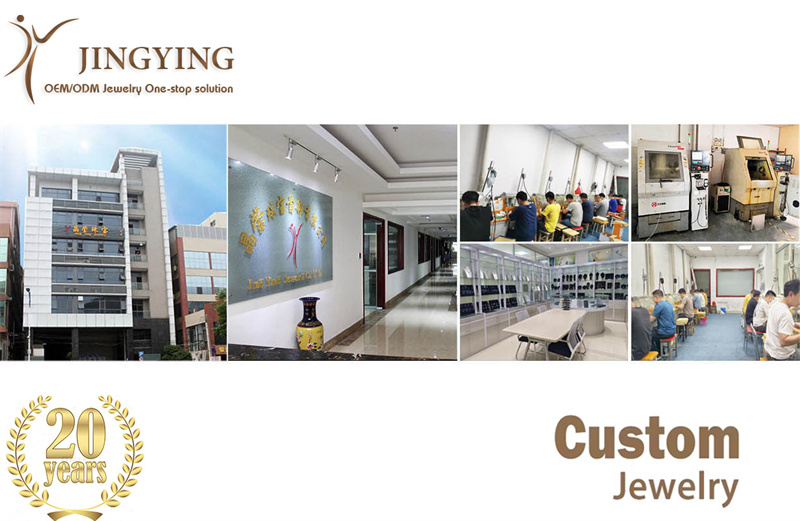
This article examines the full cost picture at JINGYING, from the basic pricing formula the company publishes to the variables that push a piece from a few dozen dollars into the thousands. Whether you are planning a small-batch sterling silver collection or a vermeil line destined for luxury retail, understanding these cost drivers is the first step toward building a realistic budget.
The Core Pricing Formula: What JINGYING Actually Charges For
JINGYING does not hide behind vague "contact us for pricing" til. In its published materials, the company explicitly states the cost composition for custom jewelry:
"The actual amount of gold used for the finished product × the gold price of the day + the size and size of the matching stone × unit price + mehnat narxi + design fee = total mosaic fee."
This formula, while written from a stone-setting perspective, captures the fundamental logic of JINGYING's pricing across all product categories. Every quote is an aggregation of four variables: metal weight and daily metal price, stone type and quantity, skilled labor time, and the intellectual work of design. A fifth factor—order quantity—then applies tiered discounts that can reduce the per-unit price substantially.
The daily metal price reference is significant. JINGYING pegs its metal cost to prevailing market rates (the London Bullion Market Association spot price for silver and gold), meaning that a quote generated in a period of high gold volatility will differ from one generated a month later. For clients planning production runs, this introduces a timing element: locking in a quote during a stable metal market can yield meaningful savings.
Materiallar tanlovi: The Largest Price Variable
Sterling Silver as the Base
The overwhelming majority of JINGYING's custom work begins with 925 sof kumush. The company has built its reputation over more than two decades as a specialist in sterling silver jewelry, and silver remains the most cost-accessible foundation for custom pieces. Kumush vazniga qarab baholanadi, and because JINGYING produces at scale—with monthly capacity reaching 50,000 pieces—its per-gram silver cost benefits from bulk sourcing.
Bu aytdi, "sof kumush" is not a single price point. JINGYING may use premium tarnish-resistant alloys, such as Argentium Silver or copper-free sterling, which carry a higher material cost than standard 925 silver but offer superior durability and a better base for gold plating. For clients targeting a higher-end market, this upgrade is often worthwhile; for cost-sensitive projects, standard sterling silver remains the default.
Gold Vermeil and Solid Gold Options
When a design calls for a gold appearance, JINGYING offers two paths: oltin vermeil (a thick layer of gold over sterling silver) va qattiq oltin (9K, 10K, 14K, or 18K). Vermeil is the more economical choice and has become a signature strength of the factory. To legally bear the "vsermmeil" designation in major markets such as the United States and the European Union, the gold plating must meet strict benchmarks. JINGYING applies a minimum of 2.5 microns of solid 18K gold over the silver base—significantly thicker than standard gold plating, which is typically less than 0.5 Mikronlar.
The cost of vermeil is driven by the thickness of the gold layer, the karat of the gold used, and the total surface area of the piece. A delicate pendant with a small surface area will consume less gold than a wide cuff bracelet, even if both are sterling silver at the core. Clients can specify 18K yellow gold, 18K white gold/rhodium, or rose gold variants, with color adjustments affecting the final quote only marginally.
Copper as a Budget Alternative
For projects with tight margin requirements—fast-fashion collections, promotional items, or test runs—JINGYING also produces copper-based jewelry with gold plating. Copper is the most affordable base metal, and while it lacks the intrinsic value and hypoallergenic properties of sterling silver, it allows brands to hit aggressive retail price points. JINGYING's copper pieces are typically positioned as "byudjet" yoki "kirish mumkin bo'lgan" options within its production range.
Tosh tanlash: Where Costs Escalate Quickly
If metal is the foundation, stones are the accelerant. Turi, o'lcham, sifat, and quantity of stones can multiply the cost of a piece several times over—or keep it remarkably modest.
Cubic Zirconia and Moissanite
For cost-conscious designs, kubik tsirkoniya (Tog 'jinsi) is the most economical stone option. JINGYING sources CZ in various grades, with AAA and AAAAA being the higher-quality tiers used in pieces destined for retail shelves. CZ pricing is relatively stable and, at the wholesale level, inexpensive enough that a fully CZ-set sterling silver piece can remain within a modest per-unit budget.
Moissanite occupies the middle ground. It offers greater brilliance and durability than CZ and passes standard thermal diamond testers, making it an attractive alternative for brands that want a diamond-like appearance without the natural diamond price tag. Moissanite costs more than CZ but substantially less than natural diamonds of comparable size.
Natural and Lab-Grown Diamonds
Natural diamonds represent the premium tier of JINGYING's stone offerings. Because diamonds are priced per carat based on the traditional four Cs (kesmoq, rang, ravshanlik, karatli), even a small shift in quality grade can alter a quote dramatically. Tennis bilaguzuk uchun, Masalan, the difference between 2.5mm and 4mm stones affects not only the size of each stone but the total number of stones required to complete the bracelet. A 4mm bracelet uses fewer stones than a 3mm bracelet of the same length, but each stone costs more—the net effect depends on the specific diamond market at the time of production.
Lab-grown diamonds have become an increasingly popular middle option, offering the visual and chemical properties of natural diamonds at a lower cost. JINGYING's capacity to work with lab-grown stones gives clients a spectrum of price points within the diamond category itself.
Semi-Precious and Colored Gemstones
JINGYING maintains direct relationships with mining regions in Sri Lanka, Janubiy Afrika, and other gem-producing areas, allowing it to source first-hand loose stones at competitive prices. This vertical integration means that colored gemstones—sapphires, yoqut, ametists, Tug'ilishlar, and zodiac stones—can be sourced at rates that reflect origin pricing rather than multiple layers of middlemen markup.
Mehnat, Dizayn, and the Human Cost of Craftsmanship
The Design Fee
JINGYING's design fee covers the conceptual and technical work that precedes production. This includes multiple design sketches, technical drawings to ensure structural integrity, 3D Modellashtirish va CAD (Kompyuterga yordam beradigan dizayn) ish, and expert consultation on stone selection and metal characteristics. The 3D modeling stage is particularly important: it allows both JINGYING and the client to visualize proportions, qoldiq, and wearability before any metal is cast.
If a client does not have a 3D model or CAD file, JINGYING can create one for an additional fee typically ranging from $30 ga $80, provided the client supplies precise 2D blueprints. For clients with existing CAD designs—common among established brands—this cost is eliminated, and production can move more quickly to the sampling stage.
Skilled Labor
Once a design is approved, the piece moves to the workshop, where skilled jewelers and setters bring it to life. JINGYING employs more than 800 malakali hunarmandlar, Muhandislar, va sifat nazorati bo'yicha mutaxassislar, and its stone-setting line alone includes approximately 25 malakali hunarmandlar. The labor component of pricing reflects the time-intensive nature of handcrafted work: metal cutting, topshirish, lehim, shakllantirish, Toshni sozlash, and finishing are all performed with manual precision.
Labor cost scales with complexity. A simple band ring requires far fewer artisan hours than a pavé-set pendant with hundreds of micro-stones. Micro-pavé settings, in particular—where dozens of 1mm to 2mm stones are placed tightly together—are among the most labor-intensive techniques, and this is reflected in the quote.
Sample Costs and Minimum Order Quantities
Before committing to a full production run, most clients request a sample. JINGYING's sample procedure is designed to validate the design, assess craftsmanship, and test market interest. Sample costs typically range from 300 ga 800 yunan (taxminan $40 ga $110 at prevailing exchange rates), depending on the complexity of the piece and the materials involved. This fee covers materials, mehnat, and tooling for the single sample; it is not a markup on the final production price but rather a standalone development cost.
The minimum order quantity (Mot) at JINGYING is notably low by industry standards. While traditional jewelry manufacturers often require 500 ga 1,000 dizayn uchun birliklar, JINGYING accepts orders starting at just 50 bo'lak. For some earring designs, the threshold can be as low as 25 bo'lak, and in certain cases even fewer. This low MOQ policy is a deliberate strategy to serve emerging designers, butik brendlari, and small businesses that cannot commit to large inventory volumes.
Real-World Price Points: What Clients Actually Pay
Entry-Level Sterling Silver Pieces
For a straightforward sterling silver piece with CZ stones—an earring, a simple pendant, or a thin chain bracelet—the per-unit cost at the 50-piece MOQ level typically falls in the range of $15 ga $50, depending on stone count and finishing requirements. A basic cubic zirconia jewelry design has been quoted as low as $8 per unit in some listings, though this represents the simplest end of the spectrum and may not include elaborate settings or premium finishes.
Mid-Range Vermeil and Moissanite Pieces
A vermeil tennis bracelet with moissanite or high-grade CZ stones represents the middle of the pricing spectrum. Based on JINGYING's published OEM pricing for vermeil tennis bracelets, per-unit costs scale with order volume:
-
251-500 dona: taxminan $120 Har bir bilaguzuk
-
501- 1000 dona: taxminan $105 Har bir bilaguzuk
-
1,001+ bo'lak: taxminan $95 Har bir bilaguzuk
-
Larger volumes: negotiable, potentially around $78 Har bir bilaguzuk
These figures illustrate the powerful effect of economies of scale. Moving from a 250-piece order to a 1,000-piece order reduces the per-unit price by roughly 20 foiz, and further volume discounts are available through negotiation.
High-End and Complex Custom Pieces
For gold pieces with complex details, natural diamonds, or elaborate stone settings, the per-unit cost rises sharply. Industry analysis suggests that for a workshop of JINGYING's caliber, relatively simple sterling silver pieces with basic labor and design may start at $800 ga $3,000 for a complete custom project (not per unit), while gold pieces with intricate detailing can range from $5,000 ga $15,000 yoki boshqa. These figures reflect the total project cost for a bespoke commission—one-of-a-kind pieces, nishon uzuklari, or high-jewelry designs—rather than per-unit OEM production pricing.
What Drives the Final Quote: A Summary of Cost Factors
To consolidate the variables discussed above, the following factors determine the final price of any custom jewelry project at JINGYING:
Metal type and weight. Sterling silver is the most affordable base; vermeil adds gold cost proportional to plating thickness and surface area; solid gold commands the highest metal cost. Stone type and quality. CZ is the budget option, moissanite the mid-range, and natural diamonds the premium. Colored gemstones fall across the spectrum depending on species and quality. Dizayn murakkabligi. Simple geometry requires less design and labor time; intricate pavé, Kanal sozlamalari, and sculptural forms increase both. Buyurtma miqdori. Tiered pricing rewards larger volumes, with per-unit costs declining as order size increases. Tugatish talablari. Rodium po'sti, two-tone finishes, qora rodium, and custom brand engravings or logos all add cost. Turnaround time. Standard production timelines exceed one month; rush orders may carry premium pricing.
Is JINGYING Expensive? A Question of Value Proposition
The question of whether JINGYING is "qimmat" depends entirely on the comparison point. Compared to mass-produced costume jewelry from low-cost overseas suppliers, JINGYING's prices are higher—but the products are not the same category. JINGYING produces genuine 925 sof kumush, thick vermeil meeting international standards, and pieces with micro-pavé settings accurate to 0.1mm. These are manufacturing specifications that cheap costume jewelry factories cannot match.
Compared to Western bespoke jewelers or high-end Italian workshops, JINGYING's pricing is highly competitive. The factory operates from Guangzhou, China's jewelry manufacturing hub, where labor and overhead costs are lower than in Europe or North America, while its quality control and finishing standards are designed to meet European and American market requirements. For brands that need to balance craftsmanship with margin, this combination of accessible pricing and export-grade quality is precisely the value proposition.
Bu 30 percent deposit requirement and the final payment upon inspection of finished products further structure the financial relationship: clients pay as they progress through the production cycle, with the ability to review and approve the work before the balance is due.
Xulosa: Budgeting for Custom Jewelry at JINGYING
For a brand or designer planning a custom jewelry project with JINGYING, a realistic budget framework might look like this. Avval, account for the sample fee (300–800 yuan) as a development cost. Ikkinchi, calculate the per-unit production cost based on metal weight, tosh tanlash, va murakkablik, then apply the appropriate volume tier. Uchinchi, factor in any design or CAD fees if the client does not supply finished technical drawings. To'rtinchi, consider finishing and packaging extras.
At the entry level, a small batch of simple sterling silver CZ earrings can be produced for a few dozen dollars per unit. At the mid-range, a vermeil moissanite tennis bracelet lands in the $80 ga $120 per-unit range at typical order volumes. At the high end, a bespoke gold and diamond commission can reach several thousand dollars for the finished piece. In every case, the cost is a direct reflection of the materials, the labor, the design intelligence, and the scale of production—not an arbitrary markup. Understanding these components is the key to negotiating effectively and building a production partnership that is both economically viable and creatively rewarding.