
How to Choose the Right Jewelry Manufacturer for Your Online 925 Sterling Silver Brand
giriiş: The Stakes of Getting It Right
For an online jewelry brand, the manufacturing partner you choose is not merely a vendor—it is the foundation upon which your product quality, marka itibarı, and customer retention are built. içinde 925 sterling silver segment specifically, the margin for error is narrow. Silver sits in an awkward middle ground: it commands higher material costs than base metals, yet its price point does not allow for the same tolerance of defects as fine gold jewelry. A manufacturer that delivers inconsistent plating, porous castings, or non-compliant alloys can generate a wave of returns, Olumsuz İncelemeler, and platform penalties that are disproportionately damaging for a digital-first business.
The global sterling silver market is expanding rapidly. Sterling silver benefits from affordability, cultural relevance, and design versatility, supporting higher unit sales and wider assortment testing than many competing categories. This growth has attracted a proliferation of manufacturers—and with them, a proliferation of pitfalls. This guide provides a structured framework for evaluating, vetting, and partnering with a 925 silver manufacturer suited to the demands of online retail.
1. Compliance Comes First, Not Last
Before you discuss design, fiyatlandırma, or MOQ, you must confirm that a manufacturer can produce jewelry that legally enters your target markets. Compliance is not a post-production checkbox; it is a production capability that depends on material sourcing, alloy control, and surface finishing processes.
For sellers targeting the European Union, nickel release is the single most critical compliance issue. Under REACH Annex XVII, Giriş 27, the nickel-release limit is 0.5 μg/cm²/week for most skin-contact jewelry, while piercing posts have a stricter 0.2 μg/cm²/week limit. Critically, silver purity alone does not guarantee EN 1811 uygunluk. Even a 925 silver base can fail if the alloy contains trace nickel or if the plating process introduces nickel migration. Your manufacturer should be able to provide EN 1811 test reports for finished products, not merely material certificates.
For the Chinese market, the new GB 28480-2026 standart, effective April 2027, represents a significant expansion of safety requirements. It moves beyond simple harmful-element limits to establish a multi-dimensional system covering mechanical safety (small parts, keskin kenarlar, magnetic hazards), chemical safety (tightened lead limits, new restrictions on phthalates, formaldehyde, and short-chain chlorinated paraffins), and labeling requirements. Suppliers serving both domestic and export markets must demonstrate they are preparing for this transition.
A manufacturer that proactively maintains REACH, RoHS, and EN 1811 documentation—and can produce current test reports from accredited third-party laboratories—signals both technical competence and market awareness. Ask for the actual reports, not just a claim of compliance.
2. Distinguish Between Factories and Trading Companies
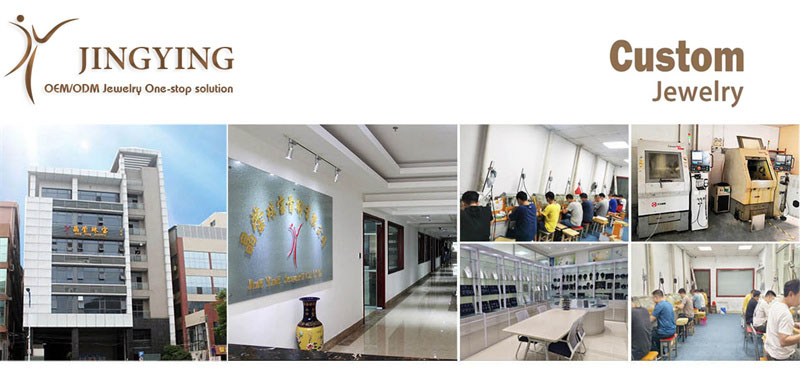
A substantial proportion of suppliers listed on B2B platforms present themselves as manufacturers but are in fact trading companies or sourcing intermediaries. This distinction matters enormously for quality control, pricing transparency, and accountability. A genuine factory can demonstrate: a registered manufacturing entity (not merely a trading license), a factory address that matches production activity, verifiable production equipment and assembly lines, and a workforce consistent with claimed output capacity.
Verification can be conducted remotely. Request the business license and cross-reference the registered address with industrial park records or mapping services. Ask for a real-time video walkthrough of the production floor—genuine factories will have the noise, aktivite, and imperfection of an actual workshop, while trading offices tend to look like showrooms. For higher-stakes orders, a third-party factory audit (through SGS, Bureau Veritas, or a specialized sourcing agent) provides independent verification.
3. Evaluate OEM and ODM Capabilities Against Your Business Model
The choice between OEM and ODM is not merely operational—it defines your brand's competitive position. OEM means you provide the design, çizimler, or specifications, and the factory manufactures to your requirements. This model costs more upfront (mold and development fees) but grants design exclusivity. ODM means the factory has pre-existing designs and molds; you select from their catalog and order production quantities. There are no mold fees, making it suitable for testing new designs before committing to custom development.
A capable OEM/ODM partner should support the entire production chain: design collaboration, 3D Modelleme, prototip, döküm, parlatma, kaplama, taş ayarı, kalite kontrolü, ve ambalaj. For online brands managing rapid assortment turnover, the ability to move seamlessly between ODM (for trend-responsive testing) and OEM (for signature pieces) is a significant operational advantage.
4. Assess Quality Systems with Specificity
"Yüksek kalite" is meaningless without verifiable criteria. When evaluating a 925 gümüş üreticisi, examine these concrete dimensions:
Material transparency. Ask for the silver content verification method. X-ışını floresanı (XRF) testing is the industry standard for rapid, non-destructive silver content analysis, with typical precision of ±1‰. A manufacturer should provide batch-level XRF reports, not a single certificate from years ago.
Kaplama dayanıklılığı. For rhodium-plated or gold-plated silver, request plating thickness measurements and accelerated corrosion test results. Standard tests include salt spray testing (typically 24–48 hours for fashion jewelry, with premium suppliers offering 240-hour results) and coating adhesion testing per ASTM standards.
Casting and finishing quality. Review high-resolution images or physical samples for porosity, surface finish consistency, solder joint integrity, and stone-setting security. Weak factories rely on visual inspection alone; strong factories use measurement tools, tolerans, and documented defect-tracking systems.
QC infrastructure. Look for in-process inspection at multiple stages (incoming materials, döküm, parlatma, ön kaplama, post-plating, final assembly), a dedicated QC team, and willingness to permit third-party audits. ISO 9001 certification is a useful baseline, though many agile exporters operate rigorous systems without it.
5. Understand the Real Cost Structure
The lowest quoted unit price is rarely the lowest actual cost. Several hidden factors frequently erode margins for first-time buyers.
Sample and mold fees. Most factories charge sample fees (often $50–$200 per design, with 3D modeling fees around $100) and mold charges ($30–$100 per design). Some factories will refund these upon reaching volume thresholds. Clarify refund conditions before committing.
MOQ economics. MOQs are not arbitrary; they reflect the fixed costs of machine calibration, labor allocation, and material batch preparation. A factory offering an extremely low MOQ may compensate through higher unit pricing or reduced QC intensity. Gümüş takılar için, typical MOQs range from 25 ile 50 Tasarım başına parçalar, though more flexible suppliers may accept 10–20 pieces for initial testing.
Currency and payment friction. When paying Chinese suppliers in USD, buyers typically absorb 1.5% ile 4% in FX markups plus $25–$75 per transfer in intermediary fees. Some suppliers add a 2–3% surcharge for USD invoicing to offset their own conversion costs. Factor these into your landed-cost calculations.
Customs and duties. Silver jewelry entering the EU or US attracts import duties (genellikle civarında 2% of declared value for silver jewelry in the UK/EU context), and these compound with shipping, sigorta, and compliance testing costs. Always calculate landed cost, not factory-gate cost.
6. Align with 2026 Manufacturing Trends
The sterling silver manufacturing landscape is evolving in ways that directly affect brand positioning. Two trends warrant particular attention when selecting a partner.
Recycled silver capability. Consumer demand for sustainability has made recycled silver a meaningful differentiator. Manufacturers incorporating recycled materials must source from refiners holding RJC Chain of Custody certification, which traces recycled content through every stage of the supply chain. If sustainability is part of your brand narrative, verify that your manufacturer can provide CoC documentation for recycled silver batches—not merely a general sustainability claim.
Gelişmiş üretim teknolojisi. 3D printing has matured considerably, offering design flexibility that traditional casting cannot match, particularly for organic or geometrically complex forms. Laser welding and PVD plating technologies improve joint strength and coating durability. A manufacturer investing in these capabilities is better positioned to execute contemporary design briefs with consistency.
7. Protect Your Intellectual Property Before You Share
IP theft in jewelry manufacturing is a documented reality. Before sharing any design files, CAD models, or proprietary specifications, execute a signed non-disclosure agreement. The IP ownership clause should state explicitly that all designs, CAD dosyaları, kalıplar, and derivative works remain your exclusive property, and that the manufacturer may not produce, sell, or distribute any product based on your designs to third parties.
For designs with commercial significance, consider registering them before production begins. Document the design development process (dated sketches, CAD file timestamps, email correspondence) to establish provenance. If a manufacturer resists signing an NDA or requests broad production rights, treat this as a disqualifying signal.
A Practical Screening Framework
When evaluating potential manufacturers, prioritize these indicators in order:
| Priority | Indicator | Red Flag |
|---|---|---|
| 1 | Verifiable factory status with production address | Only a trading office; evasive about facility |
| 2 | Current EN 1811 / ULAŞMAK / GB compliance documentation | "Compliant" claims without test reports |
| 3 | Documented multi-stage QC process | Visual inspection only; no measurement data |
| 4 | Transparent sample/mold fee structure with refund terms | Undisclosed fees added after sampling |
| 5 | Willingness to sign NDA and IP ownership clause | Resistance to written IP protection |
| 6 | Realistic MOQ aligned with your testing budget | Very low MOQ paired with very high unit price |
| 7 | Responsive communication (altında 24 saat) | Delayed replies before the order, worse after |
Çözüm
Choosing a 925 silver manufacturer for an online brand is an exercise in risk management as much as cost optimization. The right partner reduces your exposure to compliance failures, quality inconsistencies, and supply chain disruptions—factors that disproportionately harm digital-first businesses where reviews and return rates directly affect platform visibility and customer acquisition costs.
The framework above is deliberately conservative: it prioritizes verifiable evidence over promises, and long-term partnership potential over short-term price advantage. Gelişmekte olan markalar için, starting with a manufacturer that supports moderate MOQs and transparent development costs is often wiser than chasing the absolute lowest quote from a supplier whose reliability is unproven. The goal is not to find the cheapest manufacturer. It is to find the one whose quality systems, compliance posture, and communication discipline allow you to build a brand that customers trust—order after order.