
Jinging: The Custom Brass Jewelry Manufacturing Partner for Brands and Wholesalers
The global fashion jewelry market is undergoing a structural shift. With precious metal prices volatile and consumer demand bifurcating between accessible trend pieces and investment-grade fine jewelry, brass has emerged as the strategic material of choice for brands and wholesalers seeking to balance perceived value, design freedom, and margin protection. At the center of this shift stands JINGYING, a Guangzhou-based custom brass jewelry manufacturer that has spent more than two decades refining the craft of OEM and ODM production for global brands, tasarımcılar, and wholesale merchants.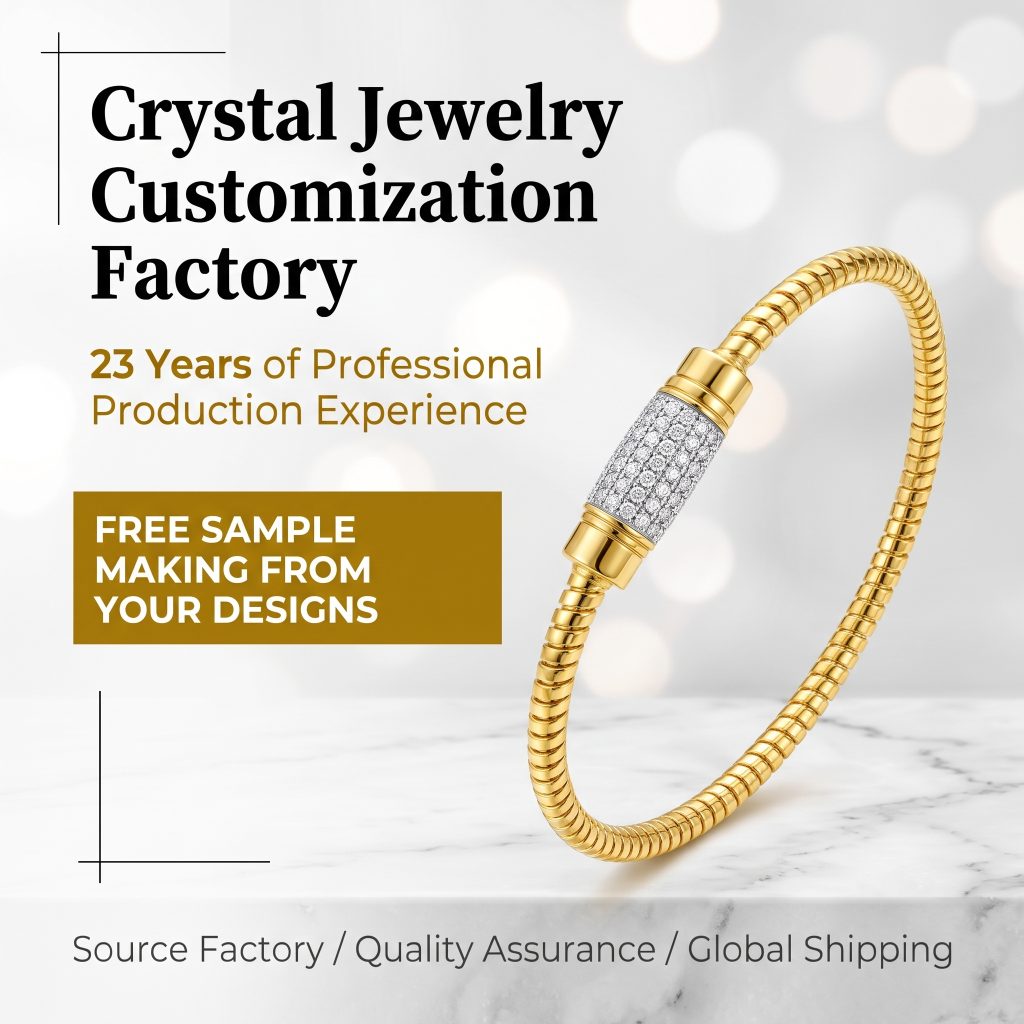
This article examines why brass has become indispensable to the modern jewelry supply chain, how JINGYING’s integrated manufacturing model addresses the specific pain points of brands and wholesalers, and what distinguishes the company as a long-term production partner in one of the world’s most concentrated jewelry manufacturing clusters.
Neden Pirinç: The Strategic Case for Brands and Wholesalers
Brass—an alloy primarily of copper and zinc—occupies a unique position in the jewelry material hierarchy. It is not a precious metal, yet it possesses physical properties that make it superior to cheaper alternatives like zinc alloy for fashion and demi-fine collections. Brass has a specific gravity of approximately 8.4–8.7 g/cm³, giving finished pieces a substantial, premium hand-feel that hollow zinc castings cannot replicate. This weight translates directly into perceived value at the point of sale, whether on a boutique display or in product photography for e-commerce.
The material’s malleability is equally consequential. Brass can be cast, damgalı, and formed into intricate filigree, slender chain links, and detailed pendants without the brittleness that plagues zinc alloys at high levels of design complexity. For wholesalers and brands that compete on design differentiation, this expands the creative vocabulary available at accessible price points.
From a cost-structure perspective, brass sits in a commercially optimal band. Relative to zinc alloy, it costs roughly 1.2 ile 1.5 times more, but offers markedly superior plating compatibility, yapısal bütünlük, and longevity. Relative to 925 som gümüş, it costs a fraction—roughly one-third to one-fourth for equivalent designs—while accepting gold, gül altın, rodyum, and antique finishes with excellent adhesion. In the $15–$45 retail fashion segment, where brass jewelry consistently delivers the strongest perceived value-to-cost ratio, this economics is difficult to ignore.
Market data confirms the shift. Industry reports indicate that a significant share of buyers—by some trade estimates, kadar 60% of clients previously sourcing silver—have migrated toward brass due to silver price volatility, with brass order volumes rising sharply year over year. Mid-tier fashion assortments are increasingly built on brass and plated foundations, while silver is being reserved for higher-tier counters. For brands and wholesalers, the question is no longer whether to include brass, but how to source it with the consistency and quality that protect brand equity.
JINGYING at a Glance: Bir Kaynak Fabrikası, Not a Trading Company
JINGYING—formally Guangzhou Jingying Jewelry Co., Ltd.—was established in 1998 in Panyu District, Guangzhou, the heart of China’s most concentrated jewelry manufacturing ecosystem. Over more than two decades, the company has evolved from a workshop operation into a vertically integrated OEM/ODM manufacturer serving brands, tasarımcılar, and wholesale merchants across Europe, Kuzey Amerika, ve ötesinde.
The distinction between a source factory and a trading company is central to JINGYING’s value proposition. The company operates its own production facilities—reported at two plants in Guangzhou and Wuzhou, with a workforce exceeding 200 skilled workers and monthly production capacity reaching up to 100,000 pieces for certain product lines. Because JINGYING owns its production equipment, technical team, and quality-inspection infrastructure, it eliminates the intermediary markups, communication latency, and quality blind spots that characterize trading-company supply chains. The direct factory-to-client model compresses lead times, stabilizes unit costs, and gives brands direct access to the people actually making their products.
JINGYING’s product scope covers the full fashion and demi-fine spectrum: halka, kolyeler, bilezikler, küpe, kolye, and brooches in brass, 925 som gümüş, and 9K/10K/14K/18K gold, with inlays of cubic zirconia, değerli taşlar, and synthetic crystals. For brass specifically, the company supports gold plating, rose-gold plating, antique finishing, emaye işi, and micro stone setting—capabilities that allow a single manufacturing partner to execute an entire trend-driven collection without splitting orders across specialized vendors.
OEM ve ODM: Two Pathways to Market, One Integrated Partner
JINGYING’s service architecture is organized around two distinct but complementary production models, each designed for a different stage of brand development and creative readiness.
For brands with proprietary designs, the OEM pathway provides pure custom production from client-supplied specifications. The process begins with design sketches, referans görüntüler, veya CAD dosyaları. JINGYING’s technical team then executes 3D modeling, kalıp açma, örnekleme, and mass production, incorporating brand-specific requirements such as logo engraving, custom clasp mechanisms, tescilli kaplamalar, and exclusive packaging. Material test reports and certification documentation can be supplied upon request, a critical requirement for brands selling into regulated markets. Çok önemli, OEM clients retain full ownership of their designs; JINGYING operates under binding non-disclosure agreements and does not sell client-specific designs to third parties.
Gelişmekte olan markalar için, boutique wholesalers, and designers without in-house product development teams, the ODM pathway lowers the barrier to market entry. JINGYING maintains an in-house design team that tracks global fashion trends and develops ready-to-market brass, gümüş, and gold collections each season. Clients can select existing designs, modify details such as stone color, Kaplama bitirmek, zincir uzunluğu, or motif scale, and apply their own branding. This model dramatically shortens the development cycle—what would otherwise require months of design iteration and sampling can be compressed into weeks—allowing smaller operators to test trends and capture seasonal demand without committing to full-scale custom development.
Both pathways are supported by a full-chain service infrastructure that extends beyond manufacturing: tasarım değerlendirmesi, sampling and confirmation, toplu üretim, multi-stage quality control, özel ambalaj, and logistics coordination. For a wholesale buyer managing dozens of SKUs across multiple collections, this single-point accountability eliminates the coordination burden of juggling separate casting, kaplama, taş belirleme, and packaging vendors.
Kalite kontrolü: The Non-Negotiable Differentiator
In brass jewelry, where the base metal is inexpensive and the perceived value rests almost entirely on surface finish, yapısal bütünlük, and plating durability, quality control is not a supporting function—it is the product. JINGYING’s quality system is built around multi-stage inspection that begins with raw material verification and continues through final packaging.
Brass pieces are cast using precision methods, then carefully polished to eliminate sharp burrs and surface irregularities before plating. Plating thickness and adhesion are monitored, because insufficient plating on brass is the root cause of the green-skin discoloration and premature tarnishing that destroy customer trust in fashion jewelry. JINGYING applies plating finishes designed for durability and color consistency, with the option of anti-tarnish treatments where appropriate. Every finished brass piece undergoes inspection for plating quality, structural stability, and ear-post safety before it is cleared for packing.
The company reports that its quality systems have achieved a 99.97% pass rate across its testing protocols, a figure that matters directly to wholesale buyers: higher first-pass yield means fewer returns, fewer customer-service escalations, and more predictable sell-through. For brands selling into the United States and European Union, JINGYING can provide material analysis reports and coordinate third-party testing to verify compliance with lead-free and nickel-free requirements, including California Proposition 65 and EU REACH standards—documentation that is increasingly non-negotiable for marketplace sellers and brick-and-mortar retailers alike.
This quality infrastructure is reinforced by JINGYING’s location within the Panyu jewelry cluster. Panyu accounts for roughly 30% of the global jewelry market by some measures and approximately 70% of Hong Kong and Macau’s re-export jewelry trade. The density of specialized suppliers, testing laboratories, and skilled craftspeople in the region gives manufacturers like JINGYING access to capabilities and accountability mechanisms that are difficult to replicate in isolated factory settings.
Confidentiality and Brand Protection
Markalar için, the manufacturing relationship is also a trust relationship. Design leakage—whether through unscrupulous factories selling client designs on open marketplaces or through uncontrolled subcontracting—is one of the most serious risks in offshore jewelry production. JINGYING has structured its operations around a “black box” manufacturing model: the factory produces for the brand, but the brand’s designs do not become part of the factory’s public catalog or available to competing buyers.
This commitment is operationalized through binding non-disclosure agreements executed before any design files, CAD models, or reference samples are shared. The NDA governs the entire production process, from sampling through bulk manufacturing, and is treated as a fundamental business practice rather than a legal formality. OEM clients retain exclusive rights to their designs, and JINGYING does not leak, resell, or repurpose client-specific intellectual property for third parties. For a brand investing in original design as a competitive moat, this confidentiality discipline is as important as the physical quality of the product itself.
JINGYING'da çalışıyor: What Brands and Wholesalers Should Expect
A production partnership with JINGYING typically follows a structured, stage-gated process designed to reduce risk and align expectations before capital is committed to tooling and bulk manufacturing. The workflow moves from initial consultation and design evaluation, through 3D rendering and wax mold creation, to sample confirmation, seri üretim, multi-stage quality inspection, özel ambalaj, and final logistics.
JINGYING accommodates both small-batch trial orders and large-volume wholesale programs, a flexibility that serves the full spectrum of buyers from independent boutiques testing a new brass collection to established wholesale distributors replenishing high-turnover SKUs. The company’s monthly capacity—reported at up to 50,000 pieces for silver production and up to 100,000 pieces for certain product categories—provides headroom for seasonal peaks and promotional launches without compromising per-unit inspection protocols.
For buyers comparing suppliers, the practical due-diligence questions are straightforward: Does the manufacturer own its production equipment, or is it outsourcing? Can it provide material and plating documentation for compliance-sensitive markets? Does it have a written confidentiality protocol? Can it show a track record across both custom OEM and trend-driven ODM work? JINGYING’s answers to these questions—two decades of operation, vertically integrated facilities, export experience across multiple regulated markets, and a confidentiality-first operating model—position it as a low-risk entry point for brands and wholesalers building or expanding a brass jewelry program.
Çözüm: A Manufacturing Partner for the Brass Era
The jewelry industry’s center of gravity is shifting toward materials that reconcile design ambition with commercial discipline. Pirinç, with its density, castability, plating compatibility, and cost profile, is no longer a compromise—it is a deliberate strategic choice for brands and wholesalers building responsive, trend-aligned assortments. What separates a successful brass program from a problematic one, Yine de, is not the material itself but the manufacturing discipline behind it: kaplama bütünlüğü, structural consistency, regulatory compliance, and design confidentiality.
JINGYING has built its operations around precisely those disciplines. From its base in the Panyu jewelry cluster, the company combines source-factory economics, dual OEM/ODM pathways, multi-stage quality control, and a confidentiality-first engagement model into a single manufacturing relationship. For brands and wholesalers evaluating where to place their next brass collection, the relevant question is not whether Chinese manufacturing can deliver—it is whether the specific partner can deliver with the consistency, accountability, and brand protection that a competitive jewelry business requires. On that measure, JINGYING presents a substantive, verifiable case.