
The Economics of Adornment: A Comprehensive Analysis of Dawn 14K Gold Earrings OEM Cost
The global jewelry industry is a complex ecosystem where art meets commerce, and nowhere is this more apparent than in the world of Original Equipment Manufacturing (OEM). For brands looking to launch a line of Dawn 14K Gold Earrings—a name that evokes the image of delicate, golden light—understanding the intricacies of OEM cost is not merely an accounting exercise; Это стратегический императив. The final price per piece is not a single number but the sum of interconnected variables: the volatile dance of commodity markets, the precision of craftsmanship, the scale of production, and the subtle economics of global supply chains. This article deconstructs the multifaceted cost of OEM manufacturing for 14K gold earrings, providing a comprehensive breakdown for brand owners, procurement specialists, and entrepreneurs navigating the jewelry landscape.
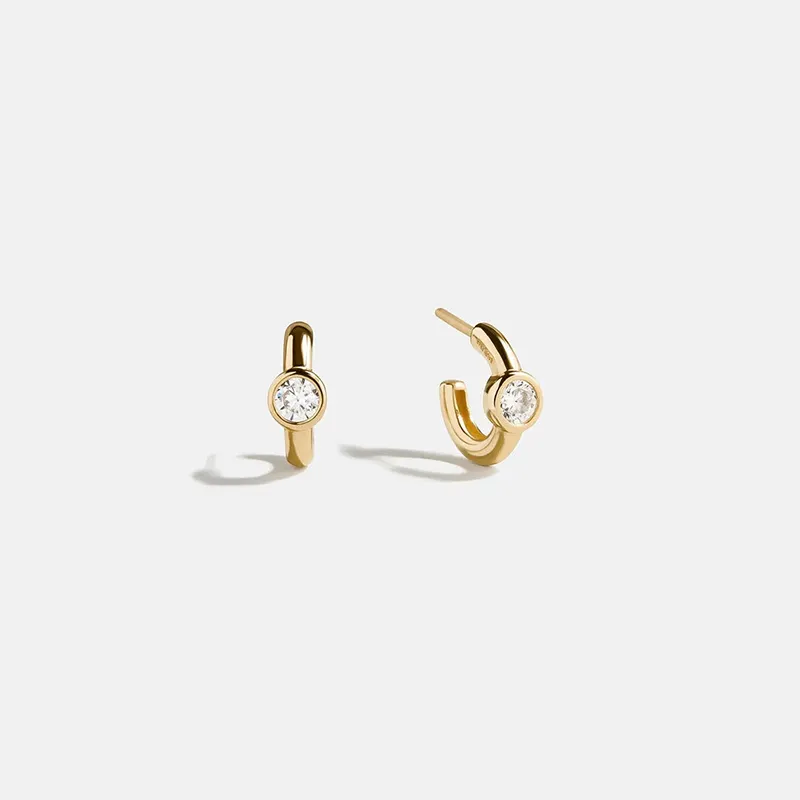
Фонд: Raw Material Costs as the Primary Driver
The most significant and non-negotiable component of the OEM cost for 14K gold earrings is the raw material itself. For a product defined by its 14K gold content, the metal price is the bedrock upon which all other costs are built.
Understanding 14K Gold Purity and Pricing
Fourteen-karat gold is an alloy consisting of 58.3% чистое золото и 41.7% Другие металлы (обычно медь, серебро, или цинк) to enhance durability. Its cost is directly tied to the global spot price of gold, a figure that fluctuates daily based on macroeconomic factors, geopolitical events, currency movements, and industrial demand. When a manufacturer provides a quote for a 14K gold earring, they do not base it solely on the "spot price" displayed on financial news networks. As industry experts note, "nobody can actually get tangible, physical gold or silver for those prices". There is a premium added to cover the cost of refining, alloying, and fabricating the metal into a usable form known as "литейное зерно".
For a pair of earrings—let's assume a modest weight of 5 grams total for the pair—the raw gold cost alone can be substantial. If the spot price of pure gold is approximately $65 за грамм, then the pure gold content in 5 grams of 14K alloy is 2.915 граммы. По этой цене, the intrinsic gold value alone is nearly $190. This is before any premium, manufacturing costs, or profit margins are added.
Wastage and Process Loss
A critical, often overlooked factor in material costing is "растрата" or process loss. During the manufacturing process—whether it is casting, резка, подача, or polishing—a percentage of the precious metal is lost as fine dust or scrap. Industry standards typically account for a wastage factor of 5% к 10% или больше, depending on the design complexity and production methods. Manufacturers usually pass this cost on to the buyer, adding it as a percentage of the total gold value. As one industry report states, the manufacturer charges "anywhere between 2% и 10% of the gold price as 'wastage' to account for the gold lost during the process". For a high-value product like 14K gold earrings, this can add a significant sum to the final material cost.
Дизайн, Оснастка, and the Non-Recurring Engineering (Нр) Расходы
Before a single pair of earrings is mass-produced, the design must be translated from concept to manufacturable reality. This phase incurs one-time costs known as Non-Recurring Engineering (Нр) or tooling fees, which are amortized across the total order quantity.
САПР-дизайн и прототипирование
The process begins with Computer-Aided Design (Атмосфера). A skilled technician creates a highly detailed 3D model of the earring, specifying every curve, contour, and connection point. The cost for this service typically ranges from $100 к $500 за дизайн. Following this, a physical prototype is created, often using a high-resolution 3D printer to produce a wax or resin model. This prototype is used for approval and forms the basis for the subsequent mold-making process. Prototyping can cost an additional $50 к $300.
Mold Making and Its Economic Impact
The creation of the mold is a pivotal NRE expense. The mold, typically made of rubber or silicone, is used to create multiple wax copies of the earring for the casting process, известный как "lost-wax casting." The complexity of the mold—whether the design is simple or features intricate filigree—directly affects the cost. Simple designs might require a mold costing between $100 и $300, while highly complex pieces can push the cost significantly higher.
For a large order, these NRE costs are negligible per unit. Например, а $1,000 NRE cost spread over 5,000 pieces adds only $0.20 за единицу. Однако, for a small-batch order of 100 куски, that same cost balloons to $10 за единицу, dramatically altering the final price.
Процесс производства: Труд, Техника, and Complexity
The transformation of raw gold into a polished, finished earring is a labor-intensive process that constitutes the second major pillar of OEM cost. The techniques used and the level of craftsmanship required are primary determinants of the final price.
Методы производства: Ручной работы против. Машинный
The choice between handcrafted and machine-made production significantly influences labor costs. Handcrafted jewelry, which involves manual sawing, подача, пайрь, и отделка, commands a premium due to the time and expertise involved. "Custom pieces are often handcrafted, which increases labor costs and attention to detail". Наоборот, machine-stamped or cast pieces are more efficient for mass production, resulting in lower per-unit labor costs. Для "Dawn" Серьги, which may feature detailed design elements, a hybrid approach using casting for the main structure and hand-finishing for details is common.
Casting and Assembly
The most common method for gold jewelry is investment casting, или "lost-wax casting." This process involves creating wax trees of the earring models, investing them in a plaster-like material, burning out the wax in a kiln, and then pouring molten gold into the resulting cavities. The cost of casting is typically calculated per gram of metal and can range from $0.15 к $0.30 за грамм. После кастинга, the individual earrings are cut from the "дерево," and components like posts and clutches are soldered on. Assembly can add $0.10 к $0.80 за штуку, depending on the complexity.
Отделка: The Art of the High Polish
The defining aesthetic of fine jewelry lies in its finish. The process of buffing, полировка, and creating a mirror-like "высокий поли" surface is one of the most labor-intensive steps. It requires skilled artisans who use specialized wheels and compounds—from "Триполи" for cutting to "Rouge" for the final shine. High-quality finishing can add $0.10 к $0.25 or more per piece in labor alone.
For 14K gold, while rhodium plating is less common than for white gold, the finishing process is equally crucial. Some manufacturers offer a "clear rhodium" finish to enhance durability and shine without altering the gold color, which can add a premium of $0.50 к $1.50 за штуку.
The Impact of Gemstones and Enhancements
Если "Dawn" earrings are to feature gemstones—whether diamonds, Моссанит, or zircon—this adds another layer of complexity and cost. Тип, размер, качество, and setting method of the stone significantly impact the final price.
Stone Material Costs
The variation in stone costs is immense. For accent stones, Кубическая циркония (Сумка) is a cost-effective option, with a small 1.5mm stone costing as little as $0.10 к $0.30 за штуку. Моссанит, a lab-grown diamond alternative with superior brilliance, sits in a mid-range price bracket. Natural diamond accents, even tiny melee diamonds, are the most expensive, with a single 0.01-carat stone potentially costing $5 к $20, dramatically increasing the total cost per pair.
Техники установки камня
Beyond the cost of the stone itself, the method used to set it in the gold requires specialized labor. Simple bezel or prong settings are relatively efficient, while intricate techniques like pavé or invisible settings demand a much higher level of skill and precision, significantly increasing labor costs.
Экономия масштаба: The MOQ Factor
Perhaps the most powerful lever in OEM pricing is the Minimum Order Quantity (Могил). The cost per unit is inversely proportional to the order volume due to economies of scale. NRE costs are amortized, labor becomes more efficient with repetition, and manufacturers offer lower prices for bulk material purchases.
The data illustrates this clearly. A similar pair of gold-plated sterling silver earrings from an OEM supplier is priced at $7.07 for a single unit but drops to $6.65 for orders of 60 или больше. This price sensitivity is amplified for solid 14K gold products. A small workshop might quote a high per-unit cost for an order of 100 куски, while a large manufacturer can offer a significantly lower price for an order of 10,000+ единицы.
Regional Cost Comparisons and the OEM Landscape
The geographic location of the manufacturer is a major cost determinant, primarily due to differences in labor costs.
| Страна/регион | Estimated Hourly Labor Rate | Ключевые характеристики | Suitability |
|---|---|---|---|
| Китай | $3 - $6 | Экономически эффективный, high volume, versatile manufacturing capabilities. | Ideal for mid-to-large scale production; offers competitive pricing across most design types. |
| Индия | $2 - $5 | Strong tradition in gemstone cutting and gold jewelry; более низкие затраты на рабочую силу. | Excellent for designs heavily featuring gemstones or intricate gold work. |
| Таиланд | $4 - $8 | Known for high-quality craftsmanship and attention to detail. | A good middle-ground option for brands that balance cost with a higher degree of artisan finish. |
| Италия | $15 - $30 | Epicenter of luxury jewelry design and ultra-high-end craftsmanship. | Suitable for luxury brands whose market positioning justifies a significantly higher cost. |
Cost Synthesis: A Hypothetical Model for "Dawn" 14К-серьги
To synthesize these factors into a tangible estimate, let us construct a hypothetical scenario for a 5,000-piece order of "Dawn" 14K Gold Earrings. The design is a moderate 5-gram per pair, with a high-polish finish and a small CZ accent stone.
-
Стоимость сырья (Золото): 5глин * 58.3% pure gold content = 2.915g pure gold. At a spot price of $65/g, содержание золота $189.47. Добавление 10% wastage and fabrication premium brings this to ~$208.42 за пару.
-
Стоимость драгоценного камня: Two 2mm CZ stones: ~$0.50 за пару.
-
Производство & Отделка: Кастинг, сборка, полировка, и контроль качества: ~$2.00 - $4.00 за пару (amortizing NRE costs).
-
Упаковка & Брендинг: Basic polybag packaging with a custom card: ~$0.20 - $0.50 за пару.
-
Manufacturer's Margin: Adding a typical 15-20% profit margin for the factory.
Ориентировочная цена OEM (Exw) за пару: ~$242 - $256.
This figure represents the factory gate price and is exclusive of shipping, страхование, customs duties, and any brand-level markups. It aligns with the general market data, which estimates high-end custom earrings can start from around $111 and can far exceed $2,000 depending on gold weight and gemstone quality.
Заключение: Navigating the OEM Equation
The OEM cost of Dawn 14K Gold Earrings is the product of a sophisticated equation where raw material pricing, design and tooling, manufacturing complexity, and order volume intersect. For a brand looking to bring such a product to market, a deep understanding of these factors is essential for budgeting, pricing strategy, and selecting the right manufacturing partner.
The process is not merely about finding the lowest price per gram; it is about balancing cost with quality, мастерство, and brand values. As one analysis wisely cautions, "very low pricing may indicate lower-quality materials, reduced quality control, or simplified finishing processes". For a product like "Dawn" 14K earrings, which likely signifies a brand’s identity, quality and consistency are paramount. В конечном счете, a successful OEM partnership is built on transparency, четкое общение, and a mutual understanding of the cost drivers that transform a simple piece of gold into a finished product ready to capture the light and the market.