
Jingying: Manufacture Your Jewelry Base in 3D Models or Sketches
In an industry where individuality is the ultimate currency, the gap between a fleeting idea and a finished piece of jewelry has traditionally been wide and expensive. For independent designers, emerging brands, și etichete consacrate deopotrivă, the ability to translate a sketch, o fotografie, or a CAD file into a tangible, market-ready product is the difference between following a trend and setting one. Guangzhou JINGYING Jewelry Co., Ltd., a manufacturer established in 1998, has built its reputation on closing that gap. The company’s core proposition is disarmingly direct: provide your vision in whatever form it takes—a rough pencil sketch, a reference photograph, or a precise 3D model—and JINGYING will engineer, meșteșug, and deliver it as custom jewelry. This is not simply a casting service; it is a full-spectrum partnership that transforms creative intent into manufacturable reality.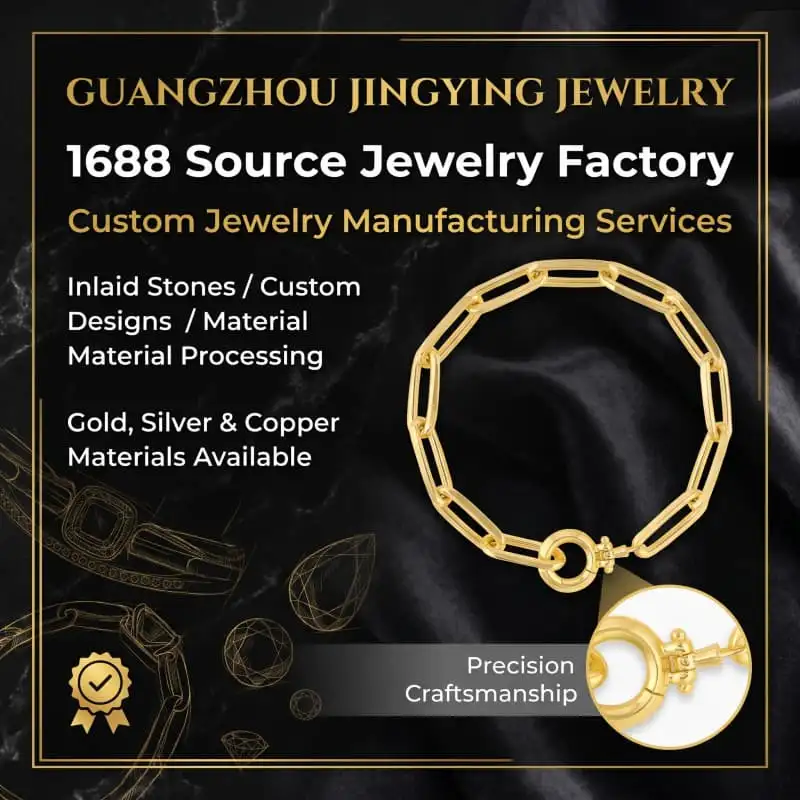
The Power of Design Input: Why Sketches and 3D Models Both Matter
The starting point of any custom jewelry project is a point of frequent friction. Designers who think visually often sketch; designers who think technically often model. JINGYING’s process is deliberately built to accommodate both, recognizing that creativity does not follow a single workflow. When a client provides a hand-drawn sketch—even a napkin doodle or a detailed technical drawing—the company’s design team treats it as a direct window into the creator’s intent. The sketch captures proportion, gesture, and the emotional weight of a design in a way that a sterile CAD file sometimes cannot. The team analyzes the lines, texturi, și puncte focale, then produces a series of interpretive sketches that propose how the essence of that drawing can become a wearable, structurally sound object. This collaborative interpretation is where the emotional becomes physical.
For clients who already possess a 3D model or CAD file, JINGYING offers a more direct, precision-oriented pathway. The company’s engineers review the file for manufacturability, optimize the geometry for casting and plating, and produce a 3D-printed prototype for approval. This option is best suited for brands with in-house technical design expertise, as it preserves the exact digital geometry of the original file while ensuring it can survive the realities of metal casting and finishing. For startups or designers without CAD skills, the sketch-to-model route is equally viable: JINGYING’s designers create a CAD model from the concept, provide 3D renderings for feedback, and refine the design until it matches expectations. The result is a level of flexibility that is rare in contract manufacturing—a partner that meets designers where they are, rather than forcing them into a single, rigid input format.
Inside the JINGYING Design and Prototyping Process
The transformation from input to output is powered by a combination of advanced software and human expertise. JINGYING’s design team utilizes Rhino and JewelCAD, two industry-standard platforms in the jewelry trade, to convert sketches into detailed 3D models. Rhino is particularly valued for its precision in freeform surface modeling, while JewelCAD is tailored to the specific needs of jewelry design, including stone setting layouts and structural considerations. Clients are not left in the dark during this phase: they can review images and videos of the evolving 3D model, ensuring that the digital representation aligns with their vision before any physical material is committed.
Prototyping follows design finalization, and it is here that JINGYING’s commitment to verification becomes clear. The company produces 3D-printed resin prototypes for shape verification, allowing clients to hold and assess the geometry of the piece. For a more complete evaluation, metal samples can also be produced to check weight, termina, and plating quality. This two-tier prototyping approach—resin first, then metal if needed—catches design flaws early, when adjustments are inexpensive, rather than after a full production run has begun. Sample turnaround is typically completed within 10 zile, enabling clients to evaluate the design and request modifications before mass production commences. For a fashion brand or independent designer operating on tight seasonal calendars, this speed is not a luxury; it is a competitive necessity.
Materiale, Placare, and the Craft of Manufacture
JINGYING’s material capabilities span the spectrum from accessible fashion jewelry to high-end fine jewelry. Compania este specializata in 925 argint veritabil, a hypoallergenic alloy that provides a premium feel and serves as an excellent base for gold plating. For more budget-conscious collections, brass and copper are available as base metals, with copper offering a warm tone that is particularly well-suited to rose gold plating. On the precious metal side, JINGYING manufactures in 9K, 10K, 14K, și aur de 18K, and works with platinum and palladium for clients requiring the highest tier of luxury. The choice of base metal is never arbitrary; it is a strategic decision that balances cost, durabilitate, skin sensitivity, and the desired aesthetic outcome.
Gold plating is one of JINGYING’s core competencies, and the company offers a level of transparency that is uncommon among manufacturers. Plating options include 14K, 18K, 24K Aur galben, Aur de trandafir, și aur alb, with thicknesses ranging from 0.5 microns for short-lifespan fashion pieces to 5 microns and above for luxury or heirloom-quality jewelry. For gold vermeil—a category that requires a sterling silver base and a minimum gold plating thickness of 2.5 microns—JINGYING’s 2-to-3-micron range provides the durability that the vermeil designation demands. The plating process itself is executed in two stages: a base plating layer is applied to ensure a smooth and durable surface, followed by the gold layer, which can be built up to 3 microns in standard production runs. This meticulous approach to plating is what allows a piece to retain its luster and color over time, rather than succumbing to tarnish or wear after a few months of use.
The manufacturing itself draws on a blend of traditional craftsmanship and modern production technology. Lost-wax casting remains the backbone of jewelry production, and JINGYING employs it with precision: a wax pattern is created from the approved 3D model, invested in plaster, and then replaced by molten metal in a high-temperature kiln. Skilled artisans then take over for finishing, performing polishing, decor de piatră, and assembly with the kind of hand-eye coordination that machines cannot replicate. The company also utilizes CNC machining and laser welding for components that require tighter tolerances or specific mechanical properties. Cu o capacitate de producție lunară de până la 100,000 pieces and a workforce operating across facilities in Guangzhou and Wuzhou, JINGYING can scale from a 50-piece custom order to a multi-thousand-unit collection without sacrificing consistency.
Asigurarea calității: From XRF Testing to Final Inspection
In custom manufacturing, quality is not an abstract promise; it is a series of measurable checkpoints. JINGYING’s quality assurance protocol begins with material verification and extends through to final packaging. Plating thickness is verified using XRF (fluorescență cu raze X) testarea, a non-destructive method that confirms whether the deposited gold layer meets the specified micron target. Adhesion testing ensures that the plating will not peel or flake under normal wear conditions, while salt spray testing evaluates tarnish resistance by exposing finished pieces to a corrosive environment that accelerates the aging process. Every piece undergoes a final visual inspection before packaging, checking for surface defects, securitate de piatră, și funcționalitatea închizătoare.
This rigorous approach to quality control is particularly important for brands that are entrusting their designs to an overseas manufacturer. A single batch of earrings with inconsistent plating thickness or a run of pendants with rough edges can damage a brand’s reputation irreparably. By building quality verification into every stage of the process—rather than treating it as a final gate—JINGYING reduces the risk of costly surprises and protects the client’s investment in tooling, materiale, and marketing.
Studii de caz: From Sketch to Shipment
The efficacy of JINGYING’s model is best illustrated by the projects it has delivered. In one case, a Canadian boutique approached the company with a set of sketches for a geometric pendant design, requiring 18K gold plating and a relatively modest production run of 500 unități. JINGYING’s team created a CAD model from the sketches, produced three prototypes to refine the proportions and finish, and delivered the full order within four weeks. For a small retailer testing a new design concept, this timeline made the difference between capturing a seasonal trend and missing it entirely.
A second case involved a U.S. jewelry designer seeking hand-textured rings with a durable 3-micron gold plating. The design required a surface finish that would not be eroded by the plating process, and the plating thickness was critical to the ring’s longevity. JINGYING utilized lost-wax casting to preserve the texture and applied a thick gold layer that met the designer’s performance requirements. In a larger-scale example, the company manufactured 10,000 units of custom 925 sterling silver necklaces for an established American jewelry retailer, combining traditional silversmithing techniques with contemporary design elements to meet the client’s specifications and timeline. These cases share a common thread: the client provided design input in the form that was most natural to them, and JINGYING handled the translation into a manufacturable, reproducible product.
Intellectual Property and the Trust Factor
For designers and brands, the decision to manufacture overseas carries an inherent anxiety: what happens to my designs once they leave my hands? JINGYING addresses this concern directly through its intellectual property policy. The company operates under non-disclosure agreements (NDA-uri) and commits to protecting client privacy and design confidentiality. Client identities, business information, and proprietary designs are not disclosed to third parties, and the NDA is executed before the manufacturing process begins. This is not merely a legal formality; it is a structural safeguard that allows designers to share their most valuable creative assets without fear of appropriation or leakage to competitors. For independent designers and emerging brands, this assurance is often the deciding factor in choosing a manufacturing partner.
Why JINGYING Stands Apart
The custom jewelry manufacturing landscape is crowded, and many factories claim to offer design-to-production services. What distinguishes JINGYING is the coherence of its offering. The company does not treat design, prototipare, casting, placare, and quality control as separate silos to be outsourced or subcontracted; they are integrated under one roof, with a single point of accountability. A client who submits a sketch is not handed off to a series of intermediaries; they work with a design team that sees the project through from interpretation to final inspection. The company’s 20-plus years of experience, its low minimum order quantity of 50 pieces for custom orders, and its turnaround time of three to five weeks for production make it accessible to small brands while remaining capable of serving larger volume clients.
În plus, JINGYING’s willingness to work from any input format—photograph, schiţa, or 3D file—removes a barrier that often excludes the most creatively driven clients from the manufacturing process. A designer who cannot create a CAD model is not shut out; a brand that has a fully developed digital model is not forced through an unnecessary design reinterpretation. The company’s role is to be a bridge between imagination and execution, and that bridge is designed to accommodate traffic in both directions.
Concluzie: Designul dvs, Their Craft
The modern jewelry market rewards originality and speed in equal measure. A design that takes six months to reach production may be obsolete by the time it reaches a display case; a design that cannot be manufactured reliably will never build a loyal customer base. JINGYING’s model—manufacturing your jewelry base from 3D models or sketches—addresses both pressures simultaneously. It respects the creative process by accepting input in its native form, and it respects the commercial process by applying engineering rigor, controlul calitatii, and scalable production capacity to every project. Whether the starting point is a napkin sketch or a fully realized CAD file, the endpoint is the same: a finished piece of jewelry that is faithful to the original vision, durable enough for everyday wear, and ready for the market. For designers and brands seeking a manufacturing partner that functions as an extension of their creative team, JINGYING offers a path from concept to creation that is as direct as it is dependable.