
Nel frenetico mondo della moda, dove le tendenze emergono e svaniscono con il sole al tramonto, la creazione di un gioiello personalizzato testimonia un diverso tipo di valore: pazienza, precisione, e partenariato. Per i marchi, designer, e rivenditori che desiderano dare vita a una visione unica, understanding the timeline is not just a logistical necessity—it is a strategic asset. Tempo, in the context of custom manufacturing, is the invisible ingredient woven into every polish, every setting, and every plating layer.
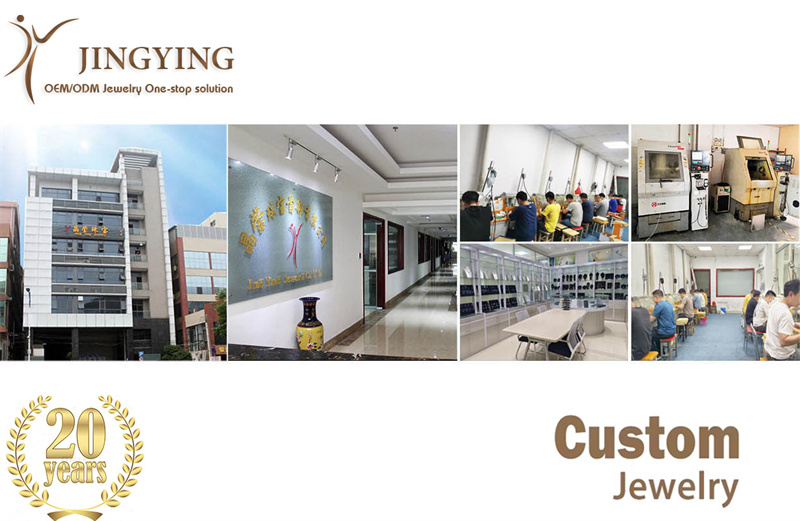
At Guangzhou JINGYING Jewelry Co., Ltd., a premier manufacturer with over two decades of experience, the journey from a conceptual sketch to a finished pair of gold-plated earrings is a meticulously orchestrated process . It is a journey that balances the irreplaceable skill of human artisans with the unwavering precision of modern technology. But how long does this journey actually take? La risposta, as with any bespoke service, è sfumato. It is not a single number, but a range shaped by design complexity, scelte materiali, volume dell'ordine, and the crucial dance of collaboration between client and creator.
This article provides an exhaustive, step-by-step breakdown of the timeline for creating custom gold-plated earrings at JINGYING. We will dissect each phase of production, from the initial spark of an idea to the final delivery of a finished product, exploring the variables that influence the clock and offering a realistic roadmap for anyone looking to launch their own jewelry line.
Parte I: The Foundation — Understanding the Variables of Time
Before diving into the weekly breakdown, it is essential to understand that the total lead time for a custom jewelry order is not arbitrary. It is the sum of several variable parts. Attempting to rush these stages is like baking a cake at double the temperature—the outside may look done, but the inside will be raw and inedible. A Jingying, la tempistica è rispettata come componente critica della qualità .
Il tempo totale può essere espresso con una semplice, eppure profondo, equazione:
Lead time totale = progettazione & Sviluppo + Campionamento & Revisioni + Produzione & Finitura + Spedizione & Logistica
Ciascuna di queste componenti è influenzata da fattori specifici. Un cliente che arriva con un file CAD 3D completamente risolto e una chiara comprensione dei materiali si muoverà attraverso il processo molto più velocemente di uno con un'idea vaga e una raccolta di ritagli di rivista. Allo stesso modo, un ordine per 50 coppie di semplici borchie saranno naturalmente completate più velocemente di un ordine 5,000 progettato in modo intricato, orecchini pendenti con pietre incastonate.
Le sezioni seguenti decostruiranno ciascuna di queste fasi, fornendo tempi tipici basati sulla vasta esperienza di JINGYING nel lavorare con clienti globali .
Parte II: Fase uno: concezione e progettazione (Giorni 1–10)
Questa è la genesi del progetto, the phase where imagination begins its transformation into a tangible blueprint. It is also the phase where time invested in clarity pays the greatest dividends downstream.
1. The Initial Consultation and Brief (Giorni 1–3)
The clock starts ticking the moment a client reaches out to JINGYING. This initial stage is about information exchange. Whether the client is a seasoned buyer from a luxury European fashion house or a budding independent designer from North America, the process begins with a detailed consultation .
During these first few days, the JINGYING account management and design teams work to extract the essence of the client's vision. They explore questions like:
-
Estetica del design: What is the style? (Minimalista, Art Déco, Boemo, ecc.)
-
Funzionalità: What type of earring is it? (Stud, hoop, penzolare, huggie, threader)
-
Specifiche dei materiali: What base metal is desired? (Sterling silver is the premium choice for gold plating, while brass offers a cost-effective alternative) .
-
Gold Plating Details: What karat? (14K, 18K, 24K) What color? (Giallo, rosa, bianco) What thickness? (Standard 0.5µm, or heavy 2.5µm vermeil) .
-
Pietre e abbellimenti: Will it feature cubic zirconia, perle, or genuine gemstones?
-
Commercial Parameters: What is the target price point? What is the desired order quantity?
This consultation is a two-way street. JINGYING’s team, with its deep knowledge of manufacturing, advises the client on the feasibility and cost implications of their choices, guiding them toward a design that is both beautiful and commercially viable .
Investimento nel tempo: 1–3 days.
2. Design Translation and 3D Modeling (Days 4–10)
With a clear brief in hand, the design team gets to work. This is where ideas are translated into a precise digital language. The method of translation depends entirely on what the client provides.
-
Scenario A: Il cliente fornisce un file CAD 3D. Per clienti con capacità di progettazione avanzate, questo è il percorso più veloce. Gli ingegneri di JINGYING eseguono un'analisi completa "Progettazione per la produzione" (DFM) analisi. Controllano potenziali problemi di produzione come i bordi non collettori, spessore della parete insufficiente, o sottosquadri problematici. Questo passo proattivo, che richiede 2-3 giorni, garantisce che il design sia ottimizzato per la fusione e la lucidatura, evitando costosi ritardi in seguito .
-
Scenario B: Il cliente fornisce schizzi o immagini. Questo è più comune. Il team di ingegneri CAD di JINGYING, come lo descrivono "scultori in un regno digitale," prende il sopravvento . Utilizzando software come Rhino o JewelCAD, costruiscono il modello da zero, interpretare la visione bidimensionale del cliente. Aggiungono elementi ingegneristici cruciali non presenti in un semplice schizzo, come uno spessore di parete appropriato per una maggiore durata, considerazioni ergonomiche per il comfort, e specifiche precise per l'incastonatura delle pietre. Il client viene mantenuto aggiornato con aggiornamenti regolari e rendering iniziali .
-
Scenario C: Il cliente ha un'idea astratta. Forse il cliente fornisce la foto di un fiore che appassisce, un pezzo di architettura, o un mood board di texture e colori. In questo caso, il team di progettazione crea innanzitutto schizzi concettuali per catturare l' "sensazione" dell'idea. Solo una volta approvata la direzione estetica si passa alla modellazione CAD .
Indipendentemente dal punto di partenza, l'output di questa fase è un modello 3D finalizzato e rendering fotorealistici. Questi rendering sono incredibilmente potenti, permettendo al cliente di vedere il pezzo da ogni angolazione, in diversi colori metallici, e con varie opzioni di pietra, garantendo l'allineamento completo prima che venga versato qualsiasi metallo .
Investimento nel tempo: 5–7 giorni per modellazione CAD e rendering, a seconda della complessità. Un semplice stallone potrebbe richiedere un giorno, mentre un complesso, un ciondolo ispirato alla natura con più componenti potrebbe richiedere un'intera settimana.
Fine della Fase Uno Tempo totale trascorso: 7–10 giorni.
Parte III: Fase due: il prototipo (Giorni 11–25)
L’approvazione di un rendering digitale è una pietra miliare importante, ma non è la stessa cosa che tenere l'oggetto fisico. La fase di prototipazione colma questa lacuna, creando la prima realtà tangibile del progetto. Questa è probabilmente la fase più critica dell’intera sequenza temporale.
1. 3D Stampa del modello principale (Giorni 11–14)
Il file CAD approvato viene inviato alle stampanti 3D ad alta risoluzione di JINGYING. Utilizzo della stereolitografia (SLA) o elaborazione digitale della luce (DLP) tecnologia, un laser o un proiettore polimerizza la resina liquida strato dopo strato, costruendo una replica fisica esatta del modello digitale . Questa resina "modello" è incredibilmente dettagliato, catturando anche le texture più complesse. Questo processo è veloce e preciso, typically taking 1–3 days depending on the number of patterns being printed.
2. Il processo di fusione a cera persa (Days 15–18)
The resin pattern now embarks on the ancient journey of lost-wax casting, a method used for millennia but refined with modern precision .
-
Making Making: The pattern is attached to a wax "albero" and encased in a heat-resistant investment plaster.
-
Burnout: Il pallone è posto in un forno. The heat hardens the plaster and burns out the resin, leaving behind a perfect hollow cavity in the shape of the earring. This cycle can take 12–24 hours.
-
Casting: Molten sterling silver (or the chosen base metal) is forced into the cavity using centrifugal force or a vacuum.
-
Devesting: The flask is quenched in water, shattering the plaster and revealing a rough metal "albero" of castings.
This entire cycle, from tree assembly to devesting, takes approximately 3–4 days.
3. Finitura e lucidatura iniziali (Days 19–22)
The raw castings are cut from the tree. They are recognizable as earrings but have a matte, rough surface. They go through initial finishing stages:
-
Crollo: The pieces are placed in a machine with abrasive media to smooth surfaces and work-harden the metal.
-
Prelucidatura: Skilled craftsmen use files and tools to remove any remaining casting seams or imperfections, preparing the surface for its final finish.
4. The First Sample and Client Review (Days 23–30)
The finished prototype—often called a "campione" O "campione d'oro"—is now complete. It is carefully inspected, fotografato, and packaged to be sent to the client . Shipping via international courier (DHL/FedEx) takes 3–5 days.
Upon receiving the sample, the client enters a crucial review period. They must evaluate not just the look, but the feel, il peso, the comfort, and the functionality. Does the clasp work smoothly? Si posiziona correttamente sull'orecchio?? L'incastonatura della pietra è sicura?? Questo è il momento del feedback. Il cliente potrebbe richiedere piccole revisioni, regolando una curva, approfondire un'incisione, o cambiare una finitura da lucida a opaca .
Se sono necessarie revisioni, il processo si ripete. Il file CAD viene aggiornato, viene stampato un nuovo motivo in resina, e viene creato un campione rivisto. Questo ciclo di revisione può aggiungere 1-3 settimane alla sequenza temporale, a seconda della complessità delle modifiche e dei tempi di spedizione. È molto meglio investire questo tempo adesso piuttosto che procedere con una progettazione difettosa nella produzione di massa.
Investimento nel tempo (presupponendo che non vi siano revisioni importanti):
-
3D Printing & Casting: 7–10 giorni
-
Spedizione al cliente: 3–5 giorni
-
Revisione del cliente: 2–5 giorni
-
Totale per la Fase Due: 12–20 giorni.
Fine della Fase Due Tempo Trascorso Totale: 19–30 giorni.
Parte IV: Fase tre: produzione di massa (Giorni 31–60+)
Con l'approvazione finale del cliente sul campione fisico, the project moves into its most intensive phase: produzione di massa. This is where JINGYING’s infrastructure, with its three specialized factories spanning 25,000 square meters and a workforce of over 450 professionisti, is put to the test . The timeline here is directly proportional to the order quantity and complexity.
1. Tooling and Production Planning (Days 31–35)
For large production runs, the approved sample is used to create durable master molds, typically from high-grade steel or rubber. This is a one-time investment that ensures consistency across thousands of pieces. Contemporaneamente, the production planners schedule the work, order the exact quantities of required materials (argento, oro, pietre), and prepare the workflow across the casting, collocamento, and plating departments .
Investimento nel tempo: 3–5 giorni.
2. Casting e assemblaggio (Days 36–50)
This stage replicates the casting process from Phase Two, but on a massive scale. JINGYING’s vacuum casting machines and high material utilization rates (achieving up to 92% in alcuni casi) ensure efficiency . For an order of 1,000 paia di orecchini, the casting phase might take 5–7 days. Per 10,000 coppie, it could take two weeks or more. Dopo il casting, the pieces are cut from their trees and any necessary assembly (like attaching hinges or complex clasps) is performed by skilled hands .
3. Ambiente in pietra (Days 41–55)
Se il disegno include pietre preziose, this is one of the most time-sensitive and skill-dependent steps. Stone setting is a meticulous hand process. A master setter, often working under a microscope, places each stone into its seat and carefully secures it . A simple 4-prong setting for a single stone per earring is quick. Tuttavia, UN "pavimentazione in pietra" collocamento, where dozens of tiny stones are set closely together, is painstakingly slow. This stage can become a significant bottleneck in the production timeline if not planned correctly. JINGYING mitigates this with a team of expert setters and Japanese micro-inlay machines that enhance precision .
4. Il processo di placcatura in oro (Days 51–55)
Prima di impiattare, the assembled and stone-set earrings undergo a final, rigorous polishing to achieve a mirror-bright finish. They are then cleaned in a series of ultrasonic and electro-cleaning baths to remove every trace of oil and dirt—a non-negotiable step for flawless plating adhesion .
The actual electroplating process, where the earrings are immersed in tanks and bonded with a layer of real gold, is relatively quick (minutes to hours). Tuttavia, the preparation and the meticulous nature of the process mean that a production batch can take several days to complete. JINGYING is renowned for its plating technology, capable of applying a consistent, durable layer up to 3.0 microns thick—far exceeding industry averages and ensuring the jewelry's longevity .
5. Controllo della qualità finale (Days 56–60)
Quality is not an afterthought at JINGYING; it is woven into every step. Before any piece is packaged, it undergoes a battery of final checks :
-
Spettrometria XRF: To verify the purity of the silver and the thickness of the gold plating.
-
Visual Microscopic Inspection: To check for surface defects, incastonature di pietre sicure, and a flawless finish.
-
Prove meccaniche: For earrings with moving parts (like hinge mechanisms on hoops), each piece is tested for durability and smooth operation. Pull tests are performed on stone settings to ensure they meet a 50g standard .
-
Controlli dimensionali: To ensure consistency with the approved specifications, often within a tolerance of ±0.15mm .
This final quality control stage, including the packaging of approved pieces into their custom-branded boxes or pouches, takes approximately 3–5 days.
Time Investment for Mass Production:
-
Piccolo lotto (100–500 pz): 15–20 giorni
-
Medium Batch (500–5.000 pezzi): 20–30 giorni
-
Large Batch (5,000+ PC): 30–45+ days
End of Phase Three Total Elapsed Time: 45–75 days (from project start).
Parte V: Phase Four — Logistics and Delivery (Days 61–90+)
The jewelry is finished, confezionato, and ready to go. The final variable is the journey to the client's doorstep. Jingying, with its global logistics partnerships, offers clients a choice between speed and cost .
-
Aereo espresso (DHL/FedEx): This is the fastest and most secure method. It is ideal for smaller, high-value shipments or for clients who need to launch a collection by a specific date. Transit time to major markets like the US or EU is typically 3–5 giorni. The cost is higher.
-
Trasporto aereo: For larger pallets, consolidated air freight is a balance of speed and cost. Transit time is usually 7–10 giorni.
-
Ocean Freight (LCL - Less than Container Load): This is the most economical option for very large orders where time is less critical. The shipment shares a container with other goods. Transit time from China to the US West Coast, Per esempio, è approssimativamente 18–25 giorni, plus additional time for inland transport and customs clearance . A hybrid approach is sometimes used, where an initial small batch is sent by air for a product launch or market testing, while the main bulk order follows by sea .
Customs clearance is an additional variable that JINGYING helps clients navigate by providing all necessary export documentation and compliance certifications, such as REACH, RoHS, and CPSIA tracking labels, ensuring a smooth entry into the destination country .
Investimento nel tempo:
-
Aereo espresso: 3–5 giorni
-
Trasporto aereo: 7–10 giorni
-
Ocean Freight: 25–35 days
Conclusione: The Symphony of Time and Craftsmanship
COSÌ, how long does it take to make custom gold plated earrings at JINGYING?
For a relatively simple, straightforward custom design with an approved sample and no revisions, and using air express shipping, the total journey from initial contact to delivery can be condensed into approximately 5 A 7 settimane.
A more realistic timeline for a typical custom project—including design development, sampling with one revision cycle, and mass production of a medium-sized batch—falls within the range of 8 A 12 settimane.
For a highly complex, large-volume order with multiple design elements, extensive stone setting, and ocean freight, the process can extend to 12 A 16 weeks or more.
| Project Phase | Typical Timeframe | Key Variables |
|---|---|---|
| Fase 1: Conception & Progetto | 7–10 giorni | Client input quality, complessità progettuale, CAD revisions. |
| Fase 2: Prototipazione | 12–20 Days | 3D Printing, casting, spedizione, client review speed, revision cycles. |
| Fase 3: Produzione di massa | 15–45+ Days | Quantità dell'ordine: Piccolo (15–20d), Medio (20–30d), Grande (30–45d+). Complexity: Incastonatura di pietra, intricate mechanisms. |
| Fase 4: Logistica | 3–35 Days | Metodo di spedizione: Aereo espresso (3–5d), Trasporto aereo (7–10d), Ocean Freight (25–35d). Customs clearance. |
| Total Estimated Time | 5–16+ Weeks | Cumulative effect of all variables above. |
Alla fine, the time required is a reflection of the care and precision invested in the piece. Rushing the process compromises the very qualities that make custom jewelry valuable: unicità, qualità, e durata.
JINGYING’s role is not just to manufacture, but to orchestrate this complex symphony of time and craftsmanship. Con oltre 20 anni di esperienza, a client-centric approach, and a manufacturing philosophy rooted in the very meaning of their name—"precision in execution, excellence in delivery"—they guide their partners through every step .
Per un marchio o un designer, understanding this timeline is the first step in a successful partnership. It allows for strategic planning, aligning production schedules with marketing launches and retail seasons. It transforms the waiting period from a source of anxiety into a period of anticipation, knowing that at the end of the journey lies a collection of jewelry that is not just made, but meticulously crafted—a true alchemy of elegance, born from the perfect marriage of time, tecnologia, and human skill.