
The Art and Science of Gold Jewelry Manufacturing in JINGYING: A Comprehensive Guide
Abstract
In the intricate world of fine jewelry manufacturing, JINGYING has emerged as a distinguished name, representing the convergence of traditional craftsmanship and cutting-edge technology. This comprehensive guide explores the complete lifecycle of gold jewelry production at JINGYING—from initial design conception to final quality assurance. Drawing upon the company's 23-year legacy, state-of-the-art facilities spanning 25,000 square meters, and a workforce of over 450 skilled professionals, this article provides an in-depth examination of the materials, processes, and philosophies that define excellence in gold jewelry manufacturing. Whether producing gold-plated sterling silver pieces, vermeil-quality jewelry, or solid gold creations, JINGYING's systematic approach to design, casting, plating, and quality control offers a blueprint for manufacturing jewelry that combines aesthetic beauty with enduring durability.
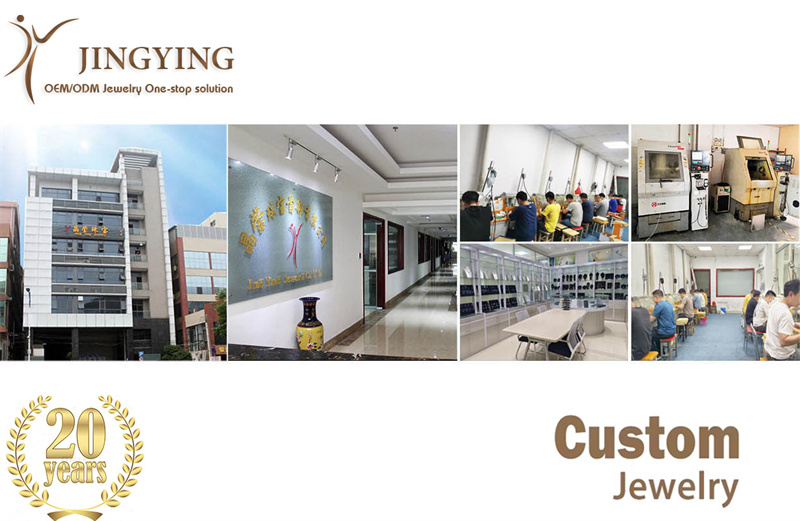
Introduction: The JINGYING Philosophy
The name JINGYING (晶英) embodies the company's core principles: 晶 (JING), meaning "crystal," represents clarity, purity, and brilliant light, while 英 (YING), meaning "essence" or "excellence," signifies the pinnacle of quality and spirit . This philosophy—"Precision in Execution, Excellence in Delivery, Partnership in Growth"—is woven into every piece created within its workshops.
Founded in 1998, JINGYING has evolved from a modest workshop into an international manufacturing powerhouse . The company operates specialized facilities dedicated to casting and metalwork (8,000 square meters), stone setting and assembly (10,000 square meters), and plating and finishing (7,000 square meters) . With a monthly production capacity of up to 500 kilograms of silver jewelry and the ability to produce 150,000-200,000 pieces monthly, JINGYING serves over 200 brands across 35 countries .
What distinguishes JINGYING's approach is its commitment to durability as a design philosophy rather than an afterthought. In an industry where "fast jewelry" often succumbs to tarnish, wear, and breakage within months, JINGYING engineers pieces designed to withstand the rigors of daily life—skin acidity, perspiration, cosmetics, and abrasion—while maintaining their beauty . This commitment to longevity represents not merely a technical specification but an ethical stance, offering sustainability through durability.
Chapter 1: The Materials Palette – Foundation of Quality
The journey to exceptional gold jewelry begins not at the plating tank or the polishing wheel, but in the careful selection and verification of raw materials. JINGYING's material philosophy is simple but uncompromising: high-quality output demands high-quality input.
1.1 Base Metal Options
JINGYING offers a spectrum of base metal options, each selected for specific properties and applications:
Copper-Based Alloys: Copper serves as an excellent base metal due to its malleability, allowing for intricate and detailed designs, and its excellent conductivity, which is crucial for even electroplating . JINGYING uses high-grade, lead-free, and nickel-free brass alloys for clients prioritizing hypoallergenic properties .
925 Sterling Silver: Sterling silver—an alloy of 92.5% pure silver and 7.5% other metals (typically copper for strength)—represents a premium base material. It is naturally hypoallergenic, possesses brilliant white luster, and carries intrinsic value . When sterling silver receives a thick layer of gold plating (typically 2.5 microns or more), the resulting piece qualifies as vermeil—a legally defined standard for luxury gold-plated jewelry .
For enhanced performance, JINGYING also considers premium alternatives such as Argentium silver, alloyed with germanium instead of copper, which offers superior tarnish resistance and brighter appearance .
Stainless Steel: For clients requiring exceptional durability and corrosion resistance, stainless steel provides an excellent foundation, particularly for men's jewelry and pieces designed for active lifestyles .
Solid Gold: At the apex of the material hierarchy lies solid gold—available in 10K, 14K, 18K, or 22K varieties. Solid gold pieces offer the ultimate in durability and legacy, with color that permeates the entire piece and never wears off .
1.2 Gold Plating Specifications
The gold layer applied to base metals is characterized by three key parameters:
Karat Purity: JINGYING offers plating in 14K, 18K, and 24K gold, with 18K being the standard for luxury vermeil pieces . The choice of karat affects both color and durability; higher karat gold offers richer color but is softer and more prone to scratching.
Thickness: While many manufacturers apply a sub-micron "flash" of gold, JINGYING ensures substantially thicker layers. Standard plating thickness ranges from 0.5 to 3 microns, with vermeil-quality pieces requiring a minimum of 2.5 microns under FTC guidelines . JINGYING's premium offerings often exceed this baseline, utilizing 3-5 micron layers for superior durability .
Color Variations: Clients can select from yellow gold, white gold, and rose gold finishes, each achieved through specific alloy compositions in the plating solution .
1.3 Material Verification and Traceability
JINGYING implements rigorous material control protocols:
-
Supplier Qualification: Partnerships with reputable, certified bullion suppliers and refiners
-
Certificate of Analysis: Every batch of precious metal comes with documentation verifying purity
-
XRF Analysis: Periodic independent assaying using X-Ray Fluorescence analyzers to verify metal composition upon receipt
-
Lot-Tracking Systems: Enables tracing any quality issue back to a specific material batch for targeted corrective action
Chapter 2: The Design Process – From Concept to Digital Reality
The creation of gold jewelry at JINGYING begins with understanding that inspiration manifests in many forms. The company has structured its design input methodology to accommodate whatever form a client's vision takes.
2.1 Design Input Methods
Photographic Inspiration: Sometimes, the vision arrives as a photograph—a wilting rose, the intricate geometry of a historic building, the curve of a seashell. JINGYING's design team specializes in translating two-dimensional images into three-dimensional works of art through interpretive sketching and collaborative refinement .
Hand-Drawn Sketches: A sketch provides direct insight into the client's intent regarding form, proportion, and layout. CAD engineers function as digital sculptors, translating each line while analyzing anatomical feasibility—ensuring ring shanks are comfortable, pendants hang correctly, and delicate elements possess adequate thickness for durability .
3D Files: For clients with advanced design capabilities, provided files in formats like .STL, .OBJ, or .Rhino represent the most streamlined path to production. JINGYING's Digital Design for Manufacturing analysis checks for common production issues: non-manifold edges, wall thickness variations, undercuts, and proper stone setting dimensions .
Design Briefs: For clients beginning without visual materials, JINGYING guides creation of a comprehensive Design Brief—including mood boards, target audience description, competitive analysis, and key descriptors defining the design ethos .
2.2 CAD Modeling and Design for Manufacturing
Computer-Aided Design (CAD) is indispensable to modern jewelry production. Using software such as Rhino and JewelCAD, JINGYING's 20 in-house design professionals create precise 3D digital models of each piece .
The CAD model serves multiple purposes:
-
Visualization: Viewing the piece from every angle to perfect proportions
-
Prototyping: Direct linking to 3D printing for physical model creation
-
Problem-Solving: Identifying structural weaknesses and planning for stone setting before any metal is touched
Design for Manufacturing (DFM) analysis ensures the CAD model can be efficiently manufactured. Engineers review draft angles for casting, uniformity of wall thickness to prevent porosity, and plating accessibility—avoiding deep crevices that are difficult to plate evenly .
2.3 Prototyping and Validation
Before full-scale production begins, JINGYING creates physical prototypes:
-
3D Printed Resin Models: Using advanced SLA and DLP 3D printers that cure liquid photopolymer resin layer by layer, capturing details as subtle as fingerprints or leaf veining
-
Cast Metal Samples: For final approval before production runs
-
Finish and Plating Samples: For color matching and texture verification
This prototyping phase includes First Article Inspection (FAI), where every dimension and detail is checked against the CAD model to validate design, process, and tooling .
Chapter 3: Manufacturing Processes – Transforming Design into Metal
3.1 Casting: The Lost-Wax Method
The lost-wax casting process represents the primary method for creating complex jewelry forms at JINGYING .
Step 1: Wax Injection: Molten wax is injected into a rubber mold to create a perfect wax duplicate of the design. Multiple wax models are attached to a central "wax tree" to create a single casting unit .
Step 2: Investment: The wax tree is placed in a steel flask and surrounded with a liquid plaster-like investment material, which hardens to form a solid mold .
Step 3: Burnout: The flask is heated in a kiln, melting out the wax and leaving a hollow cavity that perfectly replicates the original design .
Step 4: Casting: Molten gold or silver is poured into the cavity using centrifugal force or vacuum casting machines, ensuring complete filling of even the finest details .
Step 5: Devesting: Once cooled, the investment material is broken away, revealing the raw metal "tree" of jewelry components .
For designs unsuitable for casting—or for adding custom chains and clasps—JINGYING's artisans employ hand-fabrication techniques including sawing, soldering, and forming gold sheets and wires by hand .
3.2 Post-Casting Processing
The raw casting is rough and requires extensive refinement:
Cutting and Deburring: Pieces are carefully cut from the casting tree, and rough edges are removed .
Pre-Polishing (Tumbling): Pieces are loaded into tumbling machines with steel shot, water, and burnishing compound. This process work-hardens the surface, removes imperfections, and provides preliminary shine .
Handwork and Assembly: Skilled artisans file, sand, and emery any remaining flaws, seams, or sprues. Components are meticulously soldered together—for instance, attaching a pendant bail to a pendant body .
Stone Setting: If the design includes gemstones, highly trained setters secure them using techniques including bezel, prong, pave, and channel setting. This is done before plating to avoid damaging the gold layer .
3.3 Surface Preparation – The Critical Foundation
The single most important factor for durable gold plating is meticulous surface preparation. Any contamination on the base metal will lead to peeling, blistering, or uneven plating .
Ultrasonic Cleaning: Pieces are placed in ultrasonic cleaners with specialized alkaline solutions. High-frequency sound waves create microscopic bubbles that scrub away every trace of oil, dust, and polishing compound .
Rinsing: Multiple rinses in deionized (DI) water remove all cleaning solution residue. Tap water contains minerals that can cause spotting .
Electrocleaning: The jewelry becomes the cathode in an electrochemical bath. Electrical current reverses the polarity of the metal surface, lifting away any remaining microscopic impurities .
Water-Break Test: A critical audit where a clean surface should hold a continuous water film—any beading indicates residual contamination .
Chapter 4: The Alchemy of Gold Plating
4.1 Electroplating Principles
Electroplating is the process by which a thin layer of gold is deposited onto the prepared base metal surface. JINGYING employs advanced electroplating techniques to ensure uniform, pore-free deposits .
The Setup: Clean sterling silver jewelry is attached to a negatively charged rack (the cathode). A plate of solid 18k or 22k gold is attached to the positive charge (the anode). Both are submerged in a temperature-controlled tank containing an electrolyte plating solution—typically a potassium gold cyanide solution for yellow gold .
The Science: When direct current is applied, the gold anode dissolves into the solution as positively charged gold ions. These ions are attracted to the negatively charged cathode (the jewelry) and deposit onto its surface, forming a solid, metallic layer of gold .
4.2 Controlling Plating Quality
The thickness and quality of the gold layer are precisely controlled by three factors:
Current Density: Measured in Amps per Square Decimeter (ASD), the amount of electrical current applied affects deposition rate and grain structure .
Time: The duration the jewelry remains in the bath. For a 3-5 micron layer, this can require 3 to 15 minutes or more .
Solution Chemistry: The concentration of gold in the solution, pH levels, temperature, and the presence of organic or metallic impurities all affect deposit quality .
4.3 Advanced Plating Technologies
JINGYING employs sophisticated plating technologies to achieve superior results:
Pulse Plating: Uses pulsed current instead of direct current, allowing better control of the deposition process. This results in denser, smoother, more even coatings with excellent "throwing power" into recessed areas .
Barrel Plating: For large batches of small items like chains or beads, pieces can be plated in a rotating barrel, ensuring even coverage on all sides .
Multi-Layer Systems: Some pieces receive a clear, hard protective coating—such as rhodium or specialty polymer sealants—over the gold layer to shield against scratches and chemicals .
4.4 Plating Bath Maintenance
The electroplating solution is a living chemical environment requiring rigorous maintenance:
-
Regular Analysis: Hull Cell tests or laboratory analysis to monitor gold concentration, pH levels, and impurities
-
Continuous Filtration: Carbon filtration removes organic impurities; dummy plating eliminates metallic contaminants
-
Detailed Logging: Records of chemical additions, filtration cycles, and analysis results for each plating tank
Chapter 5: Quality Assurance – The Guardians of Excellence
Quality control at JINGYING is not a department that finds faults; it is an integrated system that prevents them, permeating every stage of production .
5.1 In-Process Quality Control
Quality checks occur throughout the manufacturing workflow:
Post-Casting Inspection: 100% visual inspection of raw castings for porosity, fills, and gross defects .
Post-Assembly Inspection: Verification of solder joints, stone settings, and structural integrity .
Pre-Plating Audit: Critical inspection of cleaned pieces before they enter plating tanks, including the water-break test for cleanliness verification .
5.2 Final Inspection and Testing
Every single finished piece undergoes multi-layered final inspection:
Visual Inspection: Under controlled, high-intensity LED lighting with magnification (loupes or microscopes), inspectors check:
-
Surface finish: Scratches, pits, polish lines
-
Plating quality: Color consistency, coverage, absence of burns, stains, or peeling
-
Construction: Secure stone settings, functional clasps, overall craftsmanship
Micron Thickness Testing: Using XRF analyzers, JINGYING measures gold thickness on a 100% basis for high-value pieces and rigorous statistical sampling for larger batches. This data is recorded and traceable to the production batch .
Adhesion Testing: Regular destructive testing—including tape tests and thermal shock tests—on sample pieces from each plating batch to proactively monitor plating process health .
Dimensional Verification: Digital calipers and gauges ensure pieces match design specifications .
5.3 Non-Conforming Product Management
A robust system handles defects:
-
Identification and Segregation: Clear marking and separation of non-conforming pieces
-
Root Cause Analysis: Investigation of failure reasons
-
Disposition: Decisions on repair, rework (stripping and re-plating), or recycling
-
Corrective and Preventive Action (CAPA): Root cause analysis feeds back into processes to prevent recurrence
5.4 Testing Protocols
JINGYING employs advanced testing methods to validate durability:
-
Salt Spray Testing: Checks tarnish and corrosion resistance
-
Wear and Tear Simulation: Ensures longevity under typical use conditions
-
Lead and Nickel Compliance: Meets international safety standards for EU and US markets
Chapter 6: Customization and OEM Services
6.1 The OEM Partnership Model
JINGYING's OEM (Original Equipment Manufacturing) services allow brands to leverage world-class manufacturing capabilities without the associated overhead and operational complexities . Brands can focus on their core competencies—marketing, distribution, and customer engagement—while relying on JINGYING's expertise to materialize their vision .
6.2 Customization Options
Clients can request extensive customization:
Design: From minimalist modern styles to ornate vintage-inspired pieces, architectural geometric designs to organic free-form creations .
Finishes: High polish mirror finish, matte brushed surfaces, hammered textures, sandblasted effects, antique oxidized detailing .
Engraving: Logos, text, patterns, and personalization .
Gemstone Additions: Cubic zirconia, Swarovski crystals, birthstones, and genuine gemstones .
Clasp Variations: Lobster clasps, magnetic closures, toggle clasps, extension chains .
6.3 Low Minimum Order Quantities
One of JINGYING's strategic advantages is its low Minimum Order Quantity (MOQ) model, which empowers emerging designers and startups alongside established brands . This flexibility allows clients to test markets, launch limited collections, and maintain inventory efficiency.
6.4 Private Label Services
For brands seeking white-label solutions, JINGYING offers comprehensive private label services including custom jewelry boxes, tags, and branded packaging options .
Chapter 7: Ethical and Sustainable Manufacturing
7.1 Environmental Responsibility
JINGYING has implemented sustainable manufacturing practices:
-
Water-Based Plating Solutions: Reducing hazardous chemical usage
-
Closed-Loop Water Recycling: Minimizing water waste and environmental impact
-
Recycled Metal Sourcing: Programs for using recycled brass and sterling silver
-
Waste Management: Responsible disposal and recycling of manufacturing byproducts
7.2 Ethical Sourcing
JINGYING maintains strict ethical standards:
-
Conflict-Free Materials: Sourcing from suppliers who certify conflict-free origins
-
Fair Labor Practices: Safe working conditions and fair wages
-
Transparency: Open communication about sourcing and manufacturing practices
7.3 Certifications
Industry recognition includes:
-
ISO 9001:2015 certification
-
Responsible Jewellery Council membership
-
Sustainable Jewelry Council compliance
Chapter 8: Global Operations and Logistics
8.1 Production Capacity and Scalability
JINGYING's infrastructure supports substantial production volumes:
-
Monthly production capacity: Up to 500 kilograms of silver jewelry
-
150,000-200,000 pieces monthly
-
40% capacity expansion within 30 days when client demand requires
8.2 Global Distribution
JINGYING serves over 200 brands across 35 countries, with production volume distributed:
-
North America: 45%
-
European Union: 35%
-
Asia-Pacific: 15%
-
Emerging markets: 5%
8.3 Logistics Services
-
Air freight express options (3-5 days)
-
Ocean shipping for bulk orders
-
Customs clearance assistance
-
Insurance coverage options
8.4 After-Sales Support
-
Replating services
-
Repair and refurbishment
-
Inventory management programs
-
Seasonal production planning
Conclusion: The JINGYING Legacy
Gold jewelry manufacturing at JINGYING represents the synthesis of artistic vision, material science, and rigorous process control. From the initial spark of inspiration—whether a photograph, sketch, or CAD file—to the final inspection of a finished piece, every step is guided by a philosophy that quality is not accidental but engineered.
The company's 23-year legacy demonstrates that enduring success in jewelry manufacturing requires more than technical capability. It demands a culture where every employee, from master jeweler to floor cleaner, is empowered to champion quality. It requires investment in human capital—continuous training in advanced stone setting, polishing, soldering, and CAD/CAM. It demands transparent communication and feedback loops that enable continuous improvement .
For brands seeking manufacturing partners, JINGYING offers not merely production capacity but strategic partnership. The company's low MOQ model, comprehensive customization options, and global logistics capabilities make it accessible to emerging designers while meeting the demands of established brands. Its commitment to ethical and sustainable manufacturing aligns with the values of today's conscious consumers.
In an era where consumers increasingly reject disposable fashion in favor of pieces that tell stories and endure, JINGYING's focus on durability through superior materials, generous plating thickness, and meticulous quality control positions it as a manufacturer for the future. Each piece that leaves its workshops carries not just the beauty of gold, but the assurance of longevity—an heirloom in the making.
Whether crafting gold-plated sterling silver for a startup's debut collection or solid gold for an established luxury house, JINGYING brings the same commitment: precision in execution, excellence in delivery, and partnership in growth. This is the standard that defines gold jewelry manufacturing at JINGYING, and the legacy that continues to distinguish it in the global jewelry industry.