
How to Design Custom Jewelry for Yourself: A Comprehensive Guide
The desire for personalized adornment is as old as humanity itself. From ancient amulets carved from bone to heirlooms passed down through generations, jewelry has always been a profound medium for expressing identity, commemorating milestones, and celebrating personal style. In today's world of mass-produced accessories, custom jewelry offers something far more meaningful—a piece that carries not just aesthetic value, but emotional weight; an object that speaks of a moment, a memory, or simply the essence of who you are.
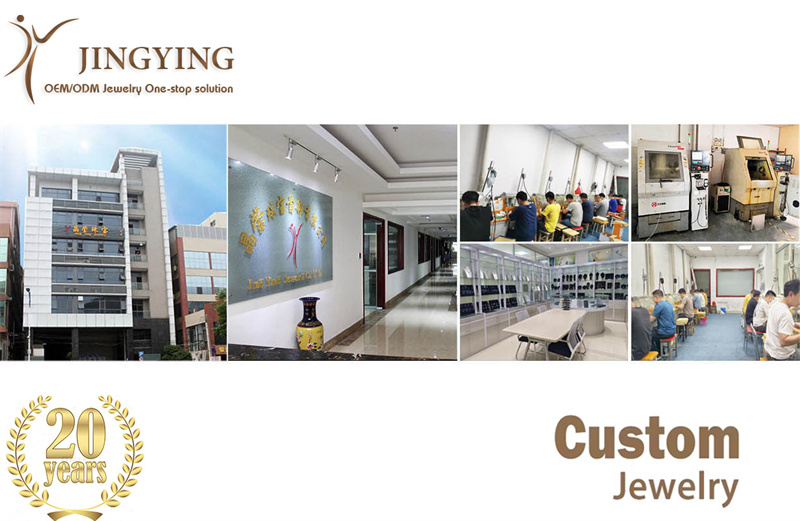
This guide will walk you through every facet of designing custom jewelry, from finding inspiration to understanding the technical processes that bring your vision to life. When it comes to manufacturing your unique design, JINGYING stands as your ideal partner—a one-stop solution that transforms your imagination into tangible reality with unmatched craftsmanship and dedication.
Part I: Finding Your Inspiration and Defining Your Vision
Before any metal is cast or stone is set, the journey begins with an idea. Perhaps you have a clear vision in mind, or maybe you simply have a feeling you wish to capture. This phase is about gathering and refining that inspiration.
Discover Your "Why"
Understanding the motivation behind your custom piece is the first and most crucial step. This "why" will guide every subsequent decision. Ask yourself:
-
Is it commemorative? A wedding, anniversary, birth of a child, graduation, or personal triumph.
-
Is it symbolic? Representing strength, peace, freedom, or eternal love.
-
Is it personal? Incorporating initials, a name, a fingerprint, or a significant date.
-
Is it aesthetic? Designed to complement your personal style.
-
Is it sentimental? Featuring birthstones of loved ones or charms that represent shared memories.
Share this "why" with your design consultant. It allows them to infuse the piece with deeper meaning from the very beginning.
Gather Your Visual References
You don't need to be an artist to communicate your vision. In our digital age, inspiration is everywhere:
-
Create a Mood Board: Use platforms like Pinterest or Instagram to save images that resonate with you—shapes, textures, other jewelry, nature scenes, architectural details, or colors that evoke the feeling you want.
-
Look Beyond Jewelry: Inspiration can come from the veins of a leaf, the pattern of waves on sand, the geometry of a city skyline, or flowing calligraphy.
-
Collect Existing Pieces: If you have jewelry you love, photograph it. Note what you like—the weight, the clasp, the way it drapes.
-
Sketch and Doodle: Even a rudimentary sketch on a napkin can convey more than a thousand words. Don't worry about perfection; just get the idea out of your head.
During your initial consultation, you will share this collection of references. This visual dialogue is invaluable for designers to begin understanding your unique aesthetic language.
Part II: Deconstructing the Elements of Your Design
A piece of jewelry is a complex assembly of components, each offering an opportunity for customization. Understanding these elements empowers you to make informed decisions.
The Chain: Your Foundation
The chain is not just a support; it's an integral part of the design that affects the necklace's drape, style, and feel.
Chain Styles:
-
Cable: A simple, classic link. Timeless and strong, perfect for showcasing a pendant.
-
Curb: Flattened links that lie flat against the skin. Versatile and popular.
-
Figaro: A pattern of small links followed by an elongated link. Distinctive.
-
Rope: Multiple wires twisted together for a dense, luxurious chain.
-
Box: Square links creating a sleek, modern look.
Chain Length:
-
Collar (12-13 inches): Sits snugly at the base of the neck.
-
Choker (14-16 inches): Rests on the collarbone. Universally flattering.
-
Princess (17-19 inches): The most common length, ideal for pendants.
-
Matinee (20-24 inches): Falls at the top of the bust.
-
Opera (28-34 inches): Can be worn single or doubled.
-
Lariat (35+ inches): Worn looped or tied.
The Clasp: Functional Art
Though small, the clasp is a critical piece of engineering that should be both secure and beautiful. Options include lobster clasps, spring rings, box clasps, magnetic clasps, and even custom signature clasps designed as an integral part of the piece.
Surface Finishes: Creating Texture and Light
The way light interacts with silver is controlled by its finish. This is where texture and personality are born:
-
High Polish: Classic mirror-like shine that reflects light brilliantly.
-
Satin/Matte/Brushed: A soft, non-reflective finish for a modern, understated look.
-
Hammered: Textured surface created by hammering, giving a rustic, organic feel.
-
Sandblasted: Uniform, pebbled texture that is very contemporary.
-
Two-Tone Finishes: Combining finishes—like a high-polish pendant on a matte chain—to create depth and contrast.
Embellishments: Adding Color and Meaning
While sterling silver is stunning on its own, it provides a perfect canvas for other materials:
-
Gemstones: Birthstones add timeless meaning; diamonds offer unparalleled sparkle; sapphires, rubies, and emeralds provide bold color.
-
Engraving: Hand-engraving creates unique, flowing scripts or patterns directly into the metal for a deeply personal touch.
Part III: The Journey from Concept to Creation
Working with a custom jewelry manufacturer requires understanding the typical stages of production. Each stage requires clear communication and collaboration.
Stage 1: Design Conceptualization
Your idea—whether a photograph, sketch, or 3D file—is the starting point. JINGYING's process is structured to be as flexible as your creativity demands.
The Power of a Photograph: Sometimes, the vision is not a piece of jewelry but a feeling, a memory, or an object of beauty. The design team analyzes the photograph, identifying key lines, textures, and focal points. They then create interpretive sketches, proposing how the essence can be captured in wearable form.
The Clarity of a Sketch: A hand-drawn sketch provides clear intent regarding form, proportion, and layout. CAD engineers translate this into a precise digital model, adding necessary elements like internal galleries for stone settings, appropriate wall thickness, and ergonomic considerations.
The Precision of a 3D File: For those with design capabilities, a provided 3D file represents the most streamlined path. The file undergoes a comprehensive Digital Design for Manufacturing (DFM) analysis to check for issues like non-manifold edges, wall thickness, undercuts, and stone setting accuracy.
Stage 2: Digital Prototyping and Model Approval
Before a single gram of metal is used, your piece exists in a perfect digital universe. The 3D model is sent for final approval. Photorealistic renderings simulate different metal types and stone settings, allowing you to see a near-perfect representation of the final product. For rings and some bracelets, augmented reality allows you to "try on" the digital prototype using your smartphone camera.
Stage 3: Master Model Production and Casting
With signed approval, the physical master is created. Advanced 3D printers use lasers to cure liquid resin layer by layer, building the model with exceptional detail. This resin model is then used to create a mold for the casting process. The model is encased in investment, heated in a kiln to bake the mold solid and burn out the resin, leaving a perfect hollow cavity. Molten metal is then forced into this cavity, capturing every single detail of the approved design.
Stage 4: Handcraftsmanship and Finishing
This is where machine precision meets the soul of the artisan. The raw casting is now in the hands of skilled bench jewelers:
-
Pre-polishing and Tumbling: Smooths out minor imperfections.
-
Hand-Soldering and Assembly: Multiple parts are carefully joined with precise heat and solder.
-
Stone Setting: Using microscopes, specialists place each stone using prong settings, bezel settings, pavé settings, or channel settings.
-
Final Polishing and Plating: The piece undergoes meticulous hand-polishing for its designated finish. If gold plating is desired, the piece enters an electroplating bath for a rich, luxurious color.
Stage 5: Rigorous Quality Control
No piece leaves the facility without passing a multi-point inspection. This includes dimensional checks, surface finish inspection, structural integrity testing, and stone security verification.
Part IV: Why JINGYING Is Your Best Choice
With over 15 years of experience, JINGYING stands at the intersection of your imagination and tangible reality, offering a bridge forged from expertise, technology, and artistic sensibility.
A True One-Stop Solution
Unlike traditional manufacturers that specialize in single processes, JINGYING handles every stage from initial sketches to final polishing under one roof. This saves time, ensures cost efficiency, maintains quality consistency, and offers scalability—from 50-piece prototypes to 50,000-unit productions.
Collaborative, Not Transactional, Communication
From your first inquiry, you are assigned a dedicated project manager—your single point of contact guiding you through every step, translating technical jargon, and providing regular updates. JINGYING sees itself as an extension of your team, making you feel confident and informed throughout the entire process.
Design for Manufacturing Expertise
JINGYING's value is most evident in what they prevent. Engineers' early intervention in the design phase can identify potential problems that would otherwise result in a broken product, a failed stone, or an unwearable piece. This expertise saves you from costly mistakes and ensures the jewelry you envision is not only beautiful but also functional and durable for years.
Material Integrity and Versatility
JINGYING excels with 925 sterling silver and gold plating, including heavy gold plating and vermeil (thick gold plating over sterling silver). They can also work with 10K-18K gold, platinum, and palladium. All silver is certified 925, ensuring authenticity and longevity. Their ethical sourcing includes recycled metals, conflict-free stones, and sustainable manufacturing practices.
Uncompromising Quality Control
Quality is embedded in every step. JINGYING employs advanced testing methods including XRF testing for metal purity, X-ray imaging for internal defects, rhodium plating adhesion tests, tarnish and corrosion resistance testing, and mechanical durability testing. Every piece comes with a lifetime quality guarantee for manufacturing defects.
Proven Track Record
JINGYING's expertise includes custom 925 silver earrings, bracelets, necklaces, letter pendants, and more. Their portfolio demonstrates the ability to work with global brands, retailers, and independent designers to create high-quality, stylish, and affordable jewelry.
Conclusion
Designing custom jewelry is an exciting journey that blends creativity, technical knowledge, and strategic collaboration. By preparing thoroughly, choosing the right partner, communicating clearly, and prioritizing quality, you can transform your vision into breathtaking reality.
JINGYING offers the ideal partnership: a one-stop shop with over 15 years of craftsmanship, advanced technology, rigorous quality control, and a commitment to bringing your unique story to life. Whether you're creating a single piece for yourself or an entire collection for a brand, JINGYING is not just a manufacturer but a creative ally dedicated to making your vision wearable art.
Submit your design request today and begin the journey to wearing your story.