
A Founder's Honest Guide to Finding the Right Jewelry Manufacturer
You have the designs. You have the brand vision. You have a growing list of followers who keep asking, "When can I buy this?" What you don't have is a manufacturing partner who can turn your sketches into sellable inventory. And if you've spent any time searching, you already know the discovery process can feel like walking through a maze blindfolded—dozens of suppliers all claiming to be "the factory," all promising low prices, all saying quality is their top priority.
Here is the uncomfortable truth: most jewelry brands fail not because of bad designs, but because of bad manufacturing partnerships. The factory you choose will affect every aspect of your business—your margins, your customer reviews, your ability to restock your bestsellers, and ultimately your brand's reputation. This guide is designed to help you avoid the mistakes that have cost founders months of delays and tens of thousands of dollars.
Start With Self-Definition, Not Supplier Search
Most failed factory searches begin with the wrong question: "Find me a jewelry manufacturer." The right starting point is defining what your brand actually needs. Linton Group's sourcing guide recommends answering five questions before contacting any factory: What jewelry category are you producing? What is your production model (make-to-order vs. bulk inventory)? What are your quality, retail price, and margin targets? What is your current and projected order volume? And what manufacturing techniques does your design require?
These answers determine everything downstream. A brand producing personalized engraved pendants needs a factory with laser engraving capability and one-piece minimums. A brand producing cast fashion jewelry needs casting, plating, and stone-setting lines. A brand targeting the $80–$150 demi-fine price point needs a factory that can deliver vermeil plating at 2.5 microns or higher—not a factory whose default is 0.3-micron gold flash over brass.
The temptation to skip this step is real. Founders want to start sampling immediately. But without a clear product definition, you will end up evaluating factories that cannot serve your business, wasting weeks on dead-end conversations.
Price Is the Last Filter, Not the First
The single most damaging mistake a jewelry startup can make is choosing a manufacturer based on price alone. When a factory quotes 30% below the market average, that discount has to come from somewhere. Eon Gems' analysis of hundreds of jewelry startups identifies the most common hidden compromises: base metal substitutions (brass sold as sterling silver), substandard plating thickness without XRF verification, outsourced production with no quality control, commercial-grade stones substituted for good-grade without disclosure, and inflated shipping or packaging charges that appear only after the order is placed.
This does not mean you should ignore cost. It means you need to understand what cost actually consists of. Custom jewelry pricing typically breaks down into three buckets: approximately 30–40% covers raw materials, another 30–40% goes to labor and craftsmanship, and the remaining 20–30% covers design fees, overhead, and profit margins. When a quote looks unusually low, one of these buckets is being shorted—and it is rarely the factory's own margin.
Volume leverage is real but misunderstood. A standard brass ring with 18K gold plating might cost around $8.00 per unit at 50–100 pieces, drop to roughly $5.50 at 300–500 pieces, and reach approximately $3.80 at 1,000+ pieces. The goal is not the lowest possible unit price—it is cost-per-unit optimization at a volume you can actually sell through. Over-ordering to chase a lower unit price ties up capital in inventory that may not move.
What a transparent quote should specify: base metal grade (H62 brass vs. zinc alloy vs. S925 sterling silver), plating thickness in microns (not vague "gold plated" language), stone quality grade (AAA CZ vs. natural gem), whether mold fees are included and refundable at what volume, and whether packaging and inspection are part of the quoted price. If a factory cannot break down costs at this level, that is not a negotiation tactic—it is a warning sign.
The Sampling Process: Where Quality Is Proven or Lost
Sampling is not optional, and skipping it is the second most costly mistake startups make. CAD renders show dimensions and proportions. They do not show weight, finish quality, stone color in real light, or whether a clasp mechanism works smoothly. The physical sample—what the industry calls the "golden sample"—becomes the production standard for every run that follows.
But not all sampling is done equally. Ask specifically: Are samples made by hand or using production molds? Will bulk production use the same materials and plating as the approved sample? What changes typically occur between sample and bulk? These questions reveal whether the sample represents a best-case scenario or actual production reality.
A thorough sample evaluation should include plating thickness verification (request XRF test results, not verbal assurance), stone-setting stability checks (prong evenness, bezel wall thickness, no glue where mechanical setting should exist), hardware durability testing (soldered jump rings, clasp cycle testing), and finish consistency across the entire piece. Plating is the number-one driver of returns in fashion and demi-fine jewelry, and visual inspection alone is insufficient—micron thickness must be measured and documented.
Protecting Your Intellectual Property Before You Share Anything
Your jewelry designs are intellectual property, and if you share them without proper protection, you may lose control of them permanently. Every year, designers send concepts to factories without legal safeguards and discover nearly identical products on wholesale platforms months later.
Before you share a single sketch, CAD file, or 3D rendering, require a signed Non-Disclosure Agreement. A professional factory should already have NDA procedures in place—if a supplier avoids signing one or insists it is unnecessary, that is a red flag. The NDA should cover hand-drawn sketches, CAD files, 3D renderings, technical specifications, logo designs, stone settings, and pricing structures.
Three clauses deserve particular attention. First, the scope of confidentiality must cover all design stages—from initial sketch through 3D modeling, prototyping, and final production. Factories that only protect "finished design" leave the prototyping stage—where leaks most commonly occur—exposed. Second, the confidentiality period should remain effective for at least three to five years after the cooperation ends; your collection may not launch for two years, and an agreement that expires in one year offers no protection. Third, the agreement must specify concrete penalties for breach—not vague "good faith" language, but defined compensation mechanisms.
Vetting the Factory: Questions That Separate Real Partners From Risky Suppliers
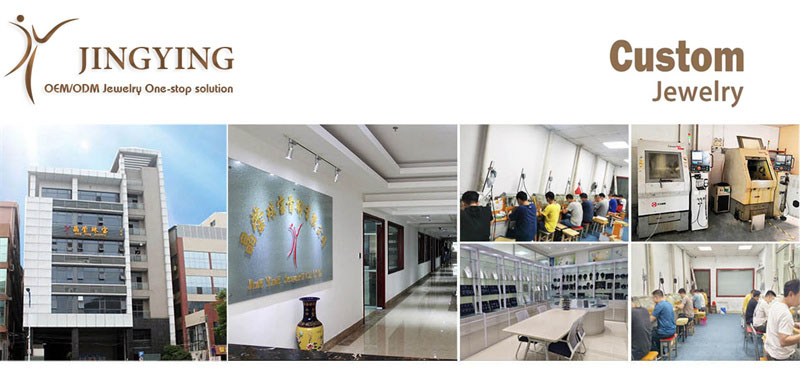
When you have narrowed your list, the vetting process separates serious manufacturers from trading companies posing as factories. The first question is direct: "Do you own your production facility?" A trading company that outsources to multiple workshops cannot control quality, timelines, or accountability. Ask for a live video tour of the production floor—not stock photos. Verify the factory's business license, employee count, and which processes are completed in-house.
A capable factory should clearly explain its minimum order quantity, monthly production capacity, lead times, available materials, and which processes—CNC machining, laser cutting, casting, polishing, PVD plating, stone setting—are handled internally versus subcontracted. The more processes completed in-house, the better the factory can control quality and delivery.
Quality control deserves particular scrutiny for small orders. Small batches are where most quality problems occur because factories may deprioritize them. Ask whether quality inspection differs for small versus large orders, whether they check each piece or only random samples, and how defects found before shipment are handled. A professional manufacturer should describe step-by-step QC procedures, not simply state "we have QC."
Certifications matter depending on your target market. For sales to Europe or North America, confirm REACH compliance, RoHS, nickel-release standards, and material test reports. Factories with ISO 9001 certification have standardized document control and work processes. RJC (Responsible Jewellery Council) certification, which covers supply chain transparency and business ethics, is increasingly relevant as sustainability regulations across major markets become more prescriptive.
Communication Infrastructure and Logistics Planning
How a factory communicates before you place an order predicts how it will communicate during production. Response time matters: top-tier suppliers maintain average response times under four hours, and some industry leaders achieve under one hour. A factory that takes a week to respond to a sample feedback email will cause cascading delays across your entire production schedule.
Ask who will be your main point of contact, how time zones are managed, and what happens when an issue arises mid-production. Slow or vague pre-production communication often signals larger problems during the actual run.
On logistics, treat shipping as a chain of stages rather than a single delivery date. Production completion, inspection, final packing, carrier handoff, export processing, and customs movement each add time before goods move toward you. Standard custom jewelry production typically requires 25–45 days after sample approval, depending on order quantity and plating process. Express shipping to North America and Europe takes 5–7 days; sea freight takes 20–35 days. Build buffer time into your launch calendar—customs review, carrier congestion, and weather disruption can shift delivery even when the factory is reliable.
The Emerging Factor: Sustainability and Traceability
Sustainability is no longer a marketing buzzword—it is becoming a compliance requirement and a consumer expectation. CIBJO's 2026 pre-congress reports emphasize that growing supply chain scrutiny will make provenance, traceability, and ESG credentials increasingly important for competitiveness and consumer trust.
For startups, this translates into practical questions for your factory: Can they provide the origin of gemstones and precious metals? Do they offer recycled silver or gold options? Are their plating processes REACH-compliant and free from harmful levels of lead, cadmium, and nickel? Lab-grown diamonds and gemstones have gained mainstream attention for their ethical sourcing and reduced ecological impact, and consumers increasingly expect suppliers to provide traceable recycled materials and adhere to fair labor and environmental standards.
Choosing a factory that cannot answer these questions may save money today but will limit your brand's ability to make credible sustainability claims tomorrow—and that limitation will only grow more costly.
A Practical Framework for Final Selection
After you have completed the discovery and vetting process, compare your shortlisted factories across five dimensions: category-specific production experience, confirmed production capacity for both current and projected volume, documented QC standards and processes, communication infrastructure and responsiveness, and sample quality relative to bulk production. Use a scorecard. Assign weights based on what matters most to your brand. A factory with slightly higher pricing but consistent quality will reduce your overall costs by minimizing returns, delays, and rework.
The brands that build durable production relationships invest in clear standards, structured communication, and long-term factory alignment. A manufacturing partner is not a vendor you squeeze for the lowest price—it is a partner whose operational discipline directly determines whether your brand delivers on its customer promise. Choose accordingly.