
Au-delà du regard bleu: Le guide complet des colliers à breloques contre le mauvais œil sur mesure à JINGYING
Introduction: L'intersection du talisman ancien et de la fabrication moderne
Le mauvais œil est l'un des symboles les plus anciens et les plus universels de l'histoire de l'humanité.. À la croisée des cultures de la Méditerranée au Moyen-Orient, De l’Amérique latine à l’Asie, le nazar - ce cercle concentrique de bleu foncé, bleu clair, blanc, et noir – sert de gardien silencieux contre les regards malveillants et les énergies négatives.. Depuis des millénaires, ce symbole a été rendu en verre, peinture, et de l'argile. Aujourd'hui, il connaît une renaissance de la haute joaillerie .
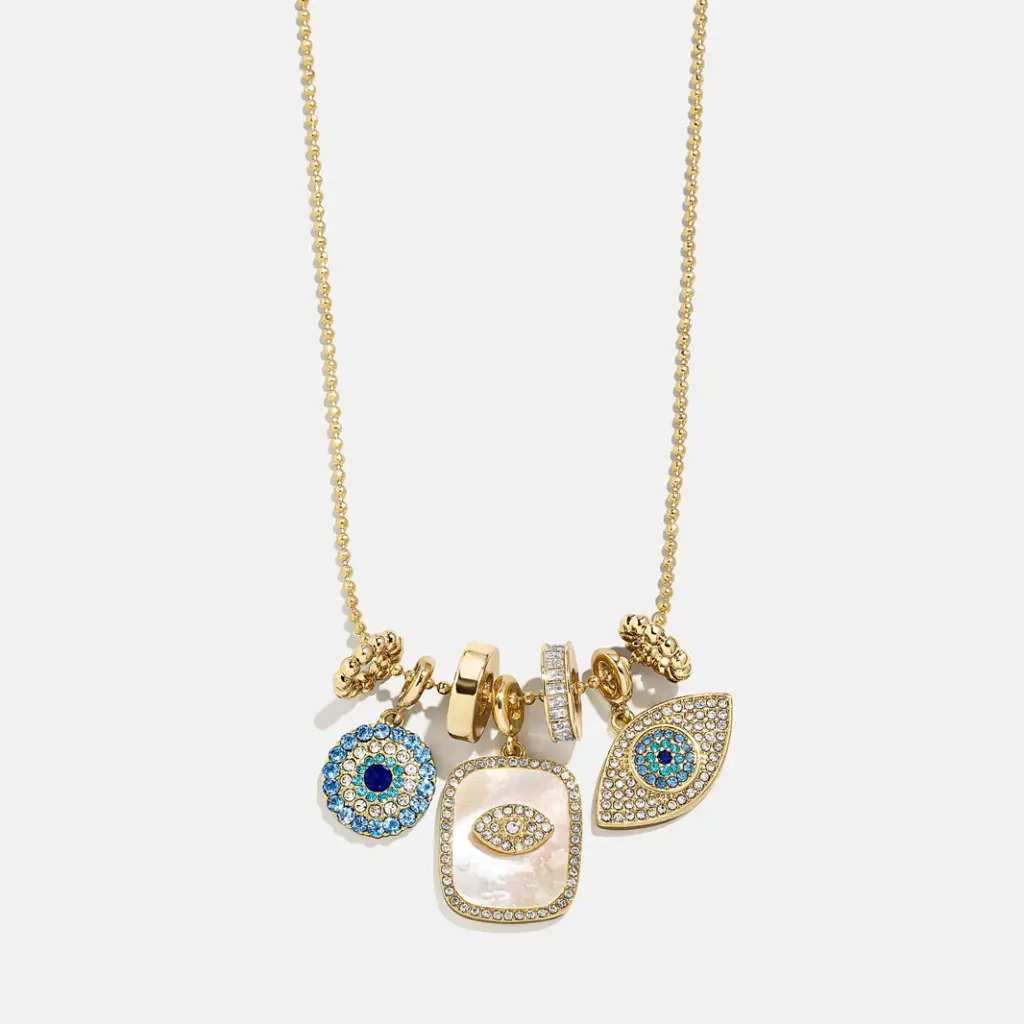
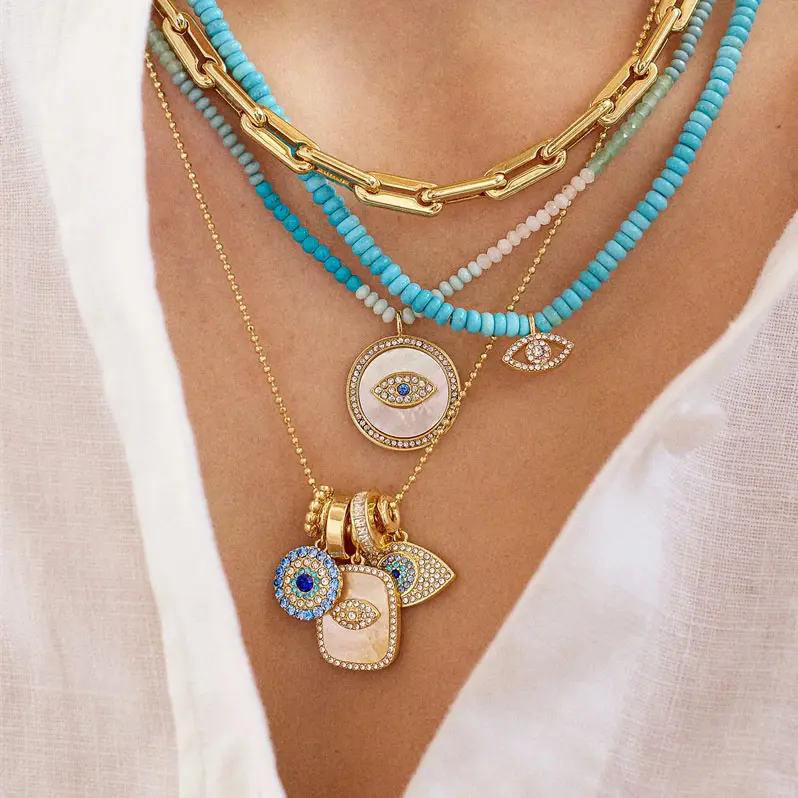
Sur le marché de la bijouterie contemporaine, le mauvais œil n'est plus qu'une superstition; c'est une déclaration de mode, un symbole de pleine conscience, et un SKU le plus vendu pour les marques du monde entier. Cependant, pour les créateurs, entrepreneurs, et les détaillants, se procurer une pièce générique Evil Eye à partir d’un catalogue est insuffisant. Pour capturer le désir d'authenticité et de personnalisation du consommateur moderne, vous avez besoin d'une solution personnalisée.
Entre Jingying. (également référencé sous le nom de Jingying Jewelry ou Chingying Jewelry). Pendant plus de deux décennies, JINGYING s'est positionné comme un fabricant unique de premier plan, dominant spécifiquement le secteur des bijoux personnalisés en laiton et en argent . Mais comment peut-on prendre une icône culturelle comme l’Evil Eye et la transformer en une image exclusive ?, collier à breloques de haute qualité?
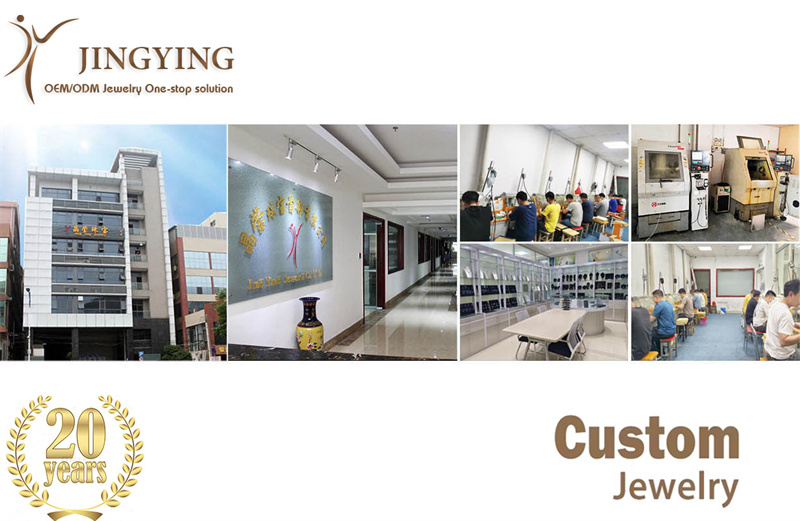
Ce guide propose une masterclass en fabrication sur mesure avec JINGYING. Nous analyserons le flux de travail, de l'inspiration spirituelle initiale à la finition finale, en couvrant les éléments de conception., science du matériel, techniques de sertissage de la pierre, et assurance qualité. Que vous soyez une startup à la recherche de votre première collection ou une marque établie en production à grande échelle, ceci est votre plan pour créer le collier à breloques Evil Eye personnalisé parfait.
Chapitre 1: Comprendre l'avantage JINGYING
Avant de dessiner une seule ligne, il faut comprendre l’écosystème manufacturier. JINGYING n'est pas simplement une usine qui fabrique du métal; c'est un fournisseur de solutions. L'entreprise fonctionne sur un modèle verticalement intégré, souvent appelé un "service à guichet unique" .
Le flux de travail intégré verticalement
Dans la production de bijoux traditionnels, une marque doit se coordonner avec un concepteur CAO, une roulette séparée, un poseur de pierre, un polisseur, et un plateau. Cette fragmentation entraîne des erreurs de communication, retards d'expédition, et majorations de coûts. JINGYING élimine ces variables.
Quand vous travaillez avec JINGYING, chaque phase se déroule sous un même toit:
-
Conception & GOUJAT: Des artistes internes peaufinent vos croquis.
-
Prototypage: Les imprimantes 3D haute résolution créent des modèles en cire/résine.
-
Fonderie: Fonte à la cire perdue avec des métaux précieux.
-
Paramètre: Sertissage de pierres expert (paver, pelouse, dent).
-
Finition: Polissage, placage (or, rhodium, rhodium noir), et oxydation.
-
Conditionnement: Boîtes de marque personnalisées .
Spécialisation en Argent et Laiton
Alors que de nombreux fabricants se concentrent uniquement sur l'or, JINGYING a bâti sa réputation sur 925 Argent sterling et de haute qualité Laiton. Ceci est essentiel pour le marché du mauvais œil. The Evil Eye est un film à grand volume, article souvent à prix moyen. Silver offre le "métal blanc" sensation de luxe sans le prix du platine, tandis que le laiton permet de créer des bijoux tendance abordables avec un placage en or épais. (Vermeil style). Leur chaîne d'approvisionnement pour 92.5% l'argent pur garantit le respect des normes internationales (sans nickel, sans plomb, hypoallergénique) .
Le "Mauvais œil" Compétence
Surtout, JINGYING a fait ses preuves avec ce motif spécifique. Des études de cas révèlent que JINGYING a honoré des commandes massives, tel que 35,000 bracelets en argent Evil Eye personnalisés pour un client japonais . Ce volume indique une maîtrise des enjeux spécifiques de la conception Evil Eye: l'alignement concentrique des couleurs, la courbure du "œil" sur un petit charme, et la durabilité des incrustations d'émail ou de pierre.
Chapitre 2: Le langage de conception du mauvais œil
Créer un charm Evil Eye personnalisé est un exercice de minimalisme symbolique. Le design est petit, généralement entre 11 mm et 18 mm de diamètre ou de hauteur . Donc, chaque micron compte.
L'anatomie du charme
Un charme Evil Eye standard se compose de plusieurs zones distinctes:
-
L'anneau extérieur: Généralement en métal blanc ou jaune (argent/or).
-
Le premier iris: Traditionnellement bleu foncé.
-
Le deuxième iris: Bleu clair ou turquoise.
-
L'élève: Noir ou bleu foncé.
-
Le "Sourcil" / Accent: Souvent une ligne courbe au-dessus de l’œil représentant un sourcil ou une paupière, ou pierres CZ décoratives.
Variables de personnalisation avec JINGYING
Vous n'êtes pas limité à l'appartement traditionnel, nazar en verre peint. Utiliser les capacités de JINGYING, vous pouvez modifier chaque variable:
1. Géométrie (Forme)
-
Rond: Le nazar classique.
-
Larme: En forme d'œil dégoulinant, allonger le cou.
-
Cœur: Une fusion d'amour et de protection, populaire sur les marchés asiatiques .
-
Serpent/bobine: Le serpent qui s'enroule autour de l'œil, symbolisant la sagesse et la renaissance .
2. Palette de couleurs (Émail & Pierres)
-
Traditionnel: Bleu cobalt, blanc, noir.
-
Moderne: Roses pastel, lavande, vert émeraude, ou "caméléon" changements de couleur.
-
Monochromes: CZ tout noir ou tout blanc pour un minimaliste, look gothique.
3. Texture (La finition)
-
Vernisque: Finition miroir pour une réflexion maximale de la lumière.
-
Mat / satin: Un look brossé moderne et subtil.
-
Marqué: Un artisan, texture robuste qui diffuse la lumière différemment .
La fonction Mantra/Backplate
L'une des tendances les plus fortes en matière de bijoux de protection est le "mantra de retour." JINGYING propose une gravure laser au verso de la breloque . Tandis que le recto affiche l'oeil, le dos peut être gravé avec:
-
"je suis guidé"
-
"Lettre" (C'était écrit)
-
"Protège-moi"
-
Une date précise ou une initiale
Cela ajoute une couche narrative aux bijoux, le transformant d'un accessoire en une ancre personnelle.
Chapitre 3: Les entrées: De l'esquisse au modèle 3D
Comment commencer? JINGYING accepte trois formes principales de saisie .
1. La photographie (Le "Reconstruire")
Scénario: Vous avez vu une pièce vintage Evil Eye dans un musée, ou vous avez une photo d'une texture spécifique que vous aimez.
Processus: L'équipe de conception de JINGYING analyse les proportions et les textures de la photo. Ils ne copient pas (pour éviter la violation de la propriété intellectuelle), mais ils interpréter. Ils extrairont le "ambiance"—la courbe de la paupière ou la teinte spécifique de l'oxydation—et la reconstruire sous forme de fichier 3D original.
Mieux pour: Mood boarding et pièces high-concept.
2. Le croquis de la main (Le "Plan")
Scénario: Vous dessinez un cercle approximatif avec un point au milieu et une forme de larme en dessous.
Processus: C'est là que les ingénieurs CAO de JINGYING gagnent leur vie. Ils convertissent les lignes 2D en volume 3D. Ils doivent déterminer:
-
Épaisseur de paroi: Si une esquisse présente un bord très fin, l'ingénieur l'épaissit à 0,8 mm-1,2 mm pour éviter la casse lors du moulage.
-
Angles de dépouille: S'assurer que le charme peut être retiré du moule.
-
Ergonomie: Est-ce que la caution (la boucle où la chaîne s'attache) asseyez-vous à l'angle droit pour que l'œil soit tourné vers l'avant lorsqu'il est porté?
3. Le fichier 3D (Le "Chemin direct")
Scénario: Vous êtes un designer avec des compétences RhinoGold ou Matrix.
Processus: Vous envoyez un fichier .STL ou .OBJ. JINGYING gère un "Conception pour la fabrication" (DFM) analyse. Ils vérifient "bords non collecteurs" (erreurs numériques qui provoquent des trous dans le métal) et assurez-vous que les réglages des pierres sont mathématiquement corrects pour les tailles de pierres précieuses . C'est le chemin le plus rapide vers la production.
Chapitre 4: L'alchimie des matériaux
Une fois la conception numérique approuvée, La création physique commence. Le choix du matériau dicte le prix et la longévité du collier.
Le métal de base: Argent sterling (925)
Pour le mauvais œil, 925 L'argent sterling est l'étalon-or . Il consiste en 92.5% argent pur et 7.5% cuivre (pour la dureté).
-
Pros: Lustre blanc brillant, hypoallergénique, valeur intrinsèque élevée.
-
Personnalisation: JINGYING peut le laisser en argent brut (qui ternit naturellement pour un look antique) ou plaquez-le.
L'assiette: Vermeil vs. Plaque d'or standard
Si tu veux un mauvais œil en or, tu as des options:
-
Placage en or standard: Une fine couche d'or sur argent/laiton. Rentable mais peut s'user avec le temps.
-
Vermeil (Plaque lourde): Au moins 2.5 microns d'or sur argent sterling. Il s'agit d'un produit de luxe de niveau intermédiaire qui résiste à un usage quotidien. .
-
Or rose & Rhodium noir: L'or rose offre une touche vintage. Le placage en rhodium noir crée un effet spectaculaire, fond gothique pour un œil en émail aux couleurs vives.
Le "Œil": Émail vs. Pierres précieuses
Comment créer la couleur bleue de l'iris?
-
Émail dur (Cloisonné): La poudre de verre est cuite dans un four à haute température. Il fond en une douceur, surface vitreuse. Il est résistant aux rayures et permanent. JINGYING utilise de l'émail sans plomb pour se conformer aux normes de sécurité UE/États-Unis .
-
Résine époxy douce: Un rhume, résine de type plastique. Moins cher mais moins durable (jaunissant avec le temps).
-
Pavé de pierres précieuses (CZ/Saphir): Au lieu de peindre, le bleu "iris" est composé de minuscules zircones cubiques serties en pavé ou de saphirs créés en laboratoire. La pupille est un seul spinelle noir. Cela crée un "oeil de diamant" effet qui scintille intensément .
Chapitre 5: Le parcours de fabrication (Étape par étape)
Voici le parcours physique de votre charm Evil Eye personnalisé à travers l'usine JINGYING .
Étape 1: L'arbre à cire (Prototypage)
Votre fichier 3D approuvé est envoyé à une imprimante 3D SLA. Il imprime un modèle en résine haute résolution du charme. Ce modèle en résine est attaché à un "base de grappe" (un entonnoir en caoutchouc) créer un arbre à cire. Cet arbre permet de lancer plusieurs charmes à la fois.
Étape 2: Investissement & Épuisement professionnel
L'arbre à cire est placé dans un flacon et rempli d'une suspension semblable à du plâtre appelée investissement. Le flacon est chauffé dans un four à 750°C (1382° F). La cire/résine brûle, laissant une cavité négative parfaite de votre charme Evil Eye à l'intérieur du plâtre.
Étape 3: Fonderie
Fondu 925 Argent (chauffé à ~1000°C) est injecté dans le ballon chaud à l’aide d’une centrifugeuse ou sous vide. La force pousse l'argent dans les minuscules cavités, capturer les détails de la paupière et le trou de la bélière.
Étape 4: Dévot & Coupe
Le plâtre est décollé au jet d'eau à haute pression. L'arbre d'argent se révèle. Les breloques sont coupées de l'arbre avec une scie au carbure. À ce stade, le charme semble gris, rugueux, et a un petit "carottes" (des bosses où le métal coulait).
Étape 5: Le département finition (La scène artisanale)
C'est la phase la plus critique. Les pièces moulées brutes vont au bijoutier d'établi.
-
Culbutage: Les breloques sont placées dans un culbuteur vibrant avec grenaille d'acier. Cela lisse la surface.
-
Affûtage: Un bijoutier utilise un micromoteur pour poncer les carottes au ras du corps du charm..
-
Polissage: La pièce est polie pour obtenir une brillance élevée à l'aide d'une meule de polissage et d'un composé à rouge.
Étape 6: Le cadre (Si vous utilisez CZ)
Si votre mauvais œil utilise des pierres de zircone cubique pour l'iris, le passeur intervient.
-
Réglage du pavé: Le sertisseur utilise un petit ciseau pour pousser les dents en argent sur le bord des pierres CZ., les verrouiller en place .
-
Cadre de lunette: Une bande d'argent est enroulée sur le bord de la pierre pour un aspect élégant., frontière moderne.
Étape 7: Application d'émail (La couleur)
Si vous avez choisi l'émail dur, le charme va au "coloriste." La poudre d'émail (mélangé à de l'eau) est injecté dans les zones en retrait du charme. Le charm est cuit à ~850°C. L'émail fond, fusibles à l'argent, et rétrécit légèrement. Ce processus est répété 3-4 fois pour remplir la niche parfaitement au niveau des murs argentés.
Étape 8: Placage
La breloque en argent finie est plongée dans un bain de galvanoplastie. Si c'est une pièce d'or, l'argent jaunit instantanément.
Étape 9: Inspection CQ
Le charme est vérifié au microscope.
-
L'émail a-t-il des trous d'épingle? (Rejeter)
-
La pierre CZ est-elle lâche ?? (Rejeter)
-
La couleur du placage est-elle uniforme? (Rejeter)
Chapitre 6: L'assemblage du collier
Un charm n'est rien sans une chaîne. JINGYING propose une personnalisation étendue de la chaîne .
Sélection de chaîne pour le mauvais œil
-
Chaîne de Singapour: Liens en spirale à plat. Très brillant. Excellent pour les délicats, pendentifs féminins Evil Eye.
-
Chaîne de câbles: Le classique, chaîne à maillons ronds. Durable et abordable.
-
Chaîne Serpent: Un lisse, surface lisse. Permet au charme Evil Eye de glisser magnifiquement sans s'accrocher.
-
Chaîne de corde: Texture tordue. Donne un gros, look audacieux.
Innovation du fermoir
Le marché japonais, connu pour sa haute qualité, exige des fermoirs spécifiques pour les objets Evil Eye .
-
Fermoir à homard: Norme pour les pendentifs lourds.
-
Fermoir magnétique: Facile à utiliser; populaire pour les bijoux de mode.
-
Chaîne de sécurité: Une petite chaîne secondaire attachée au fermoir. Si le fermoir principal échoue, le collier ne tombe pas. C'est une caractéristique de la fabrication sur mesure haut de gamme.
Chapitre 7: Contrôle qualité et liste de contrôle en 7 points
JINGYING utilise un système d'inspection rigoureux en 7 points avant l'expédition .
-
Vérification du poids du métal: La breloque de 1,45 g fait-elle réellement 1,45 g ?? (L'argent est évalué au poids; la précision est un profit).
-
Test d'étanchéité de la pierre: Est-ce que le CZ "hochet"? Si oui, ça va tomber pendant le transport.
-
Inspection des défauts de surface: Rayures, porosité (petites bulles dans le métal), ou des bords rugueux.
-
Test de la fonction de fermoir: Le fermoir mousqueton doit s'ouvrir/se fermer 50 fois en test sans brouillage.
-
Adhérence de placage: Test de bande. Est-ce que l'or s'écaille?
-
Intégrité de l'émail: La surface est-elle plate? Pas de fissure?
-
Revue esthétique finale: Est-ce que cela ressemble à l'échantillon approuvé?
Chapitre 8: Le flux de travail de l'entreprise (Délai de plomb & MOQ)
Pour les entrepreneurs, les aspects pratiques comptent.
Quantité de commande minimale (MOQ)
JINGYING est un fabricant, pas un magasin de détail.
-
Haute complexité (Émail + CZ + Plaque d'or): MOQ pourrait être 100-300 pièces.
-
Faible complexité (Timbre d'argent simple): MOQ pourrait être 50-100 pièces.
-
Production de masse: Ils gèrent jusqu'à 50,000 unités facilement .
Délai de plomb
-
GOUJAT & Exemple d'approbation: 5-7 jours (pour les rendus) .
-
Prototype physique (Cire/Résine): 7-10 jours.
-
Production (après dépôt): 25-35 jours .
-
Expédition (DDP/FOB): 5-10 jours selon le lieu.
Facteurs de tarification
Le coût d’un collier Evil Eye personnalisé dépend de:
-
Poids argenté: Plus le charme est épais, plus le coût de l'argent est élevé.
-
Travail: Mise à la main 100 Les pierres CZ prennent des heures. L'émail nécessite des artisans qualifiés.
-
Placage: Vermeil (2.5 microns) coûte plus cher que le placage flash standard.
Chapitre 9: Étude de cas – Le succès japonais
Pour illustrer la capacité, pensez à la commande de 35 000 unités du Japon . Le client voulait un "énergie positive" bracelet.
-
Défi: Assurez-vous que l'iris bleu était de la teinte exacte de "Indigo japonais" requis par leur livre de marque.
-
Solution: Jingying Created 10 plaques d'échantillons en émail avec différents ratios de pigment bleu. Ils ont expédié ces pastilles de couleur physiques à Tokyo pour approbation à la lumière du jour..
-
Résultat: Une fois la couleur signée, JINGYING a utilisé ses distributeurs automatiques d'émail (pour le socle) et finition à la main (pour l'élève) livrer 35,000 unités identiques avec un taux de défauts inférieur à 0.5%.
Chapitre 10: Le "Comment faire" Résumé
Pour réaliser sur mesure votre collier charms Evil Eye à JINGYING, suivez-les 5 mesures:
-
Définissez votre USP: Décidez de votre touche spécifique. Est-ce un Enveloppé de serpent œil? UN En forme de coeur œil? UN Mantra sur le dos? Préparez vos images de référence.
-
Contacter JINGYING: Contactez-nous via leurs canaux officiels (Kingjy.com ou Chingying-jewelry.com). Demander un ingénieur commercial, mentionnant spécifiquement "Projet de charme personnalisé contre le mauvais œil."
-
Soumettre le pack technique: Envoyez votre croquis, photo, ou fichier 3D. Précisez votre matériel (925 Argent / Laiton), placage (Argent / 14K or / Rhodium), et méthode de couleur (Émail / Pavé CZ).
-
Approuver le prototype: Ils enverront un rendu 3D, puis un échantillon physique. Ne sautez pas l’échantillon physique. Portez-le pendant une journée. Testez le fermoir. Vérifiez l'émail pour les bords tranchants.
-
Signe & Échelle: Approuver le "Échantillon doré." Signer le contrat de fabrication. Dépôt 30-50% dès le départ. Attendez 25-35 jours. Recevez votre marque, collection personnalisée Evil Eye.
Conclusion
Le mauvais œil est plus qu'une perle sur une chaîne; c'est une émotion, une prière, et une œuvre d'art portée près du cœur. Dans le monde trépidant de la vente au détail de bijoux, les stocks génériques mènent à des guerres de prix. La fabrication sur mesure mène à la fidélité à la marque.
JINGYING offre le pont rare entre la précision industrielle et l'âme artisanale. En tirant parti de leur service unique pour votre collier Evil Eye personnalisé, vous n'achetez pas seulement du métal et de l'émail. Vous gagnez du temps gagné en coordination 10 différents vendeurs. Vous achetez de la cohérence pour 10,000 unités. Et finalement, vous achetez la possibilité d'offrir à votre client une protection qui n'existe nulle part ailleurs dans le monde.
Le regard du mauvais œil est fixe. Avec jingying, vous pouvez maintenant contrôler exactement ce qu'il voit.