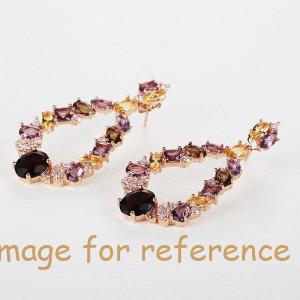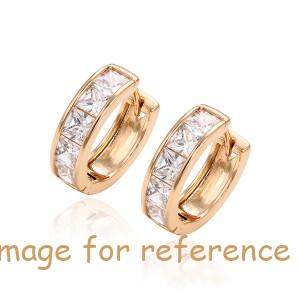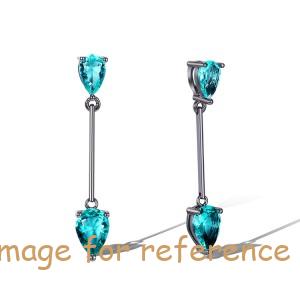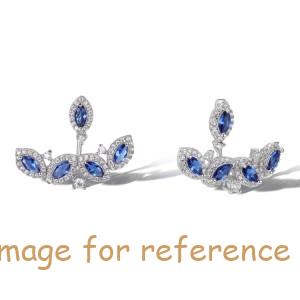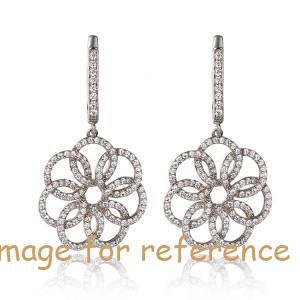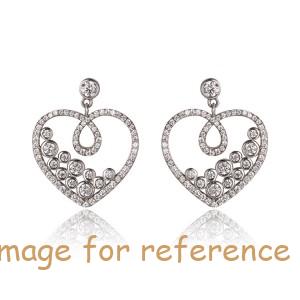
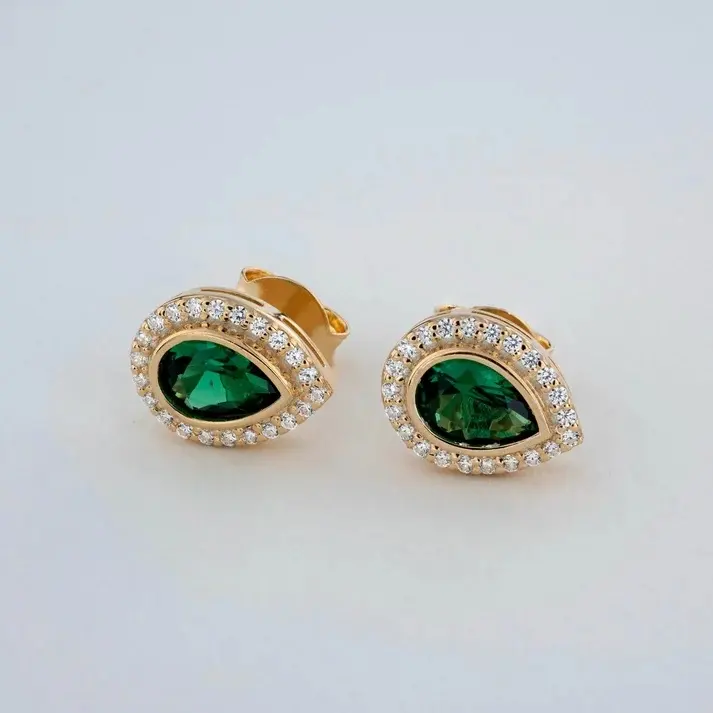
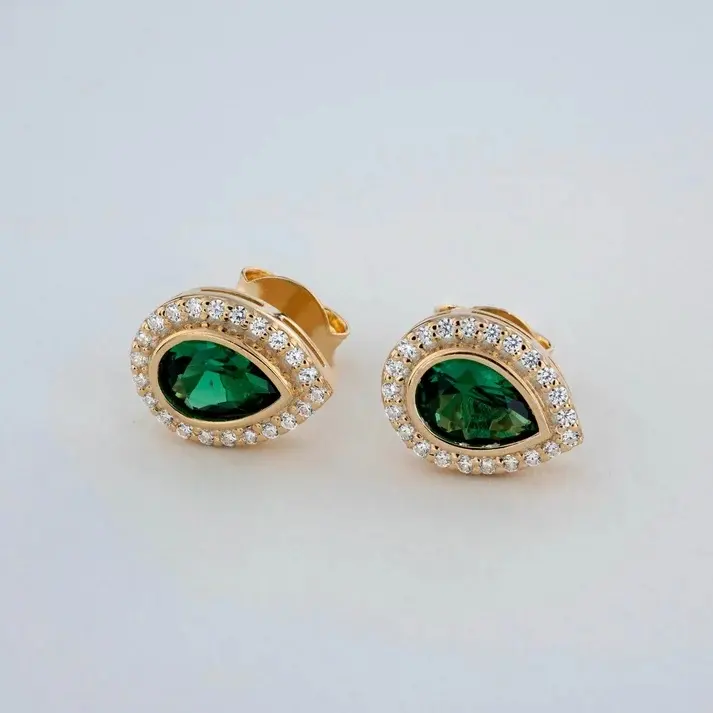
Dịch vụ OEM ODM tùy chỉnh của Bông tai thả ngọc lục bảo bằng vàng nguyên khối 8K/10K/14K
Nhà sản xuất trang sức OEM/ODM Thiết kế tùy chỉnh đồ trang sức của riêng bạn
Hãy để bắt đầu : mo@kingjy.com
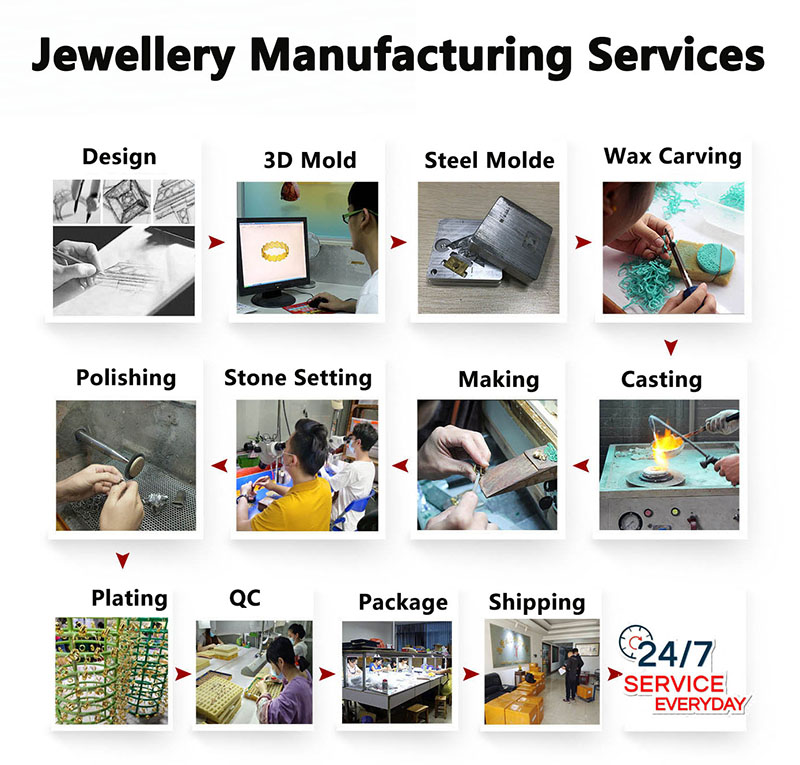
How to Produce Emerald Bezel Drop Stud Earrings in 8K/10K/14K Solid Gold at JINGYING
Giới thiệu: The Confluence of Gemstone and Metal
In the hierarchy of fine jewelry, few combinations possess the quiet authority of emerald and gold. The deep, verdant green of a well-cut emerald—with its characteristic Jardin inclusions that attest to its natural origin—finds its most sympathetic setting in the warm glow of solid gold. Tại Jingying, a manufacturer with over two decades of experience in OEM and ODM jewelry production, the creation of emerald bezel drop stud earrings in 8K, 10K, or 14K solid gold represents a sophisticated interplay of traditional craftsmanship and advanced manufacturing precision. This article provides a comprehensive technical account of how JINGYING transforms raw materials into a finished pair of these highly coveted earrings.
The Metallurgical Foundation: 8K, 10K, and 14K Solid Gold
Before a single CAD file is opened, the selection of the gold alloy establishes the parameters for the entire production process. JINGYING’s expertise lies in navigating the specific metallurgical requirements of different karat golds to achieve a balance of durability, màu sắc, and workability.
Understanding the Karat System
Vàng đặc, as distinct from gold-plated or gold-filled alternatives, forms the structural core of the earrings. 24K Vàng (99.9% nguyên chất) is too soft for jewelry that requires structural integrity for setting stones. Do đó, JINGYING works with alloys where gold is mixed with other metals. 14K gold comprises 58.3% vàng, while 10K gold contains 41.7% vàng. 8K Vàng, at approximately 33.3% vàng, offers the greatest durability but requires careful alloying to achieve an appealing color.
The Alloying Challenge: Color and Castability
Producing high-quality solid gold castings requires precise control over the alloy composition. JINGYING employs proprietary master alloy recipes to control both the color and the castability of the metal. Ví dụ, achieving a rich yellow hue in 10K gold without a greenish tint involves blending palladium, bạc, and copper in specific proportions. For the casting process itself, the alloy must be optimized for fluidity to ensure it fills the fine details of the mold.
One critical aspect of gold casting is the management of oxygen. Porosity—microscopic air bubbles—is the enemy of high-integrity jewelry, particularly in prongs and bezel walls that must be structurally sound. JINGYING's expertise includes the use of oxygen scavengers in the alloy, such as germanium. In yellow karat gold casting alloys, germanium (up to approximately 1% theo trọng lượng) serves as an effective deoxidizer, reducing the need for elements like silicon or boron that can create hard spots and compromise the final finish.
For the production of the drop stud earrings, JINGYING's technicians select the specific gold alloy based on the client's requirements. 14K Vàng, with its higher gold content, offers a richer color and is perceived as more luxurious, making it ideal for higher-end collections. 10K Vàng, being harder and more scratch-resistant, is chosen for pieces intended for daily wear or more active lifestyles.
The Design and Prototyping Phase: From Concept to Casting Tree
The journey from a designer's sketch to a physical product begins in the digital and physical modeling phase. JINGYING utilizes a structured "Collaborative Odyssey" to ensure that the client's vision is translated accurately into a manufacturable piece.
Giai đoạn 1: Design Translation and CAD Modeling
The process begins with the client providing a design concept. JINGYING’s in-house engineering team translates this into a 3D model using advanced CAD software like Rhino 7 or MatrixGold. This is not merely a visual exercise; it is a structural one. The engineers calculate the precise weight of gold required for the piece using density algorithms. They also engineer the "fixing pipes" and structural connections that will become the earring post and the drop element, ensuring the earring is balanced and wear-resistant. For a bezel-set emerald, the CAD model must define the exact dimensions of the emerald's seat to ensure a secure fit without placing undue stress on the gemstone.
Giai đoạn 2: Wax 3D Printing and Tree Assembly
Once the digital model is approved, JINGYING utilizes high-resolution 3D printers to create a physical prototype in wax. This is typically a "wax-like resin" printed via Stereolithography (SLA), achieving a layer thickness of approximately 33 microns for a smooth surface finish. The 3D-printed wax model is then meticulously cleaned, and support structures are removed.
Multiple wax models of the earring are then assembled into a "cây." Using a heated tool, the wax sprues are welded to a central wax rod, creating an arrangement that allows molten gold to flow into all cavities of the mold. JINGYING follows strict spacing protocols: each model on the tree is spaced at least 2mm apart from its neighbors to ensure adequate metal flow and a uniform casting.
Quá trình đúc sáp bị mất: The Birth of the Gold Master
The wax tree is the sacrificial element in the lost-wax casting process, one of the most pivotal stages in jewelry manufacturing.
Bước chân 1: Creating the Investment (Plaster) Khuôn
The assembled wax tree is placed inside a stainless steel flask. A fine plaster, được gọi là "sự đầu tư," is mixed with water and poured over the tree. This plaster is then placed in a vacuum to remove air bubbles—a critical step, as any trapped air could create a void in the final gold casting.
Bước chân 2: Burnout and Pre-Heating
The investment flask, now containing the wax tree, is placed in a kiln. Cái này "kiệt sức" phase is a gradual, two-stage heating process. Đầu tiên, the temperature is raised to 150–200°C to soften the wax, allowing most of it to melt and flow out of the mold. The temperature is then increased to 300–400°C to vaporize any remaining wax residues. If any residue remains, it would carbonize during the final high-temperature phase (750–850°C), contaminating the mold cavity and ruining the surface finish of the casting. JINGYING often uses "Ashless" casting investment powder to further ensure that zero residue remains, guaranteeing a flawless surface for the molten gold.
Bước chân 3: Melting and Casting the Gold
The precious metal—whether 8K, 10K, or 14K solid gold—is melted in a specialized crucible. JINGYING employs multiple methods, including electric induction melting (in an "electro-melting" máy móc) or using an oxygen-acetylene torch for specific applications. To prevent oxidation and porosity, the melting is often performed in a protective atmosphere, such as argon gas, or within a sealed vacuum casting machine. The molten gold is then poured or forced (via vacuum or centrifugal force) into the hot investment mold. The high temperature of the flask (750–850°C) ensures that the gold remains fluid long enough to fill the thinnest sections of the mold, including the intricate bezel walls.
Bước chân 4: Devestment and Quenching
Khi vàng đã nguội và đông đặc lại, the flask is quenched in cold water. The plaster investment, still hot from the casting process, shatters upon contact with the water due to thermal shock. This crude yet effective method releases the gold tree from its plaster cocoon. Some residual plaster may remain, which is removed using high-pressure water or, in stubborn cases, a weak acid solution.
The Finishing and Assembly Process: Precision and Craft
The gold tree that emerges from the flask is a rough, interconnected cluster of emerald drop earring models. It is now time to transform it into a finished piece of jewelry.
Bước chân 1: Cutting and Polishing
The individual earring castings are carefully cut from the tree, a process known as "de-sprueing." The small nubs where the sprues were attached are filed and sanded down. Ở giai đoạn này, the rough castings undergo a series of mechanical and manual polishing operations to bring them to their final luster. The first phase involves grinding and polishing to remove major casting imperfections and to define the metal's shape. This is followed by a more delicate phase of "wheeling" Và "hoàn thiện bằng tay" using rotating wheels and abrasive compounds to create the desired finish—whether it be high-polish, mờ, or satin. JINGYING's artisans employ a range of tools, from rotary wheels to "collet blocks" (or bezel blocks), to precisely size and shape the bezel setting for the emerald.
Bước chân 2: Cài đặt khung viền
The defining feature of the earring is its bezel setting, a continuous metal rim that encircles and protects the emerald. Setting an emerald is a particularly delicate operation. Không giống như kim cương, emeralds are more brittle (classified as Type III gemstones) and prone to cracking under pressure. JINGYING's master setters are adept at a technique that minimizes risk: the diamond halo (if the design includes one) is set first, and the emerald is added last. Cái này "floating bezel" technique involves gently lowering the emerald into a meticulously polished seat and carefully pushing the soft gold bezel wall over the stone's girdle, rather than applying direct pressure to the stone itself.
Bước chân 3: Assembly and Quality Control
The final assembly involves soldering the earring post and butterfly (push-back) fitting to the main body of the earring. For drop earrings, a hinge or a fixed link is attached to the stud component. At every stage, JINGYING’s quality control team verifies the work. They are trained to identify and correct surface flaws, ensuring color consistency and finish quality compare to the approved sample.
For final quality verification, JINGYING sử dụng một Sigma Metalytics Precious Metal Identifier to confirm the 10K or 14K purity of the gold piece. Ngoài ra, Huỳnh quang tia X (Xrf) testing is a standard practice to spot-check the karat composition and the thickness of any applied plating, ensuring they meet the agreed-upon specifications. Only after passing these rigorous inspections and a final 100% visual examination is the earring deemed ready for its "JY" hallmark and final delivery.
Phần kết luận
The production of emerald bezel drop stud earrings at JINGYING is a journey of meticulous transformation. It begins with the selection of a sophisticated 8K, 10K, or 14K gold alloy, engineered for the dual demands of castability and durability. It proceeds through the digital precision of CAD design and 3D wax printing, and culminates in the ancient alchemy of lost-wax casting. The rough castings are then brought to life through a blend of industrial polishing and artisanal hand-finishing, culminating in the delicate, risk-laden art of setting a natural emerald in a protective gold bezel. It is this synthesis of technical rigor, industrial efficiency, and refined craftsmanship that positions JINGYING as a premier manufacturer for custom fine jewelry, có khả năng cung cấp những sản phẩm vừa bền vừa đẹp.