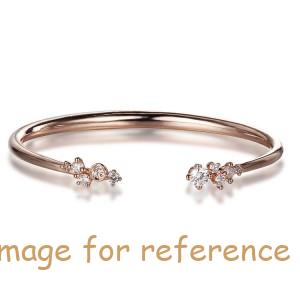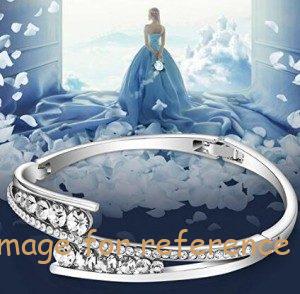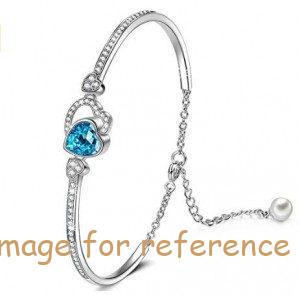
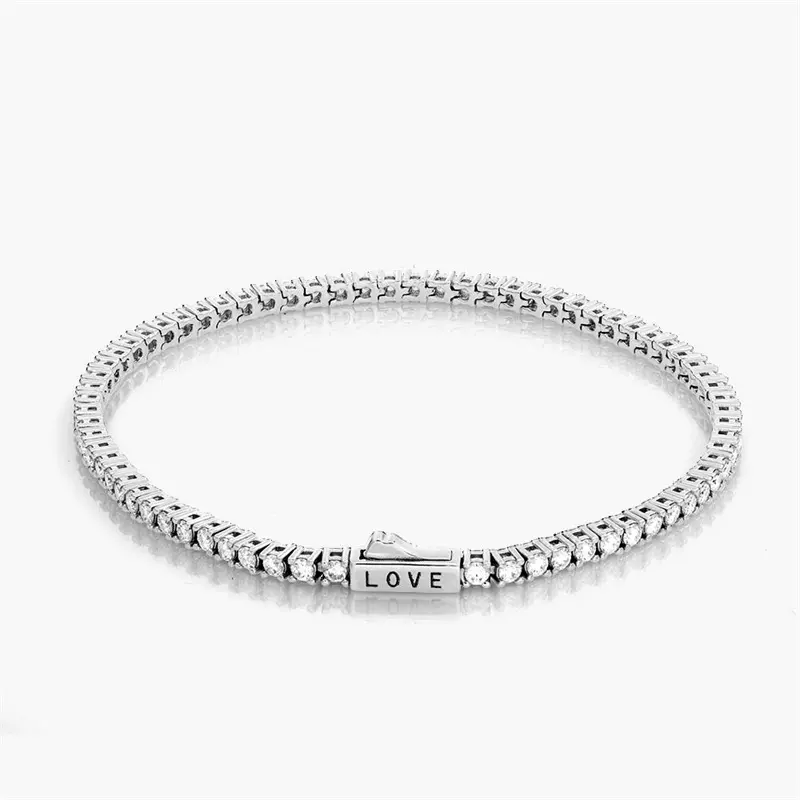
Jingying :Producătorul personalizat de brățări cu lanț agrafă cu trei straturi, aur vermeil
Produceți brățară de argint tenis Moissanite gravată la JINGYING
Să începem : mo@kingjy.com
How to Produce Engraved Moissanite Tennis Silver Bracelet at JINGYING
Introducere
In the contemporary jewelry manufacturing landscape, the tennis bracelet remains a perennial classic—a continuous line of gemstones set in precious metal, designed to wrap elegantly around the wrist. When enhanced with moissanite—a lab-grown gemstone renowned for its brilliant fire and durability—and executed in sterling silver with custom engraving, this piece becomes both accessible and extraordinary.
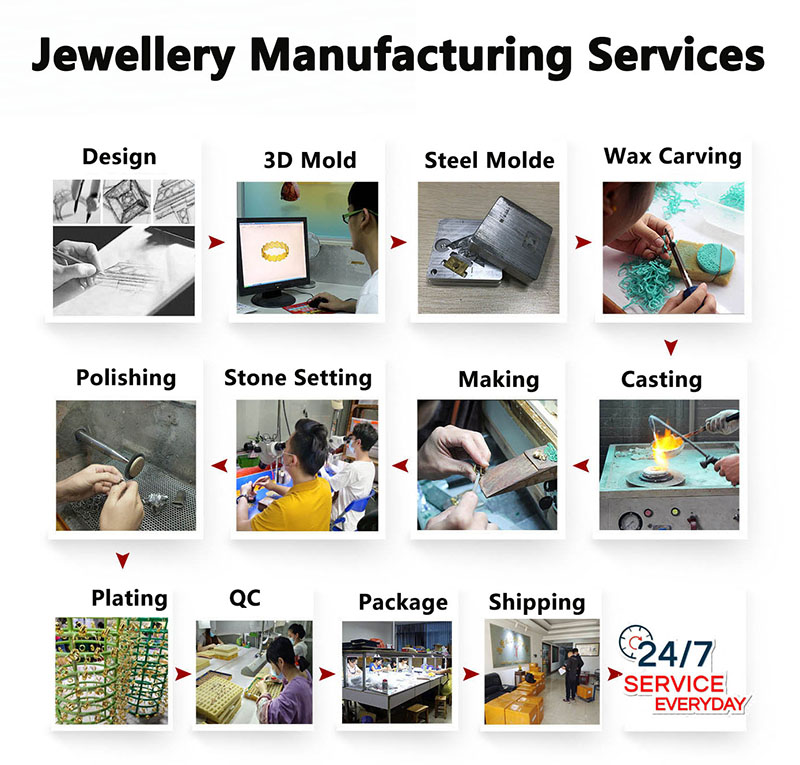
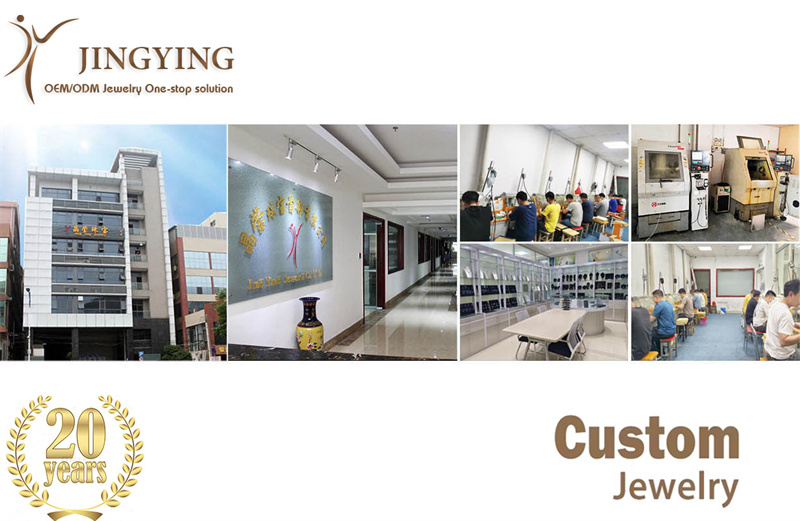
Bijuterii JINGYING, cu peste 23 years of manufacturing experience in Guangdong, China, has perfected the production of such intricate pieces through a vertically integrated one-stop manufacturing model. Unlike fragmented supply chains where design, casting, setare, and finishing are handled by different vendors, JINGYING controlează fiecare variabilă sub un singur acoperiș - de la scheletul CAD inițial până la ambalajul final anti-pătă..
Producerea unei brățări de tenis de moissanite gravată în argint este o simfonie a tehnologiilor de precizie: proiectare asistată de calculator (CAD), 3imprimare D, turnare cu ceară pierdută, Prelucrare CNC pentru gravare, și setarea manuală meticuloasă. Acest raport deconstruiește fiecare fază a procesului respectiv, oferind o foaie de parcurs tehnică pentru mărcile care doresc să producă acest SKU la cerere mare.
Fază 1: Conceptualizare și proiectare tehnică (CAD)
Călătoria unei brățări de tenis la JINGYING nu începe cu metalul, dar cu matematica. Fiecare curbă, scaun de piatră, iar coordonatele de gravură sunt mapate în spațiul tridimensional înainte ca orice material fizic să fie atins.
Metodologia de intrare în proiectare
Echipa de proiectare a lui JINGYING acceptă un spectru larg de formate de intrare, făcând procesul accesibil atât mărcilor consacrate, cât și designerilor de startup:
-
Schițe desenate manual: Rough concepts translated into technical drawings.
-
Reference photos: Images of existing pieces or natural forms used for inspiration.
-
3D files: .STL, .OBJ, or .Rhino files for clients with existing digital assets.
Upon receiving the design brief, CAD engineers begin constructing the parametric model of the bracelet. For a moissanite tennis bracelet, this involves modeling individual links, the hinge mechanism for the clasp, and most critically, the întărituri de piatră.
Engineering for Stone Setting
The CAD phase is where functionality is baked into beauty. Engineers must determine the appropriate wall thickness for the silver settings. If the metal surrounding a moissanite is too thin, the stone will fall out; if too thick, the bracelet becomes heavy and loses its elegant drape.
-
Prong design: The tiny metal claws that hold each moissanite are modeled with exact dimensions. For a 3mm round moissanite, the prongs must rise precisely 1.2mm above the girdle of the stone to ensure security without obscuring light entry.
-
Channel vs. Prong: În timp ce setările de dinte (four-claw or six-claw) are standard for maximum light exposure, JINGYING also models channel settings for a modern, flush look.
-
Engraving depth: If the bracelet features surface engraving on the links between stones, the CAD file maps this negative space to ensure the metal retains structural integrity after etching.
Before approval, JINGYING produces photorealistic renderings. This allows the client to see how light interacts with the moissanite’s facets and how the engraving sits relative to the stones.
Fază 2: Material Selection – Sterling Silver and Moissanite
The Silver Foundation
Pentru acest produs specific, 925 Argint veritabil is the substrate. JINGYING folosește 92.5% pure silver alloyed with other metals (de obicei cupru) to increase hardness. Pure silver is too soft to hold gemstones securely; the alloy ensures that the prongs maintain tension on the moissanites for years.
Clients can choose various plating options over the silver base:
-
Placare cu rodium: A platinum-group metal that gives a brilliant white, mirror-like finish and prevents tarnishing. This is standard for "aur alb" look tennis bracelets.
-
Placă de aur (Vermeil): A thick layer of 14K, 18K, or 24K gold electroplated over the silver for a luxury yellow or rose gold aesthetic.
The Moissanite Quality
moissanit (Silicon Carbide, SiC) is selected for its superior refractive index (2.65-2.69), which exceeds that of diamond (2.42). JINGYING typically utilizes Claritate VVS moissanite, ensuring the stones are eye-clean.
-
Tăiat: Standard round brilliant cut is most common for tennis bracelets, though pear cuts and princess cuts are available for custom orders.
-
Color grading: Clients may select D-F (incolor) or G-H (near-colorless) stones depending on budget and design requirements.
Fază 3: Prototyping and Mass Production Preparation
Prototiparea rapidă (3D tipărire)
Once the CAD is finalized, the file is sent to a SLA (Stereolitografia) or DLP (Digital Light Processing) 3D printer. These machines cure liquid photopolymer resin layer by layer to create a physical wax or resin model of the bracelet.
This resin model is an exact replica of the final silver piece. It includes the delicate prongs, the hinge mechanisms, and the engraved textures. This step is crucial for two reasons: it allows for a physical fit check, and it serves as the sacrificial element for casting.
Casting (Metoda ceară pierdută)
This is the ancient art of metalworking adapted for high precision:
-
Investind: The resin bracelet tree is placed in a steel flask and covered with a plaster-like slurry called investitie.
-
Burnout: Balonul se încălzește într-un cuptor. The resin melts and vaporizes, leaving a perfect negative cavity of the bracelet.
-
Casting: Topit 925 argint (heated to approximately 1,760°F or 960°C) is forced into the cavity using centrifugal force or vacuum pressure. The metal rushes into the micro-details of the prongs and engraving.
După răcire, investitia este rupta, revealing the raw silver bracelet casting.
Fază 4: The Art of Stone Setting – Securing the Moissanite
With the raw castings cut from the metal tree, the pieces move to the stone-setting bench. This is the most labor-intensive phase and requires jewelers to work under microscopes.
La JINGYING, the stone setting process for a tennis bracelet follows a strict sequence:
-
Seat cutting: Using a micro-motor drill, the setter deepens the pre-formed seats in the CAD model to match the exact diameter of the incoming moissanite.
-
Stone placement: Each VVS moissanite is manually placed into its seat. Because tennis bracelets often feature 30 la 60 pietre, consistency is key.
-
Prong tightening: Using a beading tool or a burnisher, the setter pushes the silver prongs over the crown (top) of the moissanite. The pressure must be precise—enough to hold the stone securely against daily wear, but not so much that it cracks the gemstone.
-
Pave and Channel techniques: For bracelets requiring a "fully iced out" Uite, JINGYING utilizes pave setting, where tiny beads of silver are lifted to hold small stones close together, creating a continuous surface of sparkle.
Fază 5: Engraving – Adding the Custom Identity
With the stones set, the bracelet now requires its custom engraving. JINGYING employs two primary methods for engraving, depending on the complexity and volume.
Metodă 1: High-Precision CNC Engraving
For crisp, adânc, and repeatable text or logos (such as brand names, numere de serie, or geometric patterns), JINGYING folosește CNC (Control numeric computerizat) prelucrare.
-
Proces: The bracelet is mounted on a 4th-axis rotary table. A diamond-tipped or carbide end mill rotating at 10,000+ RPM follows the G-code path to physically cut the engraving into the silver.
-
Avantaje: Unmatched precision down to microns; perfect for serialized luxury items.
-
Aplicație: Logos on the clasp back or intricate geometric patterns on the link shoulders.
Metodă 2: Gravura cu laser
For high-speed text or delicate surface markings.
-
Proces: A fiber laser vaporizes the silver surface to create high-contrast, permanent marks.
-
Aplicație: Heartfelt messages, date engravings, or QR codes linking to authenticity certificates.
Fază 6: Finishing and Electroplating
After engraving and setting, the bracelet is physically complete but visually raw. It must be polished and plated.
Lustruire
JINGYING’s artisans use a series of rotary tools and compounds to bring the silver to a mirror finish.
-
Pre-lustruire (Tumbling): The bracelet is placed in a tumbler with stainless steel shot to smooth general surfaces.
-
Lustruire manuală: Using a soft muslin buff and rouge compound, jewelers polish the links, avoiding the moissanites to prevent compound buildup in the settings.
Placare (Galvanic Process)
To enhance durability and color, the bracelet enters the electroplating bath.
-
Placare cu rodium: For silver/white finish. The bracelet is submerged in a rhodium sulfate solution. An electrical current deposits a bright white, hard layer of rhodium over the silver. This prevents the tarnish that raw silver naturally develops.
-
Placă de aur (Vermeil): For yellow/rose gold. The silver is first plated with a barrier layer of nickel or copper, then with a thick layer of 18K gold.
Fază 7: Controlul calității (The 7-Point Inspection)
Înainte de ambalare, every engraved moissanite tennis bracelet passes through a rigorous 7-point inspection system:
-
Stone Alignment: Is the moissanite table perfectly parallel to the bracelet surface?
-
Prong Integrity: A tactile test ensures no prongs are loose.
-
Mecanism de închidere: The box clasp and safety latch must click firmly. Pentru o brățară de tenis, losing the clasp means losing the entire bracelet.
-
Uniformitate de placare: The thickness is measured (adesea 0.5 la 3 microni de aur) to ensure no thin spots.
-
Engraving Depth: Verification that the text meets spec and is legible.
-
Finisaj de suprafață: Inspection for scratches or bubbles in the plating.
-
Verificare dimensională: The bracelet is measured to ensure it meets the requested length (De ex., 7 centimetri).
Fază 8: Logistics and Packaging
With final approval, the bracelets are cleaned ultrasonically to remove any polishing residue, uscate, and packaged. JINGYING offers private label packaging, allowing the brand to place their custom logo on the box.
-
Timp de producție standard: 20-30 business days for bulk orders.
-
Sampling/Prototype: 7-10 zile lucrătoare.
Concluzie
Producing an engraved moissanite tennis silver bracelet at JINGYING is a journey of high-tech precision and hands-on artistry. The process leverages CAD/CAM for structural perfection, turnare cu ceară pierdută for economic scalability, expert stone setting pentru strălucire, şi Gravura CNC for bespoke identity. By utilizing 925 argint sterling ca bază, JINGYING bridges the gap between affordability and luxury, while moissanite provides the ethical, durable fire that modern consumers demand.
For a brand looking to enter the custom jewelry market, partnering with a one-stop manufacturer like JINGYING eliminates the logistical nightmares of coordinating multiple factories. From the first sketch to the final engraved clasp, fiecare milimetru al brățării este responsabil în fața unui singur, sistem integrat de management al calității.