

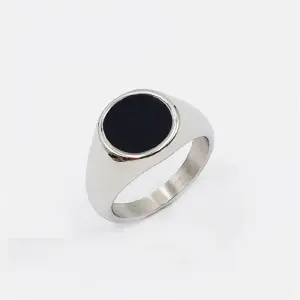
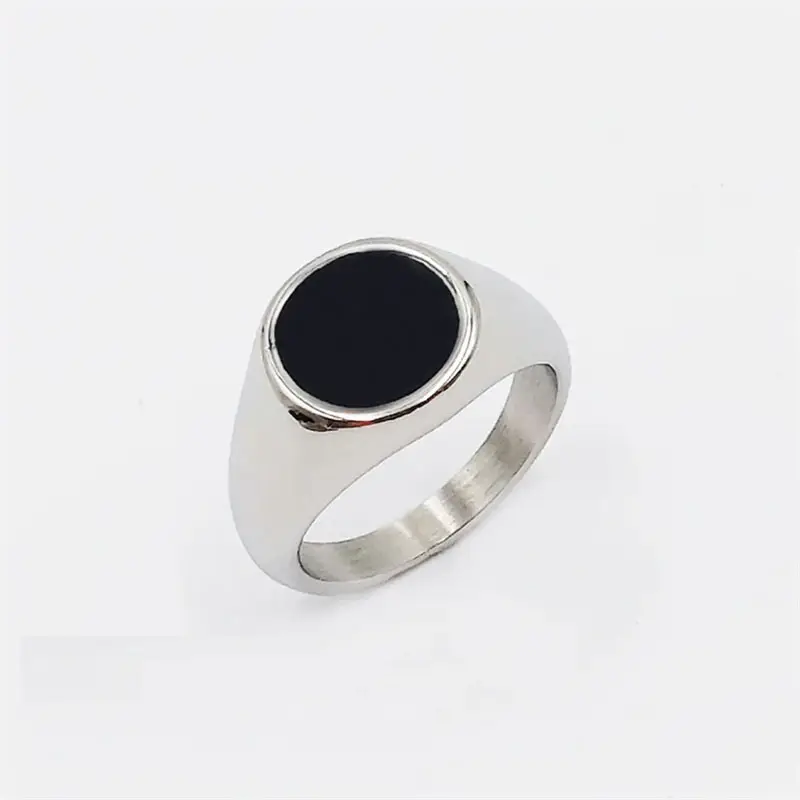
Jingying : OEM Jewelry Service manufacturer of Black Round Enamel Ring
OEM/ODM Jóias Fabricante Design personalizado suas próprias jóias
Vamos começar : mo@kingjy.com
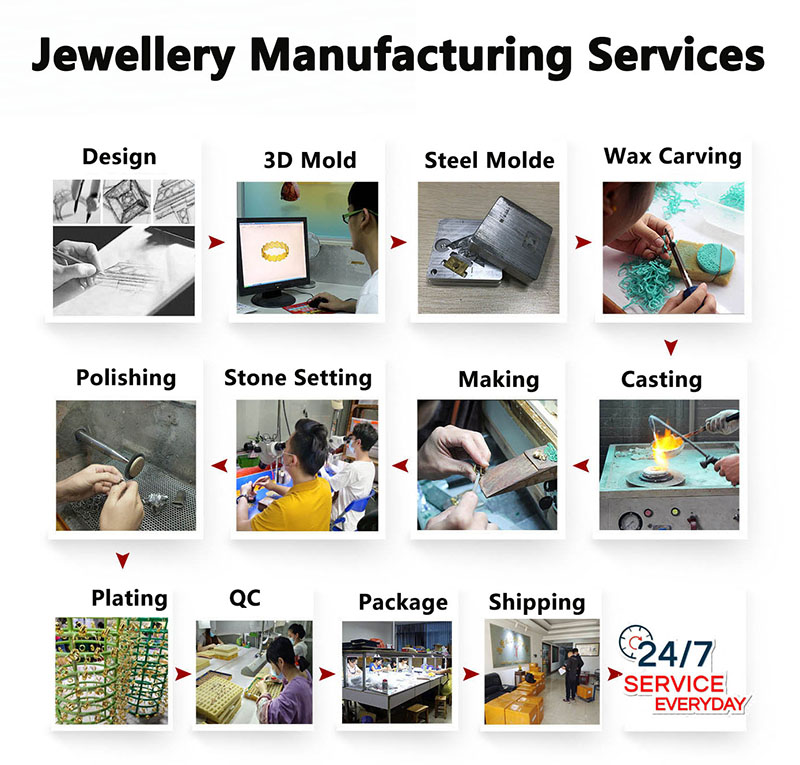
How to Manufacture Black Round Enamel Rings at JINGYING: A Technical Standard Operating Procedure
Introdução
In the world of customized jewelry manufacturing, the combination of metalwork and enamel represents the intersection of durability and artistry. No Jingying (Joias Chingying), a manufacturer with over 23 anos de experiência no setor, the production of a Black Round Enamel Ring is a multi-stage process that transforms raw materials into a high-end accessory. Unlike cold resin or epoxy coatings, vitreous (vidro) enamel offers a permanent, scratch-resistant finish that maintains its gloss for decades.
This guide details the specific technical workflow used at JINGYING to manufacture a black round enamel ring, from initial CAD design to final quality inspection.
Fase 1: Projeto & Engenharia (The CAD Phase)
Before any metal is melted or enamel is fired, the manufacturing process begins at a computer workstation. JINGYING employs skilled CAD engineers who translate the concept of a "round ring" into a precise 3D model using specialized software.
Key Design Considerations for Enamel
Standard ring design differs significantly from enamel ring design. Enamel functions like glass; it needs a "container" to hold it in place. Portanto, the CAD design must include:
-
The Base Shank: The round body of the ring.
-
The Enamel Cavity (Cell): A recessed trough or depression created in the metal surface. For a black enamel ring, this is typically a 0.8mm to 1.2mm deep groove running around the circumference of the ring.
-
The Metal Walls: The edges of the cavity must have vertical or slightly undercut walls to mechanically lock the enamel in place after firing. Without these walls, the glass would pop out when the ring is dropped.
Engineering Check: JINGYING engineers review the file to ensure the metal thickness is sufficient (minimum 0.8mm after polishing) to withstand the high heat of the kiln without warping.
Fase 2: Prototipagem & Fabricação de mofo
Once the digital file is finalized, JINGYING utiliza 3D impressão (SLA/DLP) para criar um protótipo de resina de alta resolução. This physical model allows the client to feel the width and roundness of the ring before mass production begins.
The Rubber Mold
If the order is for批量 production (typically over 10 pedaços), JINGYING creates a vulcanized rubber mold.
-
The resin prototype is embedded in raw rubber.
-
The block is heated and compressed.
-
Uma vez curado, the rubber is cut open, and the prototype is removed, leaving a negative cavity.
-
This mold is used to inject wax repeatedly, allowing for hundreds of identical wax "copies" of the ring to be produced efficiently.
Fase 3: Elenco (Lost-Wax Process)
Com os modelos de cera prontos, the ring enters the fundição de cera perdida department. This is the most common method for creating complex jewelry geometry.
Step-by-Step Casting:
-
Montagem de árvore: The wax rings are attached to a central wax "jito" (como galhos de uma árvore) para criar uma árvore de fundição.
-
Investimento: A árvore de cera é colocada em um frasco de aço e coberta com um material de revestimento semelhante a gesso. (binder + silica). It hardens into a solid block.
-
Burnout: The flask is placed in a high-temperature furnace (aprox.. 750°C/1382°F). The wax melts and vaporizes ("cera perdida"), leaving a perfect negative cavity of the ring tree.
-
Elenco: JINGYING uses vacuum or centrifugal casting machines. Molten metal—typically Latão, Prata de lei, or Stainless Steel for enamel bases—is forced into the hot mold cavity.
Note on Material: Copper-rich alloys (like brass or fine silver) are preferred for enamel because they bond chemically with the glass oxides during firing.
Fase 4: Initial Metal Finishing (A tela)
After the metal has cooled, as peças fundidas brutas são cortadas da árvore. Nesta fase, the ring looks dark, duro, and porous. It must be refined before enamel can be applied.
-
Caindo: The rings are placed in a vibrating tumbler with abrasive media to remove the investment residue and smooth surface roughness.
-
Pré-polimento: Os trabalhadores usam escovas de cerdas radiais e compostos de polimento para deixar o metal com um acabamento quase espelhado.
-
The Critical Step (Limpeza): Enamel will not stick to dirty metal. The rings undergo a degreasing process in an ultrasonic cleaner with a specialized detergent, followed by a rinse in distilled water. Any oil from fingers at this stage will cause the enamel to "crawl" away from the metal during firing.
Fase 5: O Processo de Esmaltação (The Black Application)
This is the core of manufacturing the "Black Round Enamel Ring." JINGYING utiliza Vitreous Enameling, which involves fusing powdered glass to the metal substrate at extremely high temperatures (750°C - 850°C).
5.1 Preparação de Materiais
-
The Enamel: High-quality black vitreous enamel (often sourced from specialized suppliers like Thompson Enamel) é usado. The glass is ground into a fine powder, washed to remove impurities, and dried.
-
The Binder: The dry powder is mixed with a liquid adhesive, como Klyr-Fire or a simple distilled water mixture, to create a slurry that can be applied with a brush or syringe.
5.2 Aplicativo (Wet Packing)
-
Artisans use fine-tipped brushes to "wet pack" the black slurry into the cavity of the ring.
-
They must ensure the enamel is packed tightly without air bubbles. The liquid binder holds the glass powder in place temporarily.
-
The ring is placed on a firing trivet (a mesh screen).
5.3 Disparo (The Kiln Cycle)
-
The trivet with the ring is placed into a kiln preheated to approximately 800°C (1472°F) .
-
Duração: The ring remains in the kiln for 45 Para 60 segundos. The artisan watches through a heat-protective window. When the surface of the enamel "wets" (looks molten and glossy like lava), it is ready.
-
Removal: The trivet is pulled out and allowed to cool.
-
Shrinkage: The glass volume drops significantly as it melts. One firing is rarely enough.
5.4 Multi-Firing (Building Layers)
To achieve a deep, glossy black, the ring may be fired 4 Para 6 vezes.
-
After the first firing, the ring looks bumpy (orange peel texture).
-
It is cooled, and more black enamel powder is applied.
-
The ring is re-fired. This process repeats until the enamel is flush with (or slightly domed above) the metal walls.
5.5 Contraction Check
JINGYING technicians check for Crazing (tiny cracks). Because metal expands and contracts with heat faster than glass, rapid cooling can shatter the enamel. Lento, controlled cooling (using a trivet to insulate it from cold surfaces) is mandatory.
Fase 6: Moagem, Polimento & Doming
After the final firing, the enamel surface is rough and the ring may have excess black glass overflow on the metal edges. This is where the true luxury feel is created.
-
Lapping (Moagem): Using a wet grinding wheel or lapidary equipment, the artisan grinds the black enamel flat. They use diamond abrasives (starting at 220 areia, moving up to 600 areia) to ensure the surface is perfectly flush with the metal walls.
-
Edge Cleaning: The metal edges are cleaned of any overflow enamel using a diamond file or a flexible shaft with a ceramic stone.
-
Final Polish: The metal parts (top and bottom edges of the ring) are polished with rouge compound to a high shine. The black enamel is não polished heavily in this step if a matte finish is desired; no entanto, if a glossy black is required, a felt wheel with a fine diamond paste (cerium oxide) is used to bring the glass to a mirror finish.
-
O "Dome" Efeito: For high-end black dome rings, the enamel is intentionally overfilled and fired until surface tension pulls the liquid glass into a smooth, rounded bubble (like a droplet of water). This requires high skill to prevent the glass from spilling over the edges.
Fase 7: Controle de qualidade & Conjunto (O "No-Fault" Padrão)
The final stage at JINGYING involves rigorous inspection.
Inspection Criteria for Black Enamel:
-
Inclusion Check: Under a 10x loupe, the inspector looks for carbon flecks (black spots in black enamel? Na verdade, they look for white/ashy inclusions or bubbles). True black should be deep and opaque.
-
Crack Test: The ring is gently tapped. Um sólido "ping" indicates good bonding. UM "clique" indicates a crack.
-
Thermal Shock Check (Amostragem): A random ring is heated and quickly cooled to ensure the enamel does not craze.
-
Adesão: The inspector checks if the enamel has "shrunk back" from the metal walls. There should be no visible gap between the metal and the glass.
Revestimento (Opcional)
If the ring is made of brass or silver, it may be sent for Rodium Plating ou Arremesso de ouro at this stage. Observação: Plating is done after the enamel is finished, but careful attention is paid to ensure the plating material does not dull the black glass.
Fase 8: Embalagem & Entrega
Finalmente, the rings pass through an ultrasonic cleaner with a neutral detergent to remove polishing compounds. They are dried, placed into anti-tarnish bags, and packaged into JINGYING's branded boxes.
Because the ring uses Vitreous Enamel rather than resin, it is marked as Premium Jewelry—resistant to UV fading and chemical exposure, ready for the luxury market.
Summary of Technical Specifications
| Process Stage | Equipamento / Método | Quality Check Point |
|---|---|---|
| Fabricação de mofo | Vulcanized Rubber | Sharpness of cavity edges |
| Elenco | Cera Perdida / Vácuo | Porosity / Metal integrity |
| Base Prep | Ultrasonic Degrease | Zero oil residue |
| Esmalte | Kiln @ 800°C / Wet Pack | Glass thickness (min 0.6mm) |
| Acabamento | Diamond Grinding / Radial Wheels | Flush surface / Gloss retention |
| QC | 10x Loupe / Teste de adesão | No crazing or shrinkage |
Manufacturing Note: For businesses looking to order custom black enamel rings from JINGYING, it is critical to specify the type of enamel required. Soft enamel (Epóxi) is cheaper but will fade and scratch within months. Hard enamel (Vitreous/Glass) , as described in this process, requires expert firing skills but results in a heirloom-quality piece that defines a brand's reputation.