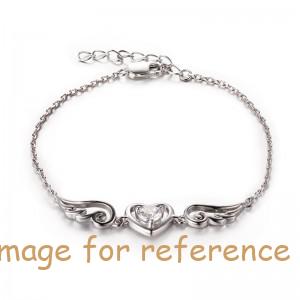
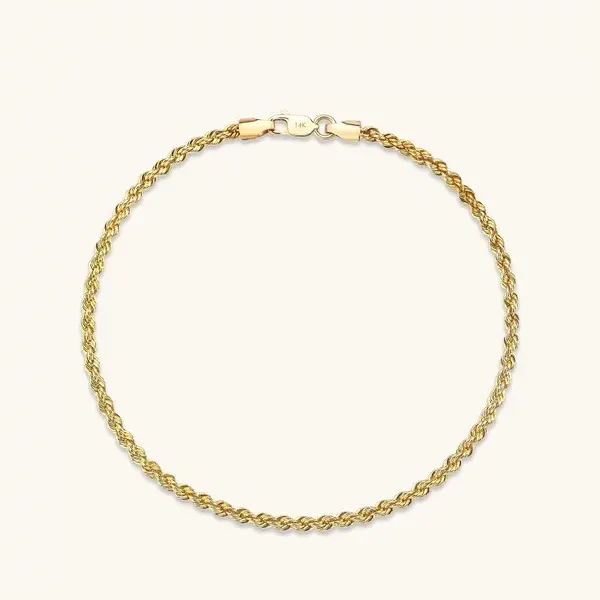
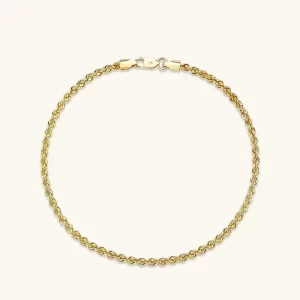
Custom Rope Chain Bracelet for Gold-filled Vendor
OEM/ODM jewelry manufacturer design custom your own jewelry
LET’S GET STARTED : mo@kingjy.com
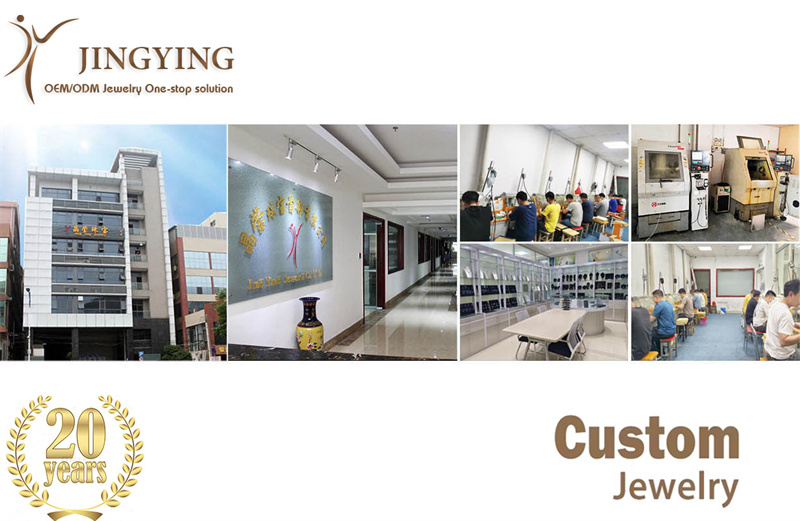
How to Custom Rope Chain Bracelet at JINGYING
Introduction
In the world of fine jewelry, few designs command the same level of timeless appeal as the rope chain bracelet. Characterized by its twisted, intertwined links that mimic the texture of a nautical rope, this bracelet style has remained a staple in both men's and women's jewelry collections for decades. But what if you could take this classic design and make it entirely your own—choosing the metal, the finish, the length, and even adding personalized engravings or gemstones?
Enter JINGYING Jewelry, a Guangzhou-based manufacturing powerhouse that has spent over 25 years perfecting the art of custom metalwork. Founded in 1998, JINGYING (also known as Guangzhou Jingying Jewellery Co., Ltd.) has evolved from a small workshop into a 15,000-square-meter facility exporting to over 30 countries. With a monthly production capacity of up to 50,000 pieces of silver jewelry, JINGYING offers full OEM/ODM jewelry solutions for necklaces, pendants, bracelets, earrings, and rings.
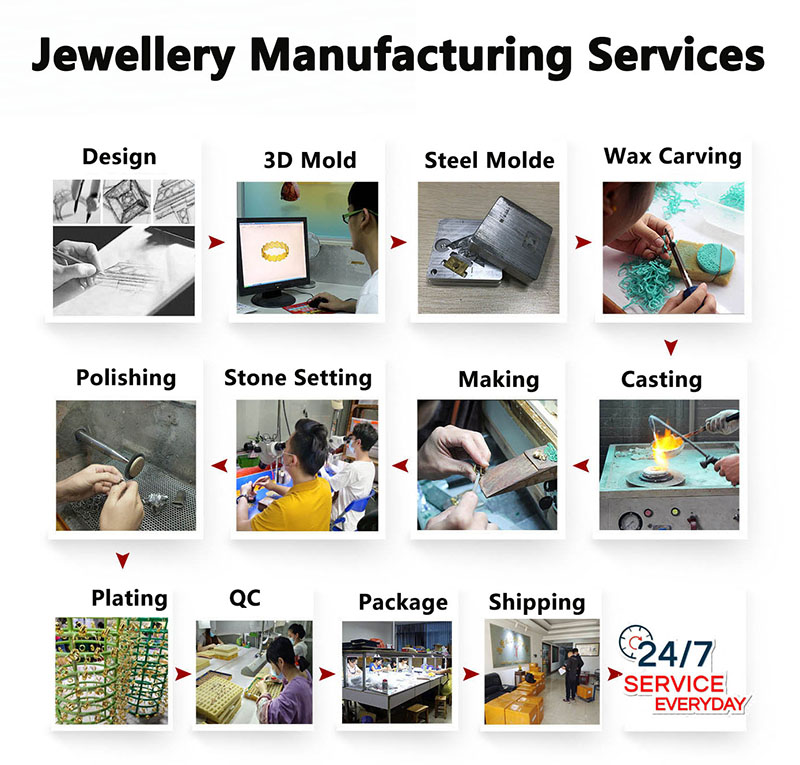
This article provides a comprehensive, step-by-step guide to customizing your own rope chain bracelet at JINGYING—from the initial concept to the final polished product.
Why Choose JINGYING for Custom Rope Chain Bracelets?
Before diving into the customization process, it is worth understanding what sets JINGYING apart as a manufacturing partner. Unlike trading companies that outsource production, JINGYING operates as a vertical OEM/ODM solution. This vertical integration means JINGYING controls every variable in the production chain: alloy mixing, casting, plating, and quality control.
JINGYING specializes in high-quality materials including 925 sterling silver, copper gold-plated pieces, and 9K/10K/14K/18K gold jewelry. All products are manufactured with a strong focus on durability and long-lasting plating. The company also offers private label and OEM services, making it an ideal partner for jewelry brands, retailers, and even individuals looking to create their own signature pieces.
Perhaps most importantly, JINGYING respects intellectual property. A non-disclosure agreement (NDA) is signed prior to the start of the manufacturing process to ensure that your unique design is never shared with anybody else.
Step 1: Conceptualization and Design Brief
The journey of customizing a rope chain bracelet at JINGYING begins with an idea. JINGYING's team can create a jewelry collection using just your thoughts, photos, or CAD designs. The design process typically starts with a consultation where you communicate your vision.
What to Consider in Your Design Brief:
-
Bracelet Style: Rope chains are characterized by their twisted links that resemble a rope. The links can vary in thickness—from delicate 2.5mm chains to bold, statement-making designs.
-
Length: Standard lengths include 7", 7.5", 8", 8.5", and 9". JINGYING can accommodate custom lengths based on your wrist measurement.
-
Closure Type: Options include T-bar closures for easy adjustment, lobster clasps, or custom-designed clasps.
-
Metal Type: Choose from 925 sterling silver, 9K/10K/14K/18K gold, or gold-plated options.
-
Plating Finish: Yellow gold, rose gold, white gold, rhodium, or vermeil (gold-plated sterling silver).
-
Additional Elements: Engravings, charms, pendants, or cubic zirconia settings.
JINGYING's experienced design team will then create an original design sketch based on your requirements. Whether you provide a hand-drawn sketch, a photo of an existing piece, or a detailed CAD file, the team translates your vision into a technical blueprint.
Step 2: CAD Modeling and 3D Rendering
Once the initial sketch is approved, JINGYING's engineering team creates a high-resolution 3D model using Computer-Aided Design (CAD) software. This phase is critical for rope chain bracelets because the twisted link structure requires precise engineering to ensure that every link interlocks perfectly.
During this stage, the team programs the specifications for each link, including:
-
Link thickness and diameter
-
The degree of twist in each link
-
Overall bracelet length and weight distribution
-
Clasp mechanism integration
The CAD model allows you to visualize the bracelet in three dimensions before any physical production begins. This digital prototype can be rotated, scaled, and examined from every angle, ensuring that the design meets your expectations before moving to the next phase.
For complex designs, JINGYING's team also performs stress-testing simulations to ensure the bracelet will withstand daily wear. As one JINGYING case study notes, certain chain structures have a higher failure rate in casting than standard rope chains, making the CAD phase particularly important for ensuring structural integrity.
Step 3: Material Selection and Alloy Preparation
With the 3D design finalized, the actual manufacturing begins with material preparation. For a 925 sterling silver rope chain bracelet, JINGYING starts with 92.5% pure silver mixed with 7.5% other metals—typically copper—to provide the strength required for a bracelet that withstands daily wear.
For gold options, the process is more complex. Pure 24K gold (99.9% purity) is too soft for the intricate shaping and daily wear that a chain bracelet endures. To achieve the perfect balance of hardness, durability, and color, JINGYING's metallurgists create precise alloys. For example, a common formula for 18K yellow gold uses 75.2% gold, 13.69% copper, 7.44% nickel, and 3.66% zinc. The copper provides a warm hue and strength, while zinc and silver contribute to workability and resistance to tarnishing.
The raw metals are smelted under the protection of an inert gas, such as argon or nitrogen, to prevent oxidation during melting. This ensures a pure, homogeneous mixture free from impurities that could weaken the final product. The molten metal is then cast into ingots, which are subsequently rolled and drawn through a series of increasingly smaller dies to create the precise thickness and shape of wire needed for the bracelet's links.
Step 4: Wire Drawing and Link Formation
The rope chain's distinctive twisted appearance requires wire of exceptional uniformity. JINGYING employs a precise wire-drawing process to transform the metal ingot into a long, continuous wire of a specific diameter.
Using computer-controlled drawing machines, the metal is pulled through a series of tungsten carbide or diamond dies, each with a progressively smaller hole. Tolerances are held to within 0.01mm—a standard of precision engineering that ensures every link in the chain will be identical in thickness and weight.
For rope chains specifically, the wire must be perfectly round and of the exact gauge to create the characteristic twisted pattern. The rope chain is typically made on specialized machinery with a head that turns at different degrees to create the interlocking twist pattern.
Step 5: Casting and Assembly
Once the wire is prepared, the manufacturing moves to the casting phase. JINGYING offers several casting methods depending on the complexity of the design and the volume of the order.
For the rope chain bracelet, the links are formed, twisted, and assembled into the final chain structure. This is a meticulous process that requires both mechanical precision and skilled craftsmanship. Each link must interlock perfectly with its neighbors to create the smooth, continuous rope texture that defines this bracelet style.
JINGYING performs 2-time plating for all custom bracelet pieces—a process that ensures the plating is durable and long-lasting. The first plating layer provides the base, while the second layer enhances the finish and durability. This double-plating process is one of the reasons JINGYING's jewelry maintains its luster even with daily wear.
Step 6: Quality Control and Finishing
Quality control is integrated into every stage of production at JINGYING, but the final inspection is particularly rigorous. Each rope chain bracelet undergoes:
-
Dimensional Verification: Checking that the bracelet matches the exact specifications from the CAD model
-
Weight Confirmation: Ensuring the bracelet falls within the expected weight range
-
Plating Inspection: Verifying that the plating is even, consistent, and properly adhered
-
Link Integrity Testing: Checking that every link is properly secured and that there are no weak points
-
Clasp Functionality: Testing that the closure mechanism works smoothly and securely
-
Hypoallergenic Confirmation: JINGYING's sterling silver products are completely nickel-free, lead-free, and cadmium-free, making them suitable for sensitive skin
The finishing phase may also include additional touches like high-polishing, matte finishing, or diamond-cutting to enhance the bracelet's visual appeal.
Step 7: Packaging and Shipping
The final step in the customization journey is packaging and delivery. JINGYING offers personalized packaging options, including custom logos and branded packaging materials.
Before shipping, JINGYING ensures that all intellectual property protections are in place. The company respects client confidentiality and will not reveal any information about operations or designs to third parties.
Real-World Examples of JINGYING Customization
JINGYING has successfully customized rope chain bracelets for clients around the world. One notable example involves a French jewelry store that customized 1,500 chain bracelets. The bracelet was designed with the word "BLESSED" featured prominently in the center, with several cubic zirconia stones embedded along the chain. The main material was 925 sterling silver with 14K gold plating, and the bracelet was hypoallergenic and fade-resistant.
Another example involves an English jewelry supplier who customized 1,000 hand-made oval fashionable link chain bracelets. These bracelets measured 7.5 inches in length with a T-bar closure for easy adjustment.
These examples demonstrate the versatility of JINGYING's customization capabilities—whether you need a small batch of unique pieces or a large-scale production run.
Getting Started with Your Custom Rope Chain Bracelet
To begin your customization journey with JINGYING, you can reach out directly via email at mo@kingjy.com or visit their website at www.kingjy.com[reference:54][reference:55]. The team is experienced in working with clients at every stage of the design and production process, from initial concept to final delivery.
Whether you are a jewelry brand looking to expand your product line, a retailer seeking exclusive designs, or an individual wanting a one-of-a-kind piece, JINGYING provides the expertise, technology, and craftsmanship to bring your rope chain bracelet vision to life.
Conclusion
Customizing a rope chain bracelet at JINGYING is a journey that combines traditional craftsmanship with modern precision engineering. From the initial design consultation and CAD modeling to material selection, wire drawing, casting, and quality control, every step is executed with meticulous attention to detail.
With over 23 years of experience, a vertically integrated manufacturing process, and a commitment to quality and intellectual property protection, JINGYING offers a one-stop solution for jewelry customization. The company's expertise in 925 sterling silver and gold jewelry, combined with its capacity for both small-batch and large-scale production, makes it an ideal partner for anyone looking to create custom rope chain bracelets.
As the Chinese saying goes, "No Pain, No Gain". At JINGYING, this philosophy translates into painstaking effort at every stage of production—ensuring that when you receive your custom rope chain bracelet, it is not just a piece of jewelry, but a work of art crafted with dedication and precision.