
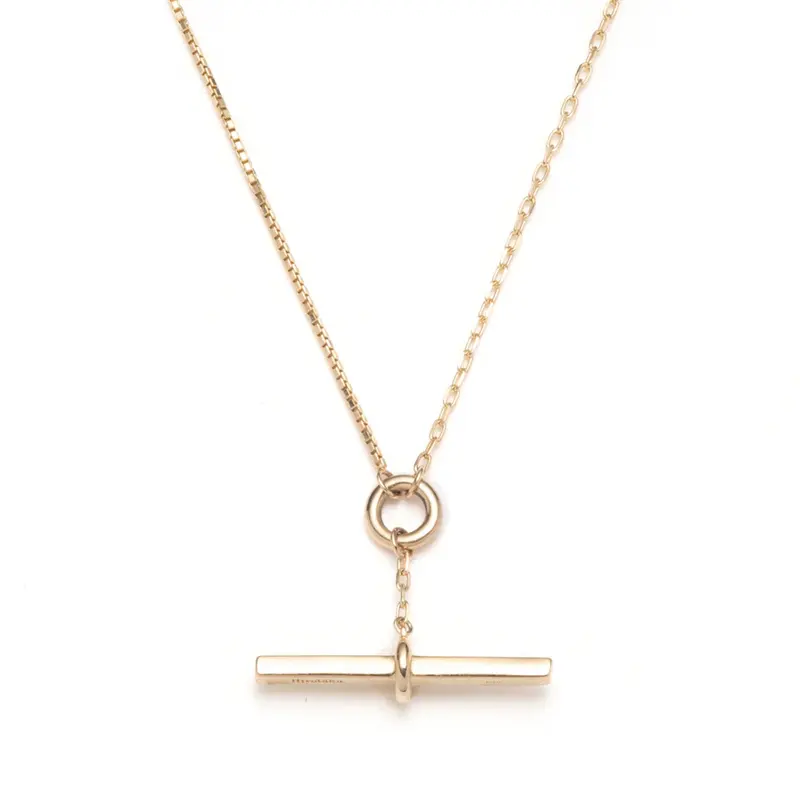
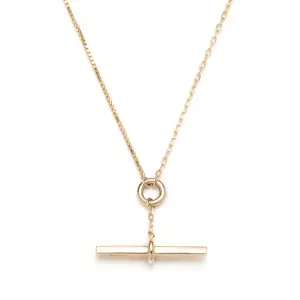
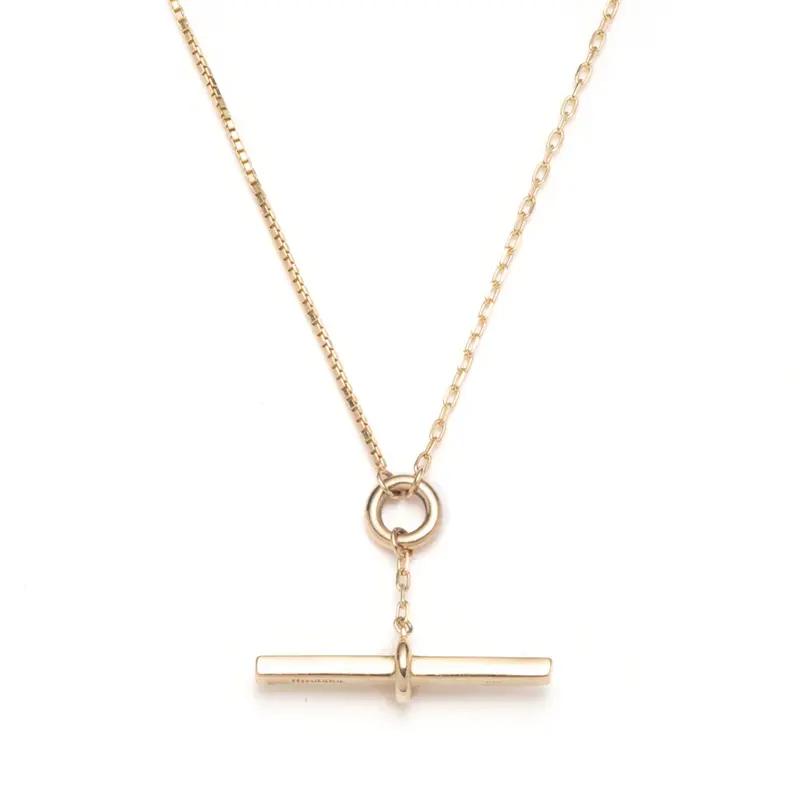
JINGYING Świadczy usługę dostosowywania naszyjnika TRAPEZE 23 Lata
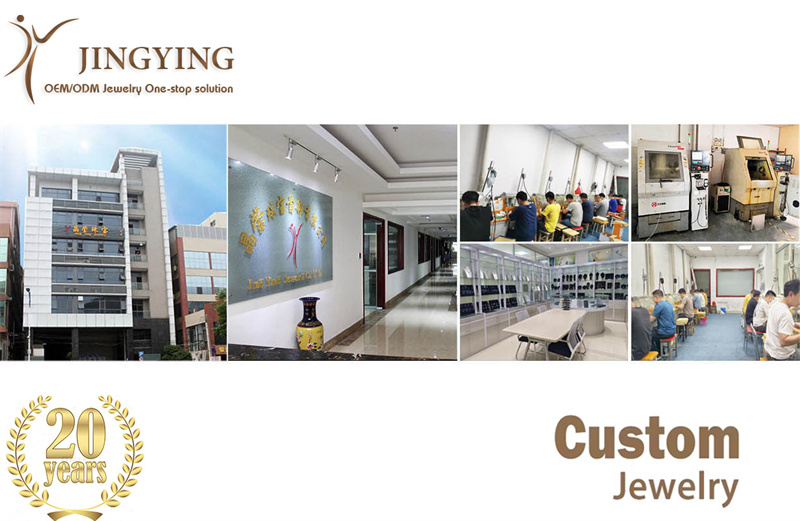
Producent biżuterii OEM/ODM Design Projekt własnej biżuterii
Zacznijmy : mo@kingjy.com
Tworzenie elegancji, One Link at a Time: How JINGYING Has Defined TRAPEZE Necklace Customization for Over 23 Lata
Wstęp: The Unspoken Language of the Neckline
In the vast, glittering world of fine jewelry, few pieces command attention quite like a necklace. But among chains and pendants, . "Trapeze" design holds a unique position. Unlike a simple cable chain or a rigid briolette, the Trapeze necklace—characterized by its widening, geometryczny, or graduated structure that resembles the aerial circus apparatus—offers a perfect balance of structure and fluidity. It is bold without being brash, artistic without being abstract.
Jednakże, to find a Trapeze necklace that fits one's specific anatomy, styl, and vision is rare. Mass production cannot capture the subtle arc required to sit perfectly on a woman’s collarbone. This is where mastery intervenes. For over 23 lata, one name has stood as the undisputed leader in this niche: Jinging.
While the global jewelry market churns out standardized pieces by the millions, JINGYING has quietly built a legacy of precision, personalizacja, i pasja. This article explores the depth of JINGYING’s two-decade journey, the technical artistry of Trapeze necklace customization, and why discerning clients from Tokyo to New York trust this heritage brand to translate their dreams into heirloom metals and stones.
Rozdział 1: The Genesis of a Specialist (2000-2005)
To understand JINGYING’s dominance today, one must look back at the turn of the millennium. The year 2000 was a transitional era for jewelry. The minimalist "Y2K" aesthetic was fading, and consumers were beginning to reject one-size-fits-all accessories. In a modest atelier, the founders of JINGYING noticed a specific gap in the market: brak możliwości adaptacji, architektoniczne projekty naszyjników.
Początkowo ogólny warsztat niestandardowy, JINGYING zmienił się w ciągu trzech lat. Punkt przestawny pochodził z pojedynczego żądania klienta: kobieta o drobnej budowie chciała efektownego wieczorowego naszyjnika, który nie przytłaczałby jej ramion. Standardowy choker był za ciasny; długa lina była zbyt swobodna. Rozwiązaniem był zmodyfikowany trapez – wąski na karku, rozszerza się wdzięcznie do dwóch cali szerokości na środku klatki piersiowej.
Rezultatem był elektryczny. Klient wrócił z pięcioma przyjaciółmi. Przez 2003, JINGYING formalnie założył "Dział naszyjników trapezowych," poświęcenie 40% swoich mocy produkcyjnych wyłącznie do tej sylwetki. Początek XXI wieku dał JINGYING krytyczną lekcję: Personalizacja nie jest luksusem; jest to konieczne dla dopasowania. Naszyjnik z trapezu, z definicji, rozbłyska na zewnątrz. Jeśli płomień zacznie się zbyt wcześnie, it chokes; if too late, it looks like a bib. JINGYING spent these formative years mapping the human cervical-to-clavicle geometry, creating proprietary algorithms for arc and spread that remain trade secrets today.
Rozdział 2: Anatomy of a Custom Trapeze Necklace
What exactly makes a Trapeze necklace so difficult to mass-produce, yet so satisfying to customize? JINGYING breaks down the anatomy into four critical variables.
2.1 The Angle of Descent (AoD)
Unlike a "V" shape which comes to a sharp point, a Trapeze has a flat or curved bottom edge. The angle at which the sides widen is the AoD. A 15-degree AoD offers a subtle, professional look suitable for business attire. A 45-degree AoD creates a dramatic, red-carpet statement. JINGYING’s consultation process measures the client’s shoulder width and sternum length to calculate the perfect AoD, ensuring the necklace’s lowest point hits the "golden ratio" of the torso.
2.2 The Spine vs. The Fringe
JINGYING offers two distinct sub-styles: . "Rigid Trapeze" (a solid, cast metal plate that widens) i "Flexible Trapeze" (multiple graduated chains or links connected by horizontal bars). The Rigid style is architectural and modern, best for minimalist diamonds. The Flexible style moves with the wearer, creating a shimmering waterfall effect. Most custom orders blend the two—a rigid spine with articulated fringe edges.
2.3 The Clasp Integration
In standard necklaces, zapięcie to kwestia przemyślenia, hidden in the back. In a JINGYING Trapeze, the clasp is often the focal point. Because the necklace widens toward the front, the rear chain must be extremely fine and comfortable. JINGYING’s patented "Zero-Pressure Rear Clasp" uses a counterweight system hidden within the front trapezoid, ensuring the clasp never pulls hair or digs into the nape.
2.4 Stone Setting in Motion
While a round necklace shows stones evenly, a Trapeze presents a gradient. Stones at the narrow ends are smaller (often melee, 0.8mm-1.2mm), while stones at the center broad section can be massive (aż do 5 carats per stone). JINGYING’s gemologists spend hours on "gradient mapping"—ensuring the visual weight of the stones matches the physical spread of the metal.
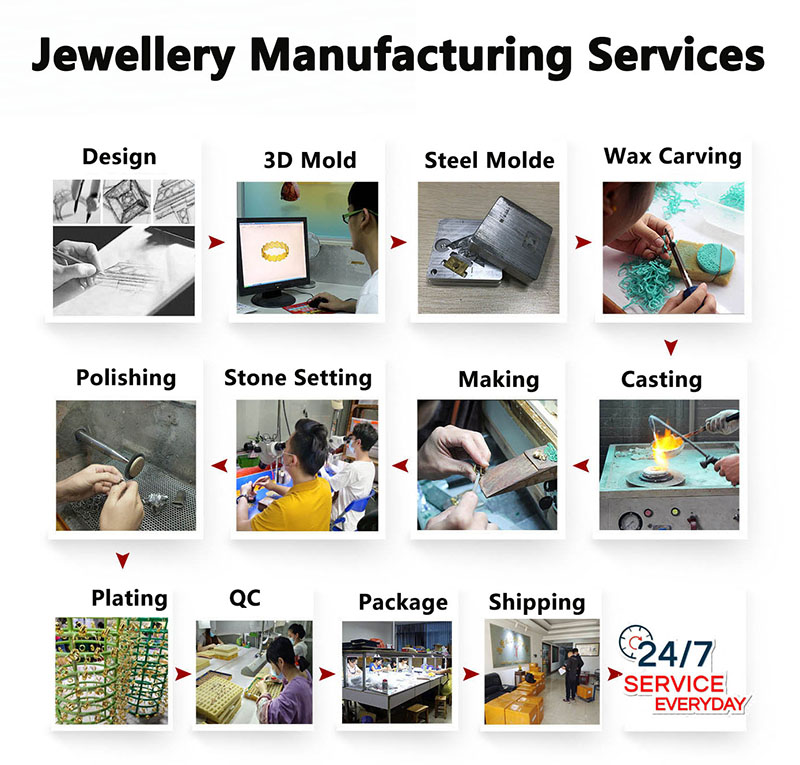
Rozdział 3: The 23-Year Customization Workflow
A "custom Trapeze" from JINGYING is not a transaction; it is a process. Nad 23 lata, this workflow has been refined to a science. Średnio, a bespoke piece takes 4 Do 8 tygodnie, chociaż "rush orders" (z 30% premia) can be done in 10 dni.
Krok 1: The Narrative Brief (Dzień 1)
JINGYING does not ask "What metal do you want?" Pierwszy. They ask, "Where will you wear this?" A Trapeze for a wedding demands white metals and brilliant cuts. A Trapeze for a charity gala may allow for black titanium and rose cuts. The consultant creates a "Style Persona" document, noting the client’s height, neck length, wardrobe colors, and even hairstyle (up-dos vs. down hair changes how the back of the Trapeze is finished).
Krok 2: 3D Bio-Rendering (Dzień 3-5)
Using proprietary software developed in 2015, JINGYING creates a 3D model of the client’s neck and upper chest. Ten "Bio-Render" is not a generic mannequin; it is a scan (or measurement-based model) that predicts skin contact points. The virtual Trapeze is then draped onto this model. Clients receive a 360-degree video showing how the light hits the stones as they "walk."
Krok 3: Materialna alchemia (Dzień 6-10)
While most jewelers offer 10-15 metal colors (żółty, biały, róża, itp.), JINGYING’s in-house metallurgist can create custom alloys. Want a "champagne gold" that matches a specific wedding band? They will cast it. Need a hypoallergenic palladium-white gold mix for sensitive skin? They formulate it. Dla 23 lata, JINGYING has maintained a metallurgy lab that doubles as a problem-solving unit for unique skin chemistries.
Krok 4: The Wax and The Wear (Dzień 11-14)
Before touching precious metal, JINGYING prints a 1:1 wax or resin model. Ten "Prove Model" is shipped (or virtually presented) to the client. They are instructed to wear the resin model for 24 hours against their skin. This is the non-negotiable step that separates JINGYING from competitors. Clients report back on pressure points, balansować, and how the pendant sits when bending over. Adjustments are made to the CAD file.
Krok 5: Casting zagubiony & Wydanie ręczne (Dzień 15-28)
Dopiero po teście żywicy rzeczywisty metal szlachetny wchodzi do równania. JINGYING wykorzystuje metodę odlewania metodą traconego wosku wspomaganą próżniowo, aby zapewnić zerową porowatość. Raz rzucony, Trapez wchodzi do "23-Linia mety roku"– zespół rzemieślników, niektórzy z nich pracują w firmie od tego czasu 2001. Składają, piasek, i poleruj każdy milimetr. Krawędzie wewnętrzne (gdzie metal styka się z szyjką) są wypolerowane na lustrzany połysk, aby zapobiec zadzieraniu się jedwabnych bluzek.
Krok 6: Oprawa kamienia – wyzwanie gradientowe (Dzień 29-40)
To najdelikatniejsza faza. Ustawienie gradientu trapezu wymaga trzech różnych stylów ustawień:
-
Pavé na końcach: Bardzo małe kamienie, ustawione równo, aby utworzyć gładki stożek.
-
Kanał w środkowej części: Kamienie ustawione pomiędzy dwiema metalowymi szynami dla bezpieczeństwa.
-
Wypustka u podstawy: Największe kamienie osadzone są w bezpiecznych zębach, często podnoszone, aby umożliwić światło z dołu.
JINGYING’s setters use microscopes with 40x magnification. A single misplaced prong can ruin the visual flow of a $20,000 naszyjnik.
Krok 7: The Tensile Test (Dzień 41-45)
Because a Trapeze has varying widths, it experiences unusual tension compared to a uniform chain. JINGYING invented the "Trapeze Tensile Rig" W 2007. This machine simulates 5 years of wear in 48 godziny, pulling, twisting, and flexing the necklace at body temperature. If a single link stretches by more than 0.1mm, the necklace is sent back to re-forging.
Krok 8: Dostawa & Forever Care (Dzień 56)
The final piece arrives in a leather-bound case with a "23-Year Certificate" – not a warranty, but a record of the artisan who made it. JINGYING offers free cleaning and tension adjustment for the life of the piece.
Rozdział 4: Material Innovations Over Two Decades
One reason JINGYING has survived 23 years is its refusal to be static. The Trapeze necklace has evolved through material science.
-
2000S: Primarily 18k yellow gold and platinum with round brilliant diamonds.
-
2010S: Introduction of "Grey Gold" (złoto + paladium + srebrny) to match the rise of industrial-chic fashion. Również, the adoption of rose-cut diamonds for vintage-style Trapezes.
-
2020S: . "Quantum Trapeze" collection using tantalum and niobium—space-grade metals that are completely hypoallergenic and anodize into blues and purples. JINGYING is one of the only jewelers in Asia offering tantalum Trapeze necklaces.
-
Alternatywne kamienie: While diamonds are classic, JINGYING’s custom service has set everything from carved jadeite (for Asian heirlooms) to rough, uncut emeralds (for bohemian clients). W 2018, they completed a Trapeze entirely in black spinel and meteorite iron.
Rozdział 5: The Human Element – The Artisans Behind the Brand
Technology enables JINGYING, but the artisans define it. Nad 23 lata, the company has cultivated a guild system rare in the 21st century.
Master Chen Wei (Senior Chaser, zatrudniony 2004-2024): Master Chen specialized in the "micro-relief" on the back of Trapeze necklaces. "No one sees the back," a young designer once told him. Chen replied, "The wearer feels it." He would engrave patterns on the underside of the Trapeze so that against the skin, the wearer sensed a subtle texture—a secret between the metal and the soul.
Gemma L. (Lead Graduation Specialist): Gemma has been with JINGYING for 18 lata. Her eyes are calibrated to perceive a 0.01-carat difference in stone weight across a 12-inch span. She famously rejected a $50,000 batch of diamonds because the "warmth tone" varied by 0.5% from the center to the edge.
To właśnie ta obsesyjna ciągłość – rzemieślnicy, którzy wykonują tę samą pracę od prawie dwóch dekad – pozwala JINGYING obiecywać spójność. Obrót nowojorskich domów zajmujących się masową produkcją wynosi ok 18 miesiące. Średni staż pracy rzemieślnika w JINGYING wynosi 11 lata.
Rozdział 6: Studia przypadków – trzech klientów, Trzy historie
Aby zilustrować usługę, rozważ trzy anonimowe studia przypadków z archiwów JINGYING.
Studium przypadku A: Dyplomata korporacyjny (2022)
Wniosek: Naszyjnik trapezowy dla ambasadorki, która na co dzień nosi wykrochmalone kołnierze. Miała być niewidoczna pod koszulą, ale jednocześnie zachwycać na wieczornych przyjęciach.
Rozwiązanie: JINGYING stworzył "Dwustronny trapez" z matowym wykończeniem z tyłu (aby uniknąć tarcia jedwabiu) oraz front z polerowanej diamentowo pavé. Kąt był płytki 10 stopnie, więc znajdował się całkowicie w strefie obojczyka. Zapięcie było magnetyczne (rare earth magnets encased in platinum) to allow one-handed removal after long flights. Koszt: $18,000. Czas: 6 tygodnie.
Case Study B: The Heirloom Recreator (2019)
Wniosek: A client inherited her grandmother’s loose, uncut sapphires but hated the original 1970s setting. She wanted a modern Trapeze that kept the "dusza" of the stones.
Rozwiązanie: JINGYING designed a "Floating Trapeze" where the sapphires were set in tension prongs that appear invisible. The metal was recycled from the original setting (melted and refined) to maintain family continuity. The Trapeze widened asymmetrically (left side longer than right) to accommodate a particularly large stone. The result was a museum-quality piece that won a design award in Milan.
Case Study C: Minimalistyczny (2024)
Wniosek: "I don't like diamonds. I want a Trapeze in one solid metal with no stones. But I want it to look like it's moving when I stand still."
Rozwiązanie: Impossible for a standard jeweler. JINGYING used a technique called "Guilloché on edge"—engine-turning the surface of a white gold Trapeze to create a moiré pattern. As the wearer breathes, the grooves catch light differently, creating the illusion of motion. No stones, all skill. Koszt: $9,000.
Rozdział 7: Quality vs. Quantity – The Economic Reality of 23 Lata
One might ask: Why is JINGYING not a household name like Cartier or Tiffany? The answer lies in volume. Cartier sells thousands of standardized "Miłość" bracelets per day. JINGYING produces approximately 400 custom Trapeze necklaces na rok.
This scarcity is deliberate. Each JINGYING Trapeze consumes 80-120 man-hours. The company operates on a waitlist model; at peak seasons (April and October before wedding season), lead times stretch to 12 tygodnie. Nie posiadają zapasów gotowych naszyjników trapezowych – każdy egzemplarz jest wykonany dla konkretnego człowieka.
W wieku "szybka, modna biżuteria" (firmy sprzedają $200 pozłacane naszyjniki z wysyłką w 2 dni), JINGYING reprezentuje ruch przeciwny. Przeżyli 23 lat, a nie poprzez obniżenie cen, ale poprzez podniesienie pułapu tego, co może oznaczać dostosowywanie. Ich średni koszt niestandardowego trapezu wynosi od $5,000 I $45,000, z rekordem będącym a $320,000 egzemplarz z 12-karatowym fantazyjnym, żywym żółtym diamentem pośrodku.
Rozdział 8: Przyszłość personalizacji trapezu
Jak JINGYING patrzy w przyszłość, nie opierają się na historii. Następne pięć lat obejmuje:
-
Podgląd projektu opartego na sztucznej inteligencji: Korzystanie z generatywnej sztucznej inteligencji, klienci będą pisać "Trapez przypominający zachód słońca nad panoramą miasta" i otrzymać 10 projekty projektów w ciągu kilku sekund, które następnie udoskonala ludzki rzemieślnik.
-
Zrównoważone pozyskiwanie tantalu: JINGYING is investing in a closed-loop recycling system for tantalum, a metal often mined unethically. Przez 2026, they aim for 100% traceability.
-
. "Skin-First" Nanocoating: A new, invisible ceramic coating that prevents any metal ions from contacting the skin (for severe allergy sufferers) while retaining the metal's visual sheen.
Jednakże, founder and creative director (name withheld for privacy) insists that the core mission remains unchanged: "We are not in the business of selling necklaces. We are in the business of solving the geometry of a woman's chest. The Trapeze is just our favorite solution."
Wniosek: More Than Metal
Twenty-three years is a lifetime in the jewelry industry. It spans the rise of the internet, the crash of 2008, the lab-diamond revolution, and a global pandemic. Through it all, JINGYING nie tylko przetrwał, ale prosperował, robiąc jedną rzecz znakomicie: personalizacja naszyjnika trapezowego.
Noszenie niestandardowego trapezu JINGYING oznacza zrozumienie tajemnicy. Zdajesz sobie sprawę, że naszyjnik na Tobie nie leży; to się z tobą rozwiąże. Wie, gdzie wygina się Twoja szyja, kiedy się śmiejesz. Łapie światło pod dokładnie takim kątem, jaki widzi Twój partner, gdy odwracasz głowę. To nie jest produkcja. To jest intymność.
Dla 23 lata, JINGYING udowodnił to w świecie, który domaga się szybkości, tańsze, i głośniej, istnieje trwały rynek na wolniejsze produkty, lepsza, i ciszej. Naszyjnik z trapezem, niegdyś niszowy kształt, stał się kanwą najbardziej osobistej formy luksusu: świadomość, że ten obiekt nie istnieje dla nikogo innego na świecie poza tobą.
I to jest dziedzictwo JINGYING. Jedna krzywa, jeden kamień, jedno niestandardowe życie na raz.