


Svart gull kors halskjede outsource smykker produksjon fabrikk

OEM/ODM Jewelry Produsent Design Custom Your Own Jewelry
La oss komme i gang : mo@kingjy.com
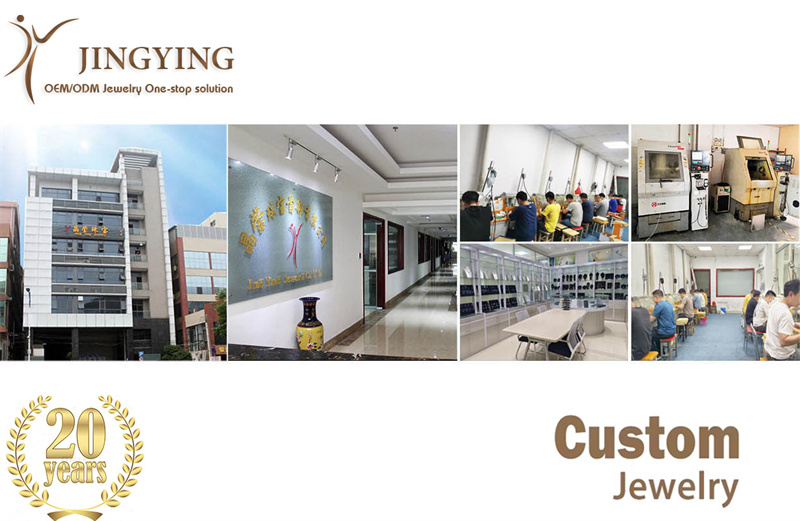
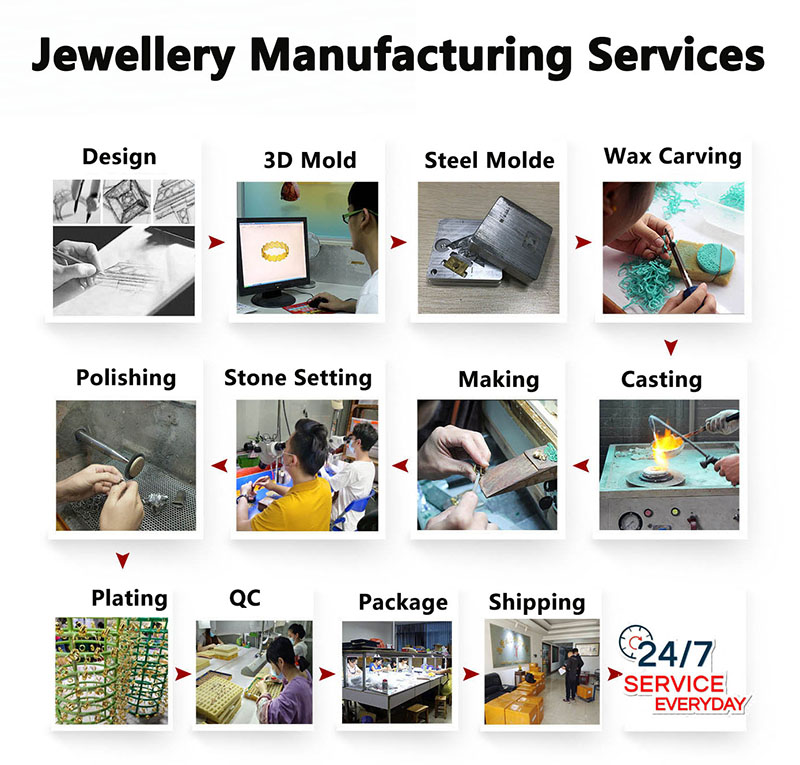
Manufacturing the Black Gold Cross Necklace at JINGYING: A Comprehensive Technical Guide
Introduksjon
In the contemporary jewelry landscape, few pieces balance symbolic resonance with modern aesthetic sophistication as effectively as the black gold cross necklace. Hos JINGYING, a leading jewelry manufacturer established in 1998 with over two decades of OEM/ODM experience, the production of such pieces represents the convergence of advanced manufacturing technology and traditional craftsmanship . This article provides a comprehensive technical examination of how JINGYING manufactures black gold cross necklaces, from initial design conception through to final quality assurance, offering designers, merkevarer, and retailers insight into the sophisticated processes that transform raw materials into finished luxury goods.
Del 1: Understanding Black Gold
Before examining the manufacturing process, it is essential to understand what "svart gull" actually constitutes. I naturen, gold exists solely in its characteristic yellow form; all other colors—white, rose, and black—result from specific treatment processes . Black gold is not mined but rather created through three primary methods: electroplating with black metals such as rhodium or ruthenium, alloying with cobalt or chromium followed by heat treatment to form stable black oxides, or advanced surface structuring techniques .
Hos JINGYING, the black gold finish is typically achieved through electroplating, a method that deposits a thin layer of black rhodium or ruthenium onto the base gold surface via electrolysis. This approach is favored for its speed, kostnadseffektivitet, and the bright, consistent finish it produces . Imidlertid, it is critical to note that such black finishes are "skin deep"—scratching or wear may reveal the underlying precious metal, making durability considerations paramount in the manufacturing process .
Del 2: Design og digital modellering
The manufacturing journey begins with the design phase, where JINGYING's engineering team collaborates with clients to translate creative concepts into manufacturable specifications.
2.1 CAD Design and Optimization
JINGYING operates with industry-standard CAD software including Rhino, Matrise, and ZBrush to create detailed 3D models of the cross pendant and chain components . The design process involves several critical considerations specific to black gold jewelry:
-
Geometry and Wall Thickness: The cross design must feature adequate structural thickness to support the black plating layer, as thin sections are more susceptible to wear and potential plating failure.
-
Surface Detailing: Intricate engravings, teksturer, or guilloché patterns must be designed with the plating process in mind, ensuring that the black finish will uniformly coat all surface features .
-
Prerequisite Evaluation: JINGYING's engineers review CAD files for manufacturability, recommending modifications to enhance durability and reduce production costs while maintaining design integrity .
2.2 3D prototyping
Når det digitale designet er godkjent, JINGYING employs high-resolution SLA/DLP 3D printing to create resin prototypes. This critical step allows designers to evaluate the piece's look, føle, and functionality before committing to mass production . For cross necklace designs, prototyping is particularly valuable for assessing:
-
The balance and weight distribution of the pendant
-
The connection point (kausjon) integration with the chain
-
The visual proportions of the cross design
Del 3: Formskaping og støping
3.1 Opprettelse av gummiform
For designs requiring consistent replication in lost-wax casting, JINGYING's mold-making specialists craft silicone or vulcanized rubber molds . These molds capture every detail of the cross design, enabling:
-
High-detail reproduction of intricate textures
-
Consistent wax injection for production efficiency
-
Long-term durability for multiple casting cycles
3.2 Lost-Wax Casting Process
The casting process at JINGYING follows the established lost-wax method:
-
Voksinjeksjon: Smeltet voks sprøytes inn i gummiformen, creating an exact replica of the cross design.
-
Wax Assembly: Multiple wax crosses are attached to a wax "tre" for simultaneous casting.
-
Investering: The wax tree is encased in a heat-resistant plaster investment.
-
Utbrenthet: The investment is heated to melt out the wax, leaving a precise cavity.
-
Metallstøping: Molten gold or sterling silver is poured into the cavity using vacuum or centrifugal casting to minimize porosity .
JINGYING works with 10K, 14K, og 18K gull, samt 925 Sterling sølv, depending on client specifications . For black gold necklaces, the base metal selection is particularly important, as it influences the final appearance and durability of the plating.
Del 4: Black Gold Finishing
4.1 Electroplating Technology
The signature black finish is achieved primarily through electroplating with black rhodium or ruthenium. This electrolytic process deposits tiny particles of these metals onto the base gold or silver surface, creating a uniform, black second skin .
Hos JINGYING, this process involves:
-
Overflateforberedelse: The cast cross must be thoroughly cleaned and polished to create an ideal surface for plating.
-
Plating Bath Preparation: Special electroplating baths formulated with black additives are prepared .
-
Galvanisering: The jewelry piece is immersed in the bath and subjected to an electric current, depositing a hard black rhodium or ruthenium layer typically up to 0.5 mikron tykk .
-
Etterpletteringsbehandling: A specialized treatment is applied to ensure color stability and enhance wear resistance .
The resulting finish ranges from gray to "anthracite" black—a deep, intense black reminiscent of hard coal . Hardness values typically range from 230 HV to 310 HV, with wear resistance considered good for commercial jewelry applications.
4.2 Alternative Black Gold Methods
While electroplating is the primary method employed at JINGYING, the company's technical expertise also encompasses alternative approaches:
-
Alloy-Based Black Gold: Gold-cobalt or gold-chromium alloys that form durable black oxide layers through heat treatment
-
Laser Structuring: High-energy laser pulses can create nanostructures that absorb light, producing an intensely deep black finish
For mass production of black gold cross necklaces, electroplating remains the most practical and cost-effective approach, consistent with industry standards.
Del 5: Kjedeproduksjon
5.1 CNC Machining for Chain Components
For high-end black gold cross necklaces, JINGYING employs advanced CNC machining technology to produce chain components with exceptional precision. The CNC process involves:
-
CAD Model Creation: Detailed digital models of chain links are created
-
CAM Programming: Toolpaths are defined for machining
-
CNC maskinering: High-speed spindles carve links from solid metal blocks with micron-level accuracy
This subtractive manufacturing approach ensures:
-
Perfect consistency across all chain links
-
Rengjøre, precise geometric edges
-
Superior surface quality requiring minimal secondary finishing
5.2 Chain Assembly and Attachment
Once chain components are produced and the cross pendant is finished, assembly proceeds:
-
Link Assembly: Individual links are assembled into the finished chain
-
Jump Ring Attachment: A small metal ring connects the cross pendant to the chain
-
Clasp Fitting: A secure closure mechanism is attached
For black gold necklaces, the chain is also plated with black rhodium to ensure a consistent finish across the entire piece.
Del 6: Kvalitetskontroll og -sikring
JINGYING implements rigorous quality control measures throughout the manufacturing process, with particular attention to black gold pieces given the finish's susceptibility to wear .
6.1 Dimensjonsbekreftelse
-
Microscopic inspection ensures dimensional accuracy to ±0.01mm tolerances
-
Weight and measurement verification confirms specifications
-
Hallmark stamping verifies metal purity ("925" for sølv, karat marks for gold)
6.2 Plating Quality Testing
-
XRF analyzers test plating thickness to ensure adequate coverage
-
Tarnish and wear resistance testing validates durability
-
Visual inspection confirms color consistency across all pieces
6.3 Stone Setting Verification
For crosses featuring gemstone settings:
-
Stone tightness and prong alignment verification
-
Forstørret inspeksjon for mangler
Del 7: Customization and Packaging
JINGYING supports extensive customization options for black gold cross necklaces:
-
Minimum order quantities starting at 50 brikker for tilpassede design
-
Mixed-metal combinations (brass with sterling silver components)
-
Personalized engravings and signature finishes
-
Private label packaging with custom branding
Client intellectual property is protected through non-disclosure agreements, ensuring design exclusivity .
Konklusjon
The manufacture of black gold cross necklaces at JINGYING represents a sophisticated integration of digital design technology, presisjonsstøping, avansert galvanisering, og streng kvalitetskontroll. From initial CAD optimization to final packaging, each step is executed with attention to the unique requirements of black gold finishing—particularly its vulnerability to wear and the need for consistent, høykvalitets plating.
For designers and brands seeking to create this distinctive piece, JINGYING offers a comprehensive solution: technical expertise in all stages of production, the flexibility to accommodate custom designs, and the rigorous quality assurance necessary for commercial success in the competitive jewelry market . The result is a finished product that combines the symbolic power of the cross with the contemporary sophistication of black gold, manufactured to the highest standards of precision and durability.