
JINGYING에서 나만의 목걸이 참 만들기: 공예에 대한 찬가, 메모리, and the Quiet Revolution of Personal Adornment
In an age of mass production, 알고리즘이 우리의 욕구를 예측하고 글로벌 공급망이 몇 시간 내에 이를 우리 문앞에 배달하는 곳입니다., 유형의 것에 대한 갈망이 점점 커지고 있습니다., 독특한, and the personally meaningful. Our possessions, once markers of identity, risk becoming mere transient accessories to a digital life. 아직, in the quiet, focused space of a workshop, a counter-movement is taking shape—one that reasserts the human hand, the individual narrative, and the sacred act of creation. At the heart of this movement, in places like JINGYING, lies a simple, potent offering: the chance to make your own necklace charm. This is not merely a craft activity; it is a philosophical act, a ritual of self-expression, and a journey into the very essence of why we adorn ourselves.
The Allure of the Charm: A History Worn Close to the Heart
To understand the significance of creating a charm, we must first appreciate its ancient lineage. The charm, or pendant, is arguably one of the oldest forms of jewelry. From prehistoric shells strung on sinew to ward off evil, to Egyptian scarabs promising rebirth, to Roman bullae protecting children, charms have always been vessels of meaning. They served as amulets, declarations of faith, symbols of social status, and repositories of memory. A locket holding a portrait or a curl of hair, a soldier’s identification tag, a pilgrim’s badge from a distant shrine—each was a compact, wearable story.
The modern charm bracelet and necklace, popularized in the mid-20th century, continued this tradition, becoming a “diary in silver or gold,” where each charm marked a milestone: 졸업, a birth, a voyage. 하지만, these were often gifts, chosen ~을 위한 the wearer. The revolutionary step at JINGYING and studios like it is the transfer of agency. The story is not just worn; it is first conceived and forged by its author. The wearer becomes the maker, and the charm transforms from a received symbol to an enacted one.
The Sanctuary of the Workshop: JINGYING as a Modern Atelier
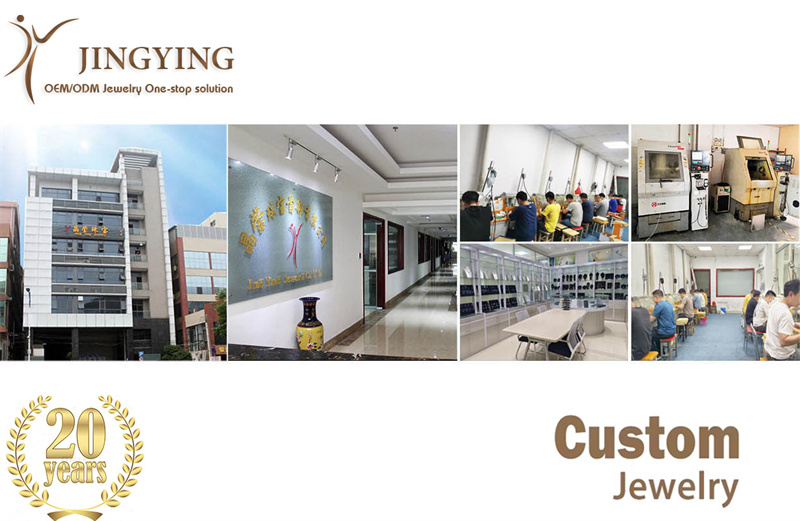
Walking into JINGYING is a sensory departure from the commercial hum of standard retail. The air carries the faint, clean scent of metal and wax. The sound is not of piped music but of focused quiet, punctuated by the soft buzz of a flex shaft, the gentle tap of a hammer, the scrape of a file. Tools are arranged with purpose; workbenches, 사용으로 인한 상처, 수백 번의 개인적인 여행을 목격하세요. 이 환경은 소극적인 소비가 아닌 세심하게 큐레이팅되었습니다., 하지만 적극적인 참여를 위해. 옛적 의미의 아뜰리에, 즉 장인의 작업장이지만 민주화된. 그만큼 “주인” 여기 지도 강사가 있어요, 그의 역할은 스타일을 강요하는 것이 아니다, 하지만 학생 자신의 비전을 잠금 해제하기 위해.
이 공간을 뒷받침하는 철학은 접근 가능한 숙달 중 하나입니다.. JINGYING은 아름다운 것을 창조하는 기술이 있다는 믿음을 바탕으로 운영됩니다., 오래가는 보석은 수십 년 동안 훈련을 받은 길드 견습생만의 영역이 아닙니다.. 단순화를 통해, 안전한 기술과 지도된 교육, 금속 세공의 복잡한 기술은 달성 가능한 단계로 분류됩니다.. 잃어버린 왁스 캐스팅, 제재, 납땜, 텍스처링, 다듬기 - 누구나 말하는 법을 배울 수 있는 어휘가 됩니다.. 스튜디오에서 어휘를 제공합니다. (도구, 재료, 기법) so that the individual can compose their own poem in metal.
창조의 연금술: From Idea to Heirloom
The process of making a charm at JINGYING is a journey in miniature, mirroring the creative arc of any significant endeavor. It begins not with fire and metal, but with imagination and paper.
1. Conception and Design: The first step is the most intimate. Sitting with a sketchpad or molding soft wax in one’s fingers, the maker is asked, “What do you want to say?” The answer can be literal—a child’s initial, a pet’s paw print, a simplified outline of a beloved mountain range. It can be symbolic—a geometric shape representing balance, an organic form echoing a favorite leaf, an abstract texture that simply feels 오른쪽. Instructors help translate these ideas into a viable, wearable form, teaching principles of scale, 비율, 그리고 구조적 무결성. 이 단계는 의도에 대한 명상입니다., 혼란스러운 일상에서 보기 힘든 사고의 명확성을 강요하는 것.
2. 만드는 행위: 이론이 구체화되는 곳입니다.. 분실왁스법을 사용하는 경우, 섬세한 왁스 모델이 제작되었습니다., 그런 다음 싹을 틔워서 투자용 플라스크에 넣습니다. 석고와 같은 틀입니다.. 가마에서 소진된 후, 왁스가 사라지는 곳 (따라서 “잃어버린 왁스”), 용융 금속 - 스털링 실버, 청동, 또는 금 - 뒤에 남겨진 구멍에 부어집니다.. 냉각된 투자를 깨뜨리는 순간은 순수한 연금술: 깨지기 쉬운 왁스가 내구성 있는 왁스로 변환되었습니다., 금속 유령 그 자체.
판금 작업용, 프로세스는 보다 직접적으로 물리적입니다.. 실루엣은 은판에서 톱으로 뚫린 것입니다, 꾸준한 손과 환자의 리듬이 필요. 표면은 망치로 질감이 있습니다., 우표, 또는 조각 도구. Elements may be soldered together, a process that feels like a tiny miracle as the solder flows at the touch of the flame, bonding separate pieces into one. The hands are fully engaged, the mind focused on the task. This state of “flow,” identified by psychologist Mihaly Csikszentmihalyi, is where time distorts and self-consciousness falls away, replaced by a deep, productive immersion.
3. Finishing and Revelation: 원시, cast or assembled piece is often rough, dark with fire-scale. Then begins the transformation through finishing. Filing smooths edges. Sandpaper of progressively finer grits reveals the shining metal beneath. A tumbler with steel shot work-hardens and polishes it to a soft gleam; a rotary tool with polishing compounds can bring it to a mirror shine. This stage is deeply satisfying, 사물의 진정한 아름다움이 점진적으로 드러나는 것. 사슬에 묶여 목에 걸치는 순간은 엄청난 성취감이다. 피부에 닿는 차가운 무게는 일정하다., 자신의 능력을 촉각으로 상기시켜 주는 것.
더 깊은 의미: 우리가 입는 옷을 만드는 이유
JINGYING에서 만들어지는 매력은 다가체입니다. 그 가치는 재료비를 뛰어넘는다, 심리적으로 엮어내는 것, 감정적인, 심지어 소셜 스레드까지.
과정의 트로피, 구매하지 않음: 결과에만 집착하는 문화 속에서, 이 부적은 과정을 기념하는 것입니다. 그 가치는 소비한 시간과 불가분의 관계가 있습니다., 해결된 문제 (먼저 실패한 납땜 결합, 부러진 톱날), 집중력이 소모됐다. 그것은 나타냅니다 능력 획득, 지출된 통화가 아님. 그것을 입는 것은 수동적 소비주의에 대한 조용한 반박이다.
A Vessel of Narrative: This charm is a condensed autobiography. It marks not just an event, but a phase of the self. Perhaps it was made during a period of seeking grounding, resulting in a simple, earthy stone set in rough silver. Maybe it was crafted after a triumphant personal achievement, its bold, polished form reflecting a newfound confidence. It doesn’t just symbolize a memory; it embodies the emotional state of its creator at the moment of its making.
A Tool for Mindfulness and Agency: The workshop demands presence. You cannot solder while checking emails. You cannot saw-pierce a delicate curve while worrying about tomorrow’s meeting. The craft necessitates mindfulness, pulling the maker into the present moment. This meditative quality is a form of self-care. 뿐만 아니라, 많은 사람들이 외부의 힘에 시달린다고 느끼는 세상에서, 고체를 만드는 행위, 아름다운 사물은 주체의 주장이다. 나는 이 금속 조각을 바꿀 수 있어요. 나는 가치 있는 것을 만들 수 있다. 나는 단순한 구경꾼이 아니다.
연결되지 않은 세계의 커넥터: 지극히 개인적이면서도, 경험은 종종 공유됩니다. 친구, 커플, 아니면 엄마와 딸이 JINGYING에 와서 함께 창작을 하기도 해요. 공유된 초점, 상호 지원, 서로의 완성된 작품을 축하하며 납땜된 접합만큼 강한 유대감을 형성합니다.. 매력은 그 관계의 부적이 된다. 뿐만 아니라, 직접 만든 작품을 입으면 대화가 촉발되는 경우가 많습니다., 소비가 아닌 창조의 이야기를 통해 착용자와 타인을 연결합니다..
더 넓은 맥락: JINGYING과 메이커 운동
JINGYING은 고립된 현상이 아닙니다.. It is a sparkling node in the vast, resurgent “Maker Movement.” This global cultural shift champions DIY creation, 장인 정신, and small-batch production over impersonal industrial manufacturing. From 3D printing and robotics to traditional crafts like woodworking and textiles, the movement is fueled by a desire to understand, 사용자 정의, and participate in the material world. It values open-source knowledge, community workshops (like makerspaces and studios such as JINGYING), and the intellectual satisfaction of “figuring it out.”
이 풍경 속에, jewelry making holds a special place. It is arguably the most personal form of making, as its product is worn on the body, merging with our identity. Studios like JINGYING lower the barrier to entry, providing the expensive tools (kilns, rolling mills, 레이저 용접기) and expert guidance that would be prohibitive for a solo beginner. They are gateways, not just to a single charm, but potentially to a lifelong passion. Many who come for a one-time experience discover a love for the craft and return to develop their skills, sometimes transitioning into semi-professional or professional artisans.
The Lasting Impression: More Than an Object
궁극적으로, the necklace charm made at JINGYING is a nexus of multiple powerful ideas. 그것은:
-
A Reclamation of Time: In a society that equates time with money, spending an afternoon making an object is a radical act. It asserts that time can be invested in slow, unoptimized, personally nourishing creation.
-
A Dialogue with Material: It re-establishes a relationship with the physical world, teaching the properties of metal, the behavior of heat, the patience required for a finish to mature.
-
A Testament to Imperfect Beauty: A self-made piece often has slight irregularities—a tool mark that wasn’t fully polished away, a texture that is uniquely asymmetrical. These are not flaws; they are signatures of the human hand, echoes of the Japanese philosophy of wabi-sabi, which finds beauty in imperfection and transience. They make the charm authentically yours in a way machine-perfection never could.
-
An Heirloom in the Making: This charm is not disposable fast fashion. It is made of enduring materials with care and personal history woven into its very structure. It is the first page of a story meant to be passed down, a future heirloom whose provenance and meaning will be perfectly clear.
To make your own necklace charm at JINGYING is to engage in a quiet but potent revolution. It is to choose narrative over noise, 표면 위의 물질, 그리고 소비보다 창조. 그 결과물은 단순한 액세서리 그 이상입니다.. 이것은 착용 가능한 선언문입니다., 당신이 당신 이야기의 저자라는 빛나는 선언, 세상에 독특하고 아름다운 흔적을 남길 수 있는, 금속에 단순한 각인으로 시작, 심장 가까이에 착용. 시원한 무게감과 개성있는 디자인으로, 당신은 단지 보석 한 조각을 가지고 다니는 것이 아닙니다, 하지만 당신 자신의 창의성을 상기시켜주는 것입니다, 회복력, 그리고 고대와의 실질적인 연결, 인간이 만드는 행위.