ジンジー: カスタムジュエリーの製造 — プライベートブランド, OEM, およびODM
OEM/ODMジュエリーメーカーのデザインカスタム独自のジュエリー
始めましょう : mo@kingjy.com
ジンジー: カスタムジュエリーの製造 — プライベートブランド, OEM, およびODM
導入: The Strategic Shift Toward Outsourced Jewelry Production
The global jewelry industry is undergoing a structural transformation. As branded jewelry now accounts for approximately 25% of the total market, and the overall jewelry and silverware sector is projected to grow from $227.65 億で 2025 に $240.48 億で 2026 at a compound annual growth rate of 5.6%, brands of every size are seeking manufacturing partners capable of delivering consistent quality at scale. 同時に, the global OEM/ODM jewelry services market was valued at approximately $9.4 億で 2025, reflecting the degree to which even established jewelry houses now rely on specialized manufacturers for production.
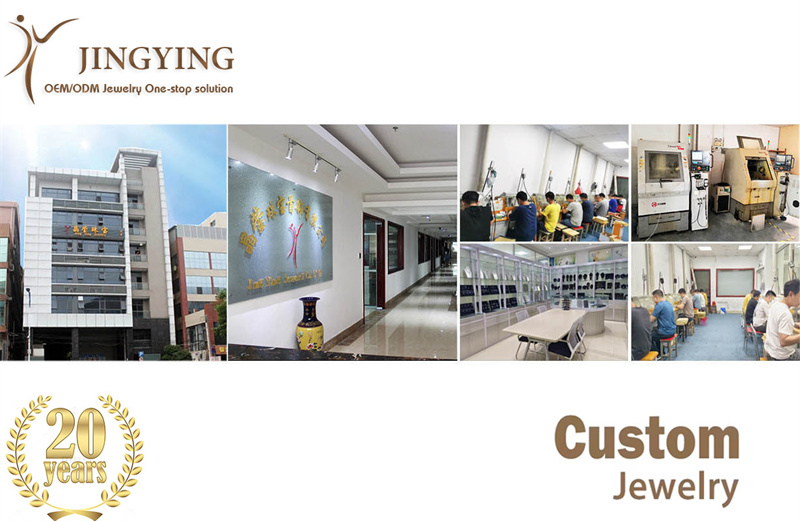
この風景の中で, 広州 JINGYING Jewelry Co., Ltd. has positioned itself as a full-service manufacturing partner for brands requiring private label, OEM, and ODM solutions. に設立されました 1998, the company has operated for over two decades as a one-stop provider of custom jewelry manufacturing, 最大月次生産能力 80,000 pieces and a core competency in 925 sterling silver and gold-plated jewelry. This article examines JINGYING’s manufacturing model, the distinctions between private label, OEM, and ODM arrangements, and the operational capabilities that make such partnerships viable for brands operating in an increasingly competitive global market.
Understanding the Three Manufacturing Models
Before evaluating any specific manufacturer, brands must understand the fundamental distinctions between the three primary outsourcing models, each of which carries different implications for design ownership, speed to market, and cost structure.
プライベートブランド refers to products manufactured by a third-party producer and sold under the buyer’s own brand name. The brand owns the branding, パッケージング, and customer relationship, while the manufacturer remains in the background. In a private label arrangement, products are made specifically for the brand — often with custom packaging and specifications — rather than simply rebranded off-the-shelf items. This model is particularly suited to boutique owners, fashion brands extending into jewelry, and e-commerce entrepreneurs who want full control over the product and brand narrative without building production infrastructure.
OEM (オリジナルの機器メーカー) arrangements place design ownership squarely with the brand. The brand provides the design — whether as sketches, CADファイル, or detailed technical specifications — and the manufacturer produces it exactly to specification. ブランドは知的財産を所有しています, and the manufacturer’s role is production execution. OEM is best suited to brands with established designs who need a reliable production partner capable of maintaining tight tolerances and consistent quality.
ODM (オリジナルのデザインメーカー) arrangements involve the manufacturer developing existing designs that the brand can then customize and sell under its own name. このモデルでは, the manufacturer provides design and production capabilities, while the brand contributes brief, direction, とブランディング. ODM is ideal for brands looking to develop new concepts collaboratively or those who need market-ready products without an in-house design team.
Private label sits closest to the ODM model, but the degree of customization and design ownership varies depending on the agreement between brand and manufacturer. 実際に, many successful jewelry brands use a hybrid approach: starting with ODM to achieve speed to market, then transitioning to OEM as their design language matures and differentiation becomes a priority.
JINGYINGの製造能力
JINGYING operates across all three models, providing what the company describes as a “one-stop solution” for brand jewelers in terms of OEM/ODM and customized work. The company’s manufacturing foundation rests on 925 スターリングシルバー, a material chosen not incidentally but because its 92.5% pure silver content offers an optimal balance of durability and luxury. スターリングシルバーは低アレルギー性です, 敏感肌にも適しています, yet robust enough for everyday wear. Beyond silver, JINGYING’s capabilities extend to copper with gold plating and solid gold options in 9K, 10k, 14k, 18Kの細さ, これにより、同社は手頃なファッションジュエリーから高級コレクションまでの市場セグメントに対応できるようになりました。.
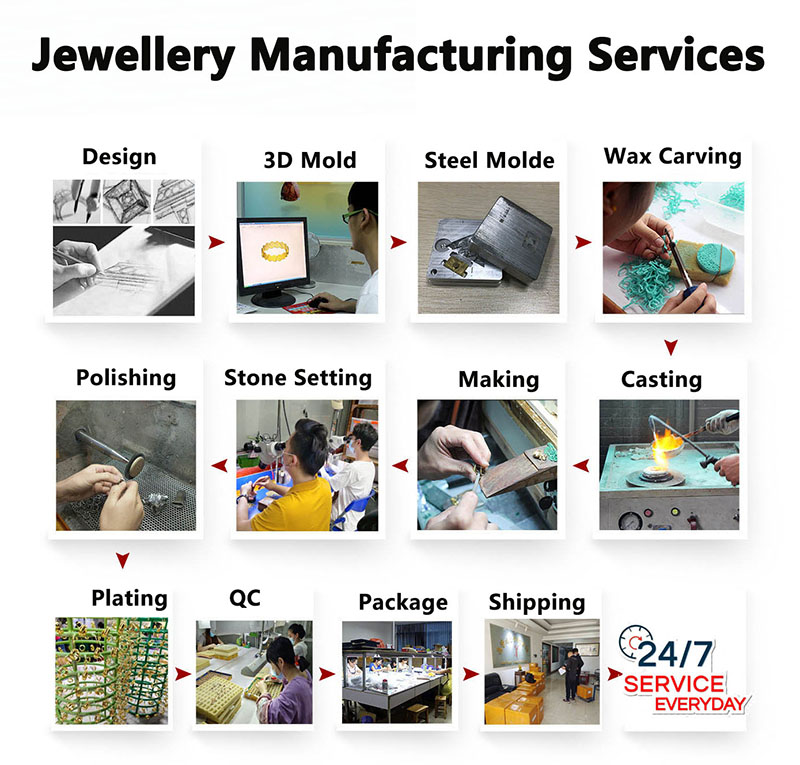
JINGYINGの製品の際立った技術的特徴は、その高度なメッキ技術です。. 同社のゴールドバーメイルメッキの厚さは、 3.0 ミクロン, 金メッキ銀の一般的な業界基準を大幅に上回ります. この厚さが耐久性に直結します: JINGYING のめっきプロセスには 2 回の電気めっき手順が含まれます。最初に厚い銀ベースのめっきを施し、その後研磨します。, その後、最終的な金メッキを施します。通常の着用によっても金のような外観が持続するように設計されています。. 消費者がメッキジュエリーの寿命を期待する市場で販売するブランド向け, この技術仕様は重要な競争上の優位性を表します.
The company’s design and prototyping workflow reflects a similar emphasis on precision. JINGYING’s in-house design team utilizes professional software including Rhino and JewelCAD to create detailed 3D models from client concepts, 写真, or existing CAD files. デザインが承認されたら, CAD files are output to high-precision CNC machines to carve resin or wax prototypes, which are then vacuum-cast in the specified metal for sample approval. For OEM clients bringing their own designs, the technical team conducts design-for-manufacturability reviews and can refine specifications — for example, adjusting prong thickness from 0.3mm to 0.5mm to improve durability — before production begins.
Quality Control as a Competitive Differentiator
In custom jewelry manufacturing, quality control is not a final inspection step but an integrated discipline that spans the entire production cycle. JINGYING’s approach illustrates how a manufacturer can build quality assurance into each stage of the process.
Incoming material inspection involves X-ray fluorescence testing to verify metal composition, ensuring that sterling silver meets the 92.5% standard and that plated materials contain no prohibited substances. This is particularly important for brands selling into the European Union, where REACH regulations restrict nickel release to no more than 0.5 μg/cm²/week and limit cadmium content to 0.01% 重量で. For UK and EU clients, compliance with these standards is not optional, and a manufacturer’s ability to document material provenance and test results directly affects a brand’s ability to access those markets.
In-process quality checks include hourly plating thickness measurements during electroplating, dimensional verification against CAD specifications with tolerances as tight as ±0.15mm, and stone tightness testing using pull-force gauges. Final audit procedures involve a multi-person inspection team and, for some orders, destructive testing on a sample percentage of finished pieces. This layered approach means that defects are identified and corrected at the point of occurrence rather than discovered after shipment, reducing the risk of costly returns and brand damage.
The company also emphasizes confidentiality as a component of its client relationships. JINGYING signs non-disclosure agreements prior to the start of any manufacturing process, ensuring that proprietary designs are not shared with other clients or used in the manufacturer’s own product lines. For brands whose competitive advantage depends on exclusive designs, this contractual protection is as important as the physical quality of the product.
Production Scale, 柔軟性, and Cost Dynamics
Operational scale is a defining characteristic of a genuine manufacturer, and JINGYING demonstrates this through its production capacity. With a monthly output of up to 80,000 作品, the company is positioned to serve both emerging brands placing initial orders and established retailers requiring consistent replenishment. This capacity is supported by a workforce of between 50 そして 100 従業員, according to company data, with export sales accounting for approximately 10% of revenue as of the most recent available figures.
Flexibility in order quantities is a practical concern for many brands, particularly those launching new collections or testing market response. Industry norms for custom jewelry manufacturing in China typically involve minimum order quantities ranging from 50 に 200 スタイルごとの枚数, depending on material and design complexity. While JINGYING’s specific MOQ varies by project, its stated model supports made-to-order production, meaning that production begins only after design approval and sample confirmation — a structure that aligns manufacturing volume with actual demand rather than speculative inventory.
Cost structures in custom jewelry manufacturing reflect the interplay of material selection, 注文量, and design complexity. 金メッキブレスレットなどの代表的な商品カテゴリーの場合, ユニットあたりのコストは約 $120 の注文量で 50 周りに断片 $78 非常に大音量で. このボリュームベースの価格設定曲線は、セットアップ費用が固定されている製造経済学の特徴です - CAD モデリング, 金型の作成, サンプル生産 — 大規模な生産実行にわたって償却されます.
市場の状況: カスタム製造が今重要な理由
プライベートブランドの需要, OEM, ODM ジュエリー製造サービスは、世界のジュエリー市場におけるいくつかの交差するトレンドによって推進されています。. ブランドジュエリーの市場シェアが拡大しており、現在総売上高の約 4 分の 1 を占めていることは、消費者が純粋に素材や価格ではなく、ブランドアイデンティティに基づいて購入の意思決定を行うことが増えていることを示しています。. This shift creates opportunities for new and mid-sized brands that can differentiate through design, 物語を語る, and customer experience, but it also creates pressure to source production partners capable of translating brand vision into physical product reliably and at competitive cost.
Online jewelry sales have accelerated this dynamic. 私たち. e-commerce jewelry revenue reached approximately $16.8 億で 2025, representing roughly one-fifth of the total market. Digital-native brands often operate with leaner organizational structures than traditional retailers, making external manufacturing partnerships essential rather than optional. These brands require manufacturers that can support rapid iteration, accommodate small initial order quantities, and integrate with digital design workflows — capabilities that JINGYING’s CAD-driven prototyping and made-to-order production model are designed to address.
同時に, the global jewelry market’s projected growth trajectory — from $227.65 億で 2025 に $240.48 億で 2026 at a 5.6% CAGR — suggests that demand for manufacturing capacity will remain robust. The OEM/ODM services segment specifically is expected to grow from approximately $9.4 億で 2025 に $10.7 10億 2032, a more modest 1.9% CAGR that reflects the maturity of the outsourcing model in established markets and its expansion into new categories and geographies.
結論: Choosing the Right Manufacturing Partnership
For brands evaluating custom jewelry manufacturing partners, the decision ultimately comes down to alignment between the manufacturer’s capabilities and the brand’s stage of development, 市場のポジショニング, and operational priorities. Private label offers the fastest and lowest-risk entry point for brands that want to test the jewelry category with existing designs. OEM provides the control and design ownership required by brands with established creative direction and a clear point of view. ODM offers the design and production partnership that emerging brands need to bring concepts to market without building internal capabilities.
JINGYING’s model — combining over two decades of production experience, 925 sterling silver and gold-plated manufacturing expertise, 3.0-micron plating technology, CAD-driven prototyping, and multilayer quality control — positions the company as a viable partner across all three arrangements. The company’s emphasis on confidentiality agreements, export compliance with REACH and related standards, and flexible order quantities addresses the practical concerns that most often determine whether a manufacturing partnership succeeds or fails. In a jewelry market where brand differentiation is increasingly tied to product quality and supply chain reliability, the choice of manufacturing partner is not merely a sourcing decision but a strategic one.