
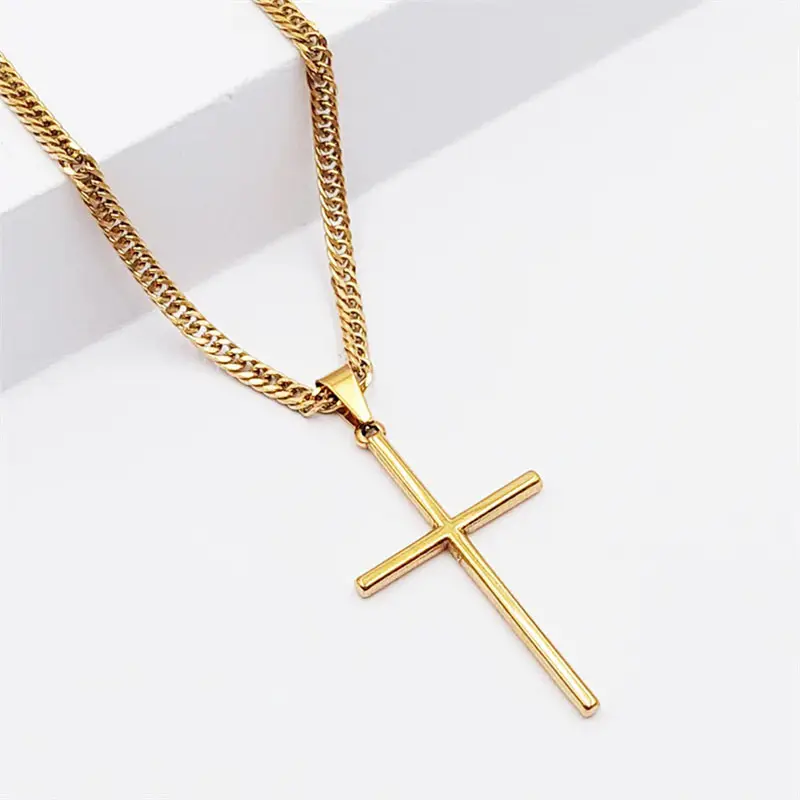
JINGYINGのプレーンクロスネックレスのカスタムプロセス
OEM/ODMジュエリーメーカーのデザインカスタム独自のジュエリー
始めましょう : mo@kingjy.com
Beyond the Standard Cast: The Custom Process of Plain Cross Necklace at JINGYING
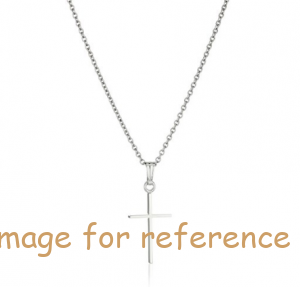
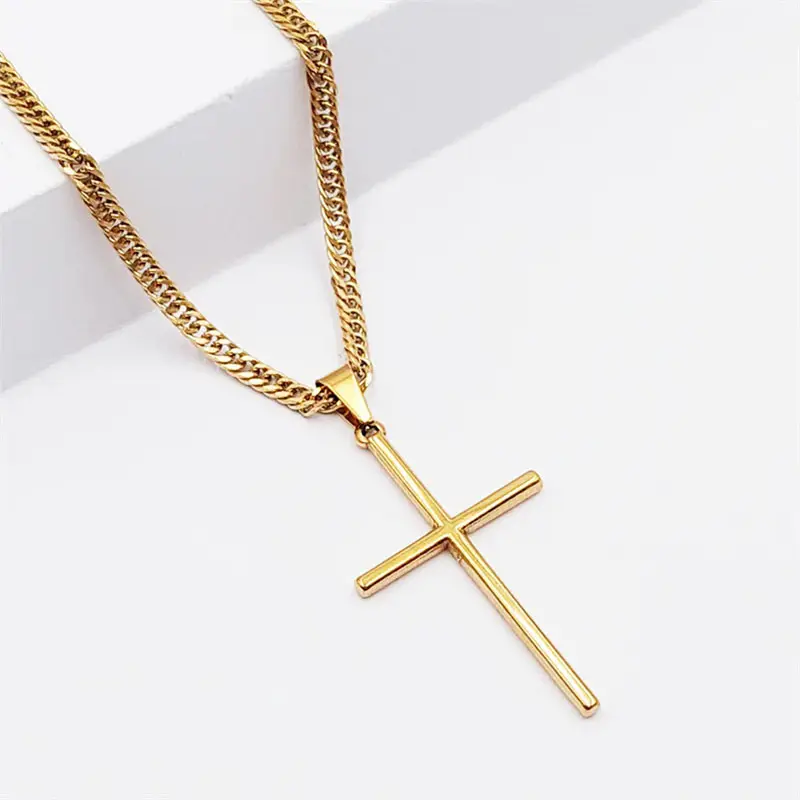
大量生産の時代に, the concept of "無地" is often mistaken for "simple." しかし, within the context of fine jewelry craftsmanship—particularly at a manufacturer like JINGYING—the word "無地" takes on a radical new meaning. It does not imply a lack of effort, but rather a mastery of restraint. The custom process of a plain cross necklace at JINGYING is a fascinating dichotomy: it is a journey that demands the highest level of technical precision to create an object that feels effortlessly minimal.
素人目には, a plain cross is just a vertical bar intersecting a horizontal one. To the metallurgists and master jewelers at JINGYING, it is a geometry problem governed by physics, a spiritual symbol that rests against the human sternum, and a canvas of light and shadow.
This guide details the seven-stage process of bringing a custom "無地" cross necklace to life, revealing the rigorous engineering, 物質科学, and hand-finishing required to achieve perfection where there is nowhere to hide.
Phase I: The Geometry of Faith (相談 & Philosophy)
The process begins long before any metal is melted. ジンジーで, the creation of a plain cross starts with a consultation that feels more like an architectural briefing . Since the design lacks decorative stones or intricate filigree to distract the eye, the proportions must be mathematically divine.
Defining the Archetype:
The first decision is historical. Is the client looking for a Latin Cross (the traditional elongated shape representing the Passion), a Greek Cross (with four equal arms, popular in Byzantine tradition), またはa Celtic Cross (the plain version with the characteristic ring intersection)?
その "ゴールデン" Ratio:
Because there are no gems, the visual weight of the pendant relies entirely on the ratio of the width to the length. JINGYING's CAD engineers often reference the Golden Ratio (約 1:1.618) to ensure the cross looks "右" to the human eye. しかし, custom requests often defy this. A men’s plain cross might require a stouter, more robust "分厚い" 感じる (a 1:3 比率), while a women's pendant might be elongated and delicate (1:5 比率).
Texture as the Only Ornament:
In the absence of stones, texture is king. The client must choose the "無地" 終える:
-
高ポリッシュ: Mirror-like reflectivity.
-
Satin/Brushed: A matte, velvety texture that diffuses light.
-
ハンマー: A dimpled surface that catches light organically, giving a hand-forged feel .
Phase II: 素材錬金術 (The Metal Selection)
JINGYING operates a zero-contamination policy in its workshops . Because a plain cross has no plating to hide imperfections (like porosity or pits), the base metal must be flawless.
-
スターリングシルバー (925): The most popular choice for plain crosses due to its bright white luster, which symbolizes purity. JINGYINGは使用します 92.5% pure silver alloyed with copper for strength. しかし, silver tarnishes. のために "無地" look that stays white, many clients upgrade to ロジウムメッキ 銀の上に .
-
純金 (14k & 18k): For a plain cross, gold offers warmth. Yellow gold emphasizes the spiritual glory, while white gold offers modern austerity. ローズゴールド, with its copper undertones, is often requested for crosses meant to symbolize the love of Christ or a memorial for a spouse .
-
白金: The ultimate choice for a "無地" 家宝. It has a heavy, 充実感 (比重) that cheap metals lack. Its natural white sheen never fades or requires plating .
Phase III: The Digital Crucible (CAD & 3Dプロトタイピング)
Once the math is calculated, the design enters the digital realm. ジンジーで, the mantra is "measure twice, cast once."
Engineers import the specifications into advanced CAD software. ここ, they analyze the 構造的完全性. A common issue with plain cross necklaces is the junction—where the vertical arm meets the horizontal arm. If the interior corner is a sharp 90-degree angle, it creates a stress riser. Under tension, a silver or gold cross could snap at the neck.
To prevent this, JINGYING's engineers introduce a microscopic radius fillet (a slight curve) in the internal corner. This distributes the weight and stress across the metal, ensuring the "無地" cross lasts a lifetime .
The 3D Render:
The client receives a 360-degree, high-definition video of the digital cross. Because there is no stone setting to correct minor asymmetries, the render is scrutinized for symmetry. Is the left arm exactly the same length as the right? Is the texture consistent? Only upon digital sign-off does the process move forward .
Phase IV: The Wax Revolution (Printing the Temporary)
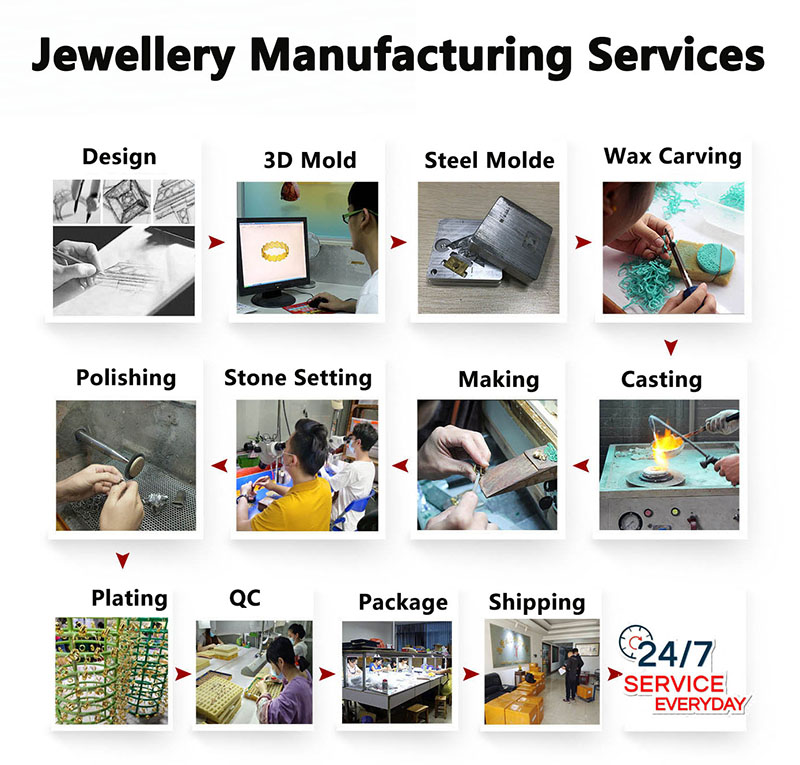
With the file approved, JINGYING creates a physical object using high-resolution 3D printing—specifically, a SLA (ステレオリスム造影) Resin Printer .
The printer builds the cross in liquid resin, layer by layer (often at 25-micron resolution). この樹脂 "ワックス" is the exact double of the final silver or gold piece.
Why wax matters for a plain cross:
In a gem-set piece, the wax is a placeholder. In a plain cross, the wax is a test. The jeweler checks the weight and the "hand feel." Does the edge feel sharp? Is the satin texture rough enough to hold a brush finish? The wax can be sanded, scraped, or polished by hand immediately—a process much cheaper and faster than correcting metal mistakes later .
Phase V: The Lost-Wax Casting (The Baptism by Fire)
The resin cross is attached to a rubber base with a "木" of wax wires. It is then inserted into a flask filled with a plaster-like investment material.
-
燃え尽き症候群: The flask is placed in a kiln at extreme temperatures (約. 750℃/1382°F). The resin wax vaporizes completely, leaving a perfect, negative-space cavity of the cross inside the plaster.
-
The Casting: JINGYING utilizes centrifugal or vacuum casting machines . 溶けた銀 (960°C) or gold is melted in a crucible. The machine spins the flask at high speeds, forcing the liquid metal into every microscopic crevice of the cavity.
のために "無地" クロス, the casting team pays special attention to the edges. If the metal cools too slowly, the sharp edges of the cross will round off. If it cools too fast, it might crack. JINGYING’s temperature controls are calibrated to ensure the final raw casting comes out of the flask with razor-sharp definition .
Phase VI: The Art of Subtraction (The Finishing Line)
ここは、 "無地" cross is either made or broken. The raw casting is covered in a black oxide from the hot plaster and has a small "スプルー" (a nub where the metal flowed in).
A master jeweler takes over. They clip the sprue and file it down flush with the metal. This is done under magnification. On a plain cross, any file mark left on the surface is permanent. The jeweler must blend the repair area seamlessly into the surrounding texture.
Chasing the Lines:
If the client ordered a high-polish cross, the jeweler begins with a 400-grit sandpaper, までに移動します 600, それから 1000, それから 2000, and finally to a polishing wheel with rouge compound. The goal is a mirror finish.
If the client ordered a brushed/satin finish, the jeweler uses a fiber brush or abrasive stone to draw perfectly straight, unbroken lines across the surface of the metal. On a cross, these lines must flow in the direction of the arms—vertical lines on the stem, horizontal lines on the arms—to create a flattering, slimming effect .
Phase VII: The Quality Crucible (QC & ホールマーク)
Before the chain is attached, the necklace enters the Quality Control phase. ジンジーのために, a custom plain cross undergoes a "Zero Defect" policy .
-
XRF分光分析: The cross is placed under an X-ray gun. This verifies the metal purity (例えば。。, "Are you sure this is 14k gold and not 13.5k?"). It ensures the alloy mix is exact.
-
Micro-Inspection: The piece is viewed under a 10x loupe. The inspector looks for "pitting" (tiny holes from gas bubbles during casting). Even one pit ruins a satin finish.
-
Porosity Check: Using X-ray imaging if necessary, they check for internal bubbles that could weaken the metal over time .
Upon passing, the cross is stamped. On the back, a tiny laser engraving marks the metal content ("925" または "750") and often the JINGYING maker's mark .
Phase VIII: The Presentation (Beyond the Pendant)
ついに, a plain cross needs its chain. JINGYING offers various chain styles, but for a minimalist plain cross, the Cable chain (classic oval links) または Box chain (square links creating a smooth, tubular feel) 推奨されます .
The cross is threaded onto the chain. The bail (the loop at the top of the cross) is gently squeezed to close the gap—but not too tight, as it must swing freely.
結論: The Loud Silence of Minimalism
The custom process of a plain cross necklace at JINGYING is an exercise in discipline. Because the design removes the distraction of gemstones, the underlying craftsmanship becomes exposed. There is no prong to hide a crooked stone; there is only the line, the angle, and the light.
クライアントのために, holding the finished product is a tactile revelation. It is heavier than expected. The edges are sharp where they should be, soft where the body touches them. それは "無地" only in design, but infinitely complex in execution—a true testament to the idea that in modern manufacturing, less is infinitely more difficult to achieve.