Jingying: Produzione di gioielli personalizzati – Marchio privato, OEM, e ODM
Progettazione di gioielli OEM/ODM Design personalizzato i tuoi gioielli
Iniziamo : mo@kingjy.com
Jingying: Produzione di gioielli personalizzati – Marchio privato, OEM, e ODM
Introduzione: Il cambiamento strategico verso la produzione di gioielli in outsourcing
L’industria globale della gioielleria sta attraversando una trasformazione strutturale. Poiché i gioielli di marca ora rappresentano circa 25% del mercato totale, e si prevede che il settore generale della gioielleria e dell’argenteria crescerà $227.65 miliardi di dollari 2025 A $240.48 miliardi di dollari 2026 ad un tasso di crescita annuo composto di 5.6%, marchi di ogni dimensione sono alla ricerca di partner produttivi in grado di fornire una qualità costante su larga scala. Contemporaneamente, il mercato globale dei servizi di gioielleria OEM/ODM è stato valutato a circa $9.4 miliardi di dollari 2025, riflettendo il grado in cui anche le case di gioielleria più affermate si affidano ora a produttori specializzati per la produzione.
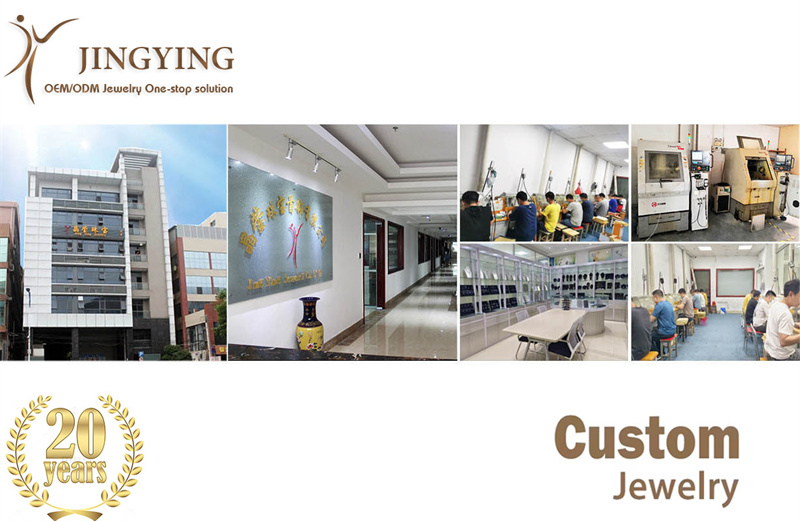
All'interno di questo paesaggio, Guangzhou JINGYING Jewelry Co., Ltd. si è posizionata come partner di produzione a servizio completo per i marchi che richiedono il marchio del distributore, OEM, e soluzioni ODM. Fondato in 1998, l'azienda opera da oltre due decenni come fornitore unico di produzione di gioielli personalizzati, con una capacità produttiva mensile fino a 80,000 pezzi e una competenza di base in 925 gioielli in argento sterling e placcati in oro. Questo articolo esamina il modello di produzione di JINGYING, le distinzioni tra private label, OEM, e accordi ODM, e le capacità operative che rendono tali partnership praticabili per i marchi che operano in un mercato globale sempre più competitivo.
Comprendere i tre modelli di produzione
Prima di valutare qualsiasi produttore specifico, i marchi devono comprendere le distinzioni fondamentali tra i tre principali modelli di outsourcing, ognuno dei quali comporta implicazioni diverse per la proprietà del progetto, velocità sul mercato, e struttura dei costi.
Etichetta privata refers to products manufactured by a third-party producer and sold under the buyer’s own brand name. The brand owns the branding, confezione, and customer relationship, while the manufacturer remains in the background. In a private label arrangement, products are made specifically for the brand — often with custom packaging and specifications — rather than simply rebranded off-the-shelf items. This model is particularly suited to boutique owners, fashion brands extending into jewelry, and e-commerce entrepreneurs who want full control over the product and brand narrative without building production infrastructure.
OEM (Produttore di attrezzature originali) arrangements place design ownership squarely with the brand. The brand provides the design — whether as sketches, File CAD, or detailed technical specifications — and the manufacturer produces it exactly to specification. Il marchio possiede la proprietà intellettuale, and the manufacturer’s role is production execution. OEM is best suited to brands with established designs who need a reliable production partner capable of maintaining tight tolerances and consistent quality.
ODM (Produttore di design originale) arrangements involve the manufacturer developing existing designs that the brand can then customize and sell under its own name. In questo modello, the manufacturer provides design and production capabilities, while the brand contributes brief, direction, e marchio. ODM is ideal for brands looking to develop new concepts collaboratively or those who need market-ready products without an in-house design team.
Private label sits closest to the ODM model, but the degree of customization and design ownership varies depending on the agreement between brand and manufacturer. In pratica, many successful jewelry brands use a hybrid approach: starting with ODM to achieve speed to market, then transitioning to OEM as their design language matures and differentiation becomes a priority.
Capacità di produzione di JINGYING
JINGYING operates across all three models, providing what the company describes as a “one-stop solution” for brand jewelers in terms of OEM/ODM and customized work. The company’s manufacturing foundation rests on 925 argento sterling, a material chosen not incidentally but because its 92.5% pure silver content offers an optimal balance of durability and luxury. L'argento sterling è ipoallergenico, rendendolo adatto alle pelli sensibili, ma abbastanza robusto per l'uso quotidiano. Oltre l'argento, JINGYING’s capabilities extend to copper with gold plating and solid gold options in 9K, 10K, 14K, and 18K fineness, consentendo all'azienda di soddisfare segmenti di mercato, dalla gioielleria di moda accessibile alle collezioni di fascia alta.
Una caratteristica tecnica distintiva della produzione JINGYING è la sua tecnologia di placcatura avanzata. La placcatura in oro vermeil dell’azienda raggiunge spessori fino a 3.0 micron, superando significativamente gli standard industriali tipici per l'argento placcato oro. Questo spessore si traduce direttamente in durabilità: Il processo di placcatura di JINGYING prevede una doppia procedura di elettroplaccatura: prima una spessa placcatura di base in argento seguita dalla lucidatura, quindi una placcatura finale in oro, progettata per garantire che l'aspetto simile all'oro duri anche dopo un'usura regolare. Per i marchi che vendono in mercati in cui i consumatori si aspettano longevità dai gioielli placcati, questa specifica tecnica rappresenta un significativo vantaggio competitivo.
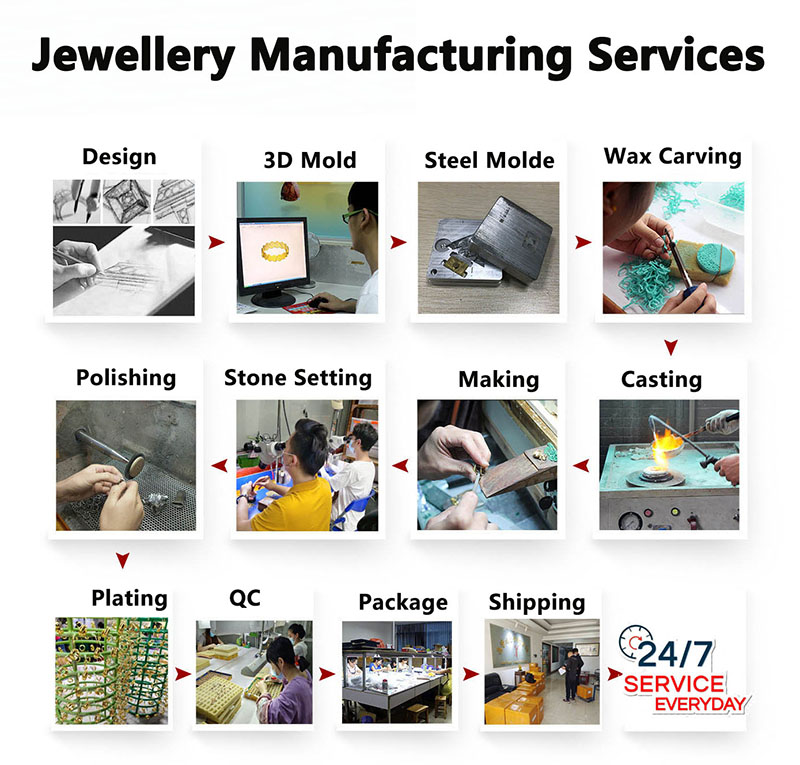
The company’s design and prototyping workflow reflects a similar emphasis on precision. JINGYING’s in-house design team utilizes professional software including Rhino and JewelCAD to create detailed 3D models from client concepts, fotografie, or existing CAD files. Once a design is approved, CAD files are output to high-precision CNC machines to carve resin or wax prototypes, which are then vacuum-cast in the specified metal for sample approval. For OEM clients bringing their own designs, the technical team conducts design-for-manufacturability reviews and can refine specifications — for example, adjusting prong thickness from 0.3mm to 0.5mm to improve durability — before production begins.
Quality Control as a Competitive Differentiator
In custom jewelry manufacturing, quality control is not a final inspection step but an integrated discipline that spans the entire production cycle. JINGYING’s approach illustrates how a manufacturer can build quality assurance into each stage of the process.
Incoming material inspection involves X-ray fluorescence testing to verify metal composition, ensuring that sterling silver meets the 92.5% standard and that plated materials contain no prohibited substances. This is particularly important for brands selling into the European Union, where REACH regulations restrict nickel release to no more than 0.5 μg/cm²/week and limit cadmium content to 0.01% in peso. For UK and EU clients, compliance with these standards is not optional, and a manufacturer’s ability to document material provenance and test results directly affects a brand’s ability to access those markets.
In-process quality checks include hourly plating thickness measurements during electroplating, dimensional verification against CAD specifications with tolerances as tight as ±0.15mm, and stone tightness testing using pull-force gauges. Final audit procedures involve a multi-person inspection team and, for some orders, destructive testing on a sample percentage of finished pieces. This layered approach means that defects are identified and corrected at the point of occurrence rather than discovered after shipment, reducing the risk of costly returns and brand damage.
The company also emphasizes confidentiality as a component of its client relationships. JINGYING signs non-disclosure agreements prior to the start of any manufacturing process, ensuring that proprietary designs are not shared with other clients or used in the manufacturer’s own product lines. For brands whose competitive advantage depends on exclusive designs, this contractual protection is as important as the physical quality of the product.
Production Scale, Flessibilità, and Cost Dynamics
Operational scale is a defining characteristic of a genuine manufacturer, and JINGYING demonstrates this through its production capacity. Con una produzione mensile fino a 80,000 pezzi, the company is positioned to serve both emerging brands placing initial orders and established retailers requiring consistent replenishment. This capacity is supported by a workforce of between 50 E 100 dipendenti, according to company data, with export sales accounting for approximately 10% of revenue as of the most recent available figures.
Flexibility in order quantities is a practical concern for many brands, particularly those launching new collections or testing market response. Industry norms for custom jewelry manufacturing in China typically involve minimum order quantities ranging from 50 A 200 pezzi per stile, depending on material and design complexity. While JINGYING’s specific MOQ varies by project, its stated model supports made-to-order production, meaning that production begins only after design approval and sample confirmation — a structure that aligns manufacturing volume with actual demand rather than speculative inventory.
Cost structures in custom jewelry manufacturing reflect the interplay of material selection, volume dell'ordine, e complessità progettuale. For a representative product category such as gold-plated bracelets, i costi unitari possono variare da circa $120 con volumi di ordini di 50 pezzi in giro $78 a volumi molto elevati. Questa curva dei prezzi basata sul volume è caratteristica dell'economia manifatturiera in cui i costi di installazione fissi sono la modellazione CAD, creazione di stampi, produzione di campioni: vengono ammortizzati su cicli di produzione più grandi.
Contesto di mercato: Perché la produzione personalizzata è importante adesso
La richiesta del marchio del distributore, OEM, e i servizi di produzione di gioielli ODM sono guidati da diverse tendenze che si intersecano nel mercato globale della gioielleria. La quota crescente di mercato dei gioielli firmati – che oggi rappresenta circa un quarto delle vendite totali – indica che i consumatori prendono sempre più decisioni di acquisto basate sull’identità del marchio piuttosto che esclusivamente sul materiale o sul prezzo.. This shift creates opportunities for new and mid-sized brands that can differentiate through design, narrazione, and customer experience, but it also creates pressure to source production partners capable of translating brand vision into physical product reliably and at competitive cost.
Online jewelry sales have accelerated this dynamic. NOI. e-commerce jewelry revenue reached approximately $16.8 miliardi di dollari 2025, representing roughly one-fifth of the total market. Digital-native brands often operate with leaner organizational structures than traditional retailers, making external manufacturing partnerships essential rather than optional. These brands require manufacturers that can support rapid iteration, accommodate small initial order quantities, and integrate with digital design workflows — capabilities that JINGYING’s CAD-driven prototyping and made-to-order production model are designed to address.
Allo stesso tempo, the global jewelry market’s projected growth trajectory — from $227.65 miliardi di dollari 2025 A $240.48 miliardi di dollari 2026 at a 5.6% CAGR — suggests that demand for manufacturing capacity will remain robust. The OEM/ODM services segment specifically is expected to grow from approximately $9.4 miliardi di dollari 2025 A $10.7 miliardi di 2032, a more modest 1.9% CAGR that reflects the maturity of the outsourcing model in established markets and its expansion into new categories and geographies.
Conclusione: Choosing the Right Manufacturing Partnership
For brands evaluating custom jewelry manufacturing partners, the decision ultimately comes down to alignment between the manufacturer’s capabilities and the brand’s stage of development, Posizionamento del mercato, and operational priorities. Private label offers the fastest and lowest-risk entry point for brands that want to test the jewelry category with existing designs. OEM provides the control and design ownership required by brands with established creative direction and a clear point of view. ODM offers the design and production partnership that emerging brands need to bring concepts to market without building internal capabilities.
JINGYING’s model — combining over two decades of production experience, 925 sterling silver and gold-plated manufacturing expertise, 3.0-micron plating technology, CAD-driven prototyping, and multilayer quality control — positions the company as a viable partner across all three arrangements. The company’s emphasis on confidentiality agreements, export compliance with REACH and related standards, and flexible order quantities addresses the practical concerns that most often determine whether a manufacturing partnership succeeds or fails. In a jewelry market where brand differentiation is increasingly tied to product quality and supply chain reliability, the choice of manufacturing partner is not merely a sourcing decision but a strategic one.