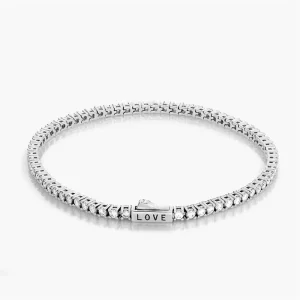
JINGING :Produsen Khusus Gelang Rantai Penjepit Kertas Tiga Lapis Vermeil Emas
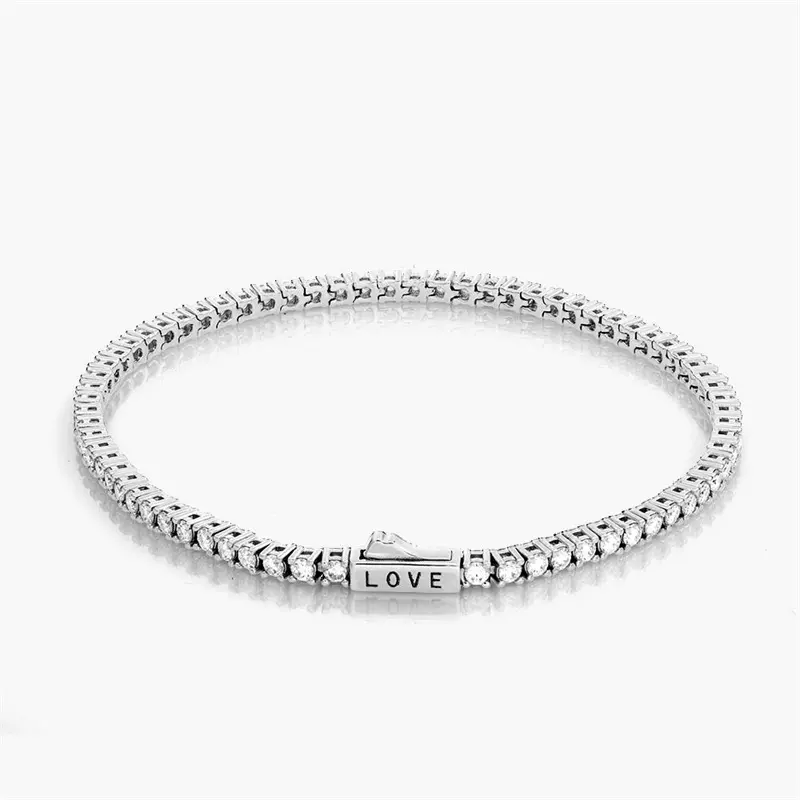
Memproduksi Gelang Perak Tenis Moissanite Terukir di JINGYING
Mari kita mulai : mo@kingjy.com
Cara Memproduksi Gelang Perak Tenis Moissanite Terukir di JINGYING
Perkenalan
Dalam lanskap manufaktur perhiasan kontemporer, gelang tenis tetap menjadi klasik abadi—rangkaian batu permata yang bersambung dari logam mulia, dirancang untuk melingkari pergelangan tangan dengan elegan. Ketika disempurnakan dengan moissanite—batu permata yang dikembangkan di laboratorium yang terkenal karena api cemerlang dan daya tahannya—dan dibuat dalam perak sterling dengan ukiran khusus, karya ini menjadi mudah diakses dan luar biasa.
Perhiasan JINGYING, dengan berakhir 23 pengalaman manufaktur bertahun-tahun di Guangdong, Cina, telah menyempurnakan produksi barang-barang rumit tersebut melalui model manufaktur terpadu yang terintegrasi secara vertikal. Berbeda dengan rantai pasok yang terfragmentasi dimana desainnya, pengecoran, pengaturan, dan finishing ditangani oleh vendor yang berbeda, JINGYING mengontrol setiap variabel di bawah satu atap—mulai dari gambar rangka CAD awal hingga kemasan anti noda akhir.
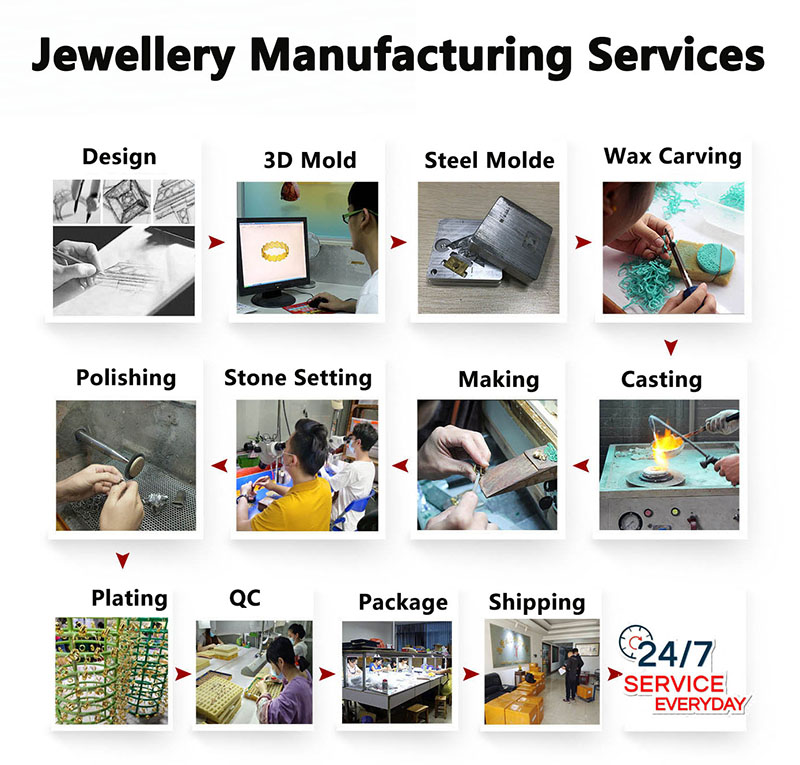
Memproduksi gelang tenis moissanite berukir dalam perak sterling adalah simfoni teknologi presisi: desain dengan bantuan komputer (Cad), 3pencetakan D, casting longgar, Mesin CNC untuk ukiran, dan pengaturan tangan yang cermat. Laporan ini mendekonstruksi setiap fase proses tersebut, memberikan peta jalan teknis bagi merek yang ingin memproduksi SKU dengan permintaan tinggi ini.
Fase 1: Konseptualisasi dan Desain Teknis (Cad)
Perjalanan gelang tenis di JINGYING tidak dimulai dengan logam, tapi dengan matematika. Setiap kurva, kursi batu, dan koordinat ukiran dipetakan dalam ruang tiga dimensi sebelum material fisik apa pun disentuh.
Metodologi Masukan Desain
Tim desain JINGYING menerima beragam format masukan, membuat prosesnya dapat diakses oleh merek mapan dan desainer startup:
-
Sketsa yang digambar tangan: Rough concepts translated into technical drawings.
-
Reference photos: Images of existing pieces or natural forms used for inspiration.
-
3D files: .STL, .OBJ, or .Rhino files for clients with existing digital assets.
Upon receiving the design brief, CAD engineers begin constructing the parametric model of the bracelet. For a moissanite tennis bracelet, this involves modeling individual links, the hinge mechanism for the clasp, and most critically, itu pengaturan batu.
Engineering for Stone Setting
The CAD phase is where functionality is baked into beauty. Engineers must determine the appropriate wall thickness for the silver settings. If the metal surrounding a moissanite is too thin, the stone will fall out; if too thick, the bracelet becomes heavy and loses its elegant drape.
-
Prong design: Cakar logam kecil yang menahan setiap moissanite dimodelkan dengan dimensi yang tepat. Untuk moissanite bulat 3mm, cabangnya harus naik tepat 1,2 mm di atas korset batu untuk memastikan keamanan tanpa menghalangi masuknya cahaya.
-
Saluran vs. Cabang: Sementara pengaturan cabang (empat cakar atau enam cakar) adalah standar untuk paparan cahaya maksimum, JINGYING juga memodelkan pengaturan saluran yang modern, tampilan memerah.
-
Kedalaman ukiran: Jika gelang tersebut memiliki ukiran permukaan pada penghubung antar batu, file CAD memetakan ruang negatif ini untuk memastikan logam mempertahankan integritas struktural setelah pengetsaan.
Sebelum persetujuan, JINGYING menghasilkan rendering fotorealistik. Hal ini memungkinkan klien untuk melihat bagaimana cahaya berinteraksi dengan aspek moissanite dan bagaimana ukirannya berada relatif terhadap batu..
Fase 2: Pemilihan Bahan – Sterling Silver dan Moissanite
Yayasan Perak
Untuk produk khusus ini, 925 Sterling Silver adalah substratnya. JINGYING menggunakan 92.5% perak murni yang dicampur dengan logam lain (biasanya tembaga) untuk meningkatkan kekerasan. Perak murni terlalu lunak untuk menahan batu permata dengan aman; paduan ini memastikan bahwa garpu mempertahankan ketegangan pada moissanite selama bertahun-tahun.
Klien dapat memilih berbagai opsi pelapisan pada dasar perak:
-
Pelapisan Rhodium: Logam golongan platinum yang memberikan warna putih cemerlang, hasil akhir seperti cermin dan mencegah noda. Ini adalah standar untuk "emas putih" lihat gelang tenis.
-
Pelapisan emas (Vermeil): Lapisan tebal 14K, 18K, atau emas 24K yang dilapisi perak untuk estetika kuning atau emas mawar yang mewah.
Kualitas Moissanite
Moissanit (Silikon Karbida, SiC) dipilih karena indeks biasnya yang unggul (2.65-2.69), yang melebihi berlian (2.42). JINGYING biasanya menggunakan kejelasan VVS moissanite, memastikan batu-batu itu bersih untuk mata.
-
Memotong: Potongan cemerlang bulat standar paling umum digunakan untuk gelang tenis, meskipun potongan buah pir dan potongan putri tersedia untuk pesanan khusus.
-
Penilaian warna: Klien dapat memilih D-F (tanpa warna) atau GH (hampir tidak berwarna) batu tergantung pada anggaran dan kebutuhan desain.
Fase 3: Pembuatan Prototipe dan Persiapan Produksi Massal
Prototipe cepat (3D Pencetakan)
Setelah CAD diselesaikan, file dikirim ke a SLA (Stereolitografi) atau DLP (Pemrosesan Cahaya Digital) 3pencetak D. Mesin ini mengeringkan resin fotopolimer cair lapis demi lapis untuk membuat model lilin atau resin fisik pada gelang.
Model resin ini merupakan replika persis dari keping perak terakhir. Ini termasuk garpu yang halus, mekanisme engsel, dan tekstur terukir. Langkah ini penting karena dua alasan: itu memungkinkan untuk pemeriksaan kebugaran fisik, dan itu berfungsi sebagai elemen pengorbanan untuk casting.
Pengecoran (Metode Lilin Hilang)
Ini adalah seni pengerjaan logam kuno yang diadaptasi untuk presisi tinggi:
-
Berinvestasi: Pohon gelang damar ditempatkan dalam labu baja dan ditutup dengan bubur seperti plester yang disebut investasi.
-
Pemadaman: Labu tersebut dipanaskan dalam tungku pembakaran. Resin meleleh dan menguap, meninggalkan rongga negatif sempurna pada gelang.
-
Pengecoran: cair 925 perak (dipanaskan hingga sekitar 1.760°F atau 960°C) dipaksa masuk ke dalam rongga menggunakan gaya sentrifugal atau tekanan vakum. Logam tersebut masuk ke dalam detail mikro pada cabang dan ukirannya.
Setelah dingin, Investasi itu terputus, memperlihatkan pengecoran gelang perak mentah.
Fase 4: Seni Pengaturan Batu – Mengamankan Moissanite
Dengan coran mentah yang dipotong dari pohon logam, potongan-potongan itu dipindahkan ke bangku pemasangan batu. Ini adalah fase yang paling padat karya dan mengharuskan pembuat perhiasan bekerja di bawah mikroskop.
Di Jingying, proses pemasangan batu untuk gelang tenis mengikuti urutan yang ketat:
-
Pemotongan kursi: Menggunakan bor motor mikro, penyetel memperdalam kursi yang telah dibentuk sebelumnya dalam model CAD agar sesuai dengan diameter tepat moissanite yang masuk.
-
Penempatan batu: Each VVS moissanite is manually placed into its seat. Because tennis bracelets often feature 30 ke 60 Batu, consistency is key.
-
Prong tightening: Using a beading tool or a burnisher, the setter pushes the silver prongs over the crown (atas) of the moissanite. The pressure must be precise—enough to hold the stone securely against daily wear, but not so much that it cracks the gemstone.
-
Pave and Channel techniques: For bracelets requiring a "fully iced out" Lihat, JINGYING utilizes pave setting, where tiny beads of silver are lifted to hold small stones close together, creating a continuous surface of sparkle.
Fase 5: Engraving – Adding the Custom Identity
With the stones set, the bracelet now requires its custom engraving. JINGYING employs two primary methods for engraving, depending on the complexity and volume.
Metode 1: High-Precision CNC Engraving
For crisp, dalam, dan teks atau logo yang dapat diulang (seperti nama merek, nomor seri, atau pola geometris), JINGYING menggunakan CNC (Kontrol Numerik Komputer) permesinan.
-
Proses: Gelang dipasang pada meja putar sumbu ke-4. Pabrik ujung berujung berlian atau karbida berputar pada 10,000+ RPM mengikuti jalur kode G untuk secara fisik memotong ukiran menjadi perak.
-
Keuntungan: Presisi tak tertandingi hingga mikron; sempurna untuk barang-barang mewah berseri.
-
Aplikasi: Logo di bagian belakang gesper atau pola geometris rumit di bahu penghubung.
Metode 2: Ukiran laser
Untuk teks berkecepatan tinggi atau penandaan permukaan halus.
-
Proses: Laser serat menguapkan permukaan perak untuk menciptakan kontras tinggi, tanda permanen.
-
Aplikasi: Pesan yang menyentuh hati, ukiran tanggal, atau kode QR yang menghubungkan ke sertifikat keaslian.
Fase 6: Finishing dan Elektroplating
Setelah pengukiran dan pengaturan, gelang itu secara fisik lengkap tetapi secara visual mentah. Itu harus dipoles dan dilapisi.
Pemolesan
Pengrajin JINGYING menggunakan serangkaian alat putar dan senyawa untuk menghasilkan hasil akhir cermin.
-
Pra-pemolesan (Jatuh): Gelang ditempatkan di dalam gelas dengan bahan baja tahan karat untuk menghaluskan permukaan umum.
-
Pemolesan tangan: Menggunakan bahan muslin buff dan rouge compound yang lembut, perhiasan memoles tautannya, menghindari moissanites untuk mencegah penumpukan senyawa dalam pengaturan.
Pelapis (Proses Galvanik)
Untuk meningkatkan daya tahan dan warna, gelang memasuki bak pelapisan listrik.
-
Pelapisan Rhodium: Untuk hasil akhir perak/putih. Gelang itu direndam dalam larutan rhodium sulfat. Arus listrik menghasilkan warna putih cerah, lapisan keras rhodium di atas perak. Hal ini mencegah noda yang timbul secara alami pada perak mentah.
-
Pelapisan Emas (Vermeil): Untuk emas kuning/mawar. Perak pertama-tama dilapisi dengan lapisan penghalang nikel atau tembaga, lalu dengan lapisan emas 18K yang tebal.
Fase 7: Kontrol kualitas (Inspeksi 7 Titik)
Sebelum dikemas, setiap gelang tenis moissanite yang diukir melewati pemeriksaan ketat 7-sistem pemeriksaan titik:
-
Penjajaran Batu: Apakah meja moissanite sejajar sempurna dengan permukaan gelang?
-
Integritas Cabang: Tes sentuhan memastikan tidak ada gigi yang longgar.
-
Mekanisme Gesper: Gesper kotak dan kait pengaman harus berbunyi klik dengan kuat. Untuk gelang tenis, kehilangan gesper berarti kehilangan seluruh gelang.
-
Keseragaman Pelapisan: Ketebalannya diukur (sering 0.5 ke 3 mikron emas) untuk memastikan tidak ada titik tipis.
-
Kedalaman Ukiran: Verifikasi bahwa teks memenuhi spesifikasi dan dapat dibaca.
-
Permukaan Selesai: Pemeriksaan terhadap goresan atau gelembung pada pelapisan.
-
Pemeriksaan Dimensi: Gelang diukur untuk memastikannya memenuhi panjang yang diminta (MISALNYA., 7 inci).
Fase 8: Logistik dan Pengemasan
Dengan persetujuan akhir, gelang dibersihkan secara ultrasonik untuk menghilangkan sisa pemolesan, kering, dan dikemas. JINGYING menawarkan kemasan label pribadi, memungkinkan merek untuk menempatkan logo khusus mereka di kotak.
-
Waktu tunggu produksi standar: 20-30 hari kerja untuk pesanan massal.
-
Pengambilan Sampel/Prototipe: 7-10 hari kerja.
Kesimpulan
Memproduksi gelang perak tenis moissanite berukir di JINGYING adalah perjalanan presisi teknologi tinggi dan karya seni langsung. Prosesnya memanfaatkan CAD/CAM untuk kesempurnaan struktural, casting longgar untuk skalabilitas ekonomi, pengaturan batu ahli untuk kecemerlangan, Dan Ukiran CNC untuk identitas yang dipesan lebih dahulu. Dengan memanfaatkan 925 perak sterling sebagai dasarnya, JINGYING menjembatani kesenjangan antara keterjangkauan dan kemewahan, sementara moissanite memberikan etika, api tahan lama yang diminta konsumen modern.
Untuk merek yang ingin memasuki pasar perhiasan khusus, bermitra dengan produsen terpadu seperti JINGYING menghilangkan mimpi buruk logistik dalam mengoordinasikan banyak pabrik. Dari sketsa pertama hingga ukiran gesper terakhir, setiap milimeter gelang itu bertanggung jawab pada satu orang, sistem manajemen mutu terpadu.