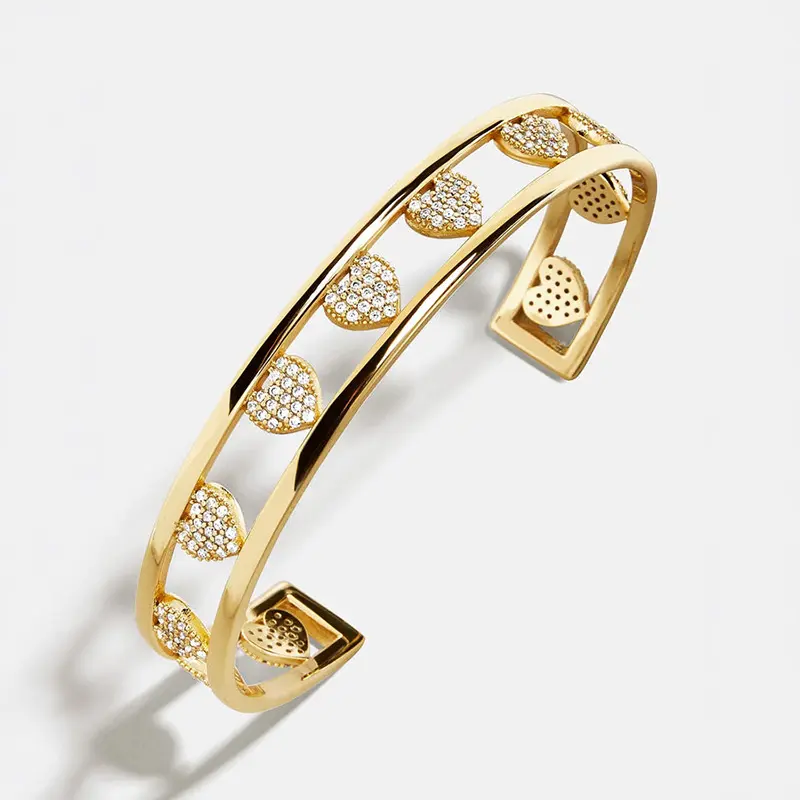
Pabrik perhiasan fashion khusus gelang manset hati emas 18K
Desain Produsen Perhiasan OEM/ODM Kustom Perhiasan Anda Sendiri
Mari kita mulai : mo@kingjy.com
Seni dan Ilmu Membuat Gelang Manset Hati Emas 18K
Penciptaan gelang manset hati emas 18 karat mewakili konvergensi ilmu metalurgi, desain artistik, dan keahlian yang cermat. Artikel ini memberikan penjelasan yang komprehensif, eksplorasi teknis dari seluruh proses manufaktur, dari formulasi paduan awal hingga tahap pemolesan akhir. Perjalanan dari bahan mentah hingga menjadi perhiasan kelas atas adalah hal yang rumit, membutuhkan pemahaman mendalam tentang sifat material, Teknik Presisi, dan teknik finishing tangan tradisional.
Yayasan Metalurgi: Paduan Emas 18K
Prosesnya dimulai dengan pembuatan paduan emas 18K itu sendiri. Emas murni 24 karat terlalu lunak dan mudah dibentuk untuk aplikasi perhiasan praktis; itu rentan terhadap pembengkokan, goresan, dan keausan umum. Karena itu, emas murni dicampur dengan logam lain untuk meningkatkan kekuatannya, daya tahan, dan kemampuan kerja, while also influencing its color. Menurut definisi, 18-karat emas adalah 75% pure gold by weight. Sisanya 25% consists of other elements, and the specific composition of this 25% dictates the final properties of the alloy.
Material Composition and Its Implications
The most common alloying elements for 18K yellow gold are silver, tembaga, dan seng. One source provides a specific formula for an 18K gold bracelet material: 75.2% emas, 13.69% tembaga, 7.44% nikel, Dan 3.66% seng. Another indicates a composition of 75-80% emas, 18.9-21.7% perak, 0.1-0.3% nikel, Dan 1-3% seng, with silver being used to maintain the yellow hue while enhancing workability. The inclusion of copper serves a dual purpose: it imparts strength and helps achieve the rich warm color characteristic of 18K yellow gold. The addition of nickel or zinc further contributes to the alloy's hardness and castability.
The Challenge of Grain Refinement
A critical aspect of gold alloy production is controlling the microstructure of the metal through grain refinement. The grain size has a direct impact on the metal's workability, aesthetic quality, dan resistensi korosi. It is a common industrial practice to add small amounts of elements like iridium to act as grain refiners. These elements create nucleation centers during solidification, resulting in a finer, more uniform crystalline structure. Namun, iridium is expensive and its use makes the production process more complex and costly. Recent advancements in thermomechanical processing offer an alternative. By optimizing the sequence of cold-working (rolling) and annealing (perlakuan panas), it is possible to achieve a final product with properties comparable to an iridium-refined alloy. This is a significant development for the industry, memungkinkan pengurangan biaya dan penyederhanaan proses tanpa mengorbankan kualitas.
Proses pembuatan langkah demi langkah
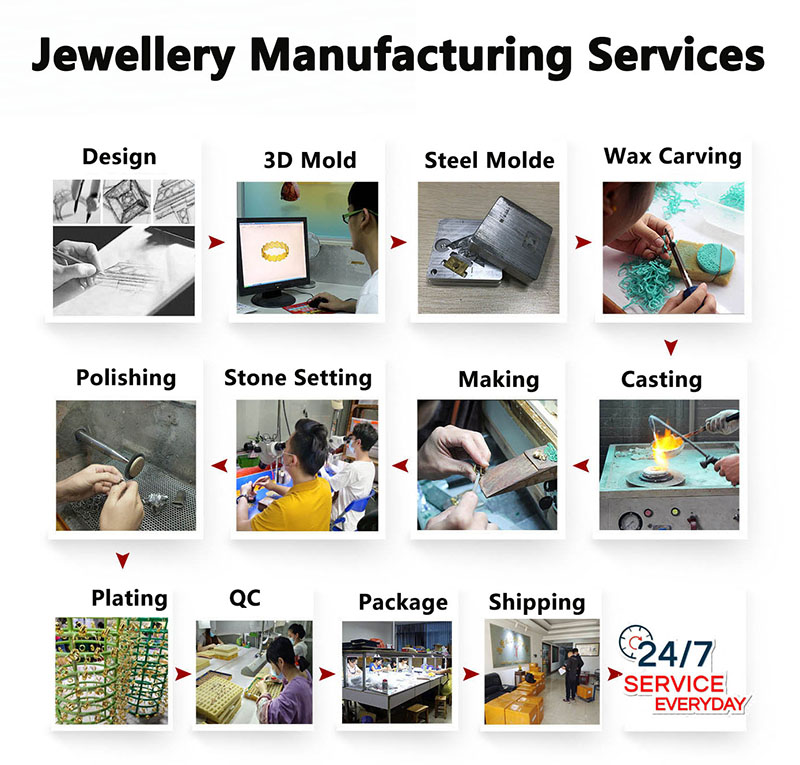
Transformasi paduan emas menjadi gelang manset jantung jadi biasanya mengikuti serangkaian proses industri dan kerajinan tangan. Metode umum pembuatan perhiasan emas 18K dapat dipecah menjadi beberapa tahap utama: peleburan, pengecoran, finishing, dan perawatan permukaan.
1. Peleburan dan Pengecoran
Prosesnya dimulai dengan penimbangan dan penggabungan logam murni secara cermat sesuai dengan formula yang dipilih. Bahan mentah ini kemudian ditempatkan dalam wadah dan dilebur di bawah perlindungan gas inert, seperti argon atau nitrogen, untuk mencegah oksidasi. Peleburan ini biasanya dilakukan dalam tungku induksi khusus, yang menggunakan medan elektromagnetik untuk memanaskan logam dengan cepat dan seragam. Logam cair kemudian dituangkan ke dalam cetakan pembentuk di bawah atmosfer gas inert. Untuk gelang manset, ini bisa melibatkan pengecoran batang persegi panjang atau "garis" dari logam, suatu proses yang dikenal sebagai pengecoran kontinyu. Laju pendinginan selama fase ini sangat penting untuk mengontrol struktur butiran awal paduan dan mencegah oksidasi berlebihan.
2. Membentuk Manset
Yang mentah, batangan logam cor masih jauh dari bentuk gelang akhirnya. Ini mengalami serangkaian proses pembentukan yang membentuknya menjadi profil manset yang familiar. Hal ini biasanya dicapai melalui kombinasi penempaan, rolling, and annealing. Deformasi dingin, seperti menggulung batangan cor melalui gilingan, mengeraskan logam, menjadikannya lebih keras dan rapuh. Untuk mendapatkan kembali keuletan logam dan memungkinkan pembentukan lebih lanjut, potongan itu harus dianil. Annealing involves heating the metal to a specific temperature (Misalnya, di atas 830 ° C.) and then rapidly quenching it, which recrystallizes the grains and softens the material. This cycle of rolling and annealing is repeated until the metal reaches the desired thickness and shape. The final shape is often achieved using a CNC (Kontrol Numerik Komputer) machining to ensure precision and consistency, creating the perfectly circular or oval shape of the bracelet body and the specific details of the heart motif.
3. Intricate Assembly and Finishing
With the base components formed, the detailed work begins. This is where the heart design is fully realized. This stage requires a skilled artisan's attention to detail and involves a combination of hand and machine tools. The heart motif might be crafted separately and then welded to the bracelet using a laser welding technique. Laser welding provides a precise, clean joint that minimizes heat-affected zones and prevents the metal from distorting. Once the main assembly is complete, the bracelet enters a rigorous finishing phase. Ini termasuk "fine clamping, pengelasan laser, repairing and shaping, fine grinding and polishing" to prepare the surface for its final treatment.
4. Surface Treatment: Proses Elektroplating
To ensure a flawless, konsisten, and brilliant gold finish, the bracelet undergoes an electroplating step. This serves several purposes. Electroplating restores the true color of the gold, giving it a more uniform and vibrant appearance than bare 18K gold might have. It also creates a final protective layer that enhances the piece's tarnish resistance and gives it its signature luster. The process involves making the bracelet the cathode in an electroplating bath containing a gold-based solution. When an electric current is passed through the solution, gold ions are deposited onto the jewelry's surface, creating a thin, high-quality gold layer. The industry is increasingly moving towards cyanide-free electroplating solutions for environmental and safety reasons. One such solution uses a mixture of gold, tembaga, and indium, claiming to improve stability, dispersibility, dan kualitas secara keseluruhan. This process provides a final, pure gold layer that is durable, tahan korosi, and aesthetically perfect.
Advanced Additive Manufacturing
While the traditional casting and forming process is the industry standard, an advanced alternative is emerging through additive manufacturing, commonly known as 3D printing. Techniques like binder jetting offer the "almost unlimited freedom of design" and are particularly suitable for creating complex or customized jewelry pieces. The process involves printing a metal powder (dalam hal ini, an 18K gold alloy powder) using a liquid binder to bind the particles together in a layer-by-layer fashion. Hasilnya "hijau" part is then sintered in a furnace to burn off the binder and fuse the metal particles, achieving a high density. Research into this method for gold alloys is ongoing, with studies focusing on optimizing the sintering process to control grain growth and achieve the desired mechanical and aesthetic properties.
Kesimpulan
The creation of an 18K gold heart cuff bracelet is a testament to the sophisticated blend of science and artistry that defines the jewelry industry. It begins with the precise formulation of an alloy designed for strength and beauty, continues through the demanding processes of casting and thermomechanical shaping, and is perfected through skilled hands-on assembly and chemical surface treatment. The evolution of the craft, from the development of grain-refining thermomechanical processes to the adoption of cyanide-free electroforming and additive manufacturing, demonstrates a continuous commitment to improving the quality, daya tahan, and sustainability of these enduring symbols of craftsmanship. The final product is not merely a piece of jewelry but the result of a complex and carefully managed process that balances material science with the highest standards of artistic skill.