
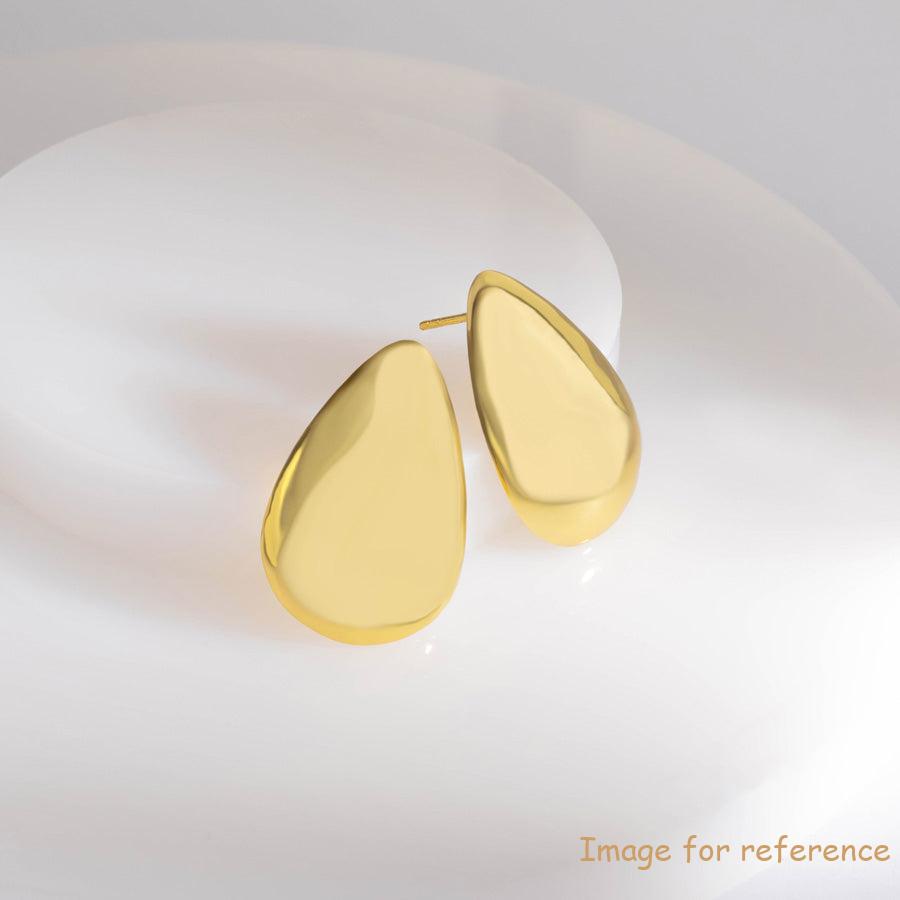
La création de boucles d'oreilles en forme de larme personnalisées implique un mélange méticuleux d'innovation en matière de conception et de savoir-faire technique.. De la conceptualisation au produit final, chaque étape demande précision et expertise. Ce guide complet explore les techniques et processus essentiels impliqués dans la fabrication de boucles d'oreilles en forme de larme sur mesure..

1. Conceptualisation et conception
1.1 Inspiration initiale
Le voyage commence par l'inspiration, qui peut provenir de diverses sources telles que la nature, art, architecture, ou expériences personnelles. Les concepteurs esquissent souvent des idées préliminaires pour visualiser le résultat souhaité.
1.2 Raffinement de la conception
Une fois le concept choisi, les concepteurs affinent l'idée en tenant compte de facteurs tels que la taille, proportions, et l'esthétique globale. Cette phase peut impliquer la création de plusieurs itérations pour perfectionner la conception.
1.3 Modélisation CAO
La conception de bijoux modernes fait souvent appel à la conception assistée par ordinateur (GOUJAT) logiciel pour créer des modèles 3D détaillés des boucles d'oreilles. Cela permet des ajustements et des visualisations précis avant de passer à la phase de production..
2. Sélection des matériaux
2.1 Choix de métaux
Le choix du métal a un impact significatif sur la durabilité et l’apparence de la boucle d’oreille.. Les métaux courants comprennent:
-
Argent sterling: Offre un équilibre entre qualité et prix abordable.
-
Or: Fournit une finition luxueuse, disponible en différents carats.
-
Laiton: Une alternative économique avec un ton chaleureux.lisayangjewelry.com
2.2 Émail et pierres précieuses
Pour ajouter de la couleur et un intérêt visuel, l'émail peut être appliqué sur la surface métallique. En plus, l'incorporation de pierres précieuses ou de perles peut améliorer l'attrait du design.be-cu.com+2Euphorie gravée+2chingying-jewelry.com+2
3. Techniques de fabrication
3.1 Sculpture et moulage de cire
Les méthodes traditionnelles consistent à créer un modèle en cire de la boucle d'oreille, qui est ensuite enduit dans un matériau de moule. Le moule est chauffé pour enlever la cire, et du métal en fusion est versé dans la cavité pour former la boucle d'oreille. chingying-jewelry.combe-cu.com
3.2 Enroulement de fil
Pour une approche plus artisanale, L'enroulement de fils consiste à façonner et à connecter des fils métalliques pour former la structure de la boucle d'oreille.. Cette technique permet des conceptions complexes et une personnalisation.Wikipédia+1lisayangjewelry.com+1
4. Finition des surfaces
4.1 Polissage
Une fois la boucle d'oreille formée, le polissage est essentiel pour obtenir une surface lisse et brillante. Cette étape rehausse l’éclat naturel du métal.
4.2 Émaillage
L'application d'émail consiste à faire fondre du verre en poudre sur la surface métallique en utilisant de la chaleur.. Des techniques comme le cloisonné ou le champlevé peuvent créer des motifs détaillés et colorés. chingying-jewelry.com
4.3 Gravure et texturation
L'ajout de textures ou de gravures peut personnaliser les boucles d'oreilles, les rendant uniques pour le porteur. Cela peut inclure des initiales, motifs, ou éléments décoratifs.
5. Assemblage et touches finales
5.1 Joindre les résultats
Les composants des boucles d'oreilles, comme des crochets ou des goujons, sont solidement fixés au corps principal. Cela garantit que la boucle d'oreille est prête à être portée.chingying-jewelry.com
5.2 Contrôle de qualité
Chaque boucle d'oreille est soumise à une inspection approfondie pour vérifier les défauts, garantir que seules des pièces de haute qualité parviennent au client.
6. Emballage et présentation
Les boucles d'oreilles finales sont soigneusement emballées pour éviter tout dommage pendant le transport.. La présentation joue un rôle crucial dans l’expérience client globale.
Conclusion
La fabrication de boucles d'oreilles en forme de larme personnalisées est un mélange harmonieux de talent artistique et de compétence technique.. En comprenant et maîtrisant chaque étape, de la conception à la finition, les bijoutiers peuvent créer des pièces à la fois belles et durables.. Qu'il s'agisse de méthodes traditionnelles ou de techniques modernes, la clé réside dans l'attention aux détails et la passion pour le métier.interweave.com