
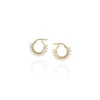
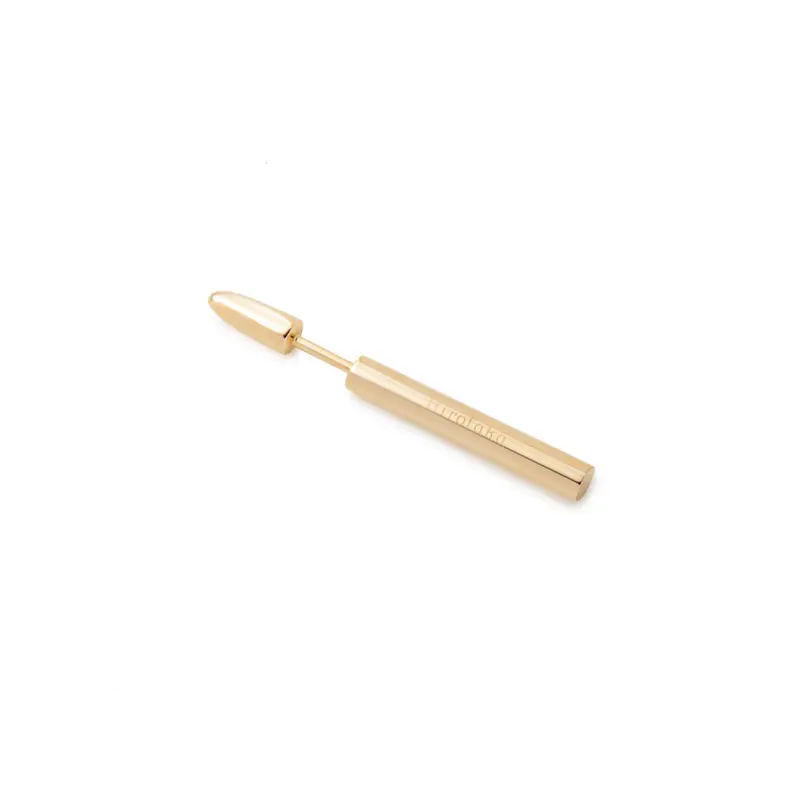
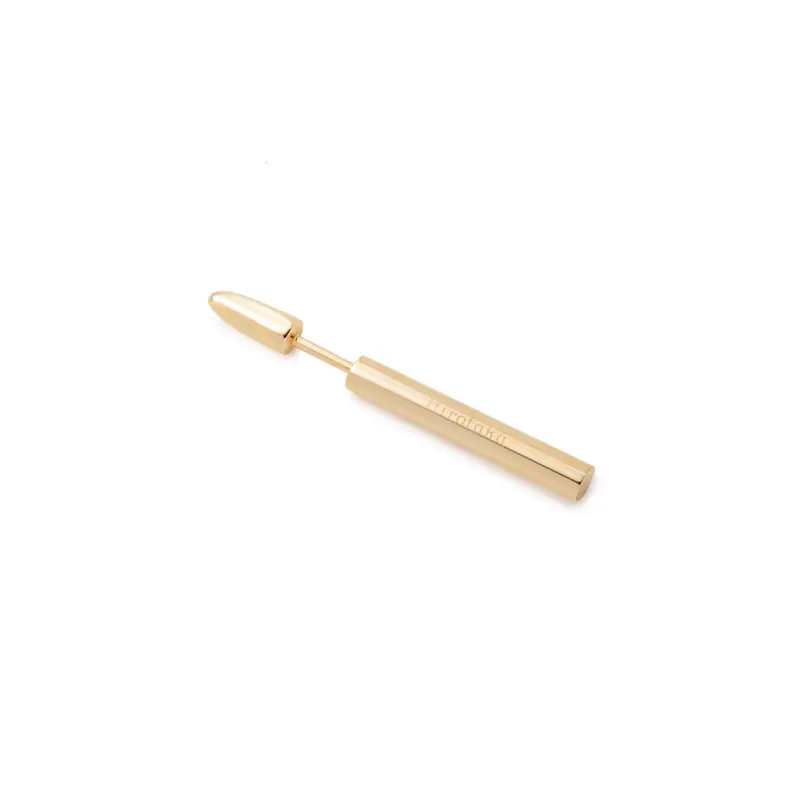
Comment personnaliser une boucle d'oreille lance PUNCTURE chez JINGYING
Conception du fabricant de bijoux OEM / ODM Custom Vos propres bijoux
Commençons : mo@kingjy.com
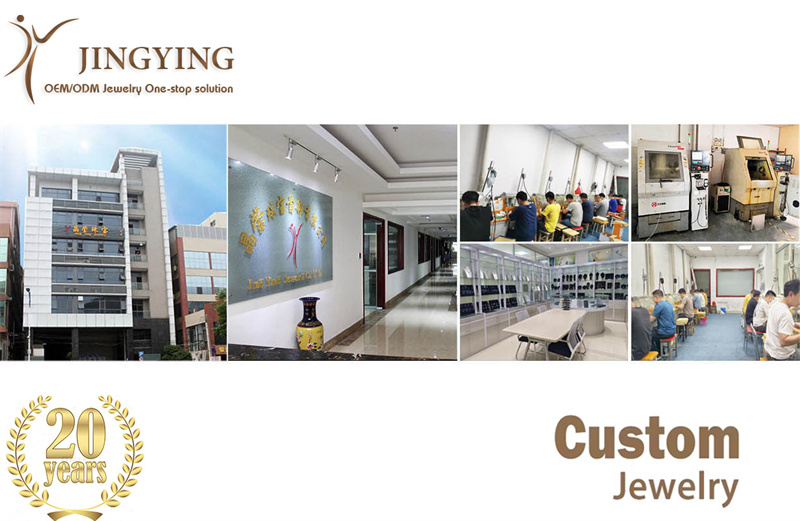
Comment personnaliser une boucle d'oreille lance PUNCTURE chez JINGYING
Abstrait
In the evolving landscape of contemporary jewelry, the puncture spear earring—a bold aesthetic statement characterized by its elongated form and piercing functionality—has emerged as a distinctive category within body jewelry. This comprehensive guide explores the customization process for puncture spear earrings at JINGYING, a premier mid-to-high-end jewelry OEM manufacturer with over two decades of industry experience . Drawing upon manufacturing whitepapers, technical documentation, and production case studies, this article provides a systematic framework for designers, marques, and individuals seeking to transform conceptual spear earring designs into precision-manufactured realities. From initial design consultation and CAD modeling through advanced CNC piercing technology, sélection des matériaux, en pierre, finishing protocols, et contrôle de la qualité, this paper elucidates each phase of JINGYING’s end-to-end customization ecosystem. Particular emphasis is placed on the technical considerations unique to elongated puncture forms—including weight distribution, intégrité structurelle, gauge specifications, and biocompatibility requirements—while also addressing low minimum order quantities, branded packaging integration, and quality assurance metrics. The objective is to equip stakeholders with actionable knowledge for navigating JINGYING’s custom manufacturing services, thereby bridging the gap between aesthetic vision and wearable art.
Mots clés: Puncture spear earring, custom jewelry manufacturing, Jinging, CNC piercing technology, S925 Silver, bijoux de corps, CAD / CAM, en pierre, contrôle de qualité, OEM / ODM
1. Introduction
1.1 The Rise of the Puncture Spear Earring
The puncture spear earring represents a distinctive fusion of ancient body adornment traditions and contemporary minimalist aesthetics. Unlike conventional stud earrings or dangling designs, the spear format features an elongated, tapered shaft that passes through one or more piercing channels, often culminating in a decorative terminal element at one or both ends . This configuration creates a linear, architectural silhouette that has gained significant traction among fashion-forward consumers seeking alternatives to traditional earring archetypes.
Market data indicates that pierced designs account for 38% of pendant and earring sales in the premium jewelry segment, with body jewelry categories showing 22% year-over-year growth . Within this expanding market, consumers increasingly demand customization—pieces that reflect personal narratives, accommodate specific anatomical considerations, or align with brand identity requirements. This demand has catalyzed a shift from mass production toward agile, made-to-order manufacturing models .
1.2 JINGYING’s Position in the Custom Jewelry Ecosystem
Fondée en 1998 and headquartered in Guangzhou, China’s prolific jewelry manufacturing hub, JINGYING has evolved from a traditional workshop into an integrated original equipment manufacturer (Socle) et fabricant de conception originale (ODM) serving major international brands . The company distinguishes itself through three core competencies:
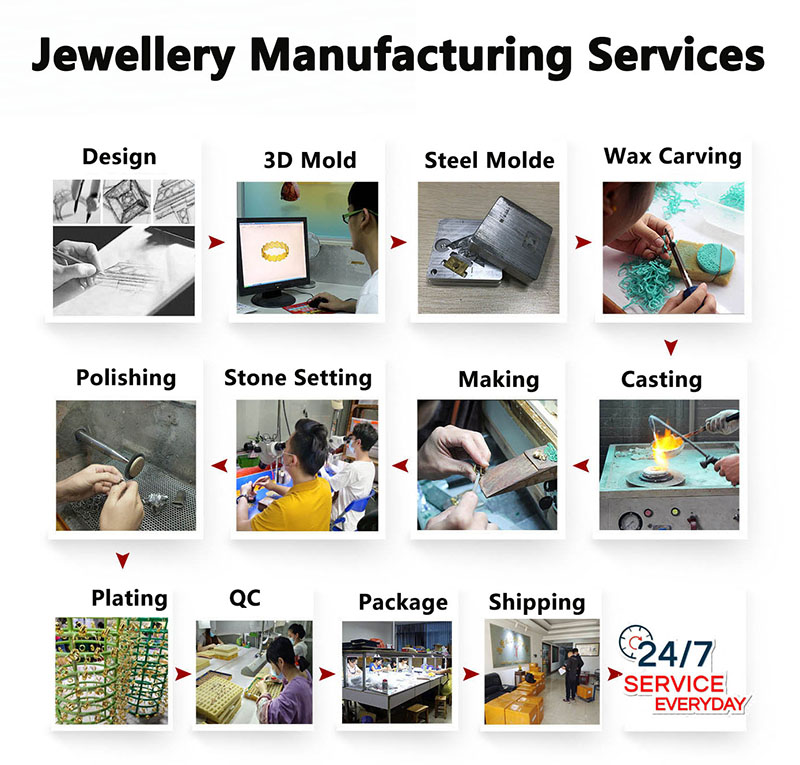
D'abord, intégration verticale enables JINGYING to manage every production phase under one roof—from initial CAD modeling and 3D printing to casting, en pierre, polissage, placage, et emballage . This eliminates the fragmentation and quality inconsistencies inherent in coordinating multiple specialized vendors.
Deuxième, sophistication technologique manifests in capabilities such as multi-axis CNC piercing systems achieving ±0.01mm accuracy, 50,000 RPM spindle speeds, and 0.1mm micro-tools for intricate hollowing operations . These specifications are particularly relevant for puncture spear earrings, which often require precise channel dimensions and delicate decorative piercing.
Troisième, accessibility without compromise is reflected in JINGYING’s low minimum order quantities—starting at just 50 pieces for custom designs—contrasted with its capacity to scale to 50,000-unit productions for established brands . This flexibility accommodates emerging designers, marques de boutique, and individual commissions alike.
1.3 Scope and Purpose of This Guide
This article addresses a specific gap in available literature: while general custom jewelry processes are well-documented, the unique requirements of puncture spear earrings—including gauge standardization, channel straightness, weight distribution for elongated forms, and biocompatibility for healing piercings—receive insufficient attention. By synthesizing JINGYING’s technical documentation with industry best practices, this guide aims to:
-
Provide a step-by-step workflow for custom spear earring production
-
Identifier critical decision points where design choices impact manufacturability
-
Établir quality benchmarks for evaluating finished products
-
Offre practical protocols for collaboration with JINGYING’s team
The intended audience includes jewelry brand founders, product designers, piercing studio owners, and discerning individuals seeking to commission bespoke pieces.
2. Understanding the Puncture Spear Earring: Design Parameters and Technical Constraints
Before engaging JINGYING’s customization services, stakeholders must understand the specific design considerations that distinguish puncture spear earrings from other jewelry categories. These parameters directly influence material selection, manufacturing methods, and quality outcomes.
2.1 Anatomical and Functional Requirements
Gauge Specifications: Body jewelry is standardized by gauge (AWG) mesures, with common ear piercing gauges ranging from 18G (1.0mm diamètre) to 14G (1.6mm diamètre) for standard piercings, and up to 8G (3.2MM) for stretched piercings. Spear earrings must be designed with precise shaft diameters compatible with these standards. JINGYING’s CNC systems can achieve tolerances of ±0.05mm on shaft dimensions, ensuring proper fit without excessive friction or looseness .
Length Considerations: Unlike standard stud earrings with 8-10mm posts, spear earrings may extend 30-60mm or more, passing through multiple piercing points (Par exemple, helix to lobe). Elongated designs introduce challenges of leverage and torque—a longer lever arm magnifies forces from accidental snagging, potentially causing deformation or injury. JINGYING addresses this through structural reinforcement strategies, including thickened core sections and strategic ribbing concealed within decorative elements .
Répartition du poids: Consumer preferences indicate optimal spear earring weight under 15g per piece to prevent lobe stretching or discomfort during extended wear . Achieving this while maintaining structural integrity requires hollowing techniques (CNC piercing to remove excess material) or tapered geometries that concentrate mass near the decorative terminal rather than along the shaft.
Biocompatibility: Puncture spear earrings contact healing or healed tissue, necessitating hypoallergenic materials. JINGYING’s standard offering for body jewelry includes S925 sterling silver (92.5% argent, 7.5% alliage de cuivre) with nickel-free rhodium plating, as well as surgical-grade titanium and niobium for sensitive wearers .
2.2 Aesthetic and Decorative Elements
The spear format accommodates diverse decorative treatments:
Terminal Finials: The visible end(s) of the spear may feature geometric forms (spheres, cones, pyramids), organic motifs (floral, botanical), or abstract sculptural shapes. JINGYING’s 5-axis CNC capabilities enable complex undercuts and 3D contours previously achievable only through hand carving .
Channel Piercing: Decorative voids within the spear shaft—creating lattice, filigrane, or negative-space effects—require precision piercing technology. JINGYING’s Multi-Axis Micro-Piercing System can produce 0.3-0.5mm piercing widths consistently across 10,000+ production units .
Finitions de surface: Options include high-polish mirror finishes (Ra ≤0,1 μm), matte/satin textures, oxidized/antique effects, and selective plating combinations (Par exemple, rose gold terminals with rhodium-plated shafts) .
Intégration des pierres précieuses: Spear earrings may incorporate pavé-set stones along the shaft, bezel-set centerpieces at terminals, or channel-set accents. JINGYING offers micro-pavé setting using Japanese-manufactured setting equipment, atteindre 99% taux de rétention des calculs .
2.3 Material Selection Framework
| Matériel | Dureté (Mohs) | Biocompatibility | Machinability | Cost Index | Best Application |
|---|---|---|---|---|---|
| S925 Silver | 2.5-3 | Bien (with plating) | Excellent | 1x | General-purpose spear earrings |
| 14K or | 2.8-3.5 | Excellent | Bien | 25-35x | Premium/luxury pieces |
| Titane (Grade 23) | 6 | Excellent | Équitable | 5-8x | Peau sensible, medical-grade |
| Acier inoxydable (316L) | 5.5 | Très bien | Bien | 0.5x | Budget-conscious, high-durability |
Source: Compiled from JINGYING technical documentation
S925 silver represents the optimal balance for most applications due to its machinability for fine details, excellent polish retention, et rentable. Cependant, designers prioritizing extreme durability or working with very thin cross-sections (under 1.0mm) may prefer stainless steel or titanium despite higher machining complexity .
3. The Customization Workflow: From Concept to Finished Spear
JINGYING’s custom manufacturing process follows a structured pathway comprising six major phases. Understanding this workflow enables clients to anticipate timelines, prepare appropriate documentation, and participate effectively in design refinement.
3.1 Phase 1: Design Consultation and Documentation
The customization journey begins when the client submits design materials to JINGYING via email (mo@kingjy.com) or through the company’s online portal . Acceptable submission formats include:
Conceptions numériques: Dossiers CAO (STEP, IGES, STL), 2D vector artwork (IA, PDF), or high-resolution raster images (PNG, JPEG at minimum 300 DPI)
Croquis physiques: Hand-drawn technical drawings with dimension notations, or artistic renderings for interpretive development
Reference Samples: Existing spear earrings for replication or modification (requiring 3D scanning)
Tableaux d'humeur: Collages of inspiration images, material swatches, and written descriptions for design-from-scratch projects
Après réception, JINGYING’s design team conducts a Feasibility Analysis, évaluation:
-
Structural integrity of proposed geometry
-
Compatibility with selected materials
-
Projected manufacturing costs and lead times
-
Potential optimizations for strength or weight reduction
This consultation typically requires 2-3 business days for initial feedback .
3.2 Phase 2: Modélisation CAO et rendu 3D
Approved concepts proceed to Computer-Aided Design (GOUJAT) modeling using industry-standard software including Matrix, Rhinoor, and SolidWorks . This phase transforms two-dimensional concepts into precise three-dimensional digital prototypes.
Key Modeling Operations for Spear Earrings:
Shaft Geometry Definition: Establishing gauge diameter, taper angles, and length parameters. JINGYING’s CAD engineers incorporate shrinkage allowances (typiquement 2-3% for silver casting) to ensure final dimensions match specifications.
Piercing Pattern Design: For spear earrings incorporating decorative voids, CAD models define the exact shape, taille, and spacing of pierced elements. Toolpath simulation verifies that proposed patterns are machinable with available micro-tools (minimum 0.3mm width for silver, 0.5mm for harder metals) .
Structural Reinforcement: CAD models may incorporate hidden ribbing or thickened core sections where piercing patterns weaken the shaft. These reinforcements are concealed within the design, visible only in cross-sectional views.
Stone Setting Placement: For gemstone-accented spears, CAD models locate each setting precisely, specifying prong dimensions, bezel wall thicknesses, or channel widths calibrated to stone sizes.
Deliverables: Clients receive photorealistic 3D renderings viewable from any angle, allowing iterative refinement. JINGYING typically provides 2-3 revision rounds included in base pricing, with additional rounds available at nominal cost .
3.3 Phase 3: Prototyping and Physical Validation
Following CAD approval, JINGYING produces a physical prototype using high-resolution 3D printing. Two primary prototyping methods are available:
Wax Resin Printing: The standard method for cast pieces. A wax or castable resin model is printed at 25-50 micron resolution, allowing clients to handle a physical representation of the design before metal casting. Wax prototypes reveal scale, poids (approximated), and ergonomic feel.
Direct Metal Prototyping: For simpler geometries or urgent timelines, CNC machining from metal stock produces a functional prototype. This method is more expensive but yields a wear-testable piece without casting lead times.
Validation Checklist during prototype review:
-
Shaft gauge compatibility with standard piercing jewelry (test with gauge card)
-
Weight within target range (under 15g per piece)
-
Piercing channels free of sharp edges (run fingertip across)
-
Balance point—does the spear rotate unexpectedly in the ear?
-
Decorative elements aligned with design specifications
JINGYING’s case documentation notes that the prototype phase identified 23% of production issues across 10,000-unit orders, including three instances where spear designs required structural modifications to prevent bending under normal wear conditions .
3.4 Phase 4: Production Planning and Toolpath Generation
Après approbation du prototype, JINGYING’s manufacturing engineers prepare for production. For spear earring orders, this involves:
Nesting Optimization: Arranging multiple spear models on casting trees or CNC workbeds to maximize material utilization. JINGYING achieves 82% material efficiency for typical silver spear earring production .
Toolpath Programming: For CNC piercing operations, Mastercam software generates toolpaths specifying each cutting tool’s movements. The program accounts for:
-
Roughing passes (removing bulk material with 0.8mm end mills)
-
Semi-finishing passes (0.4mm ball nose cutters)
-
Perçage de précision (0.1mm tapered tools for fine details)
-
Drilling operations (gauge shaft channels, bail holes)
Tool Selection: JINGYING maintains a 12-tool automatic carousel with real-time wear compensation, enabling uninterrupted production runs .
Quality Hold Points: Production schedules incorporate intermediate inspection stages where pieces are removed from the line for dimensional verification using coordinate measuring machines (MMT) with ±0.05mm accuracy.
3.5 Phase 5: Exécution de la fabrication
The manufacturing phase combines automated precision with hand craftsmanship:
Fonderie (for complex geometries): Lost-wax casting transforms 3D-printed wax models into metal. Wax trees are invested in plaster, burned out in high-temperature furnaces, and molten metal is centrifugally or vacuum-cast into the resulting cavities . JINGYING’s controlled atmosphere casting minimizes porosity—a critical factor for thin spear shafts that might otherwise fracture at internal voids.
Usinage CNC (for simpler or high-precision geometries): Direct CNC machining from metal stock achieves tighter tolerances than casting but is generally limited to geometries accessible by cutting tools (no internal undercuts without multi-axis indexing).
Traitement post-coulée: Cast spear earrings undergo:
-
Sprue removal (cutting away casting channels)
-
Initial filing and sanding to remove casting skin
-
Culbutage magnétique (8-24 hours depending on finish requirements)
-
Nettoyage à ultrasons
En pierre: For gemstone-accented pieces, JINGYING’s setters use micro-pavé techniques with Japanese-manufactured setting equipment. Each stone is individually seated and burnished, followed by a 3-meter drop test to verify retention—pieces passing this test are considered secure for normal wear .
Placage et finition: Spear earrings receive 2-3 plating layers depending on specification. JINGYING’s standard silver vermeil process applies thick silver base plating followed by gold or rhodium top plating at 3μm thickness, warranted for one year of normal wear . Alternative finishes include:
-
Brillant: Mirror finish via multi-stage buffing
-
Mat: Bead-blasted or satin-brushed surfaces
-
Oxydé: Chemical patination for antique effects
-
Bicolore: Selective plating using masking techniques
3.6 Phase 6: Contrôle qualité et emballage
Every custom spear earring order undergoes JINGYING’s multi-stage quality assurance protocol:
| Point de contrôle | Méthode | Acceptance Criterion |
|---|---|---|
| Précision dimensionnelle | CMM or optical comparator | ±0.05mm on critical dimensions |
| Piercing Channel Cleanliness | 10× magnification microscope | No burrs exceeding 0.02mm |
| Surface Finish Quality | Light chamber inspection | Ra ≤0.1μm for polished surfaces |
| Sécurité de pierre | Manual probe + 3m test de chute | 0% loose stones post-test |
| Épaisseur | Analyseur XRF | ≥3μm for vermeil specification |
| Pureté des matériaux | XRF spectroscopy | 92.5-93% Ag for S925 |
Source: JINGYING quality control documentation
Options d'emballage: JINGYING offers tiered packaging solutions:
-
Standard: Individual PETG form-fitting inserts in generic boxes
-
Branded: Custom-printed boxes with client logos, couleurs, and typography
-
Prime: FSC-certified rigid boxes with magnetic closures, foam inserts, and branded dust bags
-
NFC-Enabled: Boxes embedded with near-field communication chips for authenticity verification
Shipping and Documentation: Finished pieces are shipped globally with tracking and insurance. Accompanying documentation includes material certificates, Instructions de soins, et (for gemstone pieces) third-party appraisal reports upon request.
4. Technical Deep Dive: CNC Piercing for Spear Earrings
Given that many distinctive spear earring designs incorporate decorative pierced elements, this section examines JINGYING’s proprietary CNC piercing technology in detail.
4.1 The MAPS System
JINGYING’s Multi-Axis Micro-Piercing System (CARTES) represents a significant advancement over traditional piercing methods. Key specifications include:
-
5-contrôle simultané des axes: Enables machining of undercuts and compound-angle features without repositioning
-
50,000 Vitesse de broche tr/min: Allows micro-tools to cut rather than push material, reducing burr formation
-
0.1micro-outils en carbure mm: Achieve piercing widths as narrow as 0.2mm in silver
-
Usinage à sec sans liquide de refroidissement: Eliminates cleaning requirements and environmental contamination
-
Compensation de l'usure des outils en temps réel: Monitors cutting loads and adjusts feed rates automatically
4.2 Comparative Advantages
| Paramètre | CNC Piercing (JINGYING MAPS) | Coupure laser | Traditional Hand Piercing |
|---|---|---|---|
| Minimum piercing width | 0.2MM | 0.5MM (with charring) | 0.8MM |
| Edge quality | Pas de bavures >0.02MM | Heat-affected zone, recast layer | Variable by skill |
| 3D undercuts | Oui (5-axis) | Non (line-of-sight only) | Oui (but inconsistent) |
| Repeatability | ±0.01mm | ±0,05 mm | Highly variable |
| Production speed | 23 min/piece (typical) | 14 min/piece | 60-120 min/piece |
| Material waste | 85% less than laser | Modéré | Minimal setup waste |
Source: JINGYING case study data
For spear earring applications, CNC piercing enables several distinctive effects unattainable by other methods:
Variable-width piercing: Channels that taper from 0.5mm at the spear’s base to 0.2mm at the tip, creating visual depth and lightness.
Interlocking pierced patterns: Two or more layers of metal with offset piercings creating moiré effects when viewed from different angles.
Hidden structural elements: Piercing can be employed strategically to reduce weight in non-stressed areas while leaving thicker sections where loads concentrate.
4.3 Design Guidelines for Pierced Spear Elements
To maximize manufacturing success rates, designers should adhere to JINGYING’s recommended parameters:
-
Minimum material thickness between piercings: 2× tool diameter (0.6mm for 0.3mm piercings)
-
Minimum piercing width: 0.3mm for silver, 0.4mm for stainless steel
-
Maximum piercing depth-to-width ratio: 8:1 for straight channels, 4:1 for tapered
-
Avoid sharp internal corners—use 0.2mm minimum radius where piercings change direction
These guidelines derive from JINGYING’s analysis of 10,000+ pierced pendant units, which identified tool breakage as the primary failure mode when parameters were violated .
5. Étude de cas: Custom Floral Spear Earring Collection
To illustrate the customization process in practice, this section presents a hypothetical yet technically accurate case study based on JINGYING’s documented project patterns.
Profil client: Scandinavian-inspired jewelry brand launching a “Nordic Flora” collection featuring spear earrings with botanical pierced patterns.
Exigences de conception:
-
55mm total length, tapering from 4mm diameter at top to 1.6mm at tip
-
Pierced fern-frond patterns along upper 30mm of shaft
-
S925 silver with rhodium plating (sans nickel)
-
Weight target: 12g per earring
-
Quantité commandée: 500 couple (prototype batch) with option for 5,000 couple
Process Timeline:
| Phase | Durée | Key Activities |
|---|---|---|
| Design consultation | 5 jours | Feasibility analysis, sélection des matériaux |
| Modélisation CAO | 7 jours | 3 iterations of rendering |
| Wax prototyping | 5 jours | 3D Impression, physical review |
| Toolpath programming | 4 jours | Mastercam simulation |
| Sample production | 10 jours | 10-piece sample batch |
| Client sample approval | 3 jours | Wear testing, finish verification |
| Full production | 21 jours | 500 pairs cast, pierced, fini |
| Contrôle de qualité | 4 jours | 100% inspection |
| Emballage et expédition | 3 jours | Boîtes de marque, documentation |
| Total | 62 jours |
Résultats:
-
Final weight: 11.8g per earring (within specification)
-
Piercing width consistency: 0.38-0.42mm across all units
-
Yield rate: 96.2% (19 pieces rejected, primarily for minor surface defects)
-
Client feedback: “The precision of the pierced fern patterns exceeded our expectations—each piece looks like a miniature sculpture”
Leçons apprises: The initial CAD model’s fern fronds featured 0.2mm connections between pierced elements, which proved fragile during prototype wear testing. JINGYING’s engineering team thickened these connections to 0.35mm while maintaining visual effect through slight geometry adjustments—a value engineering intervention that prevented in-production failures.
6. Quality Assurance for Spear Earrings
Puncture spear earrings require elevated quality standards compared to conventional earrings due to their direct tissue contact and extended leverage mechanics.
6.1 Critical-to-Quality Parameters
Surface Integrity: Any burr, sharp edge, or irregularity exceeding 0.02mm can cause micro-abrasions in piercing channels, leading to irritation or infection . JINGYING’s inspection protocol mandates 10× magnification examination of all tissue-contacting surfaces.
Adhérence de placage: Spear earrings experience rotational forces during insertion and removal, which can delaminate poorly adhered plating. JINGYING validates plating adhesion through:
-
Cross-hatch tape test (ASTM D3359 standard)
-
5-minute manual rub test with abrasive cloth
-
XRF thickness verification at three points per piece
Clasp/Closure Security: For spear earrings with removable ends or locking mechanisms, JINGYING performs 5kg pull tests to verify closure retention—exceeding the approximately 0.5kg forces generated during normal wear .
Biocompatibility Verification: While JINGYING does not perform in-house biocompatibility testing, the company maintains documented material certifications from upstream suppliers. For medical-grade applications (healing piercings, bijoux initiaux), clients may request third-party testing through partnered laboratories.
6.2 Common Defect Modes and Prevention
| Defect | Root Cause | JINGYING Prevention |
|---|---|---|
| Warped shaft | Uneven cooling during casting | Controlled-atmosphere cooling, normalized heat treatment |
| Burrs in piercing | Worn cutting tool | Real-time tool wear monitoring, automatic tool changes |
| Pitting/porosity | Gas entrapment during casting | Vacuum-assisted casting, degassed alloys |
| Inconsistent plating thickness | Improper rack positioning | Fixture validation, batch sampling with XRF |
| Loose stones | Insufficient burnishing | 100% probe testing, drop-test sampling |
7. Ordering Logistics and Commercial Considerations
7.1 Quantités de commande minimale (Moqs) et les prix
JINGYING’s MOQ structure accommodates diverse client scales:
-
Sample orders: 1-10 pièces (coût unitaire plus élevé, typical sample fee $50-200 en fonction de la complexité)
-
Petit lot: 50-500 pièces (entry point for emerging brands)
-
Medium batch: 500-5,000 pièces (sweet spot for cost efficiency)
-
Large production: 5,000-50,000+ pièces (optimal per-unit economics)
Pricing for custom spear earrings varies significantly based on:
-
Complexité de conception (number of pierced elements, stone count)
-
Sélection des matériaux (silver base pricing plus precious metal premiums)
-
Finition des surfaces (single finish vs. multi-step or selective finishing)
-
Packaging tier (basic vs. branded vs. prime)
Typical retail markups from JINGYING’s wholesale pricing range from 3-5× for direct-to-consumer brands, with higher multiples for luxury-positioned pieces .
7.2 Délai de plomb
Standard lead times by order volume:
| Quantité de commande | Typical Lead Time (jours ouvrables) |
|---|---|
| Échantillon (1-10) | 15-20 |
| Petit lot (50-500) | 30-40 |
| Medium batch (500-5,000) | 45-60 |
| Large production (5,000+) | 60-90 |
Expedited services are available at 25-50% prime, reducing lead times by approximately 30% .
7.3 Protection de la propriété intellectuelle
JINGYING offers formal Non-Disclosure Agreements (Le) upon request and maintains documented IP protection protocols. Client-supplied designs are not shared with other customers or used for speculative production. For brands launching proprietary collections, JINGYING recommends:
-
Registering design patents in target markets before production
-
Including confidentiality clauses in manufacturing agreements
-
Requesting destruction of all prototypes and tooling after production (certificate of destruction provided)
8. Conclusion et recommandations
8.1 Summary of Key Findings
Customizing puncture spear earrings at JINGYING is a structured, transparent process that bridges artistic vision with industrial precision. The company’s combination of advanced CNC piercing technology, intégration verticale, and flexible MOQs positions it as a capable partner for designers at various scales. Critical success factors identified throughout this guide include:
-
Design manufacturability—spear earrings must balance aesthetic aspirations with structural realities, particularly regarding minimum piercing widths, taper geometries, and weight distribution.
-
Sélection des matériaux—S925 silver offers the optimal balance of machinability, coût, and biocompatibility for most applications, though titanium or stainless steel may be preferred for extreme durability or sensitivity cases.
-
Quality verification—rigorous inspection protocols at each production phase, combined with client involvement at prototype and sample stages, prevent costly rework.
-
Lead time planning—62-90 day typical timelines require coordination with product launch schedules, though expedited options exist.
8.2 Recommendations for Prospective Clients
For first-time custom jewelry designers:
-
Begin with sample orders (1-10 pièces) to validate designs before committing to volume
-
Request physical wax prototypes, not just renderings—handling reveals fit and balance issues
-
Budget 15-20% contingency for design revisions discovered during prototyping
For established brands:
-
Develop design guidelines aligned with JINGYING’s manufacturing parameters to reduce revision cycles
-
Establish quality acceptance criteria in writing before production commences
-
Consider JINGYING’s branded packaging integration as a differentiator—co-branded unboxing experiences drive social media engagement
For piercing studio owners:
-
Prioritize biocompatible materials (nickel-free plating, implant-grade titanium options)
-
Request surface roughness documentation (Ra values) for tissue-contacting surfaces
-
Verify gauge compatibility with standard piercing jewelry before bulk ordering
8.3 Future Directions
The custom jewelry manufacturing landscape continues to evolve, with several trends likely to shape puncture spear earring production in coming years:
AI-powered design optimization: JINGYING has signaled investment in machine learning tools that will automatically suggest structural reinforcements while preserving aesthetic intent .
Sustainable material sourcing: Growing consumer demand for recycled metals and lab-grown gemstones is driving JINGYING to expand its certified sustainable material portfolio .
On-demand manufacturing integration: Real-time production triggered by retail sales—eliminating inventory risk entirely—represents the logical extension of JINGYING’s current made-to-order model .
8.4 Pensées finales
The puncture spear earring, at its essence, is a conversation between wearer and world—a declaration of aesthetic intent made manifest in precious materials. JINGYING’s role in this conversation is that of interpreter and executor, transforming two-dimensional sketches into three-dimensional realities that maintain their integrity through years of wear. For designers and brands willing to engage seriously with the technical parameters outlined in this guide, the company offers a reliable pathway from concept to commercialization.
The key insight emerging from this research is that successful customization is not about asking “what can JINGYING make?” but rather “how can JINGYING’s capabilities amplify my design vision?” When approached as a collaboration rather than a transaction—with mutual respect for artistic intent and manufacturing reality—the result is jewelry that transcends mere accessory to become wearable art.