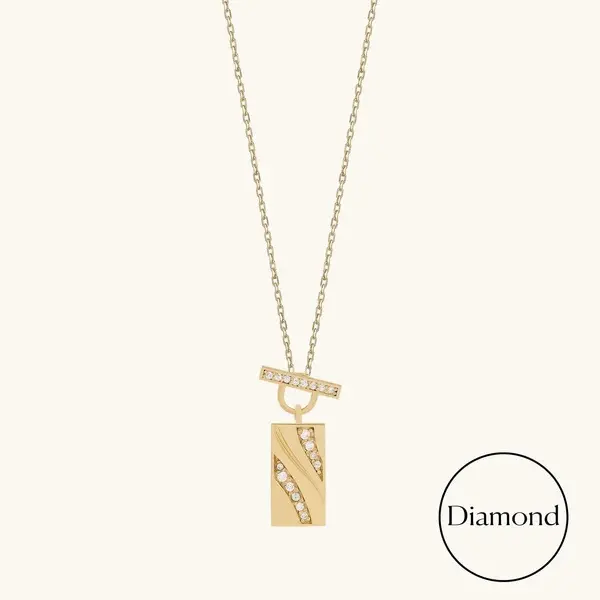
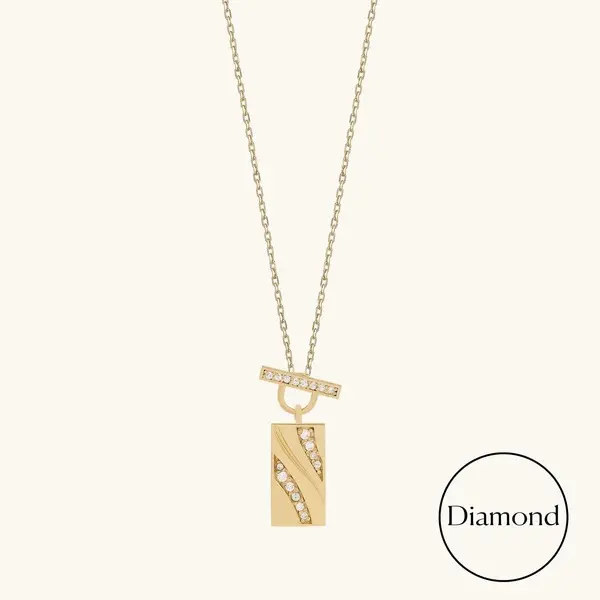
Fabricant de bijoux personnalisés de collier de diamant rectangulaire en T en or
Conception du fabricant de bijoux OEM / ODM Custom Vos propres bijoux
Commençons : mo@kingjy.com
Comment personnaliser un collier de diamants rectangulaire en forme de T en or
Dans la constellation de la haute joaillerie, peu de créations réalisent la synthèse parfaite du minimalisme moderne et de l'opulence ancienne comme le collier de diamants rectangulaire en T. C'est une pièce qui parle sans crier, un talisman géométrique qui repose sur la clavicule., capter la lumière à chaque mouvement subtil. Cependant, la vraie magie de ce collier ne se trouve pas dans une vitrine, mais dans le voyage de sa création. La personnalisation de cette pièce n'est pas qu'une simple transaction; c'est un acte de paternité. Vous n'achetez pas seulement un collier; vous commandez un récit, une manifestation physique de votre goût, ton histoire, et votre philosophie esthétique unique.
Se lancer dans ce voyage, c'est naviguer dans le monde de la métallurgie, gemmologie, et savoir-faire artisanal. Ce guide vous servira de boussole, vous guide à travers les étapes complexes pour donner vie à votre vision, de l'étincelle initiale d'inspiration jusqu'au moment où vous serrez le chef-d'œuvre fini autour de votre cou..
Première partie: La genèse d'une vision
Avant qu’une seule once d’or ne soit fondue ou qu’un seul diamant ne soit serti, la phase la plus critique du processus de personnalisation commence: la conceptualisation. C’est ici que l’on passe d’un admirateur passif à un créateur actif.
1. Définir le "Pourquoi"
La première question à se poser n'est pas "À quoi je veux que ça ressemble?" mais plutôt, "Pourquoi est-ce que je veux cette pièce?" Créez-vous un talisman personnel pour marquer une étape importante : une promotion, Un mariage, un anniversaire important? Est-ce un héritage destiné à être transmis de génération en génération, porter le poids de votre héritage? Ou est-ce simplement une indulgence personnelle, un ajout impeccable à votre garde-robe de tous les jours? La réponse à cette question éclairera chaque décision ultérieure. Une pièce marquante pourrait nécessiter un projet plus substantiel, conception de qualité investissement, tandis qu'une pièce de tous les jours peut donner la priorité à la portabilité et à la subtilité. Ce "pourquoi" devient l'âme du collier.
2. Esthétique du design: Le spectre du style
Le collier de diamants rectangulaire T-bar a un langage visuel riche, et tu dois décider quel dialecte tu parles.
-
Le minimaliste: Cette itération se caractérise par des lignes épurées, un élégant, barre rectangulaire lisse, et un subtil canal ou serti clos qui maintient les diamants au ras de la surface. La chaîne est souvent une trace délicate ou une chaîne câblée, permettant au pendentif géométrique de flotter élégamment sur la peau. Ce style est destiné aux puristes qui valorisent la retenue et le luxe discret..
-
Le classique: Ici, le design est plus traditionnel. La barre rectangulaire peut présenter une silhouette légèrement plus prononcée avec des coins arrondis. Les diamants sont souvent sertis griffes, permettant une exposition maximale à la lumière pour améliorer la brillance. La chaîne est généralement une chaîne gourmette ou figaro standard, proposant un classique, sensation intemporelle.
-
L'avant-garde: Pour ceux qui prennent des risques, la barre en T se transforme. Le rectangle pourrait être allongé, asymétrique, ou présentent des textures contrastées : un centre hautement poli flanqué d'un mat, finition brossée. Le réglage pourrait être un réglage de tension, donnant l'impression que les diamants flottent, ou le bar pourrait être fortement sculpté. Cette conception est une déclaration, une œuvre d'art qui défie les conventions.
3. Inspirations et tableaux d'humeur
Trouvez l'inspiration. Parcourir Pinterest, Instagram, et sites de bijoux haut de gamme. Enregistrer des images de formes géométriques, détails architecturaux, textures, et l'éclairage. Ce mood board sera votre principal outil de communication lorsque vous commencerez à travailler avec un designer. Il comble le fossé entre votre vision abstraite et leur exécution technique. Si vous aimez l'architecture brutaliste des années 1970, tu pourrais être attiré par Stark, lignes rigides. Si vous êtes inspiré par l'Art Déco, vous pourriez envisager un diamant taille en escalier avec un bord milgrain. Ce vocabulaire visuel est inestimable.
Deuxième partie: L'alchimie de l'or
Avec une vision claire dans votre esprit, vous portez votre attention sur le médium de la pièce elle-même: l'or. Le choix du métal n’est pas qu’esthétique; c'est une décision de durabilité, couleur, et valeur.
1. La pureté du carat: 10k, 14k, 18k, ou 24k?
La pureté de l'or se mesure en carats, avec 24 carats étant de l'or pur. Cependant, l'or pur est trop mou pour un usage quotidien. Il est allié à d’autres métaux pour augmenter sa résistance.
-
14k Or (58.3% or): C'est le cheval de bataille du monde de la bijouterie. Il offre un excellent équilibre entre durabilité et pureté. Il résiste aux rayures et au ternissement, ce qui le rend idéal pour une pièce qui sera portée quotidiennement. La couleur est chaude, jaune classique ou blanc éclatant.
-
18k Or (75% or): C'est la marque des bijoux haut de gamme. Il a un plus riche, couleur plus profonde que 14k. Pour l'or jaune, il possède un côté plus beurré, teinte luxueuse. Pour l'or blanc, il a un ton de base légèrement plus chaud qui nécessite un placage au rhodium pour obtenir un vrai blanc. Il est plus doux que le 14 carats mais convient parfaitement pour un pendentif s'il est porté avec soin..
-
10k Or (41.7% or): C'est l'option la plus durable et la plus économique. Il est plus résistant aux rayures mais a une couleur plus pâle, couleur moins vive.
-
24k Or: Généralement déconseillé pour ce type de collier car beaucoup trop malléable. Un léger coup pourrait plier la barre en T.
2. La palette de couleurs métal
-
Or jaune: Le choix classique. Cela parle de tradition et de chaleur. Il crée un contraste saisissant avec les diamants incolores, rehausser leur éclat.
-
Or blanc: Moderne et élégant. Il offre une fraîcheur, toile de fond sophistiquée qui se marie parfaitement à l’apparence incolore d’un diamant, donnant l'impression que les diamants fusionnent avec le métal.
-
Or rose: Romantique et contemporain. Sa teinte rosée est obtenue grâce à l'ajout de cuivre à l'alliage. Il se marie à merveille avec des diamants aux tons chauds et offre un look vintage., sensation féminine.
-
Platine (Une alternative): Bien qu'il ne s'agisse pas d'un alliage d'or, le platine est un choix de premier ordre pour les bijoux haut de gamme. C'est plus lourd, plus dense, et naturellement blanc, ne nécessitant aucun placage au rhodium. C'est la monture la plus durable pour les pierres précieuses, ce qui en fait le choix ultime pour une conception soucieuse de la sécurité, même si le prix est nettement plus élevé.
3. La finition
La texture finale de votre or définit la façon dont il interagit avec la lumière. UN finition polie donne un reflet semblable à un miroir, maximiser la brillance. UN finition mate ou brossée offre un doux, texture veloutée, contemporaine et sobre. UN finition martelée crée une surface alvéolée qui capte la lumière de manière aléatoire, manière biologique, offrant un beau contraste à côté de la géométrie précise du serti de diamants. Souvent, les designs les plus convaincants utilisent une combinaison de finitions : un centre poli avec un bord brossé, Par exemple.
Partie III: La science et la poésie des diamants
Les diamants sont le cœur du collier. Leur sélection est un mélange de précision scientifique et de résonance émotionnelle.
1. Le 4 CS: Le langage universel
-
Couper: Le C le plus critique. La taille détermine la brillance et le feu du diamant. Pour une barre en T rectangulaire, la taille dicte souvent la forme des pierres. Une série de Rond Brillant les diamants sont le choix le plus courant, maximiser l'éclat. Taille émeraude les diamants offrent un look sophistiqué, "galerie des glaces" effet avec longue, des lignes épurées qui complètent la géométrie du rectangle. Coupes princesse ou baguettes offrent également une esthétique linéaire époustouflante. La qualité de coupe doit être excellente (ou idéal) pour garantir que la pierre fonctionne parfaitement.
-
Couleur: Moins il y a de couleur, plus la valeur est élevée (pour les diamants blancs). L'échelle va de D (incolore) c'est (jaune clair). Pour une monture en or blanc ou en platine, il est recommandé de choisir les catégories de couleurs D-F pour garantir un résultat net, blanc glacé. En or jaune ou rose, tu peux descendre aux couleurs G-J, car la chaleur du métal masquera toute légère teinte de la pierre.
-
Clarté: Celui-ci mesure les imperfections internes et externes (inclusions et imperfections). Pour un collier, un VS1 ou VS2 (Très légèrement inclus) est généralement le "point idéal." Ces pierres sont propres aux yeux, ce qui signifie que vous ne pouvez pas voir les défauts à l'œil nu, mais elles sont plus abordables que les pierres impeccables. Vous pouvez même descendre au SI1 (Légèrement inclus) si vous inspectez méticuleusement les pierres individuelles pour vous assurer qu'elles sont propres aux yeux.
-
Poids carat: Cela dicte la taille globale des diamants et le poids visuel de la pièce.. Pour une barre en T standard, le poids total en carats (TCW) peut varier de 0,50 ct à 2,00 ct ou plus. Il est important de considérer la taille de la barre. Un petit bar avec une pierre massive aura l'air disproportionné.
2. Le cadre: L'ancre du diamant
Le sertissage est la façon dont le diamant est maintenu dans l'or. Ce choix influence fortement l'apparence et la sécurité de la pièce.
-
Réglage: Le plus classique et le plus populaire. Quatre ou six petites griffes métalliques s'élèvent pour retenir la pierre. Cela permet à un maximum de lumière de pénétrer dans le diamant par les côtés., Améliorer son éclat. Pour une barre en T, un paramètre à volets partagés (où les griffes sont partagées entre les pierres adjacentes) crée un sans couture, ligne continue d'éclat.
-
Cadre de lunette: Un élégant, choix moderne. Un fin bord métallique entoure le diamant, le tenant solidement. C'est le réglage le plus protecteur, idéal pour un style de vie actif. Cela donne à la pièce un côté contemporain, look épuré.
-
Paramètre de canal: Les diamants sont sertis dans une rainure du métal, avec les parois du canal qui les maintiennent en place. C'est un look signature pour une barre en T, créer en douceur, lignes affleurantes de diamants de chaque côté de la barre. Il est hautement sécurisé et incroyablement élégant.
-
Pavé Setting: De minuscules diamants sont étroitement serrés les uns contre les autres, avec de petites perles métalliques qui les maintiennent. Le métal est presque invisible, créer un "chaussée" de diamants sur la surface de la barre. Cela offre un éclat inégalé.
Partie IV: L'architecture de la chaîne
Le pendentif est la destination, mais la chaîne est le voyage. Il doit être en parfaite harmonie avec le pendentif.
1. Le style de chaîne
-
Chaîne de câbles: Le plus courant, constitué de maillons ronds ou ovales uniformes. C'est classique, durable, et polyvalent.
-
Chaîne Rolo: Semblable à un câble mais avec des maillons ronds, lui donnant une sensation légèrement plus délicate et élégante.
-
Chaîne Figaro: Un design italien classique comportant un motif de deux ou trois petits maillons suivis d'un maillon allongé.. Il a un robuste, sensation masculine qui peut offrir un joli contraste avec un pendentif délicat.
-
Chaîne de traces: Un très beau, chaîne délicate avec de très petits maillons. C'est parfait pour un minimaliste, effet flottant.
-
Chaîne de boîte: Liens carrés à plat, créer un élégant, surface lisse. Il est durable et a une sensation contemporaine.
2. La longueur
La longueur dicte l'endroit où le pendentif tombe sur votre poitrine. Une chaîne de 16 pouces sera placée à la base de la gorge (une longueur de tour de cou). Une chaîne de 18 pouces est le classique "pendentif" longueur, assis juste en dessous de la clavicule. Une chaîne de 20 ou 22 pouces se trouve plus bas sur la poitrine, offrant une vision plus dramatique, aspect allongé. Lors de la personnalisation, vous pouvez demander une chaîne réglable avec une petite rallonge, vous offrant de la polyvalence.
3. Le fermoir
Le fermoir est un détail souvent négligé mais pourtant crucial pour la sécurité et la facilité d'utilisation.. UN Fermoir à homard est la référence en matière de sécurité et de simplicité d'utilisation. UN Bague de printemps est une autre option, mais c'est généralement moins sûr pour un pendentif lourd.
Partie V: L'Atelier de l'Artisan
Vous avez la vision, tu as les spécifications. Maintenant, tu dois trouver l'artiste.
1. Choisir votre bijoutier
Vous avez deux chemins principaux: une grande chaîne de distribution ou un artisan indépendant.
-
L'artisan indépendant: Pour une pièce vraiment sur mesure, c'est souvent le meilleur choix. Vous travaillerez directement avec l'orfèvre ou le designer. Ils peuvent offrir un niveau d’attention personnelle, créativité, et une flexibilité qu'une opération d'entreprise ne peut pas. Vous pouvez visiter leur atelier, voir les moules en cire, et discuter des moindres détails.
-
La chaîne de vente au détail: Ils offrent la sécurité d'une marque, une politique de retour claire, et un standard de qualité. Cependant, vous êtes souvent limité à leur "personnalisation" paramètres : choix parmi un ensemble de formes prédéterminées, tailles, et couleurs métalliques.
2. Le processus de création
Un projet sur mesure typique prendra 4 à 8 semaines entre la consultation initiale et la livraison finale.
-
Consultation: Vous partagez votre mood board et discutez du design.
-
Esquisse: Le concepteur produira plusieurs croquis en fonction de votre conversation.
-
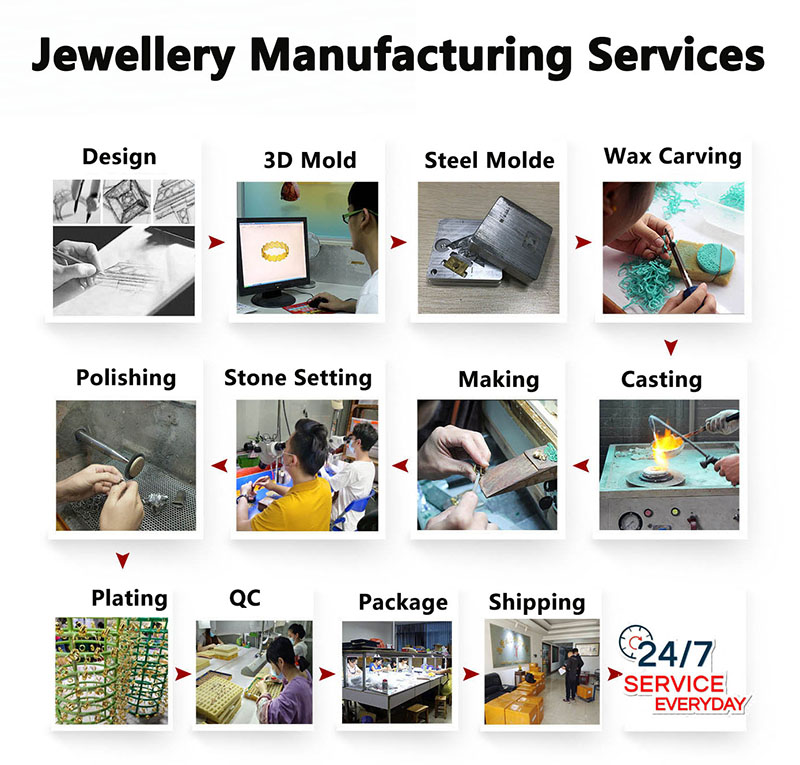
GOUJAT (Conception assistée par ordinateur) Rendre: Un modèle 3D hyper réaliste est créé sur ordinateur. Vous pouvez le faire pivoter, zoomer, et voyez exactement à quoi ressemblera la pièce finie. C’est l’étape la plus critique pour faire des ajustements.
-
Sculpture de cire: Un modèle de cire 3D est imprimé à partir du fichier CAO. Ceci permet de tester l'ergonomie et les proportions du design dans votre main..
-
Fonderie: La cire est enrobée de plâtre, fondu, et de l'or fondu est injecté dans le vide pour créer la fonte brute.
-
En pierre: L'or est poli, et les diamants sont méticuleusement sertis à la main.
-
Polissage final et contrôle qualité: La pièce reçoit sa finition finale, soigneusement nettoyé, et examiné à la loupe pour garantir la perfection.
Partie VI: Budgétisation et réflexions finales
1. L'équation du coût
Votre budget sera déterminé principalement par trois facteurs: le prix de l'or (qui fluctue quotidiennement), la qualité et le poids en carats des diamants, et la complexité de la conception et de la main d'œuvre. Une pièce sur mesure coûtera intrinsèquement plus cher qu'une pièce produite en série, car vous payez pour le temps de l'artisan., compétence, et l'exclusivité de votre design. Soyez transparent avec votre bijoutier sur votre budget dès le départ. Ils peuvent souvent suggérer des alternatives, comme des diamants de pureté légèrement inférieure ou une chaîne plus légère, pour vous aider à réaliser votre vision sans vous ruiner..
2. L'héritage de la pièce
Finalement, un collier de diamants rectangulaire en forme de T personnalisé est un investissement dans votre héritage personnel. C'est un marqueur d'un moment dans le temps, une représentation physique de votre œil perspicace. Quand tu le porte, tu ne portes pas seulement de l'or et des diamants; tu portes un morceau de ta propre histoire. Il porte l'énergie de votre intention - les heures de recherche, l'enthousiasme du design, et l'attente de la révélation finale. C'est une pièce qui sera admirée non seulement pour sa beauté, mais pour la pensée et la passion qu'il incarne.
En personnalisant ce collier, vous avez participé à l'une des traditions les plus anciennes et les plus profondes de l'humanité: transformer les éléments bruts de la terre en objets ayant une profonde signification personnelle. C'est un voyage qui, une fois terminé, vous laisse avec plus qu'un simple collier. Cela vous laisse avec un chef-d'œuvre.