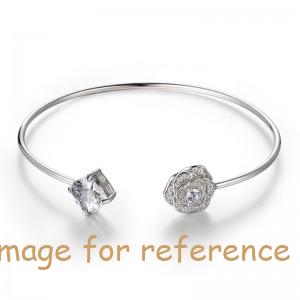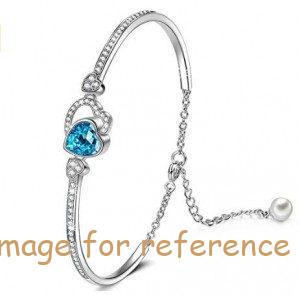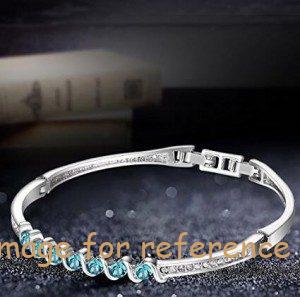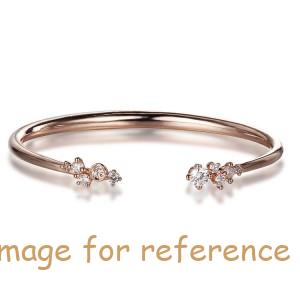
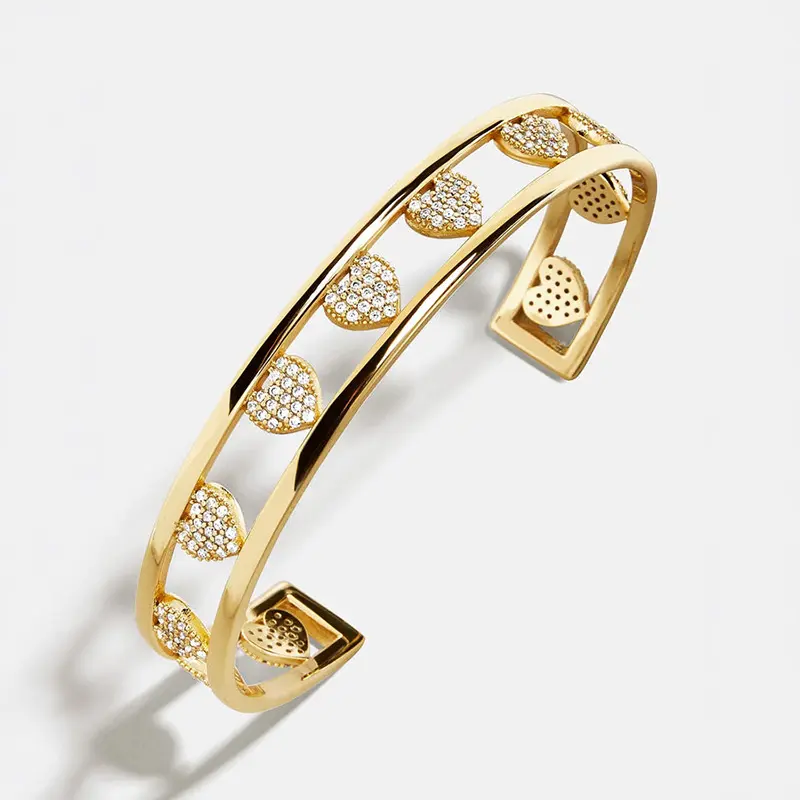
Bracelet manchette en forme de cœur en or 18 carats, usine de bijoux de mode personnalisés
Conception du fabricant de bijoux OEM / ODM Custom Vos propres bijoux
Commençons : mo@kingjy.com
L'art et la science de la fabrication d'un bracelet manchette en forme de cœur en or 18 carats
La création d'un bracelet manchette cœur en or 18 carats représente une convergence de la science métallurgique, conception artistique, et un savoir-faire méticuleux. Cet article fournit une description complète, exploration technique de l'ensemble du processus de fabrication, de la formulation initiale de l'alliage aux étapes finales de polissage. Le parcours depuis les matières premières jusqu'à un bijou fini haut de gamme est complexe, nécessitant une compréhension approfondie des propriétés des matériaux, ingénierie de précision, et techniques traditionnelles de finition à la main.
Fondation métallurgique: L'alliage d'or 18 carats
Le processus commence par la création de l'alliage d'or 18 carats lui-même. L'or pur 24 carats est trop mou et malléable pour des applications pratiques en bijouterie.; il a tendance à se plier, scratch, et usure générale. Donc, l'or pur est allié à d'autres métaux pour améliorer sa résistance, durabilité, et la maniabilité, while also influencing its color. Par définition, 18-l'or carats est 75% pure gold by weight. Le reste 25% consists of other elements, and the specific composition of this 25% dictates the final properties of the alloy.
Material Composition and Its Implications
The most common alloying elements for 18K yellow gold are silver, cuivre, et du zinc. One source provides a specific formula for an 18K gold bracelet material: 75.2% or, 13.69% cuivre, 7.44% nickel, et 3.66% zinc. Another indicates a composition of 75-80% or, 18.9-21.7% argent, 0.1-0.3% nickel, et 1-3% zinc, with silver being used to maintain the yellow hue while enhancing workability. The inclusion of copper serves a dual purpose: it imparts strength and helps achieve the rich warm color characteristic of 18K yellow gold. The addition of nickel or zinc further contributes to the alloy's hardness and castability.
The Challenge of Grain Refinement
Un aspect essentiel de la production d’alliages d’or consiste à contrôler la microstructure du métal grâce au raffinement des grains.. La granulométrie a un impact direct sur l'ouvrabilité du métal, qualité esthétique, et résistance à la corrosion. C'est une pratique industrielle courante d'ajouter de petites quantités d'éléments comme l'iridium pour agir comme raffineurs de grains.. Ces éléments créent des centres de nucléation lors de la solidification, résultant en un plus fin, structure cristalline plus uniforme. Toutefois, l'iridium est cher et son utilisation rend le processus de production plus complexe et plus coûteux. Les progrès récents dans le traitement thermomécanique offrent une alternative. En optimisant la séquence d'écrouissage (roulement) et recuit (traitement thermique), il est possible d'obtenir un produit final avec des propriétés comparables à un alliage raffiné à l'iridium. Il s’agit d’une évolution significative pour l’industrie, allowing for cost reduction and process simplification without sacrificing quality.
Processus de fabrication étape par étape
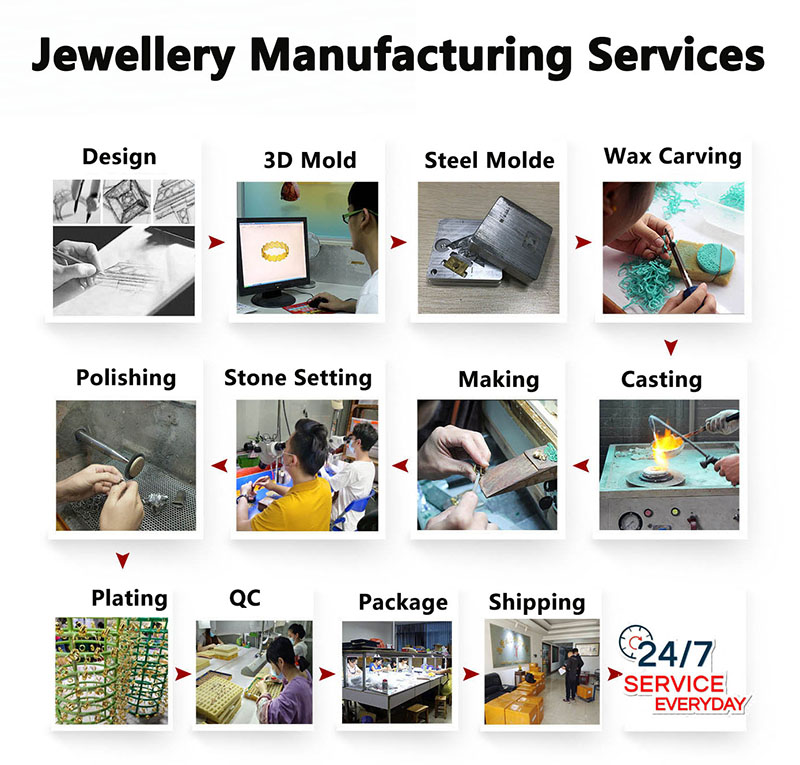
The transformation of a gold alloy into a finished heart cuff bracelet typically follows a sequence of industrial and hand-crafted processes. A general method for manufacturing 18K gold jewelry can be broken down into several key stages: smelting, fonderie, finition, and surface treatment.
1. Melting and Casting
The process starts with the careful weighing and combining of the pure metals according to the chosen formula. These raw materials are then placed in a crucible and smelted under the protection of an inert gas, such as argon or nitrogen, pour éviter l'oxydation. This melting is typically performed in a specialized induction furnace, which uses electromagnetic fields to heat the metal quickly and uniformly. The molten metal is then poured into a forming mold under an inert gas atmosphere. For a cuff bracelet, this could involve casting a long rectangular bar or "stripe" of metal, a process known as continuous casting. The cooling rate during this phase is crucial for controlling the initial grain structure of the alloy and preventing excessive oxidation.
2. Forming the Cuff
Le brut, cast metal bar is far from its final bracelet form. It undergoes a series of forming processes that shape it into the familiar cuff profile. This is typically achieved through a combination of forging, roulement, et recuit. Cold deformation, such as rolling the cast bar through a mill, work-hardens the metal, making it harder and more brittle. To regain the metal's ductility and allow for further shaping, the piece must be annealed. Le recuit consiste à chauffer le métal à une température spécifique (Par exemple, au-dessus de 830 ° C) puis l'éteindre rapidement, qui recristallise les grains et adoucit la matière. Ce cycle de laminage et de recuit est répété jusqu'à ce que le métal atteigne l'épaisseur et la forme souhaitées.. La forme finale est souvent obtenue à l'aide d'une CNC (Commande numérique par ordinateur) usinage pour assurer la précision et la cohérence, créant la forme parfaitement circulaire ou ovale du corps du bracelet et les détails spécifiques du motif cœur.
3. Assemblage et finition complexes
Avec les composants de base formés, le travail détaillé commence. C'est ici que la conception du cœur est pleinement réalisée. Cette étape nécessite l'attention portée aux détails par un artisan qualifié et implique une combinaison d'outils manuels et de machines.. Le motif cœur peut être réalisé séparément puis soudé au bracelet à l'aide d'une technique de soudage au laser.. Le soudage au laser fournit une précision, joint propre qui minimise les zones affectées par la chaleur et empêche le métal de se déformer. Une fois l'assemblage principal terminé, le bracelet entre dans une phase de finition rigoureuse. Cela comprend "serrage fin, soudage au laser, réparer et façonner, meulage fin et polissage" préparer la surface pour son traitement final.
4. Traitement de surface: Le processus d'électroplaste
Pour assurer un parfait, cohérent, et finition dorée brillante, le bracelet subit une étape de galvanoplastie. Cela sert à plusieurs fins. La galvanoplastie restaure la vraie couleur de l'or, lui donnant une apparence plus uniforme et plus vibrante que l'or nu 18 carats pourrait avoir. Il crée également une couche protectrice finale qui améliore la résistance au ternissement de la pièce et lui donne son éclat caractéristique.. The process involves making the bracelet the cathode in an electroplating bath containing a gold-based solution. When an electric current is passed through the solution, gold ions are deposited onto the jewelry's surface, creating a thin, high-quality gold layer. The industry is increasingly moving towards cyanide-free electroplating solutions for environmental and safety reasons. One such solution uses a mixture of gold, cuivre, and indium, claiming to improve stability, dispersibility, et qualité globale. This process provides a final, pure gold layer that is durable, résistant à la corrosion, and aesthetically perfect.
Advanced Additive Manufacturing
While the traditional casting and forming process is the industry standard, an advanced alternative is emerging through additive manufacturing, commonly known as 3D printing. Techniques like binder jetting offer the "almost unlimited freedom of design" and are particularly suitable for creating complex or customized jewelry pieces. The process involves printing a metal powder (dans ce cas, an 18K gold alloy powder) using a liquid binder to bind the particles together in a layer-by-layer fashion. Le résultat "vert" part is then sintered in a furnace to burn off the binder and fuse the metal particles, achieving a high density. Research into this method for gold alloys is ongoing, with studies focusing on optimizing the sintering process to control grain growth and achieve the desired mechanical and aesthetic properties.
Conclusion
The creation of an 18K gold heart cuff bracelet is a testament to the sophisticated blend of science and artistry that defines the jewelry industry. It begins with the precise formulation of an alloy designed for strength and beauty, continues through the demanding processes of casting and thermomechanical shaping, and is perfected through skilled hands-on assembly and chemical surface treatment. The evolution of the craft, from the development of grain-refining thermomechanical processes to the adoption of cyanide-free electroforming and additive manufacturing, demonstrates a continuous commitment to improving the quality, durabilité, and sustainability of these enduring symbols of craftsmanship. Le produit final n'est pas simplement un bijou mais le résultat d'un processus complexe et soigneusement géré qui équilibre la science des matériaux avec les plus hauts standards de compétence artistique..