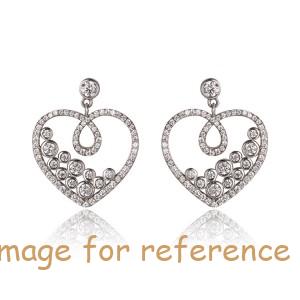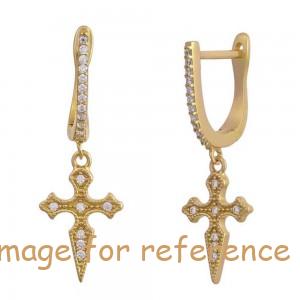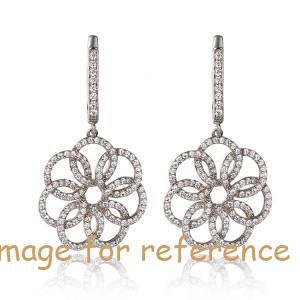
Jingoso : Pendientes Ella Personalización masiva Empresas
Diseño del fabricante de joyas OEM/ODM personalizado sus propias joyas
Empecemos : mo@kingjy.com
JINGYING and the Ella Earrings: A Study in Mass Customization
Introducción
The jewelry industry, long defined by tradition, artesanía, y exclusividad, finds itself at a critical crossroads. On one side, heritage houses protect century-old designs; por el otro, a new generation of consumers demands personalization, velocidad, y transparencia. This tension has given rise to a powerful business strategy: mass customization. This article examines the concept through two distinct lenses: el "Ella Earrings," a product name shared across multiple artisanal brands, and JINGYING, a Chinese jewelry manufacturer that exemplifies the industrial backbone enabling customization at scale.
The Consumer-Facing Ella Earrings: A Tale of Two Products
el nombre "Ella Earrings" appears across the luxury accessory market, but its meaning shifts dramatically depending on the brand. En Jennifer Behr, the Ella Earring is a delicate, ready-to-wear piece featuring "two butterflies with lifelike engraved details," crafted by hand in New York from gold-tone plated brass . This version is sold as a finished product with standardized sizing and limited customization beyond standard retail options.
En contraste, Bounkit offers an entirely different proposition. Their Ella Earrings, priced at over $600, son "handcrafted and fully customized" con "tassel removable bottom[s]" . Bounkit explicitly invites customers to co-create: "Every piece is individually designed and made to order, providing you with the creative freedom to bring your vision to life" . Similarmente, Australian brand Tania Maras offers an "ella" pearl earring that can be "customised to suit you," with modifications to size and details discussed on a case-by-case basis .
These examples illustrate the spectrum of customization in the jewelry sector. At one end lies the "configure-to-order" modelo (Jennifer Behr), donde el producto es fijo pero la producción se hace por encargo. En el otro se encuentra el "co-diseño" modelo (Bounkit, Tania Maras), donde el cliente influye directamente en el diseño. Ambas son formas de personalización masiva., pero requieren capacidades de cadena de suministro muy diferentes .
Jingoso: El motor OEM/ODM detrás de la personalización
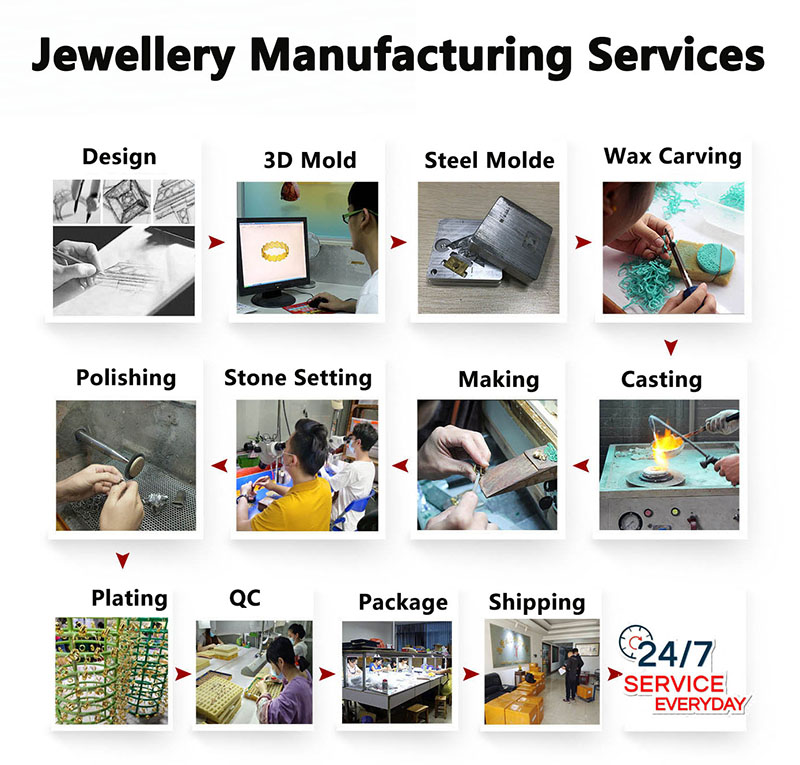
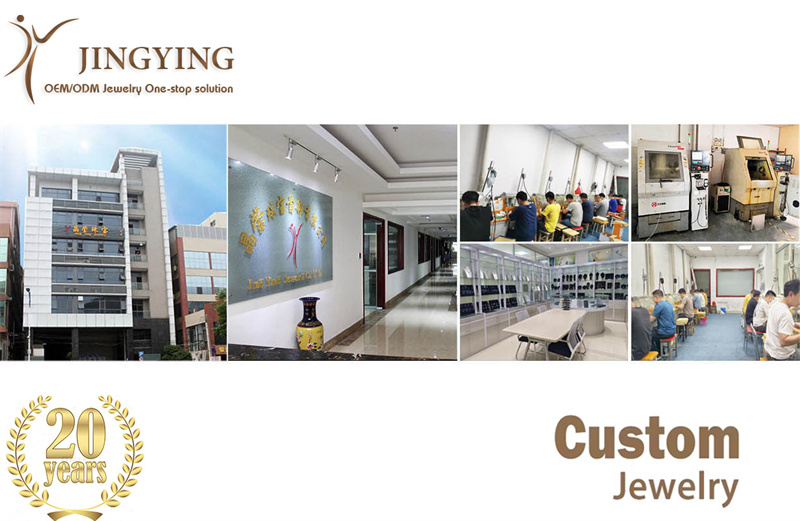
Si marcas como Bounkit representan la cara pública de la personalización, Joyería JINGYING representa la infraestructura oculta. Establecido en 1998, JINGYING es un fabricante con sede en Guangzhou que ofrece OEM/ODM integral (Fabricante de equipos originales / Fabricante de diseño original) servicios . No venden directamente a los consumidores.; en cambio, permiten que otras marcas ofrezcan joyas personalizadas.
La capacidad principal de JINGYING radica en la flexibilidad del material.. Ellos fabrican en "cobre chapado en oro, Plata esterlina (925) chapado en oro, y opciones de oro potencialmente sólidas," incluyendo 9K, 10K, 14K, y oro de 18 quilates . Esto permite que una marca como Bounkit ofrezca a los clientes opciones en tipos de metal., enchapado, y engaste de piedras sin tener fundición. El servicio de JINGYING incluye explícitamente la capacidad de "Crea una gran colección de joyería artística en joyería fina usando solo tus pensamientos., fotos, o diseños CAD" .
This is the essence of the "masa" in mass customization. JINGYING leverages over two decades of experience and a scalable factory setup to produce small batches (or even single pieces) a precios competitivos . They absorb the complexity of material sourcing, fundición, enchapado, y control de calidad, allowing brands to focus on design, marketing, and customer interaction.
Technology as an Enabler: From CAD to 3D Printing
The technical feasibility of mass customization in jewelry has advanced dramatically through digital technologies. Research on the "Jewelcodesign" concept highlights how "mass customization, social networking, ecommerce and rapid manufacturing (a.k.a. 3D impresión) were applied in a context of precious jewellery" . The study found that customers "enjoyed the codesign experience" and were "pleasantly surprised with their designs" .
More recent academic work on computational design and additive manufacturing demonstrates how "customers who want to personalise the items themselves" can modify digital models, enabling "a new, atractivo, and interactive shopping experience" . This process often involves creating a CAD model that can be "3D printed in wax and cast in a precious metal of choice" . JINGYING explicitly invites clients to submit "Diseños de CAD" for production , indicating that they are integrated into this digital workflow.
Another critical concept is pre-assembly, which involves "shipping products immediately upon receiving customer orders" . While brands like Bounkit make pieces "made to order" from scratch , JINGYING's role likely includes maintaining a degree of modularity in production. Pre-assembled components (P.EJ., generic settings or chains) can be quickly customized with specific stones, grabados, or finishes, reducing lead time for the end customer .
El "ella" Caso: A Framework for Analysis
The discrepancy between the Jennifer Behr Ella Earrings and the Bounkit Ella Earrings is not merely a matter of style; it is a reflection of the supply chain model. Jennifer Behr's version is a standardized SKU produced in larger batches, likely with a traditional manufacturing partner. Bounkit's version, sin embargo, relies on a partner like JINGYING or a similar high-flexibility OEM.
By offering customization, Bounkit can increase the perceived value of their product ($608.88 VS. Jennifer Behr's $198) while managing inventory risk—they make each piece after an order is placed . This is a classic application of mass customization theory: postponement. JINGYING's ability to switch between materials (oro, plata, cobre) y procesos (fundición, enchapado, de piedra) allows Bounkit to offer the "tassel removable bottom" y "vintage and art deco-inspired design" that defines their unique product .
Conclusión
The case of the Ella Earrings and JINGYING Jewelry reveals that mass customization in the jewelry industry is not a single process but a collaborative ecosystem. It relies on:
-
Brand Intermediaries (Bounkit, Tania Maras) that curate the customer experience and collect customization requests.
-
Manufacturing Partners (Jingoso) that provide the material expertise, flexible production lines, and digital integration (CAD/CAM) necessary to execute those requests at scale.
-
Tecnología (3D impresión, computational design) that lowers the cost of producing unique geometries.
Para el consumidor, this means the Ella Earrings can be a fixed-price luxury good or a unique, co-created heirloom. For the industry, it signals a shift from "made to stock" Para "made to order"—a shift where companies like JINGYING are not just suppliers but strategic partners in the personalization economy. As one study noted, mass customization allows "a more detailed cost and price management," which is essential for profitability . The future of luxury lies not in uniformity, but in the ability to deliver individuality—efficiently, hermosamente, and at scale.