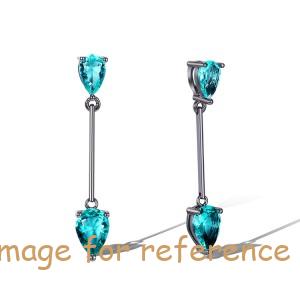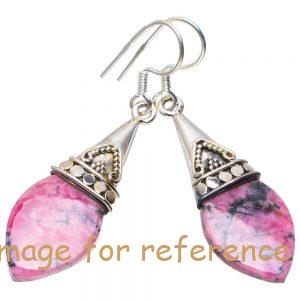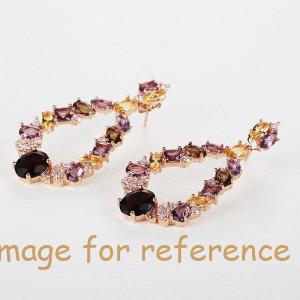
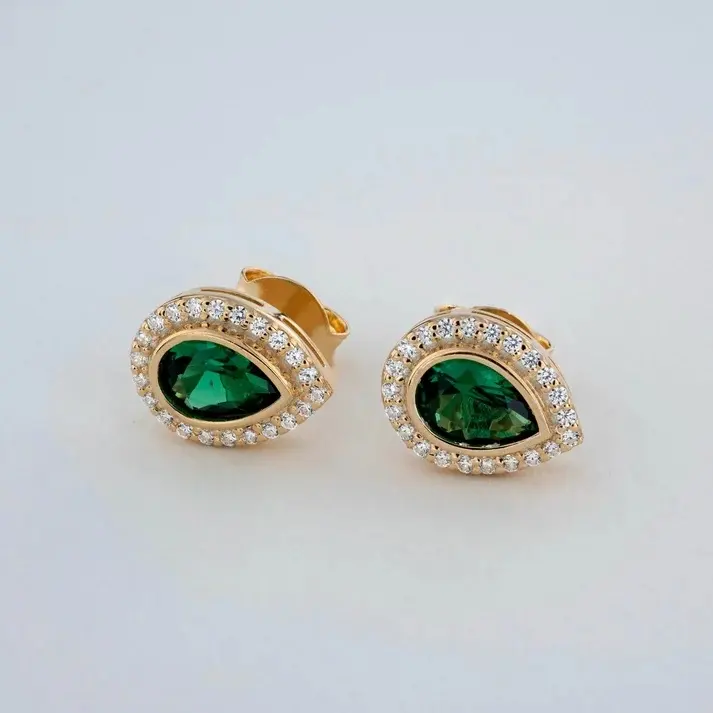
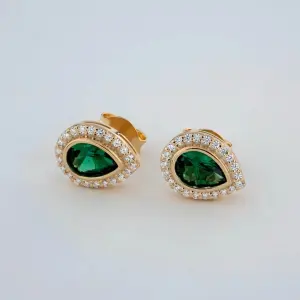
Προσαρμοσμένη υπηρεσία OEM ODM από Emerald Bezel Drop Stud σκουλαρίκια σε 8K/10K/14K μασίφ χρυσό
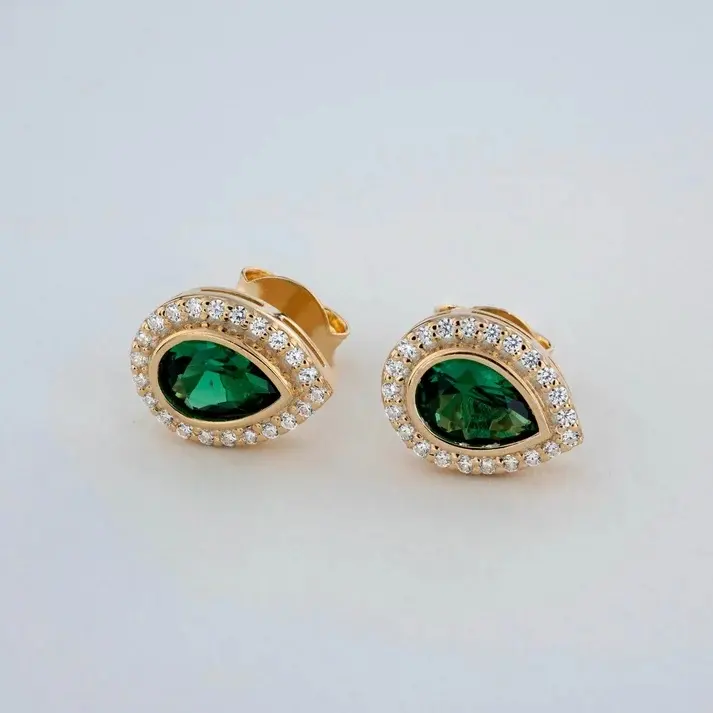
Ο κατασκευαστής κοσμημάτων OEM/ODM σχεδιάζει το δικό σας κοσμήματα
Ας ξεκινήσουμε : mo@kingjy.com
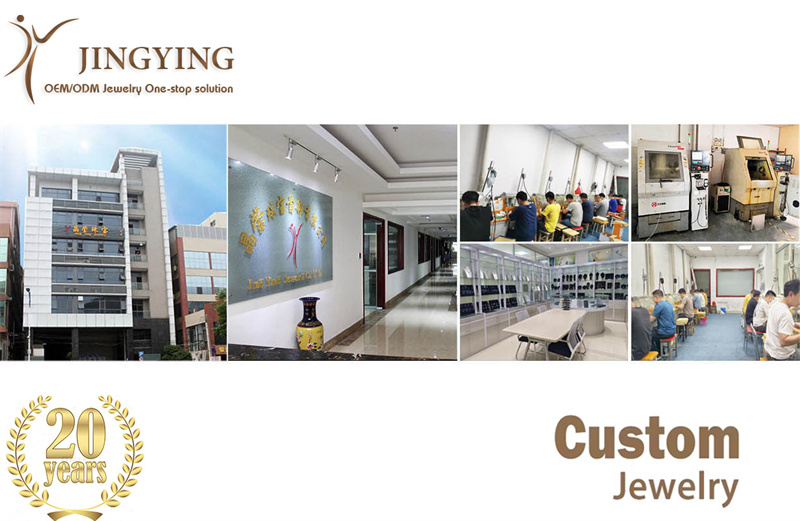
How to Produce Emerald Bezel Drop Stud Earrings in 8K/10K/14K Solid Gold at JINGYING
Εισαγωγή: The Confluence of Gemstone and Metal
In the hierarchy of fine jewelry, few combinations possess the quiet authority of emerald and gold. The deep, verdant green of a well-cut emerald—with its characteristic τζάρντιν inclusions that attest to its natural origin—finds its most sympathetic setting in the warm glow of solid gold. Στο Jingying, a manufacturer with over two decades of experience in OEM and ODM jewelry production, the creation of emerald bezel drop stud earrings in 8K, 10K, or 14K solid gold represents a sophisticated interplay of traditional craftsmanship and advanced manufacturing precision. This article provides a comprehensive technical account of how JINGYING transforms raw materials into a finished pair of these highly coveted earrings.
The Metallurgical Foundation: 8K, 10K, and 14K Solid Gold
Before a single CAD file is opened, the selection of the gold alloy establishes the parameters for the entire production process. JINGYING’s expertise lies in navigating the specific metallurgical requirements of different karat golds to achieve a balance of durability, χρώμα, and workability.
Understanding the Karat System
Στερεός χρυσός, as distinct from gold-plated or gold-filled alternatives, forms the structural core of the earrings. 24K χρυσός (99.9% καθαρός) is too soft for jewelry that requires structural integrity for setting stones. Κατά συνέπεια, JINGYING works with alloys where gold is mixed with other metals. 14K gold comprises 58.3% χρυσός, while 10K gold contains 41.7% χρυσός. 8K χρυσός, at approximately 33.3% χρυσός, προσφέρει τη μεγαλύτερη αντοχή, αλλά απαιτεί προσεκτικό κράμα για να επιτευχθεί ένα ελκυστικό χρώμα.
The Alloying Challenge: Χρώμα και χυτότητα
Η παραγωγή στερεών χυτών χρυσού υψηλής ποιότητας απαιτεί ακριβή έλεγχο της σύνθεσης του κράματος. Η JINGYING χρησιμοποιεί ιδιόκτητες βασικές συνταγές κράματος για να ελέγχει τόσο το χρώμα όσο και τη χυτευσιμότητα του μετάλλου. Για παράδειγμα, Η επίτευξη πλούσιας κίτρινης απόχρωσης σε χρυσό 10 καρατίων χωρίς πρασινωπή απόχρωση περιλαμβάνει ανάμειξη παλλαδίου, ασήμι, και χαλκός σε συγκεκριμένες αναλογίες. Για την ίδια τη διαδικασία χύτευσης, το κράμα πρέπει να βελτιστοποιηθεί για ρευστότητα για να διασφαλιστεί ότι γεμίζει τις λεπτές λεπτομέρειες του καλουπιού.
Μια κρίσιμη πτυχή της χύτευσης χρυσού είναι η διαχείριση του οξυγόνου. Το πορώδες - οι μικροσκοπικές φυσαλίδες αέρα - είναι ο εχθρός των κοσμημάτων υψηλής ακεραιότητας, ιδιαίτερα σε προεξοχές και τοιχώματα στεφάνης που πρέπει να είναι δομικά σταθερά. JINGYING's expertise includes the use of oxygen scavengers in the alloy, such as germanium. In yellow karat gold casting alloys, germanium (up to approximately 1% κατά βάρος) serves as an effective deoxidizer, reducing the need for elements like silicon or boron that can create hard spots and compromise the final finish.
For the production of the drop stud earrings, JINGYING's technicians select the specific gold alloy based on the client's requirements. 14K χρυσός, with its higher gold content, offers a richer color and is perceived as more luxurious, making it ideal for higher-end collections. 10K χρυσός, being harder and more scratch-resistant, is chosen for pieces intended for daily wear or more active lifestyles.
The Design and Prototyping Phase: From Concept to Casting Tree
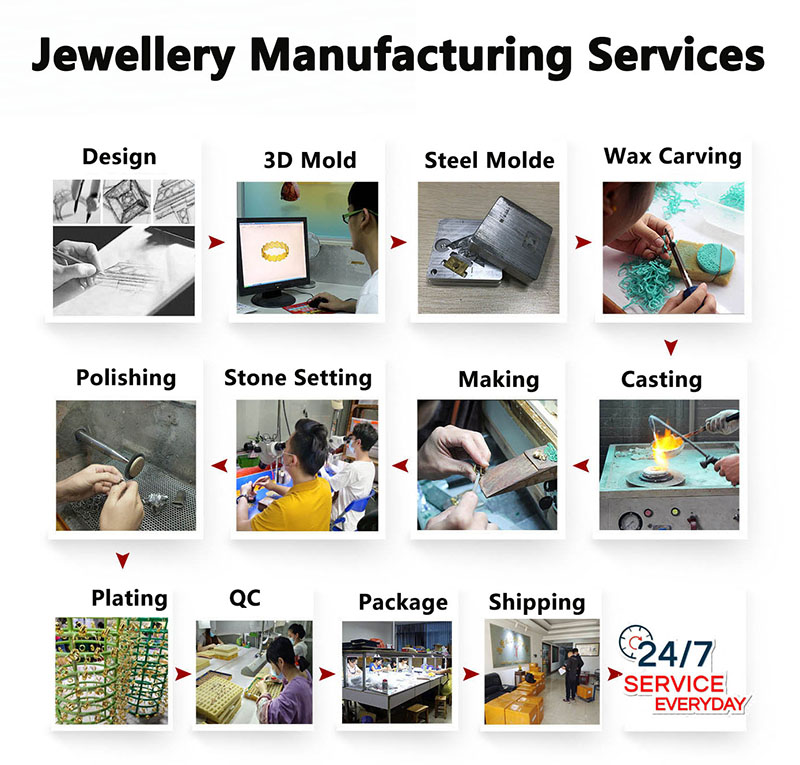
Το ταξίδι από το σκίτσο ενός σχεδιαστή σε ένα φυσικό προϊόν ξεκινά στη φάση της ψηφιακής και φυσικής μοντελοποίησης. Το JINGYING χρησιμοποιεί ένα δομημένο "Συνεργατική Οδύσσεια" για να διασφαλιστεί ότι το όραμα του πελάτη μεταφράζεται με ακρίβεια σε ένα κατασκευαστικό κομμάτι.
Φάση 1: Μετάφραση Σχεδίου και Μοντελοποίηση CAD
Η διαδικασία ξεκινά με τον πελάτη να παρέχει μια ιδέα σχεδιασμού. Η εσωτερική ομάδα μηχανικών της JINGYING το μεταφράζει σε τρισδιάστατο μοντέλο χρησιμοποιώντας προηγμένο λογισμικό CAD όπως το Rhino 7 ή MatrixGold. Αυτό δεν είναι απλώς μια οπτική άσκηση; είναι δομικό. Οι μηχανικοί υπολογίζουν το ακριβές βάρος του χρυσού που απαιτείται για το κομμάτι χρησιμοποιώντας αλγόριθμους πυκνότητας. Κατασκευάζουν επίσης μηχανικούς το "στερέωση σωλήνων" και δομικές συνδέσεις που θα γίνουν ο στύλος του σκουλαρικιού και το στοιχείο πτώσης, διασφαλίζοντας ότι το σκουλαρίκι είναι ισορροπημένο και ανθεκτικό στη φθορά. Για σμαράγδι με στεφάνη, το μοντέλο CAD πρέπει να καθορίζει τις ακριβείς διαστάσεις του καθίσματος του σμαραγδιού για να εξασφαλίσει ασφαλή εφαρμογή χωρίς να ασκείται αδικαιολόγητη πίεση στον πολύτιμο λίθο.
Φάση 2: Κερί τρισδιάστατη εκτύπωση και συναρμολόγηση δέντρων
Μόλις εγκριθεί το ψηφιακό μοντέλο, Η JINGYING χρησιμοποιεί τρισδιάστατους εκτυπωτές υψηλής ανάλυσης για να δημιουργήσει ένα φυσικό πρωτότυπο σε κερί. Αυτό είναι τυπικά α "ρητίνη που μοιάζει με κερί" τυπώθηκε μέσω Στερεολιθογραφίας (Σλάδα), επιτυγχάνοντας πάχος στρώσης περίπου 33 microns για λεία επιφάνεια. Στη συνέχεια, το τρισδιάστατο εκτυπωμένο μοντέλο κεριού καθαρίζεται σχολαστικά, και οι δομές στήριξης αφαιρούνται.
Πολλαπλά κέρινα μοντέλα του σκουλαρικιού συναρμολογούνται στη συνέχεια σε ένα "δέντρο." Χρησιμοποιώντας ένα θερμαινόμενο εργαλείο, τα σπιράλ κεριού συγκολλούνται σε μια κεντρική ράβδο κεριού, δημιουργώντας μια διάταξη που επιτρέπει στον λιωμένο χρυσό να ρέει σε όλες τις κοιλότητες του καλουπιού. Το JINGYING ακολουθεί αυστηρά πρωτόκολλα απόστασης: each model on the tree is spaced at least 2mm apart from its neighbors to ensure adequate metal flow and a uniform casting.
Η διαδικασία χύτευσης του χαμένου κεριού: The Birth of the Gold Master
The wax tree is the sacrificial element in the lost-wax casting process, one of the most pivotal stages in jewelry manufacturing.
Βήμα 1: Creating the Investment (Plaster) Mold
The assembled wax tree is placed inside a stainless steel flask. A fine plaster, γνωστός ώς "επένδυση," is mixed with water and poured over the tree. This plaster is then placed in a vacuum to remove air bubbles—a critical step, as any trapped air could create a void in the final gold casting.
Βήμα 2: Burnout and Pre-Heating
The investment flask, now containing the wax tree, is placed in a kiln. Αυτό "εξάντληση" phase is a gradual, two-stage heating process. Πρώτα, the temperature is raised to 150–200°C to soften the wax, allowing most of it to melt and flow out of the mold. The temperature is then increased to 300–400°C to vaporize any remaining wax residues. If any residue remains, it would carbonize during the final high-temperature phase (750–850°C), contaminating the mold cavity and ruining the surface finish of the casting. JINGYING often uses "Ashless" casting investment powder to further ensure that zero residue remains, guaranteeing a flawless surface for the molten gold.
Βήμα 3: Melting and Casting the Gold
The precious metal—whether 8K, 10K, or 14K solid gold—is melted in a specialized crucible. JINGYING employs multiple methods, including electric induction melting (in an "electro-melting" μηχανή) or using an oxygen-acetylene torch for specific applications. To prevent oxidation and porosity, the melting is often performed in a protective atmosphere, such as argon gas, or within a sealed vacuum casting machine. The molten gold is then poured or forced (via vacuum or centrifugal force) into the hot investment mold. The high temperature of the flask (750–850°C) ensures that the gold remains fluid long enough to fill the thinnest sections of the mold, including the intricate bezel walls.
Βήμα 4: Devestment and Quenching
Μόλις κρυώσει και στερεοποιηθεί ο χρυσός, the flask is quenched in cold water. The plaster investment, still hot from the casting process, shatters upon contact with the water due to thermal shock. This crude yet effective method releases the gold tree from its plaster cocoon. Some residual plaster may remain, which is removed using high-pressure water or, in stubborn cases, a weak acid solution.
The Finishing and Assembly Process: Precision and Craft
The gold tree that emerges from the flask is a rough, interconnected cluster of emerald drop earring models. It is now time to transform it into a finished piece of jewelry.
Βήμα 1: Cutting and Polishing
The individual earring castings are carefully cut from the tree, a process known as "de-sprueing." The small nubs where the sprues were attached are filed and sanded down. Σε αυτό το στάδιο, the rough castings undergo a series of mechanical and manual polishing operations to bring them to their final luster. The first phase involves grinding and polishing to remove major casting imperfections and to define the metal's shape. This is followed by a more delicate phase of "wheeling" και "φινίρισμα με το χέρι" using rotating wheels and abrasive compounds to create the desired finish—whether it be high-polish, ματ, or satin. JINGYING's artisans employ a range of tools, from rotary wheels to "collet blocks" (or bezel blocks), to precisely size and shape the bezel setting for the emerald.
Βήμα 2: The Bezel Setting
The defining feature of the earring is its bezel setting, a continuous metal rim that encircles and protects the emerald. Setting an emerald is a particularly delicate operation. Σε αντίθεση με τα διαμάντια, emeralds are more brittle (classified as Type III gemstones) and prone to cracking under pressure. JINGYING's master setters are adept at a technique that minimizes risk: the diamond halo (if the design includes one) is set first, and the emerald is added last. Αυτό "floating bezel" technique involves gently lowering the emerald into a meticulously polished seat and carefully pushing the soft gold bezel wall over the stone's girdle, rather than applying direct pressure to the stone itself.
Βήμα 3: Assembly and Quality Control
The final assembly involves soldering the earring post and butterfly (ώθηση προς τα πίσω) fitting to the main body of the earring. For drop earrings, a hinge or a fixed link is attached to the stud component. At every stage, JINGYING’s quality control team verifies the work. They are trained to identify and correct surface flaws, ensuring color consistency and finish quality compare to the approved sample.
For final quality verification, Η JINGYING απασχολεί α Sigma Metalytics Precious Metal Identifier to confirm the 10K or 14K purity of the gold piece. Επιπλέον, Φθορισμός ακτίνων Χ (XRF) testing is a standard practice to spot-check the karat composition and the thickness of any applied plating, ensuring they meet the agreed-upon specifications. Only after passing these rigorous inspections and a final 100% visual examination is the earring deemed ready for its "ΕΣΕΙΣ" σήμα κατατεθέν και τελική παράδοση.
Σύναψη
Η παραγωγή σμαραγδένιων σκουλαρικιών στο JINGYING είναι ένα ταξίδι σχολαστικής μεταμόρφωσης. Ξεκινά με την επιλογή ενός εξελιγμένου 8Κ, 10K, ή κράμα χρυσού 14 καρατίων, σχεδιασμένο για τις διπλές απαιτήσεις χυτότητας και ανθεκτικότητας. Προχωρά μέσω της ψηφιακής ακρίβειας σχεδιασμού CAD και τρισδιάστατης εκτύπωσης με κερί, και κορυφώνεται στην αρχαία αλχημεία της χύτευσης κεριού. Τα ακατέργαστα χυτά στη συνέχεια ζωντανεύουν μέσω ενός μείγματος βιομηχανικής στίλβωσης και χειροποίητου φινιρίσματος, με αποκορύφωμα το λεπτό, τέχνη με κίνδυνο τοποθέτησης ενός φυσικού σμαραγδιού σε μια προστατευτική χρυσή στεφάνη. Είναι αυτή η σύνθεση τεχνικής αυστηρότητας, βιομηχανική απόδοση, και εκλεπτυσμένη δεξιοτεχνία που τοποθετεί την JINGYING ως κορυφαίο κατασκευαστή για εξατομικευμένα κοσμήματα, ικανό να προσφέρει κομμάτια που είναι τόσο ανθεκτικά όσο και όμορφα.