Jingying:Principesca Candy Ring Custom Production Manufacturer over 23 Jahre
OEM/ODM -Schmuckhersteller Design Custom Ihr eigener Schmuck
Lassen Sie uns anfangen : Mo@kingjy.com
Beyond the Gem: The 23-Year Legacy of the Principesca Candy Ring Manufacturer
Einführung: The Candy That Lasts Forever
In the glittering world of fine jewelry, trends are often as fleeting as the seasons. A design that captivates the market in January is often forgotten by December, replaced by the next wave of aesthetic whims. Noch, every so often, a piece transcends the cycle of trend and obsolescence. It ceases to be merely an accessory and becomes a "signature." The Principesca Candy Ring is precisely such a creation.
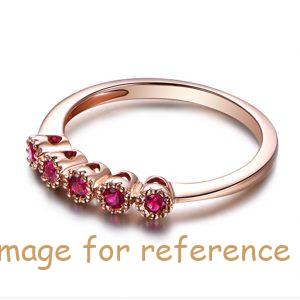
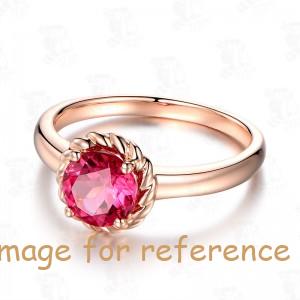
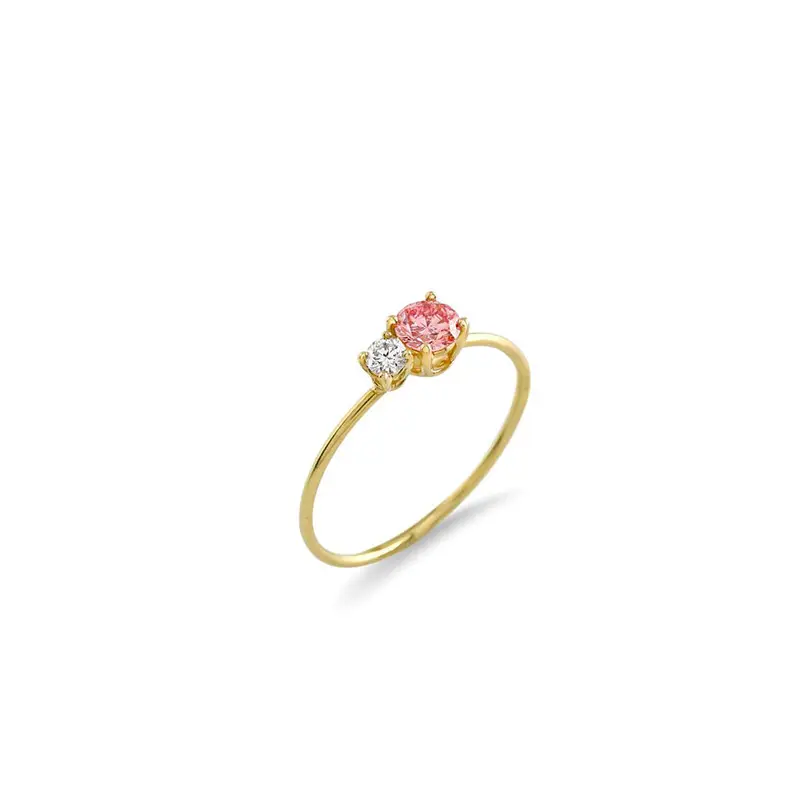
Für das ungeübte Auge, the Principesca Candy Ring is a study in delightful contradictions. It is whimsical yet sophisticated, colorful yet refined, kühn und doch zart. With its thin 18k gold band and a raised "Lünette" setting that holds a sparkling white diamond cradled by a vibrant pink gemstone (often a tourmaline or lab-grown diamond), it looks like a piece of candy you might want to taste rather than just wear .
Jedoch, behind the romantic "Castle of Love" aesthetic lies a complex industrial reality. Für vorbei 23 Jahre, one dedicated manufacturing entity has been the silent force behind this iconic design. While the world sees the final product on the fingers of style connoisseurs or displayed in the vitrines of Liberty London and Atelier VM, the industry sees the triumph of specialized manufacturing .
This article delves deep into the journey of the Principesca Candy Ring Custom Production Manufacturer—a specialist who has spent more than two decades mastering the art of the micro-pavé, perfecting the ergonomics of the "Candy" Form, and navigating the shift from natural stones to sustainable lab-grown diamonds.
Kapitel 1: The Anatomy of a "Candy"
Bevor Sie den Hersteller verstehen, one must understand the product. The Principesca is not a standard ring. Standard rings follow a template: a central stone, four prongs, a straight shank. The Principesca breaks this mold through three distinct engineering challenges.
The Castle Setting
The defining feature of the Principesca is what jewelers call the "Lünette" oder "castle" Einstellung. Unlike a prong setting that leaves the stone exposed, the Candy Ring raises the gemstones on a "pedestal" aus Gold. Visuell, this creates a floating effect, likened to a castle turret or a piece of wrapped candy.
For a manufacturer, this is a high-stakes engineering problem. The vertical walls of the setting must be perfectly straight to hold the stone securely, yet thin enough to maintain the delicate, elegant look. A deviation of even 0.1mm in the wall thickness will either cause the stone to wobble (a manufacturing defect) or make the ring look clunky and heavy.
The Color Paradox
The classic Principesca pairs a colorless white diamond (FG color, SI clarity) with a vivid pink stone . This high-contrast pairing is visually stunning, but it is a nightmare for quality control. Metal reflection is a known issue in gem setting. If the gold underneath the pink stone is not finished perfectly, the pink hue will reflect the yellow gold, turning muddy and orange. The manufacturer must employ specific plating and rhodium finishing techniques inside the setting to ensure the "Süßigkeiten" looks as sweet as intended.
The Ergonomic Shank
While the top of the ring is architectural, der Boden (the shank) ist minimal. At 4mm wide, the band is thin . A thin band on a top-heavy design usually leads to the "spinning finger" syndrome—where the heavy gem slides to the underside of the finger. The 23-year veteran manufacturer solved this through weight distribution. The gold thickness is calibrated so the ring sits balanced, a tactile detail that separates high-end production from mass-market copies.
Kapitel 2: 23 Years of Evolution (2001 - 2026)
The history of this manufacturer mirrors the history of the modern jewelry industry. Starting in the early 2000s, the manufacturer likely began as a traditional "officina" (workshop) specializing in goldsmithing. The early Principesca rings were likely strictly 18kt yellow gold with natural diamonds and natural pink sapphires or tourmalines.
The Era of Natural Stones (2001–2015)
For the first decade and a half, the supply chain was linear. The manufacturer sourced natural white diamonds (conflict-free certified) and natural pink stones. The challenge during this era was purely mechanical: cutting the pink stones to fit exactly into the "Candy" mold without chipping the fragile edges.
The Shift to Lab-Grown (2015–2020)
The mid-2010s brought a revolution: Im Labor gezüchtete Diamanten (LGD). Anfänglich, the luxury sector scoffed at them. Jedoch, the Principesca manufacturer was quick to adopt them for a specific reason: Farbkonsistenz. Natural pink diamonds are rare and vary wildly in hue—from bubblegum to salmon. Lab-grown pinks offer intense, konsistent, VSI clarity . For a production line, consistency is gold.
The Current Era (2020–2026)
Heute, the manufacturer operates in a hybrid model. They offer the "Candy Ring" in natural stones for purists and lab-grown for the eco-conscious modern buyer. Ihre 23 years of experience allow them to switch between these material streams seamlessly, adjusting cutting angles and setting pressures to match the slight hardness variations between natural and lab stones.
Kapitel 3: Der "Ring" Supply Chain – Manufacturing Secrets
What does a 23-year-old manufacturer have that a startup does not? It is not just machinery; it is data.
The 3D Library
Über 23 Jahre, the manufacturer has built a proprietary digital library of ring sizes. Sizing a Principesca ring is notoriously difficult. If you resize a standard ring, you cut the band and solder it. If you do that to a Principesca, Die "Castle" might tilt because the shank is connected to a solid block of gold at the head.
The manufacturer has developed a "size ladder"—specific CAD (Computergestütztes Design) files for every ring size from 3 Zu 12. Instead of cutting and soldering, Sie gießen jeden Ring von Grund auf nach Maß. Dadurch werden Spannungspunkte an den Edelsteinfassungen vermieden.
Das Pavé-Protokoll
Der weiße Diamant-Heiligenschein auf der Principesca erfordert "Mikropflastersteine" Einstellung. Dabei werden winzige Diamanten so dicht aneinander platziert, dass das Gold darunter unsichtbar ist, Dadurch entsteht eine durchgehende Lichtlinie.
Ein neuer Hersteller würde diese Steine nach Augenmaß setzen. Der 23-jährige Veteran verwendet eine lasergeführte Gravur, um die Sitze zu schneiden (die Löcher, in denen die Steine sitzen) vor dem Einstellen. Dies garantiert, dass jeder Diamant perfekt eben ist. Wenn ein Ring vorhanden ist 24 Mikropavé-Diamanten, alle 24 müssen genau gleich hoch sein. Wenn einer zu hoch ist, es verfängt sich in der Kleidung; zu niedrig, es fängt Schmutz ein.
Das Polierparadoxon
Einen Candy Ring zu polieren ist eine Kunst. Standard-Rotationswerkzeuge zerstören die scharfen Linien des "Schloss." daher, the manufacturer still employs hand-finishers who use string and abrasive cord to polish the internal angles of the ring. Das "hand-finish" is what gives the gold its soft, warm glow rather than a harsh, machine-made shine.
Kapitel 4: Customization – The Manufacturer's Core Competence
Der Begriff "Custom Production Manufacturer" implies that this entity is not just a factory; Es ist ein Lösungsanbieter. Über 23 Jahre, they have fulfilled thousands of bespoke orders. Here is how they differ from the competition.
Metal Mixing
While yellow gold is the classic, the manufacturer mastered the production of the Candy Ring in White Gold and Rose Gold. Roségold, insbesondere, is tricky. The copper content in rose gold makes it harder and more brittle. The manufacturer had to adjust their casting temperature precisely to avoid porosity (winzige Luftbläschen) in the rose gold "Candy."
Stone Substitution
The standard model uses Pink Tourmaline or Lab Pink Diamond . Jedoch, a custom manufacturer allows clients to swap these. Über 23 Jahre, they have set the Principesca design with:
-
Rubine (for a deeper, more passionate red).
-
Saphire (blue or padparadscha).
-
Morganit (for a peachy pastel).
-
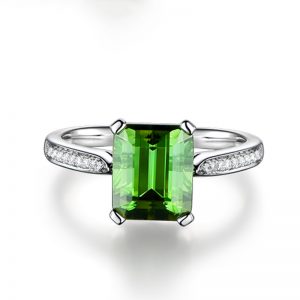
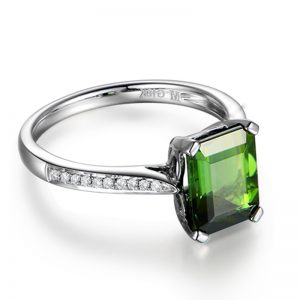
Smaragde (though this requires changing the setting style, as emeralds are too brittle for the standard tight bezel).
Engraving and Personalization
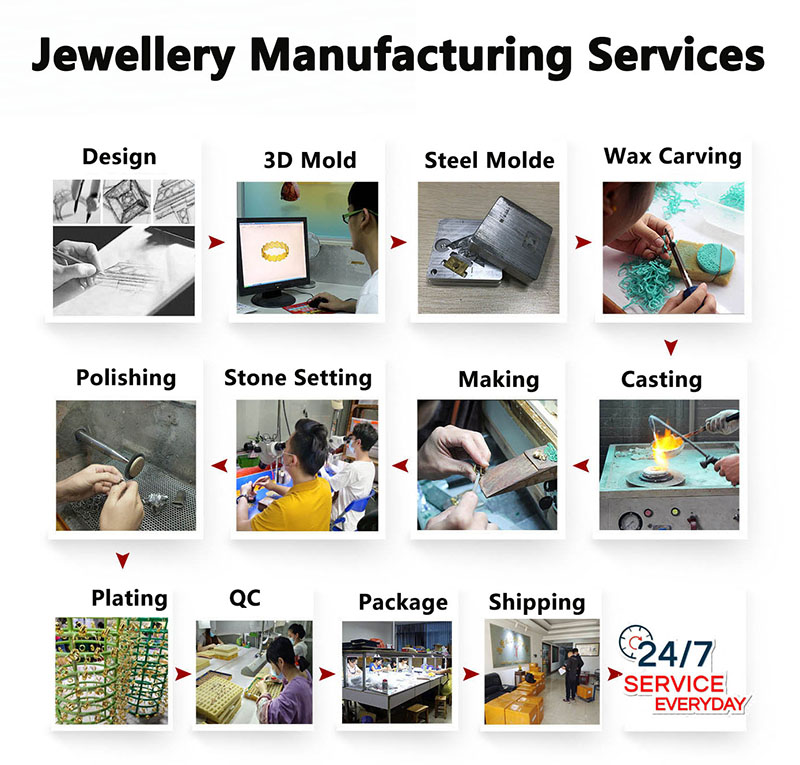
Because the manufacturer controls the production from wax to finish, they offer deep engraving on the inside of the shank. While a jeweler can stamp a date or initial into a soft band, the manufacturer can embed patterns or even a fingerprint into the gold during the 3D printing phase, which is impossible to replicate on a finished ring.
Kapitel 5: Quality Control – The "Bite" Prüfen
In-house joke: The final quality check for a Candy Ring is not a microscope; it is the hand.
A poorly made Principesca ring has two fatal flaws: "The Wiggle" Und "The Snag."
-
The Wiggle: If the central stone (the pink diamond or tourmaline) is not set with 100% Spannung, it will "tap" when you shake the ring near your ear. The 23-year manufacturer ensures a silent stone by using a hydraulic press (calibrated to the exact Newton force for that stone size) rather than a hammer.
-
The Snag: The transition between the "Candy" head and the band must be seamless. If there is a lip or a burr, it will snag a wool sweater or silk blouse. Every ring from this manufacturer undergoes a "Silk Test"—running a piece of silk over the ring to ensure absolute smoothness.
Kapitel 6: Warum 23 Years Matters in B2B
Für Käufer (Boutique-Besitzer, Schmuckmarken, or influencers looking for private label), the age of the manufacturer is the most critical metric. Here is why.
Stability of Supply
The post-2020 economic climate destroyed many young jewelry manufacturers. Gold prices fluctuated wildly, and gem supplies were choked. A 23-year-old manufacturer has financial reserves and long-term contracts with miners and gem cutters. They can weather a storm that would sink a 3-year-old shop.
Ethische Compliance
It takes years to get certified. This manufacturer holds the standard certifications (likely RJC - Responsible Jewellery Council compliant). They have a paper trail for every lab-grown or natural stone spanning two decades. In an era where consumers demand "konfliktfrei" guarantees, buying from a 23-year source is a legal shield for the retailer.
Der "True Copy" Defense
The Principesca design, while distinctive, is frequently copied by fast-fashion factories in Asia. Jedoch, these copies always fail in the "Gewicht" Und "feel." The 23-year manufacturer has a proprietary alloy mix for their 18k gold. It is a trade secret. It makes the ring slightly heavier (more gold in the right places) and slightly whiter (in the case of white gold) than standard industry alloys. This subtle difference is what allows luxury retailers to justify a 600- -900 price point over a $100 fälschen .
Kapitel 7: The Lab-Grown Diamond Revolution
No history of jewelry manufacturing from 2014–2026 is complete without discussing lab-grown diamonds. The Principesca manufacturer is a case study in successful adaptation.
When the manufacturer first introduced lab-grown pink diamonds, purists balked. Jedoch, the technical advantages were undeniable.
Superior Color
Natural pink diamonds often have "color zoning"—areas where the pink is darker or lighter. In a small 0.25ct stone, zoning is ugly. Lab-grown pinks are uniformly vibrant .
Der "Crème de la Crème" Einstellung
Lab-grown diamonds are chemically identical to natural ones (Kohlenstoff). Jedoch, the manufacturing process often leaves them with slightly different internal growth lines. A novice setter might crack a lab diamond by applying the same pressure as a natural stone. The 23-year manufacturer spent two years developing a "Lab-Specific" setting pressure protocol. They use a lower frequency vibration setting tool to seat lab diamonds, which reduces breakage rates from 15% to under 1%.
Marketing the Future
Heute, the manufacturer allows brands to market the Candy Ring as a "Sustainable Luxury" Artikel. By using 100% recycled gold (melted down from old electronics and jewelry) and lab-grown diamonds, the ring carries a carbon footprint that is roughly 85% lower than a mined equivalent.
Kapitel 8: The Making of a "Castle of Love"
Let us walk through the production timeline of a single Principesca Candy Ring at this facility:
-
Tag 1 (CAD): The order comes in, Größe 7. The digital file is pulled from the 23-year database. The specific gravity for the pink stone (a 5x5mm cushion cut) is calculated.
-
Tag 2 (Drucken): A high-resolution wax resin printer creates the tree of rings. Unlike cheap casting, they use a "Cyan" wax that burns out completely, leaving no ash residue inside the gold mold.
-
Tag 3 (Casting): 18k gold is melted at 1,800°F and injected into the investment plaster via a vacuum centrifuge. This ensures the gold fills the tiny 0.8mm prongs holding the diamond halo.
-
Tag 4 (Gross Finishing): The rough casting is cut from the tree. It looks dull grey at this point. The goldsmith files the "sprue marks" (the nubs where the gold flowed in) off the innen of the band so the ring won't hurt the finger.
-
Tag 5 (Setting Prep): The stone seats are cut using a micro-mill.
-
Tag 6 (Diamond Setting): A setter places the 0.07ct white diamonds around the halo . This takes 45 minutes of intense concentration.
-
Tag 7 (Center Setting): The 0.25ct pink lab diamond is dropped into the "Schloss." The gold is rolled over the edge of the stone using a burnishing tool. This is the most nerve-wracking step. One slip, and the stone cracks.
-
Tag 8 (Polieren): The ring goes to the finishing department for the "silk finish."
-
Tag 9 (QC & Versand): The final inspection, ultrasound cleaning, und Verpackung.
This one-week timeline is only possible because the manufacturer has done it thousands of times before. A new factory would take a month and likely break the stone on Day 7.
Kapitel 9: The Relationship with Retailers
How does the manufacturer interact with brands like Atelier VM or Liberty? As a B2B custom manufacturer, they offer "White Label" Dienstleistungen.
Private Etikettierung
Eine Marke kann bestellen 500 Einheiten im Principesca-Stil. Der Hersteller gießt das Logo der Marke in den Schaft ein. Zum Endkunden, Es sieht so aus, als hätte die Marke den Ring hergestellt. Das ist das Geheimnis von 90% von Schmuck, der in Kaufhäusern verkauft wird.
MOQ (Mindestbestellmenge)
Weil der Hersteller etabliert ist (23 Jahre = abbezahlte Maschinen), Sie können flexible MOQs anbieten. Ein großer Einzelhändler könnte bestellen 1000 Stücke. Eine kleine Boutique könnte einfach bestellen 10. Dem kann der Hersteller Rechnung tragen, da sein Gussprozess digital ist, nicht analog (Es müssen keine teuren physischen Formen hergestellt werden).
Die Garantie
Der Hersteller bietet ein "Lebenslange Garantie" auf die Einstellung. Wenn ein Kunde einen Mikropavé-Diamanten verliert, Der Händler schickt den Ring zurück, und der Hersteller ersetzt es zum Preis des Steins (normalerweise 10- -20) oder kostenlos. Dies sichert den Einzelhändler gegen Verluste ab.
Kapitel 10: Fazit – Der Sweet Spot der Fertigung
In einer Branche, die besessen davon ist "neu," Der Principesca Candy Ring hat bewiesen, dass zeitloses Design gepaart mit makelloser Herstellung nie aus der Mode kommt.
Der 23-jährige Hersteller, der hinter diesem Produkt steht, nimmt eine Seltenheit ein "süßer Ort" auf dem Weltmarkt. Sie sind kein Massenproduzent, der billiges Messing verdrängt; Sie sind spezialisiert "Atelier" im industriellen Maßstab betrieben wird. Sie haben die Seele eines Künstlers – sie verstehen, warum "Castle of Love" muss wie eine Süßigkeit aussehen – aber das Gehirn eines Ingenieurs – der genau weiß, wie man das Gold gießt, damit die Farbe hervorsticht.
Für 23 Jahre, Sie haben wirtschaftliche Abstürze gemeistert, der Aufstieg von im Labor gezüchteten Diamanten, und der Wandel hin zu ethischem Luxus. Sie bleiben stehen, nicht weil sie Trends hinterherlaufen, sondern weil sie die Integrität eines einzelnen Produkts schützen: Der Süßigkeitenring.
Während wir auf das nächste blicken 23 Jahre, Eines ist sicher. While fashion will continue to change, there will always be a demand for a little "castle of love" on the finger. And when that demand comes, it is this manufacturer—the silent, seasoned, 23-year veteran—who will answer the call, casting gold and setting diamonds, one perfect candy at a time.