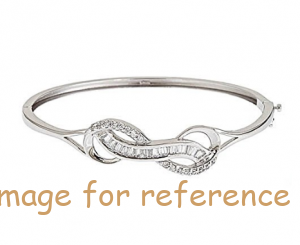

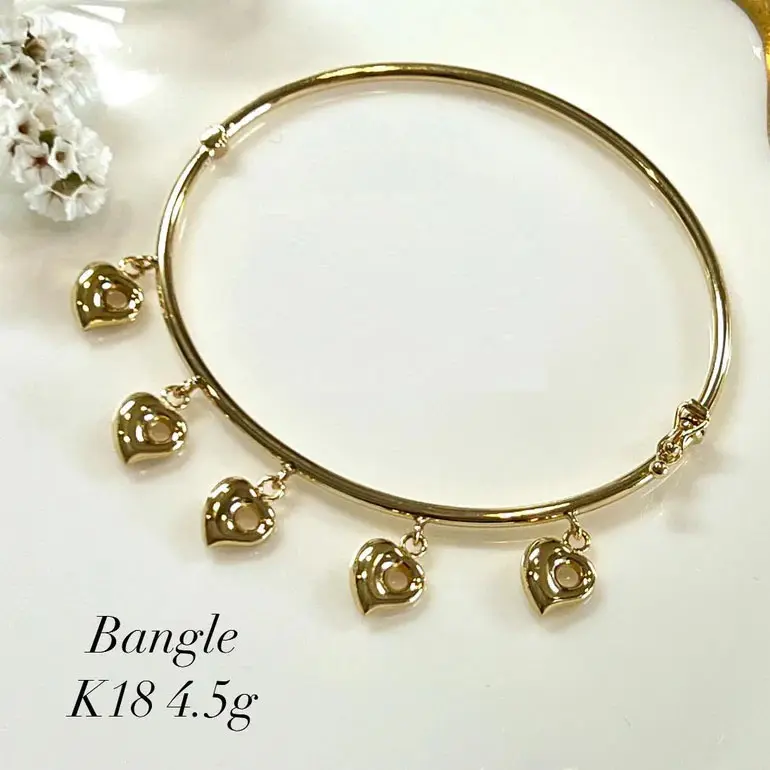
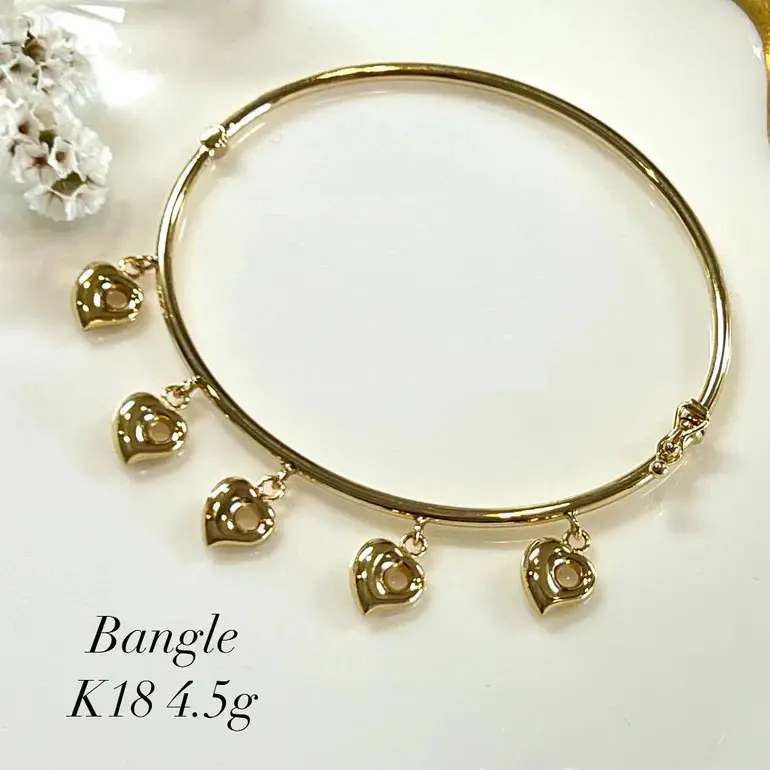
Kundenspezifischer Mini-Monaca-Armreif aus 18 Karat Japan vom JINGYING-Schmuckhersteller
OEM/ODM -Schmuckhersteller Design Custom Ihr eigener Schmuck
Lassen Sie uns anfangen : Mo@kingjy.com
The Art of Collaboration: Crafting the Japan Client Custom 18k Mini Monaca Bangle with JINGYING Jewelry
In der komplizierten Welt der Herstellung von edlem Schmuck, few relationships are as demanding—or as rewarding—as those forged with Japanese clients. The Japanese market is renowned globally for its exacting standards, where craftsmanship is elevated to an art form and quality is measured not in millimeters but in microns. When a Japanese client entrusts a manufacturer with a custom piece, they are not merely placing an order; they are extending an invitation to participate in a tradition of excellence that spans generations. This is the story of one such collaboration: the creation of a custom 18k Mini Monaca Bangle by JINGYING Jewelry, a manufacturer that has spent over two decades mastering the delicate balance between Western manufacturing efficiency and Eastern aesthetic sensibilities .
Den japanischen Schmuckmarkt verstehen
Japan represents one of the most sophisticated jewelry markets in the world, characterized by consumers who possess an almost spiritual appreciation for quality, Präzision, and cultural nuance . Unlike many Western markets where bold statements often take precedence, Japanese jewelry buyers gravitate toward designs that embody restraint, Eleganz, und Bedeutung. This cultural context is essential for understanding what makes a Japanese client's custom order unique and why manufacturers like JINGYING invest considerable effort in mastering this particular market segment.
The Mini Monaca Bangle project exemplifies this dynamic. Der "Monaca" Die Designsprache ist von der traditionellen japanischen Ästhetik inspiriert – klare Linien, ausgewogene Proportionen, und ein Gefühl stiller Kultiviertheit, das spricht, ohne zu schreien. Der "Mini" Die Bezeichnung würdigt die japanische Vorliebe für feinere Proportionen, Die Armbänder haben typischerweise eine Länge von 16–18 cm, um kleineren durchschnittlichen Handgelenkgrößen gerecht zu werden . Diese Aufmerksamkeit für anthropometrische Details ist nicht nur praktisch; Es spiegelt ein tiefes kulturelles Bewusstsein wider, dass der Schmuck mit dem Körper des Trägers harmonieren muss.
Die Bedeutung von 18-karätigem Gold in japanischem Schmuck
Die Reinheitsstandards für Gold werden in Japan durch die japanischen Industriestandards geregelt (ER), die eine strikte Einhaltung für Edelmetalle vorschreiben . Die Wahl von 18-karätigem Gold für diesen individuellen Armreif ist aus mehreren Gründen von Bedeutung. Erste, es stellt ein Goldlöckchen-Gleichgewicht aus Reinheit und Haltbarkeit dar: bei 75% reines Gold, 18k offers the rich color and prestige of high-karat gold while maintaining the structural integrity needed for daily wear. Zweite, Japan's regulations require clear labeling of metal purity, and 18k gold (often marked as "K18" oder "18金") carries specific legal implications for import and sale .
JINGYING's experience with Japanese clients has necessitated the development of rigorous quality control protocols that exceed their already high standards. Every batch of 18k gold used in Japanese orders undergoes XRF (Röntgenfluoreszenz) testing to verify metal composition and purity . The plating thickness, ggf, is measured with similar precision—Japanese buyers typically expect rhodium or gold plating of at least 2-3 microns to ensure longevity, and JINGYING's electroplating labs are equipped to meet these specifications consistently .
Vom Konzept bis zum CAD: Der Designprozess
The creation of a custom bangle for a Japanese client typically begins with a collaborative design phase that reflects the indirect communication style often preferred in Japanese business culture . Rather than presenting a finalized design and asking for approval, JINGYING's designers engage in an iterative process where sketches, renderings, and 3D models are shared progressively, allowing the client to refine the vision through subtle suggestions rather than explicit revisions.
For the Mini Monaca Bangle, the design process leveraged JINGYING's advanced CAD capabilities . Using industry-standard software including Rhino and Matrix, the design team translated the client's conceptual vision—often conveyed through mood boards and references to traditional Japanese architecture—into precise digital geometry . Der "Monaca" bilden, named after the Japanese confection known for its crisp, folded shell, required particular attention to the bangle's internal and external contours to achieve a seamless, elegant profile.
What distinguishes a custom design for the Japanese market is the attention to what might seem like minor details to less demanding clients: the exact curvature of the bangle's inner surface for comfort, the precise thickness of the metal to achieve the right weight and feel, and the flawless execution of any surface textures or finishes. JINGYING's design team has learned that Japanese clients appreciate not just the finished product but the thoroughness of the development process itself .
Die Herstellungsreise
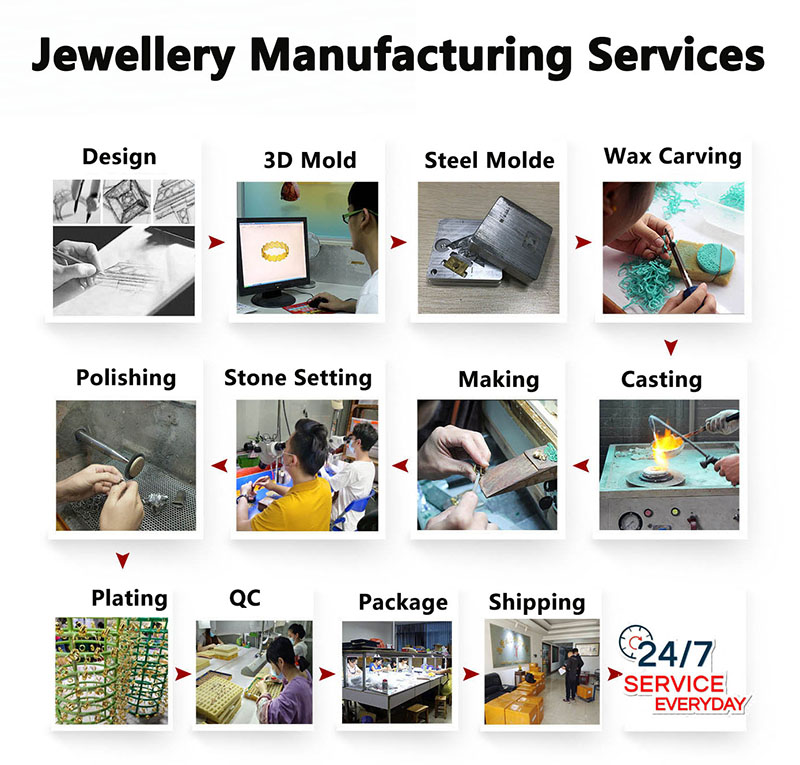
With the CAD design finalized and approved, the creation of the 18k Mini Monaca Bangle moves into JINGYING's meticulously orchestrated production workflow. For solid gold pieces like this bangle, the lost-wax casting method remains the preferred technique, though the specific steps are executed with particular care when the destination is Japan .
The process begins with 3D printing of a high-resolution resin prototype. JINGYING utilizes advanced SLA or DLP printers capable of capturing the subtle curves and precise dimensions of the Monaca design . This physical model serves as the master for creating the investment mold, which is then baked in a kiln to eliminate the resin and prepare the cavity for molten 18k gold.
Casting 18k gold requires careful temperature control and the use of vacuum or centrifugal casting equipment to minimize porosity—a particular concern for Japanese clients who inspect pieces under magnification . The gold itself is sourced from certified suppliers with documentation of purity and responsible sourcing, a requirement that has become increasingly important for Japanese import compliance .
The Art of Hand-Finishing
Perhaps the most critical phase in manufacturing jewelry for the Japanese market is the finishing process. While advanced technology enables precise casting, it is the skilled hands of artisans that elevate a piece from well-made to exceptional. JINGYING employs over 100 skilled craftspeople who specialize in various aspects of jewelry finishing .
For the Mini Monaca Bangle, the finishing process would involve several stages. The raw casting is first tumbled with stainless steel shot to smooth the surface and remove the casting skin. Then begins the meticulous hand-polishing work—a process that can take hours for a single bangle. Japanese clients typically expect a mirror finish with absolutely no visible scratches, tool marks, or unevenness, even under magnification .
Any stone setting, if the design includes gemstones, is executed by specialized setters who work under microscopes to ensure each prong or bezel is perfectly aligned . Given Japan's strict regulations regarding nickel content and allergens, JINGYING ensures all materials used in setting—solders, Legierungen, and plating solutions—are compliant with Japanese standards that effectively mirror the EU Nickel Directive .
Cultural Considerations in Production
Throughout the manufacturing process, JINGYING navigates a complex landscape of cultural expectations that go far beyond the physical product. Japanese business culture places enormous value on reliability, punctuality, and follow-through . A promised delivery date is treated as a commitment, not a suggestion. JINGYING's project management system includes regular production updates and real-time communication with clients to ensure there are no surprises.
Darüber hinaus, the packaging and presentation of the finished piece carry weight in the Japanese market. Luxuriöse Geschenkboxen, Anlaufschutzbeutel, and the inclusion of certificates of authenticity are standard expectations . JINGYING bietet Private-Label-Verpackungslösungen an, die es japanischen Marken ermöglichen, den fertigen Armreif in einer Verpackung zu präsentieren, die ihre eigene Markenidentität widerspiegelt und gleichzeitig die hohen Erwartungen ihrer Kundschaft erfüllt .
Die Qualitätskontrolle für japanische Bestellungen ist außergewöhnlich streng. Jedes Teil wird einer Maßprüfung anhand der genehmigten CAD-Spezifikationen unterzogen, Prüfung der Oberflächenbeschaffenheit unter Vergrößerung, und strukturelle Integritätsprüfung . Für Goldstücke, Die Dicke der Beschichtung wird mittels RFA-Analyse überprüft, um sicherzustellen, dass sie den vereinbarten Spezifikationen entspricht. Die Steinsicherheit wird getestet, um sicherzustellen, dass jede Fassung sicher genug ist, um dem täglichen Verschleiß standzuhalten.
Qualitätssicherung: Die letzte Grenze
Bevor der fertige Mini-Monaca-Armreif nach Japan verschifft wird, Es durchläuft das Mehrpunkt-Inspektionsprotokoll von JINGYING. This includes dimensional accuracy checks using precision measuring equipment, surface finish inspection under specialized lighting, and verification of any hallmarking or purity stamps . The bangle is then professionally cleaned and prepared for packaging.
The quality expectations for Japanese clients often exceed those of other markets. Minor scratches that might pass unnoticed in other jurisdictions can lead to rejection in Japan . JINGYING's quality control team has developed specific expertise in identifying and rectifying the types of imperfections that Japanese inspectors are trained to spot. This attention to detail is not merely about avoiding returns; it is about building the long-term trust that is essential for sustained relationships in Japanese business culture.
For the 18k Mini Monaca Bangle, final inspection would include verifying the metal purity mark (Typischerweise "K18" oder "750"), checking the overall weight against specifications, and confirming that the piece matches the approved dimensions within acceptable tolerances. Any plating is checked for uniformity and thickness, and the overall aesthetic is evaluated to ensure it meets the client's expectations.
Aufbau langfristiger Partnerschaften
JINGYING's experience in serving Japanese clients has taught the company that each order is not just a transaction but an opportunity to build a lasting relationship. The Japanese market values consistency and reliability above all else, and manufacturers who demonstrate these qualities can build partnerships that span decades .
The creation of the custom 18k Mini Monaca Bangle represents this philosophy in action. Every step of the process—from the initial design consultation through to the final quality inspection—was executed with the understanding that the client's trust was not merely earned but protected. The attention to detail, the adherence to Japanese standards, and the commitment to clear, honest communication all reflect the values that have made JINGYING a trusted partner for Japanese jewelers.
As the Japanese jewelry market continues to evolve, combining traditional aesthetic sensibilities with contemporary design innovations, manufacturers like JINGYING will play an increasingly important role in bringing these visions to life. The custom 18k Mini Monaca Bangle is more than a piece of jewelry; it is a testament to what can be achieved when craftsmanship, Technologie, and cultural understanding converge in service of a shared vision of excellence .
Am Ende, the measure of success for such a project is not merely in the flawless execution of the physical piece but in the client's confidence that they have found a manufacturing partner who understands their needs, respects their standards, and will be there for the next project, and the one after that. This is the foundation upon which JINGYING has built its reputation in one of the world's most demanding jewelry markets