
Die kuns van versiering: A Complete Guide to the Sterling Silver Earring Manufacturing Process
Earrings are among the most intimate and expressive forms of jewelry. Hulle raam die gesig, weerspieël persoonlike styl, en hou dikwels diep sentimentele waarde. Wanneer dit van sterling silwer vervaardig word, they combine the luminous beauty of a precious metal with durability and affordability. The journey from a raw idea to a finished pair of sparkling silver earrings is a fascinating blend of artistry, presisie ingenieurswese, and meticulous handcrafting.
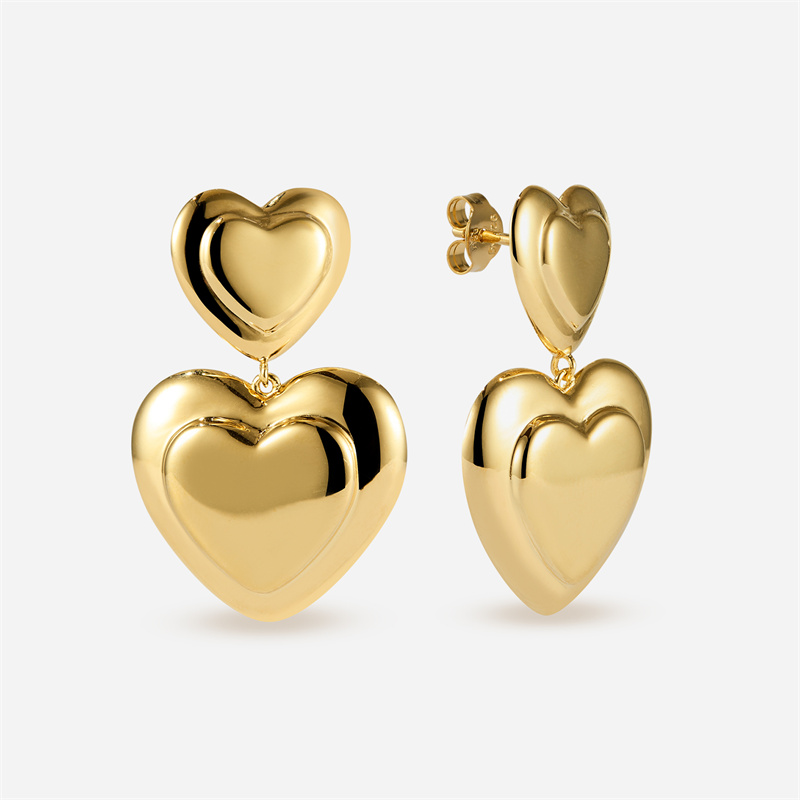
This article provides a exhaustive, step-by-step exploration of the entire process. We will delve into the various techniques—from hand fabrication to casting and forging—and follow the creation of sterling silver earrings through every stage, from initial concept to final quality control. Whether you are an aspiring jeweler, a curious consumer, or a design enthusiast, hierdie gids sal die vaardige werk wat in die skepping van hierdie draagbare kunswerke gaan, verlig.
Fase 1: Konsepsie en ontwerp – Die bloudruk vir skoonheid
Die proses begin nie met metaal nie, maar met 'n idee. Hierdie fase gaan oor die definisie van die visie en die skep van 'n uitvoerbare plan.
Stap 1: Inspirasie en idees
Oorringontwerp word deur talle faktore beïnvloed:
-
Tendense en eras: Art Deco meetkunde, Victoriaanse elegansie, Modernistiese minimalisme, of Boheemse flair.
-
Natuur: Organiese vorms soos blare, blomme, skulpe, en waterdruppels.
-
Kultuur en Simboliek: Motiewe met spesifieke betekenisse, soos mandalas, hamme, of astrologiese simbole.
-
Funksie en Styl: Is die ontwerp vir studs, hoepelle, hangbande, kandelare, of draadoorbelle? Elke tipe het spesifieke funksionele vereistes.
-
Die Draer: Met inagneming van lewenstyl (alledaagse drag vs. formele geleentheid), ouderdom, en persoonlike smaak.
Designers often create mood boards and gather visual references to solidify their concept before sketching.
Stap 2: Technical Sketching and Dimensioning
Freehand sketches are translated into technical drawings. This is crucial for determining:
-
Scale and Proportion: The size and weight of the earrings must be comfortable for the ear. 'N groot, heavy dangle requires a different design approach than a lightweight stud.
-
Front and Side Views: Earrings are three-dimensional. A side-view sketch is essential to understand the depth, how the earring will hang, and how it will sit against the ear.
-
Component Parts: The design is broken down into its components: the front element, the post or hook, any jump rings, and additional dangling parts. This planning is vital for the fabrication phase.
-
Finding Compatibility: The choice of ear wires (Franse hake, leverbacks), posts, of koppelaarrugstukke word in hierdie stadium gemaak om te verseker dat die ontwerp funksioneel en veilig is.
Stap 3: Materiaalkeuse – Hoekom 925 Sterling silwer?
Die keuse van materiaal is fundamenteel. Sterling silwer is 'n legering wat bestaan uit 92.5% suiwer silwer en 7.5% Ander metale, Byna altyd koper.
-
Hoekom Alloy? Suiwer silwer (999 fyn) is te sag vir die meeste juweliersware toepassings. Dit sou krap, duik, en verloor maklik sy vorm. Die koper byvoeging voeg aansienlike sterkte en duursaamheid by sonder om die pragtige wit glans van die metaal drasties te verander.
-
Tarnish: Die koperinhoud is ook wat veroorsaak dat sterling silwer mettertyd verkleur wanneer dit aan swael in die lug blootgestel word. Dit is 'n natuurlike proses en is maklik omkeerbaar met polering.
-
Vorms van silwer: Vir oorbelle maak, silwer word in verskeie vorme gebruik:
-
Blad: Beskikbaar in verskillende diktes (meters). Word gebruik om vorms uit te sny, seëling, en vorming.
-
Draad: Kom in rondte, plein, halfronde, en ander profiele. Word gebruik om plasings te maak, hake, Jumpringe, en draad-gebaseerde ontwerpe.
-
Giet Graan: Klein stukkies silwer vir smelt in die gietproses.
-
Voorafvervaardigde bevindings: Plasings, rug, hake, en springringe kan klaargemaak gekoop word, hoewel baie hoë-end ambagsmanne hul eie maak.
-
Fase 2: Die vervaardigingsmetodes – veelvuldige paaie na die skepping
Daar is drie primêre metodes om die komponente van sterling silwer oorbelle te skep. 'n Enkele paar kan elemente insluit wat gemaak is deur al drie tegnieke te gebruik.
Metode a: Plaatmetaal vervaardiging (Saag en Piercing)
Dit is 'n aftrekproses waar die ontwerp uit 'n plat vel silwer gesny word.
Stap 4: Uitgloeiing en voorbereiding van die silwer
Die silwer laken is eerste uitgegloei: eweredig verhit met 'n fakkel totdat dit 'n dowwe rooi gloei en dan in water geblus. Hierdie proses versag die metaal, maak dit makliker om te saag en vorm sonder om te kraak.
Stap 5: Oordrag van die ontwerp en saag
The design is transferred onto the annealed silver using a scribe to scratch the outline. The sheet is then secured on a bench pin. Using a jewelers’ saw with a fine blade, the artisan carefully cuts out the shape. This requires a steady hand and patience, especially for intricate patterns with internal piercework.
Stap 6: Liassering en skuur
The sawn edges are rough. Using a series of needle files and progressively finer sandpapers, the artisan refines the shape, smooths the edges, and creates a uniform surface, removing all saw marks.
Metode B: Lost-Wax Casting
This is the most common method for producing complex, gedetailleerd, or sculptural earrings in volume. It is an additive process.
Step 4b: Creating the Wax Model
A model of the earring is carved by hand from a block of jeweler’s wax or, more commonly today, 3D printed using a high-resolution wax printer from a CAD design. This wax model is a perfect positive of the final earring.
Step 5b: Spruing, Belegging, and Burnout
The wax model is attached to a wax “boom” with other models. This tree is placed inside a flask and liquid investment plaster is poured around it. Once hardened, the flask is placed in a kiln for the burnout cycle. The heat melts and vaporizes the wax, leaving a perfect negative cavity in the shape of the earring inside the hardened plaster.
Step 6b: Gietstuk
Sterling silver casting grain is melted in a crucible and, using a centrifugal casting machine, is forced into the hollow plaster mold. The machine spins, using centrifugal force to push the molten metal into every intricate detail of the cavity.
Step 7b: Verdoeling en skoonmaak
Na verkoeling, the plaster mold is broken away in water—a process called devesting. Die rou silwer oorbelle, nou aan 'n metaal geheg “boom,” word afgesny. Hulle word dan skoongemaak in 'n ultrasoniese skoonmaker met 'n beitsoplossing om enige oorblywende beleggingspleister en oksidasie te verwyder.
Metode C: Smeed en Vorm
Hierdie metode behels die vorming van silwer draad of vel met behulp van krag en gereedskap.
Stap 4c: Vorm hoepels en drade
Om hoepeloorbelle te maak, 'n silwer draad word eers uitgegloei om dit sag en smeebaar te maak. Dit word dan versigtig om a gebuig deurn ('n tapse staalstaaf) en met 'n rou vel of plastiekhamer getik om 'n perfekte sirkel te vorm. Die punte word gesaag en gevyl om perfek bymekaar te kom.
Stap 5c: Teksturering en hamering
Oppervlaktekstuur kan voor of na vorming bygevoeg word. Silwer kan op 'n staalbankblok geplaas word en met hamers getekstuur word (balpen, kruis-pen) or stamped with patterned punches to create unique surfaces.
Fase 3: Assembly and Joining – The Art of Soldering
Few earrings are made from a single piece of metal. Soldering is the process of permanently joining components using a metal alloy that melts at a lower temperature than the silver itself.
Stap 7: Preparing the Joint
The areas to be joined must be perfectly clean and fit together tightly. A paste-like substance called vloed is applied to the joint. Flux prevents oxidation during heating, which would prevent the solder from flowing.
Stap 8: Applying Solder and Heat
Small pieces of silver solder (which comes in easy, medium, and hard grades with different melting points) are placed on or near the joint. Using a precise torch flame, the artisan heats the entire piece evenly. The goal is to bring the work to a temperature where the solder melts and is drawn into the joint by capillary action, but where the sterling silver components themselves do not melt.
Common Soldering Tasks in Earring Making:
-
Attaching a Post: A sterling silver wire is cut and filed to create a post. This is carefully soldered onto the back of a stud earring.
-
Closing a Hoop: The perfect circle of a hoop earring is soldered closed at the seam.
-
Adding Bails and Jump Rings: Loops for dangling elements are soldered onto the main body of the earring.
-
Building Layers: Different layers of a design are stacked and soldered together.
After soldering, the earrings are pickled in a warm acid solution to remove flux and fire-scale (oxidation that occurred during heating).
Fase 4: Finishing – From Rough to Radiant
The post-assembly earrings are rough, discolored, and far from finished. This phase is where they gain their final beauty.
Stap 9: Initial Finishing and Surface Refinement
-
Fettling: Vir gegote stukke, this involves removing the sprue nubs (where the earring was attached to the tree) with a saw and files.
-
Stoning: Any solder seams are carefully filed and sanded away until they are invisible. The entire surface is smoothed.
Stap 10: Mechanical Finishing
-
Tuimel: Earrings are often placed in a tuimelaar—a rotating barrel filled with stainless steel shot, water, en verbrandingsverbinding. Tumbling for several hours work-hardens the silver, polishes it to a uniform satin shine, and removes tiny surface imperfections.
-
Sandblaas: For a uniform matte finish, earrings can be blasted with fine glass beads in a sandblasting cabinet.
Stap 11: Poleer
To achieve a brilliant, spieëlagtige glans, the earrings are polished on a motorized wheel.
-
Pre-Polish: A stitched muslin wheel charged with a coarse compound like Tripoli is used to remove fine scratches and begin the shine.
-
High-Shine Polish: A separate, clean loose muslin wheel charged with a fine red rou compound brings out the final brilliant luster. The artisan must hold the earring carefully to polish all contours without it being snatched by the wheel.
Stap 12: Oxidization and Antiquing (Opsioneel)
To highlight textures, gravering, or intricate details, a chemical antiquing solution like liver of sulfur is used. It darkens the silver, depositing a black patina in all the recesses. The high points are then gently polished back to bright silver, creating dramatic contrast and depth. This is particularly popular with Celtic, Art Nouveau, and vintage-style designs.
Stap 13: Finale montering
If the earrings have moving parts or non-silver components, they are assembled now:
-
Attaching Ear Wires: Sterling silver French hooks, leverbacks, or threader wires are attached to the main body via soldered jump rings.
-
Adding Non-Metal Elements: Krale, pêrels, or gemstones are set or strung onto the assembled components.
Fase 5: Quality Control and Final Preparation
The last steps ensure a perfect product for the wearer.
Stap 14: Rigorous Inspection
Each pair of earrings is meticulously examined under magnification for:
-
Strukturele integriteit: Are all solders secure? Are posts straight and strong?
-
Oppervlak perfeksie: Are there any remaining scratches, putte, of poleermerke?
-
Funksionaliteit: Do clasps open and close securely? Do hooks have a smooth curve?
-
Ooreenstemmende: Vir 'n paar, do both earrings match exactly in size, voltooi, and detail?
Stap 15: Ultrasonic Cleaning and Rhodium Plating (Opsioneel)
-
The finished earrings are placed in an ultrasoniese skoonmaker—a tank filled with a special solvent that uses high-frequency sound waves to remove every trace of polishing compound, stof, en olies.
-
For an extra-bright, wit, and tarnish-resistant finish, some sterling silver earrings are rhodium bedek. This involves electroplating a thin layer of rhodium (a metal in the platinum family) onto the surface.
Stap 16: Verpakking
The earrings are dried, placed in a protective zip-lock bag to minimize tarnishing, and presented in a jewelry box. They are now ready to be worn and cherished.
Konklusie
The creation of a pair of sterling silver earrings is a journey of transformation. It is a process that demands a unique synergy of artistic creativity and scientific precision. From the initial spark of an idea to the final buff on the polishing wheel, each stage requires skill, geduld, and a deep understanding of the material.
The resulting object is far more than a commodity. It is a testament to human ingenuity and craftsmanship—a small, wearable sculpture that carries with it the energy and intention of its maker. Whether crafted using ancient techniques or modern technology, sterling silver earrings remain a timeless and personal form of adornment, connecting the wearer to a rich history of art and artisanship.